- Structured Interview
- An interview format in which every candidate is asked the same predetermined questions in the same order, enabling objective, side-by-side comparison.
- Behavioral Question
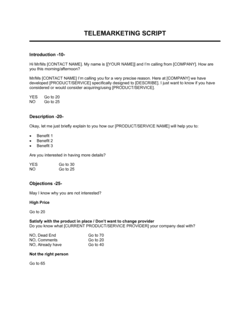
- A question asking the candidate to describe a past situation to predict future performance — typically framed as 'Tell me about a time when...'
- Competency Framework
- A defined set of skills, behaviors, and knowledge levels required for a specific role, used to evaluate and score candidate responses.
- STAR Method
- A structured response format — Situation, Task, Action, Result — used by candidates to answer behavioral interview questions.
- Prohibited Question
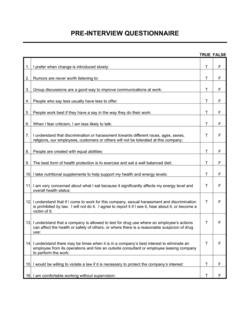
- Any interview question that directly or indirectly solicits information about a protected characteristic such as age, race, religion, national origin, disability, or family status.
- Adverse Impact
- When a neutral hiring practice — including interview questions — disproportionately screens out candidates from a protected class, creating potential discrimination liability.
- Candidate Acknowledgment
- A signed statement by the applicant confirming they participated in the interview, that information they provided was accurate, and that they understand the process.
- Interviewer Certification
- A signed declaration by the interviewer affirming that only approved questions were asked and that the scoring reflects an unbiased assessment of the candidate's responses.
- Scoring Rubric
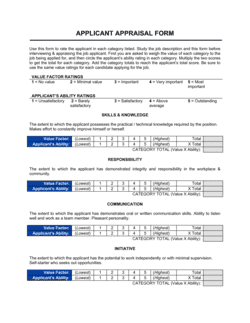
- A standardized rating scale — typically 1 to 5 — applied consistently to each candidate's answers to allow objective comparison across the applicant pool.
- Ban the Box
- Laws in numerous US states and municipalities that prohibit employers from asking about criminal history on job applications or during early-stage interviews.
- Reasonable Accommodation
- A modification to the interview process — such as extended time, a different format, or an accessible location — that enables a candidate with a disability to participate fully.