1
Complete the header before placing the call
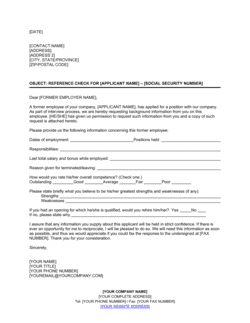
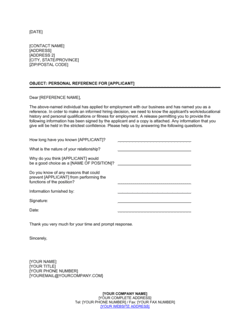
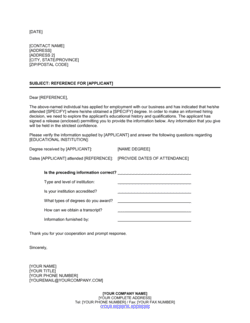
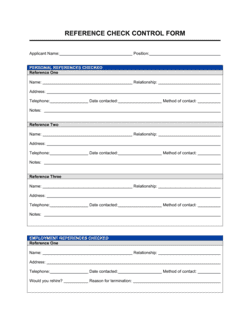
Fill in the interviewer name, title, date, candidate name, and position before you dial. Having the header completed ensures you do not forget to document it after a long call.
💡 Enter the reference's name and organization in the header as soon as the candidate provides them — do not rely on remembering to fill this in after the call.
2
Obtain and confirm candidate authorization
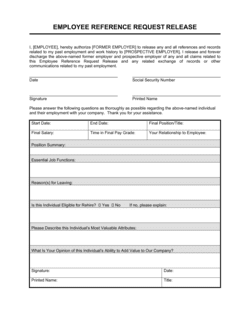
Before conducting any reference check, confirm that the candidate has signed a release or provided documented consent authorizing you to contact their references. Note the form of consent in the header.
💡 A signed candidate authorization — not just verbal permission — is required for reference checks conducted through third-party screening vendors under the US FCRA.
3
Open the call with the consent and introduction script
Read the consent and introduction clause verbatim at the start of every call. Confirm the reference has time to speak, identify yourself and your organization, and disclose that notes will be taken.
💡 If the reference declines to participate or asks for a written request first, note the response in the documentation block and respect the request — do not press.
4
Work through each question section in order
Follow the script from employment verification through performance, team dynamics, reason for departure, and re-hire eligibility. Do not skip sections or rearrange the order — consistency across all candidates is your primary legal defense.
💡 Leave blank lines after each question to take notes in real time. Do not paraphrase answers into evaluative language — record what the reference actually said.
5
Use the prohibited-question reminder before and during the call
Read the prohibited-question block before dialing, not after. Reference conversations can prompt follow-up questions that inadvertently cross into protected territory — the reminder serves as a checklist.
💡 If a reference volunteers information about a protected characteristic (e.g., mentions the candidate's age or health), stop taking notes on that information and do not include it in your documentation.
6
Probe hesitations and hedged answers
When a reference pauses, gives an unusually brief answer, or qualifies a positive statement with 'for the most part' or 'generally,' ask one neutral follow-up: 'Can you tell me a bit more about that?' Record both the original answer and the follow-up.
💡 Silence is your most effective follow-up tool. After a hedged answer, a two-second pause will often prompt a reference to continue without you having to ask anything.
7
Complete the documentation block immediately after the call
Finalize your notes, add any context you recorded shorthand during the call, and sign and date the documentation block within 30 minutes of hanging up.
💡 Never clean up or reword your notes after signing — alterations after signature create document integrity issues if the record is ever reviewed in a hiring dispute.
8
File the completed script in the candidate's hiring record
Store the signed reference check in the candidate's permanent hiring file alongside their resume, application, interview notes, and offer letter. Retain for the period required by your jurisdiction's employment records laws.
💡 In the US, EEOC guidance recommends retaining hiring records for at least one year from the date of the hiring decision; in Canada, most provinces require retention for two years.