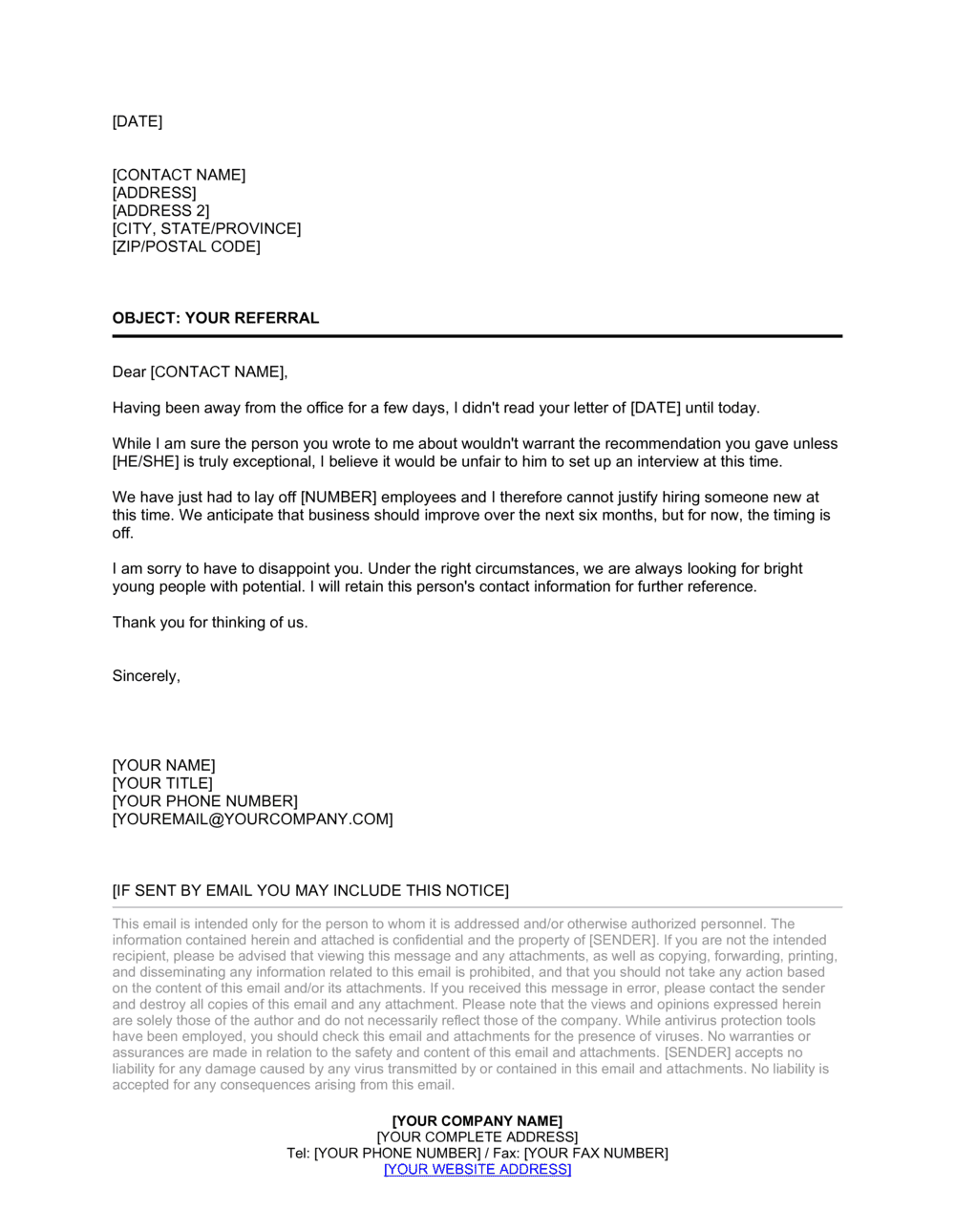
- Referred Applicant
- A job candidate introduced to the employer through a personal or professional referral from an employee, investor, client, or business contact.
- Adverse Action Notice
- A legally required notice sent to an applicant when a hiring decision is made — in whole or in part — based on a consumer report such as a background check.
- Disparate Impact
- A form of employment discrimination in which a facially neutral policy or practice disproportionately affects a protected class, even without discriminatory intent.
- Protected Class
- Categories of individuals protected from employment discrimination under law, including race, sex, religion, national origin, age, disability, and pregnancy.
- At-Will Employment
- Employment that either party may end at any time for any lawful reason — the same principle applies in reverse: employers are not required to interview any applicant.
- Bona Fide Occupational Qualification (BFOQ)
- A characteristic that is essential to performing a job's core duties and may legally justify an otherwise discriminatory hiring criterion.
- Referral Source
- The person or organization who introduced or recommended the applicant to the employer — often an employee, board member, partner, or client.
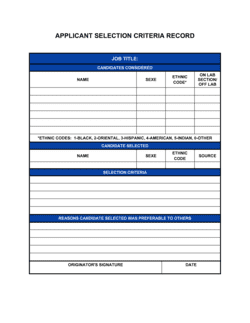
- Consistent Application
- The practice of applying the same selection criteria to all applicants for the same role, a key defense against discrimination claims.
- Paper Trail
- A documented record of hiring decisions and communications that demonstrates the employer followed a lawful, objective process.
- Employment Discrimination
- Treating a job applicant unfavorably because of a protected characteristic — prohibited under Title VII, the ADA, the ADEA, and equivalent statutes worldwide.
- Nepotism Policy
- An employer policy restricting or prohibiting the hiring of relatives or personal acquaintances of existing employees, which may govern how referrals are handled.