Interview Guide Sales Representative_Wholesale (Technical)

Free to read β€’ Save or share with one click

FreeInterview Guide Sales Representative_Wholesale (Technical) Template

At a glance

What it is
An Interview Guide for a Sales Representative (Wholesale Technical) is a structured interviewing tool that gives hiring managers a consistent set of competency-based questions, scoring rubrics, and evaluation criteria tailored specifically to candidates for technical wholesale sales roles. This free Word download is pre-formatted for in-person or video interviews and can be edited online and exported as PDF or printed for panel use.
When you need it
Use it when hiring for any outside sales, territory manager, or account executive role that requires both technical product knowledge and wholesale distribution experience. It is also useful when multiple interviewers are involved and you need consistent scoring across candidates.
What's inside
Role-specific competency definitions, behavioral and situational interview questions organized by section, a numerical scoring rubric for each competency, space for interviewer notes, a candidate comparison summary, and a final recommendation field.

What is an Interview Guide Sales Representative Wholesale Technical?

An Interview Guide Sales Representative Wholesale Technical is a structured hiring document that equips interviewers with a competency-based question set, a numerical scoring rubric, and a final recommendation framework designed specifically for evaluating candidates for field-based wholesale technical sales roles. Unlike a generic question list, this guide organizes the interview around the distinct competencies that predict success in technical selling environments β€” product knowledge depth, multi-step wholesale pipeline management, account relationship growth, negotiation under procurement pressure, and self-directed territory coverage. The result is a consistent, comparable, and defensible evaluation record for every candidate who interviews for the role.

Why You Need This Document

Without a structured interview guide, hiring decisions for technical wholesale sales roles default to gut feel and likability β€” and the wrong hire in a field sales territory costs 6–12 months of lost revenue, a damaged customer base, and a full replacement cycle. Interviewers who ask different questions of different candidates cannot meaningfully compare scores, and hiring panels that skip calibration routinely advance candidates who interview well but lack the self-management and technical depth the role demands. This template closes those gaps by anchoring every session to the same competency evidence, giving your team a documented basis for every advance and decline decision, and dramatically shortening the time between a job posting and a confident offer.

Which variant fits your situation?

If your situation is…Use this template
Hiring an inside sales rep handling inbound wholesale inquiriesInterview Guide β€” Inside Sales Representative
Recruiting an account manager responsible for existing wholesale accountsInterview Guide β€” Account Manager
Hiring a sales director or VP to lead the wholesale teamInterview Guide β€” Sales Director
Conducting a second or final-round interview focused on technical depthTechnical Skills Assessment β€” Sales
Evaluating multiple finalists side by side after interviews are completeCandidate Evaluation Scorecard
Onboarding a newly hired technical sales rep after selectionSales Representative Onboarding Checklist
Setting performance expectations for the new hire's first 90 days30-60-90 Day Sales Plan

Common mistakes to avoid

❌ Using the same generic interview guide for all sales roles

Why it matters: A wholesale technical rep role demands different competencies than an inside sales or retail role. Generic questions fail to surface the technical product knowledge and territory management skills that predict success in this specific position.

Fix: Customize at least the technical knowledge and pipeline management sections with questions specific to your product category and customer base before the first interview.

❌ Skipping the scoring rubric calibration session

Why it matters: Without calibration, two interviewers evaluating the same answer will apply different standards. Scores become incomparable across candidates, making the guide useless for structured decision-making.

Fix: Run a 15-minute calibration before the first interview cycle using a sample answer. Agree on what constitutes a 2 versus a 4 for each competency.

❌ Accepting vague behavioral answers without probing

Why it matters: Candidates trained in STAR method often give structurally correct but detail-free answers. 'I grew my territory significantly' contains no usable data for scoring or comparison.

Fix: Train interviewers to follow every behavioral answer with at least one probe: 'What was the starting point?', 'What specifically did you do?', or 'What was the measurable result?'

❌ Recording impressions instead of evidence in notes

Why it matters: Notes like 'seemed confident' or 'good communicator' cannot be compared across candidates and introduce bias into the debrief. They provide no defense if a hiring decision is later challenged.

Fix: Require interviewers to record specific statements, numbers, and examples verbatim. Notes should read like a field report, not a personality summary.

❌ Ignoring the self-management and territory planning section

Why it matters: Wholesale field sales roles operate with minimal daily supervision. A rep who cannot self-prioritize a territory will underperform regardless of technical knowledge or interpersonal skill.

Fix: Treat the self-management section as equally weighted to technical knowledge. Ask for a specific week-by-week breakdown of how the candidate structures their time in a given territory.

❌ Completing the scoring summary after the debrief discussion

Why it matters: Hearing another interviewer's opinion before recording your own scores causes anchoring bias β€” interviewers unconsciously adjust their scores toward the group consensus, eliminating the value of independent assessment.

Fix: Require all interviewers to submit completed scoring summaries before the debrief begins. Use a shared form or shared document that locks individual scores before the discussion opens.

The 10 key sections, explained

Role overview and interview instructions

Candidate profile and pre-interview checklist

Opening and rapport-building questions

Technical product knowledge questions

Wholesale sales process and pipeline management questions

Customer relationship and account management questions

Objection handling and negotiation questions

Self-management and territory planning questions

Candidate questions and closing

Overall scoring summary and hiring recommendation

How to fill it out

  1. 1

    Customize the role overview section

    Enter the job title, department, hiring manager name, open requisition number, and interview round before distributing the guide to any interviewer.

    πŸ’‘ If you are running panel interviews, assign each interviewer ownership of specific competency sections in advance to avoid redundant questions and gaps in coverage.

  2. 2

    Review the candidate profile before the interview

    Complete the pre-interview checklist by reading the rΓ©sumΓ© and job description. Note any gaps in wholesale or technical experience you want to probe.

    πŸ’‘ Mark two or three rΓ©sumΓ© items you want to ask about directly β€” specific companies, unusually short tenures, or claimed achievements without supporting numbers.

  3. 3

    Calibrate the scoring rubric with your hiring team

    Before the first interview, run a 15-minute calibration session where all interviewers agree on what a score of 1, 2, 3, and 4 looks like for each competency.

    πŸ’‘ Use a sample answer from a previous hire β€” strong or weak β€” as a concrete anchor for the top and bottom of the scale.

  4. 4

    Follow the question sequence during the interview

    Work through the sections in order, allocating roughly 8–10 minutes per competency section. Use the probing question prompts when candidate answers are vague or incomplete.

    πŸ’‘ If a candidate gives an unusually strong answer, score it and move on β€” do not re-ask a version of the same question to verify. Repetition signals poor preparation to the candidate.

  5. 5

    Record notes during the interview, not after

    Write down specific phrases, numbers, and examples the candidate uses as they speak. Paraphrase in shorthand β€” you need the data, not a transcript.

    πŸ’‘ Bracket any answer you want to revisit at the end of the session: '[FOLLOW UP]'. This keeps the conversation flowing without losing the thread.

  6. 6

    Complete the scoring summary immediately after the interview

    Fill in each competency score and the overall total within 15 minutes of the interview ending, while your recall is fresh. Flag any knock-out criteria outcomes.

    πŸ’‘ Write your recommendation β€” Advance, Hold, or Decline β€” before discussing with other interviewers. Independent scoring prevents anchoring bias in the debrief.

  7. 7

    Run a structured debrief with all interviewers

    Share scores and specific evidence observations. Discuss any competency where interviewers scored the same candidate more than one point apart β€” that gap signals different standards, not different candidates.

    πŸ’‘ Decide on the hiring recommendation based on evidence in the notes, not on the candidate's likability or presentation style alone.

Frequently asked questions

What is a wholesale technical sales representative interview guide?

It is a structured document that gives interviewers a consistent set of competency-based questions, a scoring rubric, and space for notes specifically designed for evaluating candidates for wholesale technical sales roles. It covers competencies like technical product knowledge, pipeline management, account growth, negotiation, and territory self-management β€” ensuring every candidate is assessed against the same criteria regardless of which interviewer conducts the session.

Why use a structured interview guide instead of a freeform conversation?

Unstructured interviews have low predictive validity for job performance because interviewers unconsciously focus on different things and make decisions based on likability rather than evidence. A structured guide standardizes which competencies are evaluated, how questions are asked, and how answers are scored β€” producing consistent data across candidates that supports a defensible, evidence-based hiring decision.

What competencies should a wholesale technical sales interview guide cover?

At minimum: technical product knowledge, wholesale sales process and pipeline management, customer relationship and account growth, objection handling and negotiation, and territory self-management. For senior roles, add strategic account planning, cross-functional collaboration, and distributor or channel partner management as additional competency sections.

How many questions should be in a sales interview guide?

A one-hour interview typically accommodates 8–12 substantive behavioral questions across four to six competency sections, each followed by one or two probing questions. More questions than this compress response time and produce shallow answers. Fewer questions leave gaps in competency coverage. Allocate roughly 8–10 minutes per competency section.

Should I use the same interview guide for panel interviews?

Yes, but divide ownership of competency sections across panel members before the interview begins. Assign each interviewer two or three sections so every competency is covered without repetition. Each interviewer scores only their assigned sections, then all scores are compared in a structured debrief after the candidate leaves.

Can I adapt this template for other sales roles beyond wholesale technical?

Yes. The structure β€” competency definitions, behavioral questions, scoring rubric, and summary β€” applies to any sales role. Replace the technical product knowledge section with competencies relevant to the specific role (for example, SaaS demo skills for a software AE, or retail merchandising for a consumer goods rep) and update the probing questions to match the selling environment.

How should interviewers be trained to use this guide?

Run a 30-minute briefing before the first interview cycle covering three things: how to ask behavioral questions without telegraphing the desired answer, how to probe vague responses using neutral follow-ups, and how to apply the scoring rubric consistently using calibrated anchor examples. Interviewers who receive no training default to gut-feel assessments even when handed a structured guide.

How do I compare candidates after using this guide?

Transfer each candidate's section scores into a side-by-side comparison matrix β€” one row per candidate, one column per competency. Look first for knock-out criterion failures, then compare total scores, then review the notes for any competency where scores diverge significantly. Avoid averaging away a critical weakness with high scores elsewhere.

Is a scoring rubric legally required for interviews?

No legal requirement mandates a scoring rubric, but documented, consistent evaluation criteria significantly reduce exposure to discrimination claims. If a hiring decision is challenged, structured interview notes with scores tied to job-relevant competencies provide a defensible record. Undocumented freeform interviews offer no such protection.

How this compares to alternatives

vs Generic sales interview guide

A generic sales interview guide covers broad selling skills β€” prospecting, closing, objection handling β€” without industry or role-specific context. This wholesale technical variant adds a dedicated technical knowledge section and territory self-management questions calibrated to field sales roles with long buying cycles and distributor-intermediary dynamics. Use the generic version for inside or retail sales; use this one for field-based wholesale reps.

vs Job offer letter

An interview guide is used before a hiring decision to evaluate candidates. A job offer letter is issued after the decision to formalize the employment terms. They serve opposite ends of the hiring workflow and should both be completed β€” the guide produces the evidence that justifies the offer.

vs Employee performance review template

A performance review evaluates an existing employee's output against established targets. An interview guide evaluates a candidate's potential before hire. The competencies overlap β€” both assess sales productivity and relationship management β€” but a performance review references actual results while an interview guide probes for behavioral evidence of future capability.

vs Job description β€” sales representative

A job description defines the role, responsibilities, and qualifications for posting and candidate attraction. An interview guide translates those requirements into structured, scorable questions for the evaluation stage. The two documents should be built in tandem β€” every knock-out criterion in the job description should map to at least one question or rubric item in the guide.

Industry-specific considerations

Industrial distribution

Candidates must demonstrate knowledge of specification-driven buying cycles, where procurement engineers β€” not purchasing agents β€” drive product selection decisions.

Building materials and construction supply

Territory management questions focus on contractor and lumberyard account coverage, project-based pipeline tracking, and seasonal demand fluctuations.

Technology and electronics wholesale

Technical knowledge questions assess familiarity with reseller channels, SKU complexity, and the ability to translate product specifications into distributor margin arguments.

Chemical and life sciences distribution

Regulatory knowledge and safety compliance familiarity are knock-out criteria; relationship questions focus on managing long-approval-cycle institutional accounts.

Template vs pro β€” what fits your needs?

PathBest forCostTime
Use the templateSales managers and HR teams hiring for standard wholesale technical rep roles with a defined competency modelFree30–60 minutes to customize and calibrate
Template + professional reviewOrganizations building a structured hiring process for the first time or aligning multiple interviewers across a large hiring cohort$200–$800 for an HR consultant or I/O psychologist review1–3 days
Custom draftedEnterprise sales organizations with legally reviewed competency frameworks, high-volume hiring programs, or roles in regulated industries requiring validated assessment tools$2,000–$8,000 for a custom competency-based interview design project2–6 weeks

Glossary

Competency-Based Interview
An interview method that asks candidates to describe past behaviors to predict future performance, using the principle that past actions are the best indicator of future actions.
STAR Method
A structured answer framework β€” Situation, Task, Action, Result β€” used to prompt and evaluate behavioral interview responses.
Scoring Rubric
A predefined scale (typically 1–5 or 1–4) with anchor descriptions at each level, used to rate candidate responses consistently across interviewers.
Wholesale Distribution
The sale of goods in bulk to retailers, industrial buyers, or other businesses rather than to end consumers, typically involving longer sales cycles and relationship-driven purchasing.
Technical Sales
A sales role requiring the representative to understand and explain complex product specifications, engineering requirements, or industrial applications to technically sophisticated buyers.
Territory Management
The practice of organizing a sales rep's geographic or account-based coverage area to prioritize customer visits, pipeline activity, and revenue targets.
Panel Interview
An interview format in which two or more interviewers simultaneously assess the same candidate, often using a shared guide to divide questions by competency.
Candidate Debrief
A structured post-interview discussion among all interviewers to compare scores and observations before making a hiring decision.
Probing Question
A follow-up question used to draw out more detail from a vague or incomplete candidate answer β€” for example, 'What was your specific role in that outcome?'
Knock-Out Criterion
A minimum qualification β€” such as a specific license, industry background, or experience threshold β€” that disqualifies a candidate if not met, regardless of other strengths.

Part of your Business Operating System

This document is one of 3,000+ business & legal templates included in Business in a Box.

  • Fill-in-the-blanks β€” ready in minutes
  • Compatible with all office suites
  • Export to PDF and share electronically

Create your document in 3 simple steps.

From template to signed document β€” all inside one Business Operating System.
1
Download or open template

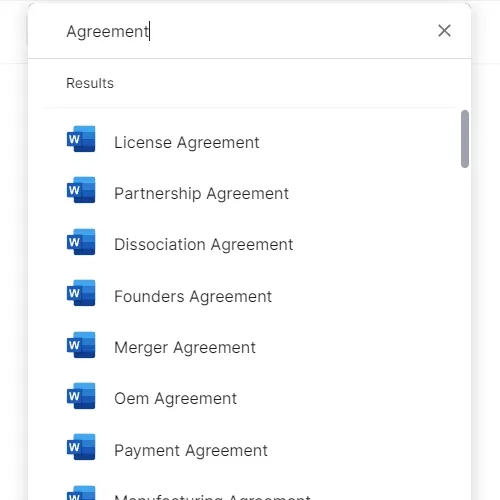
Access over 3,000+ business and legal templates for any business task, project or initiative.

2
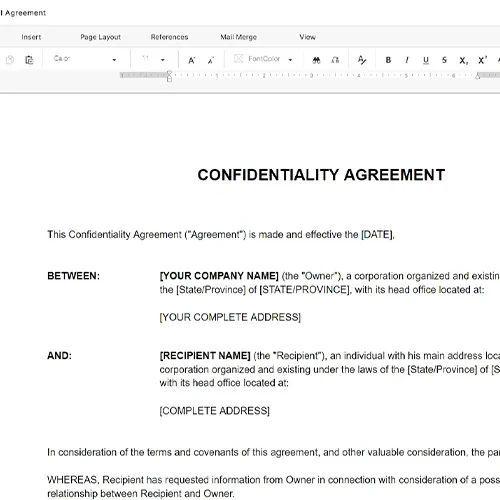
Edit and fill in the blanks with AI

Customize your ready-made business document template and save it in the cloud.

3
Save, Share, Send, Sign

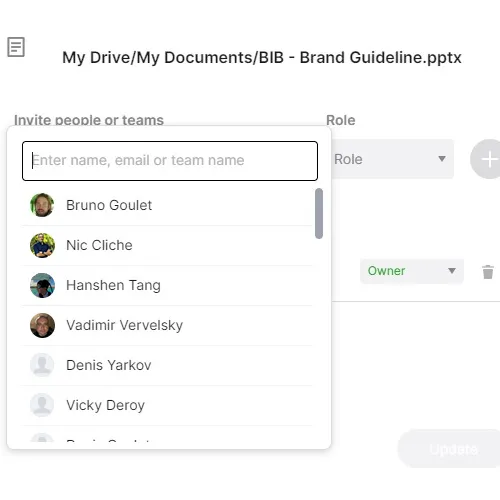
Share your files and folders with your team. Create a space of seamless collaboration.

Save time, save money, and create top-quality documents.

β˜…β˜…β˜…β˜…β˜…

"Fantastic value! I'm not sure how I'd do without it. It's worth its weight in gold and paid back for itself many times."

Managing Director Β· Mall Farm
Robert Whalley
Managing Director, Mall Farm Proprietary Limited
β˜…β˜…β˜…β˜…β˜…

"I have been using Business in a Box for years. It has been the most useful source of templates I have encountered. I recommend it to anyone."

Business Owner Β· 4+ years
Dr Michael John Freestone
Business Owner
β˜…β˜…β˜…β˜…β˜…

"It has been a life saver so many times I have lost count. Business in a Box has saved me so much time and as you know, time is money."

Owner Β· Upstate Web
David G. Moore Jr.
Owner, Upstate Web

Run your business with a system β€” not scattered tools

Stop downloading documents. Start operating with clarity. Business in a Box gives you the Business Operating System used by over 250,000 companies worldwide to structure, run, and grow their business.

Free Forever PlanΒ Β·Β No credit card required