Letter Of Rejection For Job Applicant Template

Free Word download β€’ Edit online β€’ Save & share with Drive β€’ Export to PDF

1 pageβ€’15–20 min to fillβ€’Difficulty: Standard
Learn more ↓
FreeLetter Of Rejection For Job Applicant Template

At a glance

What it is
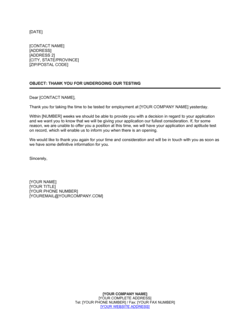
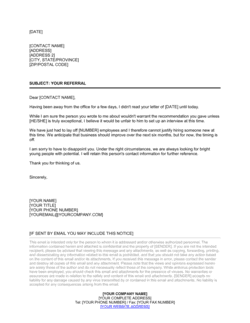
A Letter of Rejection for Job Applicant is a formal written notice an employer sends to a candidate who will not be moving forward in the hiring process. This free Word download gives you a ready-to-edit template you can personalize with the candidate's name, position title, and a brief closing note, then send by email or post in under five minutes.
When you need it
Use it after reviewing applications, completing phone screens, or finishing in-person or panel interviews whenever you need to formally close the loop with a candidate you will not be hiring. Sending a rejection letter promptly keeps your talent pipeline respectful and protects your employer brand.
What's inside
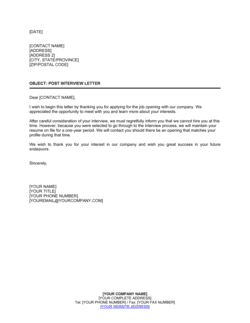
Employer contact details, candidate name and address, a clear statement that the role has been filled or the application will not proceed, an optional brief reason or encouraging close, and a professional sign-off from the hiring manager or HR contact.

What is a Letter of Rejection for Job Applicant?

A Letter of Rejection for Job Applicant is a formal written notice an employer sends to a candidate to communicate that they have not been selected for a role. It closes the candidate's application professionally, confirms the hiring decision is final, and gives the applicant the clarity they need to continue their job search. The letter typically runs three to five short paragraphs β€” acknowledging the candidate's effort, stating the decision plainly, offering an optional brief explanation, and closing with a professional well-wish.

Why You Need This Document

Failing to send rejection letters β€” or sending them poorly β€” has real costs. Candidates who are ghosted after interviews leave negative reviews on platforms like Glassdoor and LinkedIn, directly affecting your ability to attract future talent. Vague or promise-laden rejection language, such as "we'll keep your resume on file," generates follow-up calls for months and raises false expectations. In cases where a hiring decision was influenced by a background check, some jurisdictions require a formal written notice by law. A consistent, professional rejection letter template protects your employer brand, keeps your talent pipeline clean, and ensures every candidate β€” whether they were a finalist or a first-round screen β€” walks away with a positive impression of your organization. This free Word template gives you the structure to do that in under five minutes per candidate.

Which variant fits your situation?

If your situation is…Use this template
Candidate applied but was not selected for an interviewApplication-Stage Rejection Letter
Candidate completed a phone or video screen but will not advancePost-Screen Rejection Letter
Candidate attended one or more interviews but was not selectedPost-Interview Rejection Letter
Finalist candidate who reached the offer stage but was passed overFinal-Round Rejection Letter
Internal employee who applied for a promotion or transferInternal Candidate Rejection Letter
Candidate rejected due to a role being cancelled or put on holdRole Withdrawal Notice to Applicants

Common mistakes to avoid

❌ Leaving candidates with no response at all

Why it matters: Ghosting applicants β€” especially those who interviewed β€” is one of the most damaging things a company can do to its employer brand. Candidates discuss it publicly on review sites like Glassdoor and LinkedIn.

Fix: Set a standard SLA: application-stage rejections within 2 weeks, post-interview rejections within 5 business days of the decision.
❌ Using vague language that leaves the decision unclear

Why it matters: Phrases like 'we are still evaluating candidates' or 'we will be in touch' do not constitute a rejection and force the candidate to remain in limbo.

Fix: Include one unambiguous sentence β€” 'we have decided not to move forward with your application' β€” so the candidate can close the loop and continue their search.

❌ Providing specific written feedback on why the candidate was rejected

Why it matters: Detailed written reasons citing specific weaknesses β€” 'your communication skills were below the level required' β€” can be used as evidence in discrimination or unfair hiring claims.

Fix: Keep written reasons high-level and consistent across all candidates for the same role. Offer specific feedback in a brief phone call if you choose to provide it at all.

❌ Sending the rejection from a no-reply email address

Why it matters: Candidates who receive a rejection from a no-reply address with no named sender perceive it as automated and dismissive β€” heightening negative sentiment toward the company.

Fix: Send from a real inbox associated with a named person in HR or recruiting, even if responses are monitored rather than actively managed.

The 8 key clauses, explained

Employer letterhead and date

In plain language: Identifies the sending organization and establishes when the letter was issued β€” important for any timeline disputes or follow-up correspondence.

Sample language
[COMPANY NAME] | [ADDRESS] | [CITY, STATE ZIP] | [DATE]

Common mistake: Omitting the date entirely. Without it, the candidate has no reference point for how long the decision took, and the employer has no documented timeline.

Candidate salutation

In plain language: Addresses the candidate by name β€” not 'Dear Applicant' β€” to establish a respectful, personalized tone.

Sample language
Dear [CANDIDATE FIRST NAME],

Common mistake: Using a generic salutation like 'To Whom It May Concern.' This signals the candidate was never treated as an individual and damages the employer's reputation.

Opening acknowledgment

In plain language: Thanks the candidate for their time, interest, and effort β€” acknowledging the application or interview specifically.

Sample language
Thank you for taking the time to apply for the [JOB TITLE] position at [COMPANY NAME] and for participating in our selection process.

Common mistake: Skipping the acknowledgment and opening directly with the rejection. It reads as abrupt and disrespectful, and candidates remember it.

Rejection statement

In plain language: Clearly and directly states that the candidate will not be moving forward β€” without being vague or leaving false hope.

Sample language
After careful consideration, we have decided to move forward with another candidate whose qualifications more closely match our current requirements for this role.

Common mistake: Using language like 'we will keep your file on hand' when you have no intention of doing so. Vague promises create false expectations and can generate follow-up calls for months.

Brief reason or context (optional)

In plain language: Provides a high-level, non-specific explanation for the decision β€” such as a high volume of qualified applicants or a closer skills match elsewhere. Keep this brief and avoid specifics that could be used in a discrimination claim.

Sample language
We received a large number of applications for this position, and the competition was exceptionally strong.

Common mistake: Providing overly specific feedback in a rejection letter β€” e.g., citing a specific skill gap or interview answer. Detailed written reasons can be used in legal challenges and are better delivered verbally if at all.

Encouragement or talent pool mention

In plain language: Optionally invites the candidate to apply for future openings or briefly affirms their qualifications β€” keeping the door open for the talent pipeline.

Sample language
We were impressed by your background and encourage you to apply for future openings at [COMPANY NAME] that align with your experience.

Common mistake: Including this paragraph for every candidate regardless of fit. Inviting an unqualified applicant to reapply wastes both parties' time and sets a false expectation.

Closing and well-wishes

In plain language: Ends the letter on a professional, positive note β€” wishing the candidate success in their search without being effusive.

Sample language
We wish you every success in your job search and future endeavors.

Common mistake: Ending too abruptly with no closing sentiment. Even a single sentence of goodwill meaningfully improves the candidate's impression of the company.

Sign-off and sender identification

In plain language: Identifies the sender by name and title β€” typically the HR manager, recruiter, or hiring manager β€” and includes contact information if the candidate has questions.

Sample language
Sincerely, [SENDER NAME] | [TITLE] | [COMPANY NAME] | [EMAIL ADDRESS]

Common mistake: Signing with only a department name like 'Human Resources Team.' A named contact makes the letter feel genuine and gives the candidate a real person to reference.

How to fill it out

  1. 1

    Enter your company letterhead details

    Add your company name, address, and the date of the letter at the top of the template. Confirm the date matches the day you plan to send, not the day you drafted it.

    πŸ’‘ Pre-save a version with your letterhead filled in so you only need to update the candidate details for each new letter.

  2. 2

    Personalize the salutation with the candidate's name

    Replace the placeholder with the candidate's first name β€” or full name if your company culture is more formal. Pull it directly from your ATS or application file.

    πŸ’‘ Double-check the spelling before sending β€” a misspelled name in a rejection letter is a memorable negative impression.

  3. 3

    Reference the specific role they applied for

    Insert the exact job title in the opening acknowledgment. If the candidate applied for multiple roles, specify which position this letter addresses.

    πŸ’‘ Candidates who applied to several companies appreciate the specificity β€” it confirms you actually know who they are.

  4. 4

    Write the rejection statement clearly

    Use direct language that makes the decision unambiguous. Avoid softening the message to the point where the candidate is uncertain whether they've been rejected.

    πŸ’‘ Read the rejection paragraph aloud β€” if it sounds like a 'maybe,' rewrite it until it clearly communicates 'no.'

  5. 5

    Decide whether to include a brief reason

    For high-volume application-stage rejections, a generic explanation is fine. For post-interview candidates, a brief, non-specific reason is more respectful. Avoid citing specific weaknesses in writing.

    πŸ’‘ If a candidate was borderline and you want to preserve the relationship, consider a brief phone call instead of written feedback.

  6. 6

    Choose whether to invite future applications

    Include the talent-pool paragraph only for candidates you genuinely want to hear from again. Remove it for candidates who were not competitive for the role.

    πŸ’‘ Add a tag or note in your ATS at the same time you send the letter so the pipeline record reflects your intent.

  7. 7

    Add the sender's name, title, and contact details

    Sign off with a real person's name and title. Include an email address if you are open to questions β€” or omit it if the decision is final and you prefer not to invite follow-up.

    πŸ’‘ Sending from a named individual rather than a generic HR address increases the open rate and reduces negative social media commentary.

Frequently asked questions

When should I send a rejection letter to a job applicant?

Send it as soon as the hiring decision is made and you have a confirmed offer accepted by another candidate. For application-stage candidates, within two weeks of the application closing date is standard. For interviewed candidates, within five business days of the final decision is considered respectful best practice. Delaying rejection notices unnecessarily prevents candidates from pursuing other opportunities.

Should a rejection letter explain why the candidate was not selected?

Brief, non-specific reasons β€” such as a strong applicant pool or a closer skills match β€” are appropriate and professionally courteous. Specific written feedback citing particular weaknesses or interview performance should be avoided in the letter itself, as it can be used in legal challenges. If a candidate requests detailed feedback, deliver it by phone rather than in writing.

Is it legally required to send a rejection letter to every applicant?

In most jurisdictions, there is no legal requirement to send a written rejection letter to every applicant. However, if an employment decision was based on a background check in the US, the Fair Credit Reporting Act requires a separate adverse action notice. Some large employers and government contractors follow stricter documentation practices. Regardless of legal requirements, sending rejection letters is widely considered professional best practice.

What should I avoid saying in a rejection letter?

Avoid referencing any protected characteristic β€” age, gender, race, religion, disability, national origin, or marital status β€” even indirectly. Do not cite specific interview answers or skill gaps in writing. Avoid vague language that could be interpreted as a conditional rejection. Do not make promises about future openings unless you genuinely intend to follow through.

Can I use the same rejection letter for all candidates?

A standardized template is appropriate for high-volume application-stage rejections, where personalization beyond the candidate's name and role title is impractical. For candidates who interviewed, a slightly personalized version β€” acknowledging the specific stage they reached β€” is more respectful. Using identical language for every candidate regardless of stage can feel impersonal and damage your employer brand.

How long should a job applicant rejection letter be?

One page or less β€” typically three to five short paragraphs. The letter should be long enough to be respectful and clear, but not so detailed that it introduces legal risk or invites debate. A well-structured rejection letter rarely needs to exceed 150 words.

Should I call a candidate before sending a rejection letter?

For finalist candidates who reached the final round or received a verbal offer, a phone call before the written letter is considerate and professional. For candidates who interviewed once or twice, a letter alone is generally sufficient. For application-stage candidates, a letter is the standard and expected form of communication.

How this compares to alternatives

vs Job Offer Letter

A job offer letter is sent to the selected candidate and initiates the employment relationship by confirming the role, compensation, and start date. A rejection letter closes the hiring process for all other candidates. Both should be sent promptly after a hiring decision is made β€” the offer first, then rejections once the offer is accepted.

vs Employee Dismissal Letter

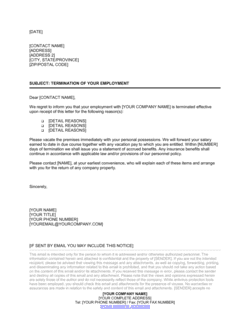
A dismissal letter terminates an existing employment relationship and carries significant legal implications, including notice periods and potential severance. A rejection letter is issued before any employment relationship begins and carries no such obligations. They serve opposite ends of the employment lifecycle and require very different tones and legal considerations.

vs Employment Application Form

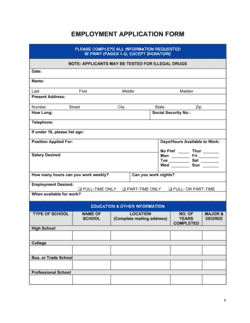
An employment application form collects candidate information at the start of the hiring process. A rejection letter formally closes that process for candidates who were not selected. Together, they bookend the applicant's experience β€” the application opens the door; the rejection letter closes it.

vs Reference Check Form

A reference check form is used mid-process to verify a candidate's background and qualifications before making a final decision. A rejection letter is issued after the decision is made. Completing reference checks before sending rejection letters to all other candidates ensures the offer is secure before closing the pipeline.

Industry-specific considerations

Technology / SaaS

High application volumes for engineering and product roles make templated rejection letters essential for maintaining response rates without overburdening recruiters.

Professional Services

Client-facing firms β€” law, consulting, accounting β€” use polished rejection letters to protect a reputation built on professionalism at every touchpoint, including hiring.

Retail / Hospitality

Seasonal hiring cycles generate large applicant pools quickly; a streamlined rejection template allows high-volume close-outs without individual composition.

Healthcare

Credentialing requirements mean many candidates are screened out early; prompt, respectful rejection letters preserve the talent pipeline for hard-to-fill clinical roles.

Template vs pro β€” what fits your needs?

PathBest forCostTime
Use the templateAny employer sending standard post-application or post-interview rejections for non-executive rolesFree5 minutes per letter
Template + professional reviewEmployers rejecting candidates in sensitive situations β€” background check denials, roles with BFOQ considerations, or positions in heavily regulated industries$100–$300 (HR consultant or employment counsel review)1–2 business days
Custom draftedEmployers rejecting a finalist who received a verbal offer or who may have grounds for a discrimination claim$300–$800 (employment lawyer)2–5 business days

Glossary

Applicant Tracking System (ATS)
Software that manages job postings, receives applications, and tracks candidates through each stage of the hiring pipeline.
Talent Pipeline
A pool of pre-screened or previously interviewed candidates an employer may contact for future openings.
Employer Brand
The reputation and perception a company has as a place to work, shaped partly by how it treats candidates during and after the hiring process.
Adverse Action Notice
A legally required notice in some US jurisdictions when an employment decision is based on a background check, informing the applicant of the decision and their rights.
Form Letter
A standardized letter sent to multiple recipients with only minor personalizations β€” common for high-volume application-stage rejections.
Bona Fide Occupational Qualification (BFOQ)
A legally recognized job requirement that would otherwise appear discriminatory but is genuinely necessary for the role β€” must be documented carefully when referenced in rejection decisions.
Candidate Experience
The overall impression a job seeker forms of a company based on every interaction during the recruitment process, including how and when they are rejected.
At-Will Employment
Employment that can be ended by either party at any time; the concept also applies in pre-hire decisions, meaning employers generally may decline any applicant for any lawful reason.

Part of your Business Operating System

This document is one of 3,000+ business & legal templates included in Business in a Box.

  • Fill-in-the-blanks β€” ready in minutes
  • 100% customizable Word document
  • Compatible with all office suites
  • Export to PDF and share electronically

Create your document in 3 simple steps.

From template to signed document β€” all inside one Business Operating System.
1
Download or open template

Access over 3,000+ business and legal templates for any business task, project or initiative.

2
Edit and fill in the blanks with AI

Customize your ready-made business document template and save it in the cloud.

3
Save, Share, Send, Sign

Share your files and folders with your team. Create a space of seamless collaboration.

Save time, save money, and create top-quality documents.

β˜…β˜…β˜…β˜…β˜…

"Fantastic value! I'm not sure how I'd do without it. It's worth its weight in gold and paid back for itself many times."

Managing Director Β· Mall Farm
Robert Whalley
Managing Director, Mall Farm Proprietary Limited
β˜…β˜…β˜…β˜…β˜…

"I have been using Business in a Box for years. It has been the most useful source of templates I have encountered. I recommend it to anyone."

Business Owner Β· 4+ years
Dr Michael John Freestone
Business Owner
β˜…β˜…β˜…β˜…β˜…

"It has been a life saver so many times I have lost count. Business in a Box has saved me so much time and as you know, time is money."

Owner Β· Upstate Web
David G. Moore Jr.
Owner, Upstate Web

Run your business with a system β€” not scattered tools

Stop downloading documents. Start operating with clarity. Business in a Box gives you the Business Operating System used by over 250,000 companies worldwide to structure, run, and grow their business.

Free Forever PlanΒ Β·Β No credit card required