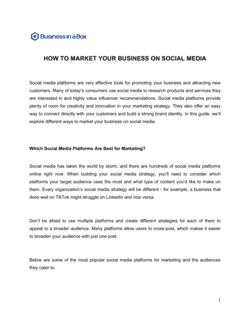
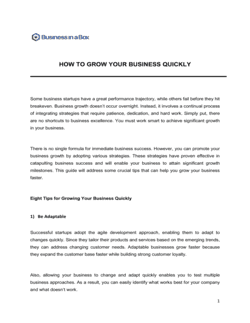
How To Use Social Media To Grow Your Business

Free to read β€’ Save or share with one click

FreeHow To Use Social Media To Grow Your Business Template

At a glance

What it is
How To Use Social Media To Grow Your Business is a structured operational guide that walks small business owners and marketing teams through every stage of building a results-driven social media presence β€” from defining goals and choosing platforms to creating content, engaging audiences, and measuring ROI. This free Word download gives you a ready-to-edit framework you can customize for your brand and export as PDF to share with your team.
When you need it
Use it when launching a new brand on social media, overhauling an inconsistent presence, or preparing a structured plan to justify social media investment to stakeholders. It is equally useful for onboarding a new marketing hire or agency partner who needs to understand your approach.
What's inside
Business goals and social media objectives, platform selection rationale, audience and persona definitions, content pillars and posting cadence, community engagement protocols, paid amplification guidelines, and a performance metrics framework tied to measurable KPIs.

What is a How To Use Social Media To Grow Your Business guide?

A How To Use Social Media To Grow Your Business guide is a structured operational document that translates a business's goals into a platform-specific social media strategy β€” covering audience targeting, content planning, community engagement, paid amplification, and performance measurement in a single reference. Unlike a general marketing plan, it focuses exclusively on the mechanics of social media: which platforms to prioritize, what content themes to publish, how often to post, how to respond to your audience, and which metrics prove the effort is working. This free Word download gives business owners and marketing teams a ready-to-edit framework they can complete in an afternoon and put into action immediately.

Why You Need This Document

Without a written social media strategy, most businesses waste hours on content that produces no measurable business outcome β€” posting inconsistently, spreading effort across too many platforms, and measuring follower growth instead of revenue impact. The absence of defined content pillars means every post starts from a blank page; the absence of engagement protocols means customer messages go unanswered; the absence of a metrics framework means there is no basis for deciding what to do more of or less of. This guide forces every tactical decision β€” platform, format, cadence, budget β€” to connect back to a stated business goal, turning social media from a time sink into a trackable growth channel. For any business allocating staff time or ad spend to social media, a completed strategy document is the difference between activity and results.

Which variant fits your situation?

If your situation is…Use this template
Planning all marketing channels, not just social mediaMarketing Plan
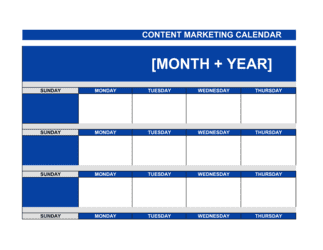
Focusing exclusively on content creation and editorial schedulingContent Marketing Plan
Running a specific paid social or digital advertising campaignDigital Marketing Plan
Launching a new product and need a channel-specific go-to-market planProduct Launch Plan
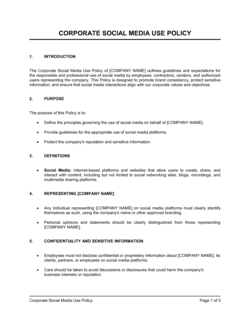
Managing brand reputation and responding to online commentarySocial Media Policy
Tracking weekly or monthly social media performance for reportingMarketing Report
Planning influencer partnerships alongside organic social effortsInfluencer Marketing Agreement

Common mistakes to avoid

❌ Publishing on every platform at launch

Why it matters: Spreading effort across five platforms simultaneously means no single channel gets enough consistent content to build algorithmic momentum or audience trust.

Fix: Commit to one or two platforms for the first 90 days. Expand only after establishing a repeatable content process and measurable traction on the initial channels.

❌ Setting follower-count goals instead of business-outcome goals

Why it matters: A large following that does not convert to leads, traffic, or sales does not justify the time and budget invested in growing it.

Fix: Tie every social media goal to a downstream business metric β€” website visits, email sign-ups, or revenue β€” and track the conversion path explicitly.

❌ Posting without a content calendar

Why it matters: Ad hoc posting produces inconsistent frequency and topic mix, trains the algorithm to deprioritize your content, and burns team time on last-minute production.

Fix: Build a 30-day calendar before publishing a single post. Plan topics, formats, and publish times in advance, and batch-produce content at least one week ahead.

❌ Ignoring comments and DMs for more than 24 hours

Why it matters: Most platforms reduce the reach of posts that generate comments without responses. Unanswered messages also damage customer perception and reduce the likelihood of repeat engagement.

Fix: Set a daily 15-minute window dedicated to responding to all inbound comments and messages. Use saved replies for common questions to reduce the time required.

❌ Boosting posts without defined targeting or a conversion goal

Why it matters: Undirected ad spend generates impressions from the wrong audience and produces no measurable return, making it impossible to evaluate whether paid amplification is working.

Fix: Before boosting any post, define the target audience parameters, the daily budget, the campaign duration, and the specific action you want the viewer to take.

❌ Measuring every available metric instead of two or three core KPIs

Why it matters: Reporting on reach, impressions, follower growth, saves, shares, story views, and link clicks simultaneously obscures whether you are moving toward your actual business goal.

Fix: Identify the two or three metrics most directly tied to your stated business objective and report only on those in your weekly review. Add secondary metrics only once the primary ones are green.

The 8 key sections, explained

Business goals and social media objectives

Platform selection and rationale

Audience and persona definitions

Content pillars and formats

Content calendar and posting cadence

Community engagement protocols

Paid amplification strategy

Performance metrics and reporting cadence

How to fill it out

  1. 1

    Define your top-level business goal first

    Before touching any social media tactic, write down one specific, measurable business outcome you want social media to support β€” lead generation, e-commerce revenue, or brand awareness with a numeric target.

    πŸ’‘ A single focused goal produces better results than three competing priorities. You can add a second goal in the next planning cycle.

  2. 2

    Choose one or two platforms based on audience data

    Research which platforms your specific target customer uses most. Use platform demographic reports and, if available, Google Analytics referral data to confirm where your existing traffic already comes from.

    πŸ’‘ If you have no existing data, start with the platform where your three closest competitors have the most active engagement β€” not the most followers.

  3. 3

    Build audience personas from real customer interviews

    Interview five to ten existing customers about their content consumption habits, preferred platforms, and what problems they search for solutions to. Summarize each interview into a one-page persona profile.

    πŸ’‘ Ask customers which accounts they already follow for inspiration in your category β€” this reveals competitors and content formats you should study.

  4. 4

    Define three to five content pillars

    Choose recurring themes that balance your business goals with genuine audience value. A typical mix: one educational pillar, one social-proof pillar, one brand personality pillar, and one direct-offer pillar.

    πŸ’‘ The 80/20 rule applies here β€” roughly 80% of posts should provide value without a sales message; 20% can promote directly.

  5. 5

    Build a 30-day content calendar

    Map specific post topics, formats, and platforms to each day for the next 30 days. Assign each post to a content pillar so you can see the balance at a glance.

    πŸ’‘ Batch-create content one week at a time rather than daily β€” this reduces context-switching and improves consistency.

  6. 6

    Set engagement response standards

    Write down a response time target (e.g., within 2 hours on weekdays), a tone guide (two to three adjectives that describe how your brand sounds), and an escalation path for complaints or sensitive topics.

    πŸ’‘ Pre-write five to ten response templates for the most common comment types. This cuts response time and keeps tone consistent across team members.

  7. 7

    Define your paid amplification triggers and budget

    Decide in advance which posts will be boosted and at what budget. Set a clear performance threshold β€” for example, boost any post that exceeds your average engagement rate by 50% within the first 6 hours.

    πŸ’‘ Start with a small daily budget ($5–$10) on one high-performing organic post before committing to a broader paid strategy.

  8. 8

    Schedule a weekly metrics review

    Block 30 minutes each week to review your two or three core KPIs against targets. Note what content over- or underperformed and carry one actionable change into the following week's plan.

    πŸ’‘ Keep a running log of your top five posts by engagement each month β€” patterns in this list are the most reliable signal for what to create more of.

Frequently asked questions

How do I use social media to grow my business?

Start by defining a specific business goal β€” lead generation, e-commerce revenue, or brand awareness β€” then choose one or two platforms where your target customers are most active. Build a content plan around three to five recurring themes that balance audience value with your business objectives. Post consistently, respond to every comment and message, and review your two or three core KPIs weekly. Adjust your content mix based on what the data shows is driving clicks, leads, or sales β€” not just likes.

Which social media platform is best for growing a small business?

It depends on your target customer. Instagram and Facebook are most effective for B2C brands targeting consumers aged 25–54. LinkedIn works best for B2B companies selling to professionals or businesses. TikTok reaches younger demographics and rewards high-frequency short-form video. Pinterest drives strong results for visual product categories like home, fashion, and food. Start with one platform where your existing customers are already active rather than the one with the largest overall user base.

How often should a business post on social media?

Consistency matters more than frequency. For most small businesses, three to five posts per week on Instagram or Facebook and two to three on LinkedIn produces better results than daily posting that depletes content quality. Platform algorithms reward consistent engagement signals over raw volume. Establish a cadence you can sustain for 12 weeks before considering an increase.

What kind of content gets the most engagement for small businesses?

Educational content that solves a specific customer problem, behind-the- scenes content that humanizes the brand, and customer success stories consistently outperform promotional posts. Short-form video β€” Reels, TikToks, and YouTube Shorts β€” currently receives the highest organic reach across most platforms. Carousel posts perform well on Instagram and LinkedIn for step-by-step educational content. Test two to three formats in the first 60 days and double down on whichever drives the most saves and shares.

How do I measure whether social media is growing my business?

Track the metrics that connect directly to your business goal. For lead generation, measure clicks to your website, form completions, and cost per lead from paid posts. For e-commerce, track revenue attributed to social referral traffic using UTM parameters in Google Analytics. For brand awareness, track reach and follower growth rate month over month. Avoid reporting on vanity metrics β€” likes and impressions β€” unless they are directly correlated to a downstream conversion in your data.

Should I use paid social media advertising or focus on organic first?

Build organic content first for at least 60 days before investing in paid amplification. Organic content reveals which topics and formats resonate with your audience at zero cost. Once you identify posts that significantly outperform your average engagement rate, boost them with a small daily budget ($5–$20) to extend reach to a defined target audience. Paid advertising without an organic proof of concept wastes budget on untested messaging.

How long does it take to see business results from social media?

Organic social media typically requires 90 to 180 days of consistent effort before producing measurable business results β€” traffic, leads, or sales. Algorithmic momentum builds slowly; accounts that post consistently for three months and engage actively with their audience see compounding returns from Month 4 onward. Paid campaigns can generate results within days but stop the moment budget runs out. Plan for a 6-month horizon when evaluating organic ROI.

Do I need a social media strategy document, or can I just post?

Posting without a strategy document produces inconsistent results and makes it impossible to improve systematically. A written strategy forces you to define your audience, content themes, posting cadence, and success metrics before you spend time creating content. It also serves as an onboarding document for any team member, contractor, or agency who takes over execution β€” ensuring brand voice and priorities are followed without constant supervision.

What is a content pillar and how many should I have?

A content pillar is a recurring theme that anchors a portion of your social media content β€” for example, educational tips, customer stories, or product demonstrations. Three to five pillars is the right range for most small businesses. Fewer than three creates a monotonous feed; more than five dilutes focus and makes planning harder. Each pillar should connect to a specific audience need and support at least one of your stated business goals.

How this compares to alternatives

vs Marketing Plan

A marketing plan covers all customer acquisition and retention channels β€” SEO, email, events, paid search, and social β€” with budget allocation across each. A social media growth guide focuses exclusively on social platforms, content strategy, and community management. Use the marketing plan as the strategic umbrella and this guide as the execution-level document for the social media channel within it.

vs Content Marketing Plan

A content marketing plan governs all content types β€” blog posts, white papers, video, email newsletters, and social β€” and their role in the broader buyer journey. A social media growth guide is narrower, focused on platform selection, content cadence, community engagement, and platform-specific KPIs. If your primary content channel is social media, this guide is more actionable; if you run a multi-channel content program, you need both.

vs Digital Marketing Plan

A digital marketing plan spans all digital channels including paid search, display advertising, SEO, and email alongside social media. A social media growth guide is limited to earned and paid social channels. For businesses whose primary growth channel is social, this guide provides greater depth; for businesses running integrated digital campaigns, the digital marketing plan provides the broader strategic framework.

vs Marketing Report

A marketing report is a retrospective document that records what happened β€” traffic, conversions, campaign results β€” over a completed period. A social media growth guide is a forward-looking operational plan that defines what you intend to do and how you will measure success. The guide informs the metrics you track in the report; the report validates or refines the assumptions in the guide.

Industry-specific considerations

Retail and e-commerce

Product discovery through shoppable posts, user-generated content reposts, and seasonal campaign planning tied directly to sales events.

Professional services

Thought leadership content on LinkedIn, client case study posts, and educational short-form video to build credibility and generate inbound inquiries.

Food and beverage

Visual-first content on Instagram and TikTok, behind-the-scenes kitchen or production content, and location-tagged posts to drive foot traffic.

SaaS and technology

Tutorial and how-to video content, product update announcements, community building in LinkedIn groups or Twitter/X threads, and developer-focused content on GitHub and YouTube.

Template vs pro β€” what fits your needs?

PathBest forCostTime
Use the templateSmall business owners and marketing coordinators building or restructuring a social media presence without an agencyFree2–4 hours to complete the template; 90 days to see initial results
Template + professional reviewBusinesses with a modest paid social budget who want a consultant to validate platform selection and content strategy before committing resources$500–$2,000 for a social media strategist review session1–2 weeks
Custom draftedMid-size brands with significant paid social budgets, multi-platform presence, and a need for a fully integrated strategy tied to CRM and attribution tracking$3,000–$10,000+ for a full agency strategy engagement4–8 weeks

Glossary

Content Pillar
A core theme or topic category that anchors all content planned for a channel β€” for example, educational tips, behind-the-scenes, or customer stories.
Reach
The total number of unique accounts that saw a piece of content during a given period, regardless of how many times they saw it.
Engagement Rate
The percentage of people who interacted with a post (likes, comments, shares, saves) relative to the total reach or follower count.
Content Cadence
The planned frequency and rhythm at which content is published on each platform β€” for example, five posts per week on Instagram and two on LinkedIn.
Organic Reach
The number of people who see content without any paid distribution β€” driven by the platform algorithm, shares, and follower activity.
Paid Amplification
Spending money to promote content or run ads on a platform in order to extend reach beyond the existing organic audience.
Social Listening
The practice of monitoring platforms for mentions of your brand, competitors, or relevant keywords to inform content and response strategy.
Buyer Persona
A semi-fictional profile of an ideal customer built from demographic data, behavioral patterns, and stated goals β€” used to guide content tone and topic selection.
CTR (Click-Through Rate)
The percentage of people who clicked a link in a post or ad relative to the number of people who saw it.
Content Calendar
A scheduling tool β€” typically a spreadsheet or project management board β€” that maps planned content to specific publish dates, platforms, and formats.
Algorithm
The platform's automated system for deciding which content to show to which users, based on signals like engagement, recency, and user behavior.
Conversion
A desired action taken by a social media user as a direct result of encountering your content β€” such as signing up for a newsletter, requesting a demo, or making a purchase.

Part of your Business Operating System

This document is one of 3,000+ business & legal templates included in Business in a Box.

  • Fill-in-the-blanks β€” ready in minutes
  • Compatible with all office suites
  • Export to PDF and share electronically

Create your document in 3 simple steps.

From template to signed document β€” all inside one Business Operating System.
1
Download or open template

Access over 3,000+ business and legal templates for any business task, project or initiative.

2
Edit and fill in the blanks with AI

Customize your ready-made business document template and save it in the cloud.

3
Save, Share, Send, Sign

Share your files and folders with your team. Create a space of seamless collaboration.

Save time, save money, and create top-quality documents.

β˜…β˜…β˜…β˜…β˜…

"Fantastic value! I'm not sure how I'd do without it. It's worth its weight in gold and paid back for itself many times."

Managing Director Β· Mall Farm
Robert Whalley
Managing Director, Mall Farm Proprietary Limited
β˜…β˜…β˜…β˜…β˜…

"I have been using Business in a Box for years. It has been the most useful source of templates I have encountered. I recommend it to anyone."

Business Owner Β· 4+ years
Dr Michael John Freestone
Business Owner
β˜…β˜…β˜…β˜…β˜…

"It has been a life saver so many times I have lost count. Business in a Box has saved me so much time and as you know, time is money."

Owner Β· Upstate Web
David G. Moore Jr.
Owner, Upstate Web

Run your business with a system β€” not scattered tools

Stop downloading documents. Start operating with clarity. Business in a Box gives you the Business Operating System used by over 250,000 companies worldwide to structure, run, and grow their business.

Free Forever PlanΒ Β·Β No credit card required