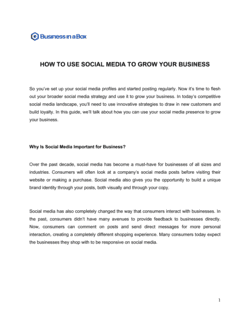
How To Market Your Business On Social Media

Free to read β€’ Save or share with one click

FreeHow To Market Your Business On Social Media Template

At a glance

What it is
This How To Market Your Business On Social Media template is a structured Word document that walks small business owners and marketing teams through every step of building and executing a social media marketing strategy. It covers platform selection, audience definition, content planning, posting schedules, paid advertising basics, and performance measurement in a single free download you can edit online and adapt to any industry.
When you need it
Use it when launching a new business or brand presence on social media, when an existing social effort is producing inconsistent results, or when you need to hand off social media responsibilities to a team member or agency and want a documented operating standard.
What's inside
Business and audience overview, platform selection rationale, content strategy and content pillars, posting schedule and channel cadence, community engagement guidelines, paid advertising framework, influencer and partnership considerations, and KPI tracking with reporting cadence.

What is How To Market Your Business On Social Media?

How To Market Your Business On Social Media is a structured operational guide that walks business owners and marketing teams through the complete process of building, executing, and measuring a social media marketing strategy. It documents platform selection rationale, audience definition, content pillars, posting cadence, community engagement rules, paid advertising parameters, and KPI tracking in a single editable Word template. Unlike a generic checklist, this guide produces a repeatable operating standard β€” one that can be handed to a new team member, a freelance social media manager, or an agency without losing strategic continuity.

Why You Need This Document

Without a written social media strategy, posting becomes reactive and inconsistent β€” content goes out when someone finds time, not when the audience is most active or when the business has something meaningful to say. The cost shows up in metrics: engagement rates below 0.5%, ad budgets spent on untargeted audiences, and social channels that generate impressions but no website traffic or leads. A documented guide forces the upfront decisions that determine whether social media works β€” which platforms to prioritize, what content to create, who approves it, and how success is measured. It also protects the business when team members change, ensuring institutional knowledge about what works stays in the document rather than walking out the door. This template gives you the structure to make those decisions once and execute consistently.

Which variant fits your situation?

If your situation is…Use this template
Building a full multi-channel marketing plan beyond socialMarketing Plan
Planning and scheduling content across channels for the month aheadSocial Media Content Calendar
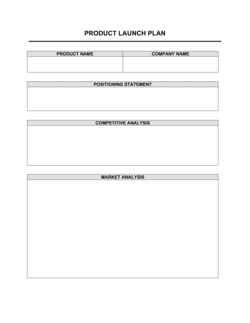
Launching a specific product or promotion on social mediaProduct Launch Plan
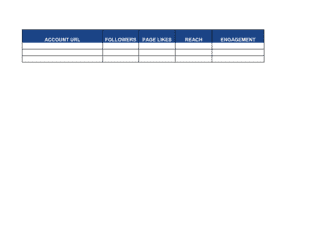
Tracking social media KPIs on an ongoing basisSocial Media Report
Documenting brand voice, tone, and visual guidelinesBrand Style Guide
Planning a paid digital advertising campaignDigital Marketing Plan
Writing copy for individual social media postsSocial Media Post Templates

Common mistakes to avoid

❌ Targeting all demographics on every platform

Why it matters: Algorithms reward relevance β€” content aimed at everyone signals relevance to no one and gets suppressed in favor of more targeted accounts.

Fix: Pick one primary audience segment per platform and create every post for that specific person. Expand segments only after the core audience is engaged.

❌ Posting without a content calendar

Why it matters: Ad hoc posting produces inconsistent cadence and off-brand content, and makes it impossible to plan campaigns around product launches or seasonal events.

Fix: Build a 4-week rolling content calendar with dates, platforms, formats, and captions β€” review it every Friday and fill the following week before publishing anything.

❌ Measuring only follower count and likes

Why it matters: Follower count and likes are easily gamed and do not correlate reliably with revenue. A business can have 10,000 followers and generate zero leads from social.

Fix: Add UTM parameters to every social link and track website sessions, lead form completions, and purchases attributed to each platform in Google Analytics.

❌ Skipping FTC disclosure on sponsored content and partnerships

Why it matters: The FTC requires clear disclosure of any material connection β€” including free product, payment, or affiliate commission β€” regardless of whether the brand or the influencer publishes the post.

Fix: Include a written disclosure requirement in every influencer or affiliate agreement, and review partner posts before they go live when possible.

❌ Abandoning the strategy after 30 days of low growth

Why it matters: Organic social reach typically takes 90–180 days of consistent activity before the algorithm distributes content to non-followers at meaningful scale.

Fix: Commit to a 90-day minimum before evaluating organic performance. Use the first 30 days to refine content format and voice based on early engagement signals.

❌ Ignoring comments and direct messages

Why it matters: Platforms penalize accounts with low response rates by reducing organic reach β€” and unanswered customer questions convert to lost sales and public complaints.

Fix: Set a 24-hour response target for all comments and DMs during business hours. Use saved replies for common questions to reduce the time cost.

The 9 key sections, explained

Business and audience overview

Platform selection and rationale

Content pillars and brand voice

Posting schedule and cadence

Content creation and sourcing workflow

Community engagement guidelines

Paid advertising framework

Influencer and partnership considerations

KPIs, measurement, and reporting cadence

How to fill it out

  1. 1

    Define your audience before choosing platforms

    Complete the business and audience overview section first. Write down the age range, location, interests, and pain points of your primary customer segment. This profile drives every other decision in the document.

    πŸ’‘ Pull real data from your existing customer list or Google Analytics demographics rather than guessing β€” even 20 existing customers reveal a pattern.

  2. 2

    Select two or three platforms and state your rationale

    Match your audience profile to platform demographics. Instagram and TikTok skew under-35; LinkedIn is dominant for B2B; Facebook still leads for 35–55 local service audiences. Document why you chose each and why you're deferring others.

    πŸ’‘ Committing to two platforms done well outperforms six platforms done poorly. Pick fewer than you think you need.

  3. 3

    Define your content pillars and brand voice

    Choose 3–5 recurring content themes that serve your audience and support a business goal. Write three adjectives that describe your brand voice, and list three things your brand would never say or post.

    πŸ’‘ Test your content pillars against this question: 'Would my target customer save or share this?' If the answer is no, replace the pillar.

  4. 4

    Set a realistic posting schedule

    Determine how many posts per week you can sustain with the content team and budget you actually have today β€” not the ideal future state. Assign specific days, times, and formats for each platform.

    πŸ’‘ Three high-quality posts per week consistently beats seven rushed posts. Set a cadence you can hold for 90 days without burning out.

  5. 5

    Document the content creation and approval workflow

    Assign a named owner for drafting, a named reviewer for approval, and a deadline for each. List the tools used for design and scheduling. Specify how you will source images, video, and UGC.

    πŸ’‘ Batch-create content for the next two weeks every Friday β€” it reduces last-minute publishing and gives the approval step enough time to catch errors.

  6. 6

    Write the community engagement rules

    Set a response time target for comments and DMs. Write a one-paragraph escalation protocol for complaints or negative reviews. Define what content you will and will not delete.

    πŸ’‘ A public, polite response to a negative comment converts more skeptical viewers than 10 positive posts β€” handle criticism visibly and professionally.

  7. 7

    Set your KPIs and reporting cadence

    Choose 3–5 metrics per platform that connect social activity to a business outcome β€” website clicks, leads generated, or revenue from social traffic. Set a monthly review date and name who owns the report.

    πŸ’‘ Tie at least one KPI directly to revenue or lead generation. Engagement-only metrics do not tell you whether social media is working for the business.

  8. 8

    Review and update the strategy quarterly

    Schedule a 60-minute strategy review every quarter to compare actuals against targets, update platform priorities if audience data has shifted, and refresh content pillars based on what performed best.

    πŸ’‘ Pull the top-five and bottom-five performing posts from the quarter and look for the pattern β€” the top five tell you what to do more of.

Frequently asked questions

How should a small business start marketing on social media?

Start by defining your target audience and selecting one or two platforms where that audience is most active β€” do not try to be everywhere at once. Build a simple content plan with 3–5 recurring themes, set a posting schedule you can maintain for at least 90 days, and track a small number of metrics tied to business outcomes. Consistency and audience focus matter far more than posting frequency in the first six months.

Which social media platforms are best for small businesses?

It depends on your audience. Instagram and TikTok perform well for consumer brands targeting under-35 demographics with visual products. Facebook remains the strongest platform for local service businesses targeting the 35–55 age range. LinkedIn is the dominant channel for B2B companies selling to professionals and decision-makers. Pinterest works well for home, fashion, food, and lifestyle products. Choose based on where your customers already spend time, not where competitors are.

How often should a business post on social media?

For most small businesses, 3–5 posts per week on a primary platform and 2–3 on a secondary platform is a sustainable and effective cadence. Posting daily is beneficial only if content quality stays high β€” low-quality daily posts hurt engagement rates and signal to the algorithm that your content is not worth distributing. Quality and consistency outperform raw volume at every stage of audience growth.

What is the difference between organic and paid social media?

Organic social media is content you post without paying for distribution β€” its reach depends on your follower count and how the platform algorithm rates your content. Paid social is advertising spend that distributes content to a defined audience beyond your followers, with targeting options by age, location, interest, and behavior. Most effective strategies combine both: organic builds brand trust and community, paid accelerates reach for specific campaigns and offers.

How do you measure whether social media marketing is working?

Track metrics that connect to business outcomes, not just engagement. Install UTM parameters on every social link and measure website sessions, lead form completions, and purchases attributed to social in Google Analytics. Platform-level metrics to monitor include engagement rate (target 1–3% on Instagram and Facebook), click-through rate on paid ads, and follower growth rate month over month. Review these monthly and adjust strategy quarterly based on trends.

How much should a small business spend on social media advertising?

A reasonable starting budget for paid social is $300–$500 per month per platform, which is enough to test two or three campaign types and gather statistically meaningful performance data. Start with one platform, one objective (traffic or conversions), and one audience segment. Scale spend only after identifying an ad format and audience combination that delivers a cost-per-click or cost-per-lead you can sustain profitably.

Do you need a social media strategy document, or is it enough to just post?

A documented strategy is essential once more than one person is involved in social media, when you are spending any budget on paid promotion, or when social media is a meaningful customer acquisition channel. Without a written strategy, content quality becomes inconsistent, KPIs are never agreed upon, and it is impossible to evaluate whether the investment is generating a return. A one-page plan is sufficient for solo operators; growing teams need a full documented framework.

What content performs best on social media for businesses?

Short-form video consistently outperforms static images on most platforms as of 2024–2025, particularly on TikTok, Instagram Reels, and YouTube Shorts. Educational content that solves a specific problem for your audience tends to generate high saves and shares, which the algorithm interprets as high-value. Behind-the-scenes content and customer stories build trust. Product-only promotional content performs worst organically and is better suited to paid campaigns.

How do you handle negative comments on social media?

Respond publicly and promptly β€” acknowledge the concern, apologize if warranted, and offer to continue the conversation in a direct message to resolve the issue privately. Never delete critical comments unless they contain hate speech, personal attacks, or violate platform community standards. A well-handled public complaint often converts skeptical observers into customers. An ignored or deleted complaint amplifies frustration and is frequently screenshotted and reshared.

How this compares to alternatives

vs Marketing Plan

A marketing plan covers the full range of channels β€” paid search, email, events, PR, and social β€” with a unified budget and annual campaign calendar. This social media guide focuses exclusively on social channels, platform selection, content cadence, and community management. Use this guide as one component within a broader marketing plan, not as a replacement for it.

vs Digital Marketing Plan

A digital marketing plan encompasses SEO, paid search, email marketing, display advertising, and social media together. This template focuses solely on organic and paid social strategy. If your primary acquisition channels include Google Ads or email, you need the digital marketing plan β€” use this guide as its social media chapter.

vs Social Media Policy

A social media policy governs how employees may represent the company on personal and professional social accounts β€” covering acceptable use, confidentiality, and compliance. This guide covers how the business markets itself through its own channels. Both documents are needed once a company has employees with public social accounts, but they serve entirely different purposes.

vs Brand Style Guide

A brand style guide documents logo usage, color palette, typography, and visual standards across all media. This social media guide references brand voice and visual guidelines but focuses on execution β€” what to post, when, where, and how to measure results. The style guide is the source of truth for how the brand looks; this guide is the playbook for how the brand acts on social.

Industry-specific considerations

Retail and e-commerce

Product tagging in Instagram and TikTok Shop, UGC campaigns featuring real customers, and seasonal paid campaigns timed to promotions drive direct purchase attribution.

Food and beverage

Visual-first content on Instagram and TikTok with recipe videos, behind-the-scenes kitchen content, and location-tagged posts to drive foot traffic and delivery orders.

Professional services

LinkedIn is the primary channel for thought leadership articles, case study posts, and referral network building β€” organic reach is stronger here than on consumer platforms for B2B audiences.

Health and wellness

Community-building through Facebook Groups and Instagram, transformation content, and influencer partnerships require careful compliance with FTC health claim guidelines and platform advertising policies.

Real estate

Property walkthrough videos on YouTube and Instagram Reels, neighbourhood lifestyle content, and Facebook paid campaigns targeting local buyer demographics by income and life stage.

SaaS and technology

LinkedIn for demand generation among decision-makers, Twitter/X for developer community engagement, and short tutorial videos on YouTube reduce support costs while building brand authority.

Template vs pro β€” what fits your needs?

PathBest forCostTime
Use the templateSolopreneurs, small business owners, and teams managing social in-house with a defined content ownerFree2–4 hours to complete the strategy document; ongoing 3–5 hours per week to execute
Template + professional reviewBusinesses spending $1,000+ per month on paid social or running influencer programs that need a strategy audit$500–$2,000 for a freelance social media strategist review session1–2 weeks
Custom draftedMulti-location brands, franchises, or companies launching in new markets where a full social media agency builds and manages the strategy$3,000–$10,000+ for agency strategy development plus monthly management fees4–8 weeks

Glossary

Content Pillar
A recurring theme or topic category that anchors your social media content β€” typically 3–5 pillars ensure variety while staying on-brand.
Organic Reach
The number of people who see your content without paid promotion, based solely on the platform algorithm and follower base.
Engagement Rate
Total interactions (likes, comments, shares, saves) divided by reach or followers, expressed as a percentage β€” the standard measure of content resonance.
Content Calendar
A scheduled plan specifying what content will be posted, on which platform, and on which date, used to maintain consistent publishing cadence.
Paid Reach (Boosting)
Paying a platform to distribute a post or ad beyond your organic audience to a defined target demographic.
Platform Algorithm
The automated ranking system each social network uses to decide which content appears in users' feeds and how prominently.
Call to Action (CTA)
A specific prompt in a post β€” such as 'shop now,' 'sign up,' or 'comment below' β€” designed to direct the audience toward a measurable next step.
Impressions
The total number of times a piece of content is displayed, counting multiple views by the same person β€” distinct from unique reach.
Social Listening
Monitoring platforms for mentions of your brand, competitors, or relevant keywords to inform strategy and respond to customer sentiment.
User-Generated Content (UGC)
Photos, reviews, or posts created by customers or followers featuring your brand, which you can reshare with permission to build credibility.

Part of your Business Operating System

This document is one of 3,000+ business & legal templates included in Business in a Box.

  • Fill-in-the-blanks β€” ready in minutes
  • Compatible with all office suites
  • Export to PDF and share electronically

Create your document in 3 simple steps.

From template to signed document β€” all inside one Business Operating System.
1
Download or open template

Access over 3,000+ business and legal templates for any business task, project or initiative.

2
Edit and fill in the blanks with AI

Customize your ready-made business document template and save it in the cloud.

3
Save, Share, Send, Sign

Share your files and folders with your team. Create a space of seamless collaboration.

Save time, save money, and create top-quality documents.

β˜…β˜…β˜…β˜…β˜…

"Fantastic value! I'm not sure how I'd do without it. It's worth its weight in gold and paid back for itself many times."

Managing Director Β· Mall Farm
Robert Whalley
Managing Director, Mall Farm Proprietary Limited
β˜…β˜…β˜…β˜…β˜…

"I have been using Business in a Box for years. It has been the most useful source of templates I have encountered. I recommend it to anyone."

Business Owner Β· 4+ years
Dr Michael John Freestone
Business Owner
β˜…β˜…β˜…β˜…β˜…

"It has been a life saver so many times I have lost count. Business in a Box has saved me so much time and as you know, time is money."

Owner Β· Upstate Web
David G. Moore Jr.
Owner, Upstate Web

Run your business with a system β€” not scattered tools

Stop downloading documents. Start operating with clarity. Business in a Box gives you the Business Operating System used by over 250,000 companies worldwide to structure, run, and grow their business.

Start freeΒ Β·Β No credit card required