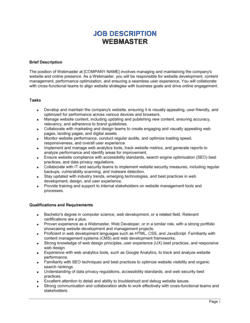
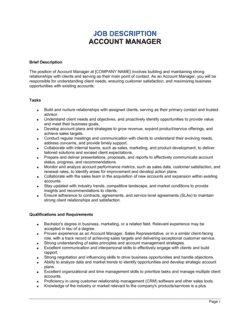
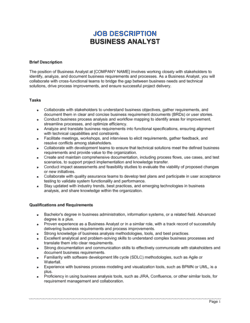
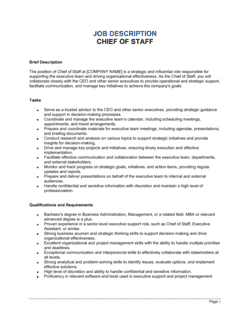
- Job Description
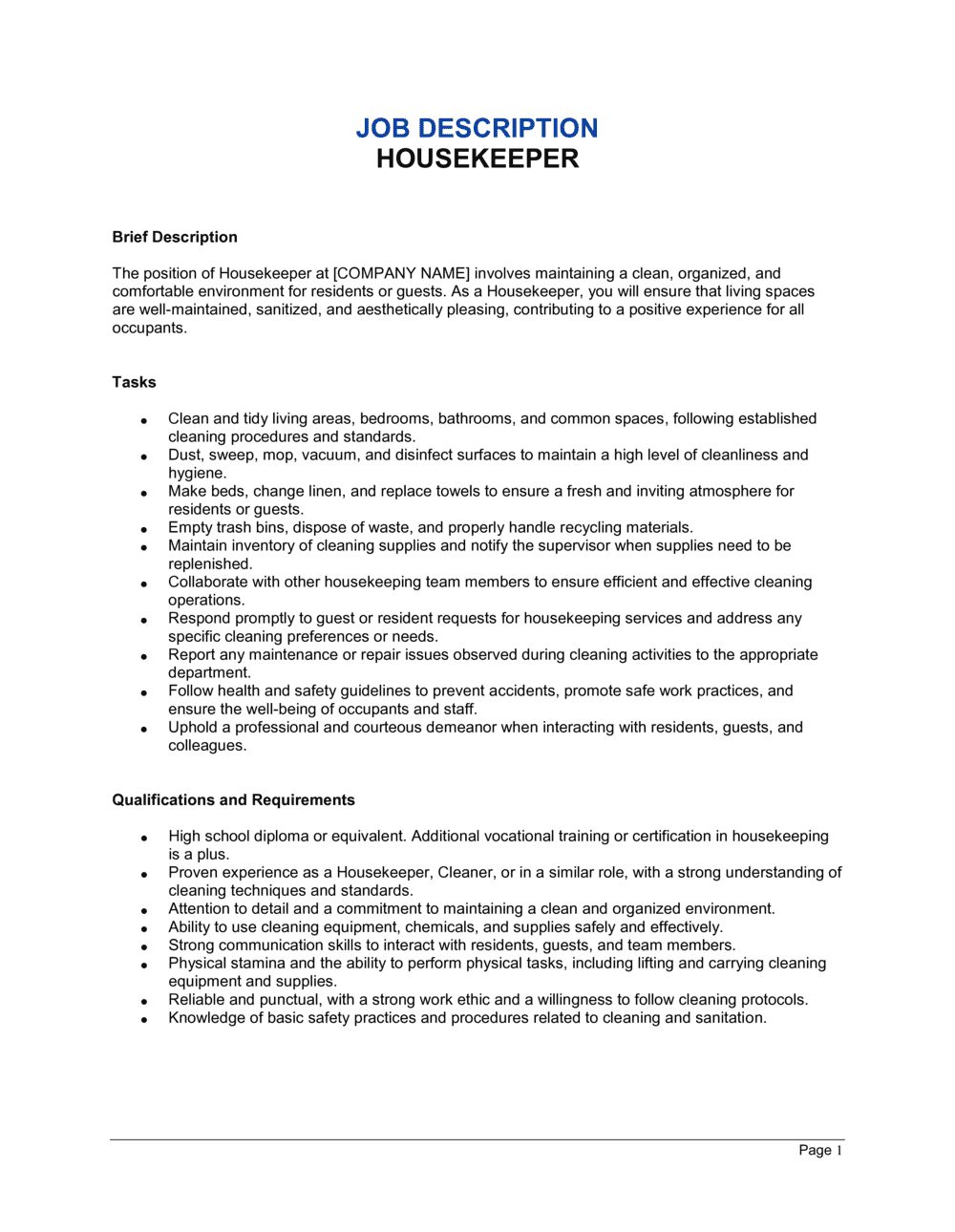
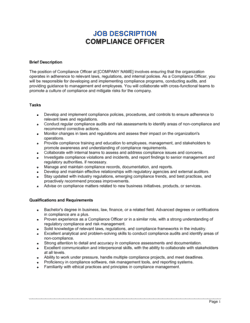
- A formal written document that defines a role's title, duties, reporting structure, qualifications, schedule, and compensation — used to hire, onboard, and manage performance.
- Live-In Arrangement
- An employment condition in which the housekeeper resides on the employer's property, typically with accommodation and some meals provided as part of the compensation package.
- Probationary Period
- An initial fixed period — typically 30 to 90 days — during which performance is evaluated and either party may end the arrangement with shortened notice.
- Domestic Worker
- An employee who performs household tasks — cleaning, cooking, childcare, or personal care — within a private home or residential setting.
- Scope of Duties
- The defined list of tasks the housekeeper is responsible for, used to set expectations and assess performance.
- Confidentiality Obligation
- A contractual requirement that the housekeeper not disclose private information about the employer, household members, guests, or property to third parties.
- At-Will Employment
- Employment that either party may end at any time for any lawful reason without advance notice — applicable in most US states but not in Canada, the UK, or the EU.
- Gross vs. Net Wages
- Gross wages are the agreed amount before tax withholding; net wages are what the employee takes home after deductions. Employers are generally required to state gross wages in the written agreement.
- Notice Period
- The advance warning — measured in days or weeks — that either party must give before ending the employment relationship.
- Personal Property Liability
- A clause addressing responsibility for accidental damage to the employer's belongings during the course of the housekeeper's duties.
- Right to Work Verification
- The employer's legal obligation to confirm that the housekeeper is legally entitled to work in the country — typically via government-issued identity and work authorization documents.