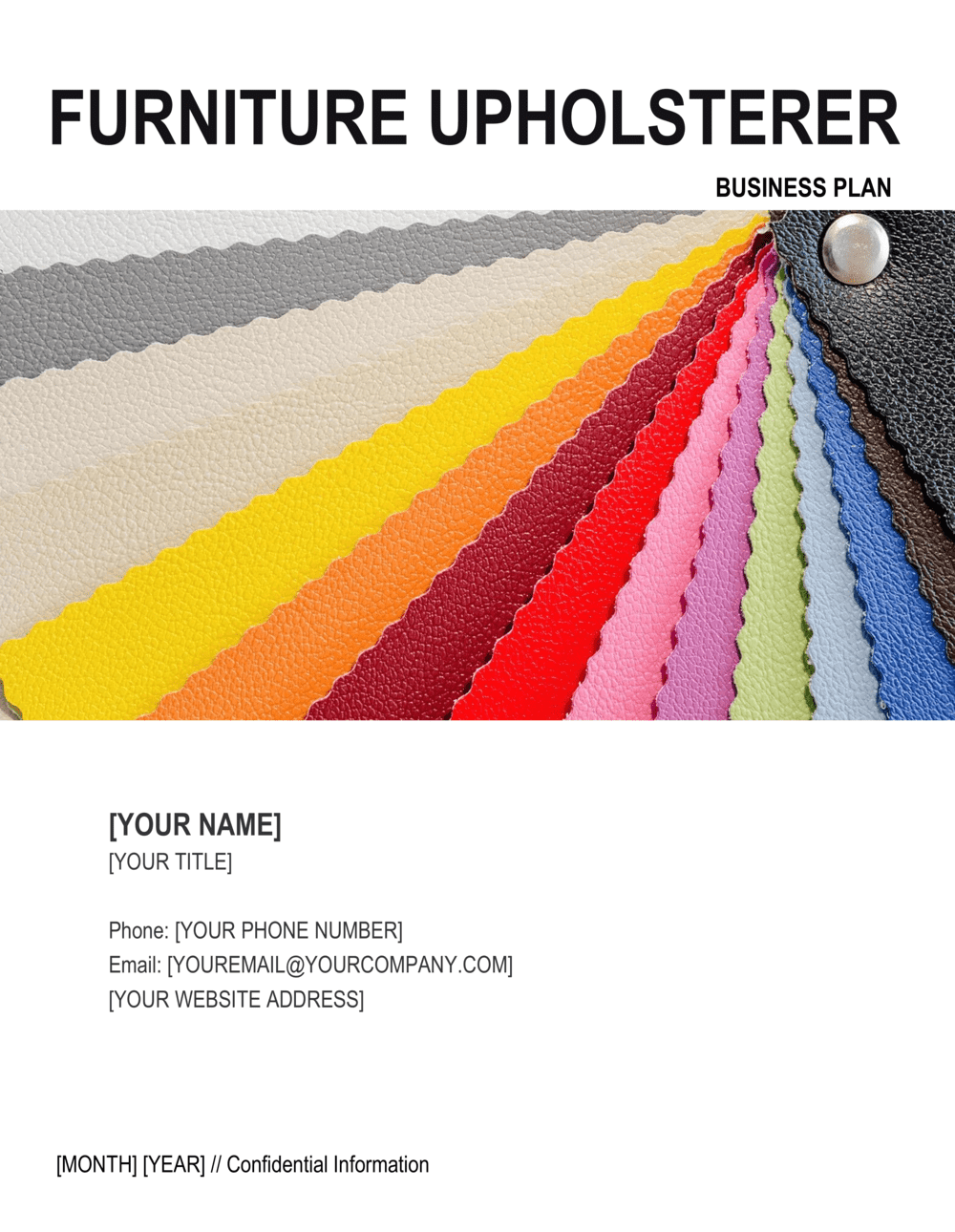
Furniture Upholsterer Business Plan Template

Free Word download β€’ Edit online β€’ Save & share with Drive β€’ Export to PDF

40 pagesβ€’3h 10m – 4h 20m to fillβ€’Difficulty: Expert
Learn more ↓
FreeFurniture Upholsterer Business Plan Template

At a glance

What it is
A Furniture Upholsterer Business Plan is a structured document that maps every dimension of launching or growing an upholstery business β€” from service menu and pricing to target customers, competitive positioning, and 3-year financial projections. This free Word download is pre-formatted and editable online, letting you fill in your shop's specifics and export a presentation-ready PDF for lenders, partners, or internal planning.
When you need it
Use it when starting a new upholstery shop, applying for a small-business loan or equipment financing, or formalizing a side operation into a full-time business with employees, a dedicated workspace, and consistent revenue targets.
What's inside
Executive summary, company overview, service offerings and pricing, market and competitive analysis, marketing and sales strategy, operations and workflow plan, management and staffing, and three-year financial projections including startup costs, monthly P&L, and cash flow.

What is a Furniture Upholsterer Business Plan?

A Furniture Upholsterer Business Plan is a structured operational and financial document that maps every core dimension of launching or growing an upholstery shop β€” from service menu, pricing, and target customers to competitive positioning, workshop operations, staffing, and three-year financial projections. It functions both as an internal management tool and as the formal document lenders, partners, and investors require before committing capital. Unlike a generic small-business plan, it addresses trade-specific inputs: cut-yardage cost modeling, turnaround time capacity, fabric supplier terms, and the distinct economics of residential versus commercial upholstery work.

Why You Need This Document

Without a written business plan, an upholstery business starts with no validated pricing model, no documented break-even target, and no capital strategy β€” which means the first slow month can become an unrecoverable cash crisis rather than a manageable variance. Banks and SBA lenders require a formal plan for any loan application; presenting a verbal pitch or a spreadsheet alone results in an immediate decline. Beyond financing, the planning process forces you to confront the real costs of running a shop before you sign a lease or buy equipment: a $4,000 industrial sewing machine, three months of working capital, and a fabric inventory to cover your first ten jobs add up quickly. This template provides the structure to work through those numbers systematically, producing a plan that is credible to lenders and useful to you every month as you track actuals against targets.

Which variant fits your situation?

If your situation is…Use this template
Launching a brand-new upholstery business with no prior revenueFurniture Upholsterer Business Plan
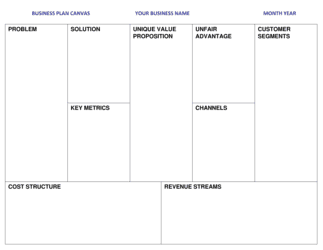
Need a one-page summary for early ideation or internal alignmentOne-Page Business Plan
Applying for an SBA loan or bank financingSmall Business Plan (Bank Format)
Planning a home-based upholstery side businessHome-Based Business Plan
Expanding an existing shop with a new service line or second locationBusiness Expansion Plan
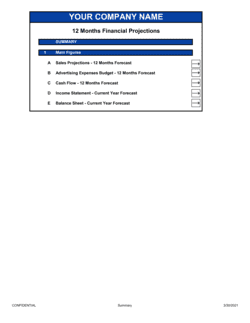
Need a 12-month financial forecast as a standalone documentFinancial Projections (12 Months)
Presenting the business concept to a potential partner or investorPitch Deck / Elevator Pitch

Common mistakes to avoid

❌ No itemized startup cost list

Why it matters: A vague startup estimate β€” '$15,000 to get started' β€” gives a loan officer nothing to approve and signals the owner hasn't priced their own business. Missing a $3,000 industrial sewing machine blows the budget before Month 1.

Fix: Build a startup cost schedule with a row for every item: equipment, tools, fabric inventory, lease deposit, insurance, licensing, website, and three months of working capital as a reserve.
❌ Projecting gross margins without accounting for fabric overruns

Why it matters: Pattern-matching and cutting waste routinely add 15–25% to fabric consumption above the theoretical yardage calculation. Ignoring this inflates gross margin and makes profitability targets unreachable.

Fix: Apply a 20% fabric waste multiplier to all cut-yardage estimates in the cost model, and revisit it against actuals after your first 10 jobs.

❌ Setting turnaround time targets with no capacity model to support them

Why it matters: Promising two-week turnarounds while projecting 30 jobs per month with one sewing machine and one person will result in missed commitments, negative reviews, and customer churn before the business stabilizes.

Fix: Model your realistic daily output β€” hours available minus setup, quoting, and admin time β€” and set turnaround commitments based on that number, not on what you wish were possible.

❌ Ignoring the commercial upholstery segment entirely

Why it matters: Restaurants, hotels, medical offices, and auto dealers generate repeat, high-volume work at predictable intervals β€” ignoring them limits revenue potential and makes the business entirely dependent on unpredictable residential demand.

Fix: Add a commercial services section with a separate pricing model and a target list of 10 local commercial accounts to approach in the first 90 days.

❌ Writing the executive summary first

Why it matters: An executive summary written before the financials and operations sections is based on assumptions that often change β€” creating a plan where the intro contradicts the body.

Fix: Complete every other section of the plan first, then write the executive summary as a one-to-two-page distillation of the finished document.

❌ Using national average pricing without adjusting for local market rates

Why it matters: Upholstery labor rates range from $50/hr in rural markets to $150/hr in major metros. Using national averages in a high- or low-cost market produces revenue projections that are meaningfully wrong.

Fix: Call or quote two to three local competitors before finalizing your pricing section. If you can't get a quote, check their Google Business reviews for price mentions.

The 10 key sections, explained

Executive Summary

Company Overview

Services and Pricing

Market Analysis

Competitive Analysis

Marketing and Sales Strategy

Operations Plan

Management and Staffing Plan

Financial Projections

Funding Requirements and Use of Funds

How to fill it out

  1. 1

    Complete the company overview and mission

    Enter your registered business name, entity type, founding date, and workshop address. Write a one-sentence mission that states what you do, for whom, and what makes your shop worth choosing.

    πŸ’‘ Locking down the legal entity name first prevents mismatches across your license applications, bank accounts, and loan documents.

  2. 2

    Define your service menu and pricing

    List every service you will offer with a specific price range or formula β€” not a vague estimate. Separate residential, commercial, and custom categories.

    πŸ’‘ Narrow price ranges (e.g., '$225–$350 for a dining chair') are more useful to customers and more credible to lenders than ranges spanning hundreds of dollars.

  3. 3

    Research your local market and competitors

    Search Google Maps and Yelp for upholstery shops within a 25-mile radius. Record each competitor's average rating, review count, and visible turnaround time. Use local housing and income data to estimate addressable demand.

    πŸ’‘ Reading the 1-star reviews of local competitors reveals the exact pain points you can build your differentiation around.

  4. 4

    Outline your marketing channels with specific tactics

    Select two to three primary acquisition channels and write one specific tactic for each β€” not just 'social media' but 'three before-and-after Instagram posts per week using the hashtag [LOCAL CITY] + interiordesign.'

    πŸ’‘ Interior designer referrals typically convert at a higher rate and higher ticket than any paid channel β€” prioritize building three to five designer relationships in your first 90 days.

  5. 5

    Map your shop operations and workflow

    List every piece of equipment you need with its cost and source. Write out your standard job workflow from customer intake to pickup. Set a target turnaround time and identify the bottleneck that will limit it.

    πŸ’‘ If your sewing machine is the bottleneck, plan its utilization rate at 70%β€”not 100%β€”to build in realistic capacity buffers.

  6. 6

    Project your financials from the bottom up

    Start with an estimate of jobs per month, average ticket by service type, and material cost per job. Build monthly revenue and expense rows from those inputs β€” never start from a target revenue and work backward.

    πŸ’‘ Include a break-even line in the model so you can immediately see how many jobs per month are required to cover fixed overhead.

  7. 7

    Itemize your startup costs and funding ask

    List every pre-revenue expense with a specific dollar amount. Total them, add three months of working capital, and state the funding source β€” personal savings, loan, or family investment.

    πŸ’‘ Get actual equipment quotes before filling in the template β€” estimated costs that turn out to be 40% low will undermine your credibility with a lender.

  8. 8

    Write the executive summary last

    Pull the single strongest data point from each section β€” your competitive advantage, target job volume, projected monthly revenue, and break-even month β€” and compress them into one to two pages.

    πŸ’‘ A lender reading your plan will read the executive summary and the financial projections first. Make sure those two sections are internally consistent before sending.

Frequently asked questions

What should a furniture upholsterer business plan include?

A complete furniture upholsterer business plan covers ten sections: executive summary, company overview, services and pricing, market analysis, competitive analysis, marketing and sales strategy, operations and workflow plan, management and staffing, financial projections (P&L, cash flow, and startup costs), and funding requirements with use-of-funds breakdown. The financial model is the section most lenders scrutinize β€” it should be built from job volume and ticket size up, not from a revenue target down.

How much does it cost to start an upholstery business?

Startup costs for a home-based upholstery operation typically run $5,000–$15,000, covering a commercial sewing machine ($1,500–$4,000), hand tools and staple guns ($500–$1,500), initial fabric inventory ($1,000–$3,000), insurance, and marketing setup. A dedicated commercial workshop adds lease deposits, build-out costs, and additional equipment, pushing total startup investment to $20,000–$60,000 depending on location and scale. Your business plan should itemize every cost before you approach a lender.

Is an upholstery business profitable?

A well-run upholstery business can achieve gross margins of 45–65% once material sourcing is optimized and fabric waste is controlled. Net margins for owner-operated shops typically run 20–35% after overhead. The primary profitability levers are average ticket size (commercial and custom work command higher prices than basic residential chairs), turnaround time efficiency, and fabric supplier terms. A financial model in your business plan should project break-even at a specific job volume so you can track progress monthly.

Do I need a business plan to start an upholstery shop?

You need a formal business plan if you are applying for a bank loan, SBA financing, or equipment lease. For a self-funded home-based operation, a written plan is not legally required β€” but it still forces you to model your startup costs, pricing, and break-even before you spend money. Founders who plan before launching are significantly more likely to reach profitability in their first year.

How many jobs per month does an upholstery shop need to break even?

Break-even volume depends entirely on your overhead and average ticket. A home-based shop with $2,500/month in fixed overhead and a $350 average ticket needs approximately 7–8 completed jobs per month at a 50% gross margin to cover costs. A commercial workshop with $6,000/month in overhead at the same ticket and margin needs 17–18 jobs. Your business plan should calculate your specific break-even number and track it against actuals each month.

What is a realistic average ticket for upholstery work?

Average tickets vary widely by job type. Dining chairs typically run $150–$350 each. Sofas and sectionals range from $800 to $2,500 depending on size, fabric complexity, and structural repairs needed. Commercial booth seating is typically priced per linear foot at $60–$120. Custom headboards and automotive work can run $500–$3,000+. Your pricing section should include a range for each service category based on local market research, not national averages.

How do I find customers for a new upholstery business?

The highest-converting early channels for upholstery businesses are Google Business Profile (optimized for local search terms like '[city] furniture reupholstery'), Instagram and Facebook before-and-after posts, and direct outreach to interior designers and furniture stores. Referral programs β€” offering a $25–$50 credit per new customer introduced β€” are cost-effective once you have initial satisfied clients. Angi and Yelp listings generate leads but typically at a lower conversion rate and higher cost than organic search and referrals.

What financial projections should a furniture upholsterer business plan include?

At minimum: a startup cost schedule, a monthly P&L for Year 1 showing revenue by service line, cost of materials, labor, and fixed overhead, and a net income line. Add a cash flow projection to identify months where expenses outpace revenue. For a loan application, include annual projections for Years 2 and 3. Every revenue number should trace back to a jobs-per-month assumption, not a top-line growth percentage.

Can I use this business plan template for an SBA loan application?

Yes, this template covers the core sections SBA lenders require: company overview, market analysis, management experience, financial projections, and use of funds. For an SBA 7(a) or microloan application, you will also need to attach personal financial statements, two to three years of tax returns (if the business is existing), and a signed personal guarantee form. The business plan is one component of the full application package β€” not a standalone submission.

How this compares to alternatives

vs One-Page Business Plan

A one-page plan captures the core concept and assumptions on a single canvas β€” useful for early ideation and internal alignment but insufficient for loan applications or investors. A full furniture upholsterer business plan adds the financial model depth, competitive analysis, and operational detail that lenders require. Start with the one-pager to test your concept, then build the full plan before approaching a bank.

vs General Small Business Plan

A generic small business plan template covers universal sections but lacks service-specific elements like cut-yardage cost modeling, upholstery workflow steps, fabric supplier terms, and turnaround time capacity analysis. The furniture upholsterer plan includes these industry-specific inputs, producing a more credible and accurate financial model for this trade.

vs Financial Projections Template

A standalone financial projections template models revenue and expenses but contains no market analysis, competitive positioning, or operational plan β€” the narrative context that makes the numbers credible. Use the financial projections template as the basis for the numbers section of your business plan, not as a substitute for the full document.

vs Marketing Plan

A marketing plan covers customer acquisition strategy in depth β€” channels, messaging, budget, and KPIs β€” but does not address startup costs, operations, staffing, or financial projections. A business plan contains a marketing section and ties it to revenue outcomes; a standalone marketing plan is appropriate once the business is established and needs a dedicated channel strategy.

Industry-specific considerations

Home Furnishings and Interiors

Residential reupholstery of sofas, chairs, headboards, and dining sets β€” the core market; plan should address local household income demographics and furniture resale trends.

Hospitality and Food Service

Restaurant booth and bar stool reupholstery generates repeat commercial work on 18–36 month replacement cycles; plan should include a commercial account pipeline and volume pricing model.

Healthcare and Medical

Medical exam tables, waiting room seating, and dental chairs require vinyl and antimicrobial fabrics meeting infection-control standards β€” a specialized niche with premium pricing and low price sensitivity.

Automotive and Marine

Auto interior reupholstery and marine seating demand weatherproof fabrics and pattern-matching skills distinct from furniture work; plan should treat this as a separate service line with its own equipment and supplier requirements.

Template vs pro β€” what fits your needs?

PathBest forCostTime
Use the templateOwner-operators planning a new or home-based upholstery business, internal planning, and SBA microloans under $50KFree1–2 weeks (15–30 hours)
Template + professional reviewLoan applications between $50K–$250K, commercial workshop launches, or plans presented to partners or investors$300–$1,000 for a SCORE mentor session or small-business advisor review2–3 weeks
Custom draftedMulti-location upholstery operations, franchise concepts, or raises above $250K from institutional lenders$2,000–$6,000 for a professional business plan writer4–6 weeks

Glossary

Reupholstery
The process of stripping old fabric, padding, and springs from a furniture piece and replacing them with new materials.
Cut yardage
The total length of fabric, measured in yards, required to complete a specific upholstery job β€” determined by the piece's dimensions and the fabric's pattern repeat.
Pattern repeat
The vertical and horizontal distance before a fabric's design motif repeats, which affects how much extra yardage must be purchased to align the pattern across a piece.
Labor rate
The hourly or per-job charge for upholstery work, typically ranging from $50–$150 per hour depending on market, skill level, and job complexity.
Gross margin
Revenue minus the direct cost of materials and subcontracted labor, expressed as a percentage of revenue β€” a key profitability indicator for service businesses.
Startup costs
One-time expenses incurred before the business opens β€” equipment, tools, initial fabric inventory, shop build-out, insurance deposits, and licensing fees.
Customer acquisition cost (CAC)
Total marketing and sales spend divided by the number of new customers gained in the same period.
Turnaround time
The number of business days from when a piece is dropped off to when it is ready for pickup β€” a key operational and competitive metric for upholstery shops.
Target market
The specific customer segment the business prioritizes β€” defined by demographics, location, furniture type, or purchasing behavior.
Break-even point
The monthly revenue level at which total income equals total fixed and variable costs, producing neither profit nor loss.

Part of your Business Operating System

This document is one of 3,000+ business & legal templates included in Business in a Box.

  • Fill-in-the-blanks β€” ready in minutes
  • 100% customizable Word document
  • Compatible with all office suites
  • Export to PDF and share electronically

Create your document in 3 simple steps.

From template to signed document β€” all inside one Business Operating System.
1
Download or open template

Access over 3,000+ business and legal templates for any business task, project or initiative.

2
Edit and fill in the blanks with AI

Customize your ready-made business document template and save it in the cloud.

3
Save, Share, Send, Sign

Share your files and folders with your team. Create a space of seamless collaboration.

Save time, save money, and create top-quality documents.

β˜…β˜…β˜…β˜…β˜…

"Fantastic value! I'm not sure how I'd do without it. It's worth its weight in gold and paid back for itself many times."

Managing Director Β· Mall Farm
Robert Whalley
Managing Director, Mall Farm Proprietary Limited
β˜…β˜…β˜…β˜…β˜…

"I have been using Business in a Box for years. It has been the most useful source of templates I have encountered. I recommend it to anyone."

Business Owner Β· 4+ years
Dr Michael John Freestone
Business Owner
β˜…β˜…β˜…β˜…β˜…

"It has been a life saver so many times I have lost count. Business in a Box has saved me so much time and as you know, time is money."

Owner Β· Upstate Web
David G. Moore Jr.
Owner, Upstate Web

Run your business with a system β€” not scattered tools

Stop downloading documents. Start operating with clarity. Business in a Box gives you the Business Operating System used by over 250,000 companies worldwide to structure, run, and grow their business.

Free Forever PlanΒ Β·Β No credit card required