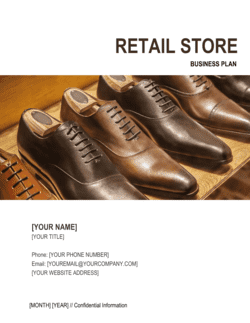
Furniture Retail Store Business Plan Template

Free Word download • Edit online • Save & share with Drive • Export to PDF

30 pages2h 35m – 3h 25m to fillDifficulty: Expert
Learn more ↓
FreeFurniture Retail Store Business Plan Template

At a glance

What it is
A Furniture Retail Store Business Plan is a structured document that maps every dimension of opening or growing a furniture retail operation — from target customer segments and merchandise strategy to showroom layout, supplier relationships, and 3–5 year financial projections. This free Word download gives you a ready-to-edit framework you can customize to your location, product mix, and capital requirements, then export as PDF to share with lenders, investors, or partners.
When you need it
Use it when applying for a commercial lease, seeking a bank loan or SBA financing, attracting an equity partner, or building an internal roadmap before your first purchase order. Lenders and landlords consistently request a formal plan before committing to a furniture retailer, given the high inventory and build-out costs involved.
What's inside
Executive summary, company overview, market and competitive analysis, merchandise and sourcing strategy, store operations and showroom layout, marketing and sales plan, management team profiles, and three-statement financial projections covering startup costs, P&L, cash flow, and break-even analysis.

What is a Furniture Retail Store Business Plan?

A Furniture Retail Store Business Plan is a structured document that defines every operational and financial dimension of launching or expanding a furniture retail business — from trade-area market analysis and supplier sourcing strategy to showroom layout, delivery logistics, staffing, and 3–5 year financial projections. It translates a store concept into a credible, evidence-backed roadmap that lenders, landlords, and investors can evaluate. Unlike a general retail plan, a furniture-specific plan must address the operational realities unique to the category: long supplier lead times, large-format showroom design, floor plan financing, white-glove delivery, and seasonal demand driven by housing market activity.

Why You Need This Document

Without a formal written plan, furniture store financing conversations stall before they start. SBA lenders require a complete plan for any loan application, and commercial landlords for anchor-size spaces routinely request one before signing a lease. Beyond external audiences, the plan forces you to confront the numbers that sink furniture stores before they open — opening inventory that must be ordered 12–16 weeks before the store generates any revenue, delivery infrastructure that carries both cost and liability, and seasonal cash flow that drops sharply between June and October. A completed plan, built on real trade-area data and supplier quotes, converts those risks into decisions you can make at a desk rather than costly surprises on the showroom floor. This template gives you the structure to produce that plan in weeks rather than months.

Which variant fits your situation?

If your situation is…Use this template
Opening a first standalone furniture store with bank or SBA financingFurniture Retail Store Business Plan
Launching a one-page concept summary for early investor conversationsOne-Page Business Plan
Adding a café, interior design service, or home décor line to a furniture storeBusiness Expansion Plan
Opening a restaurant or food-service concept in a retail spaceRestaurant Business Plan
Planning the annual operating budget and KPIs for an existing storeAnnual Business Plan
Presenting a new product launch or private-label line to investorsNew Product Launch Plan
Launching a nonprofit thrift or consignment furniture storeNonprofit Business Plan

Common mistakes to avoid

❌ Using national market data without local trade-area analysis

Why it matters: A lender financing a store in a specific suburb needs evidence of local demand — housing activity, household income, and competitor gaps — not the size of the U.S. furniture industry.

Fix: Pull Census Bureau demographic data and local housing permit records for the ZIP codes within 10 miles of the proposed store location and cite them explicitly in the market analysis section.

❌ Treating opening inventory as a one-time cost

Why it matters: Furniture inventory must be refreshed seasonally and replenished as floor samples sell. Modeling it as a sunk cost leaves no working capital for ongoing open-to-buy purchases, which stalls the store after Month 3.

Fix: Include a monthly open-to-buy budget in the cash flow model covering at least the first 12 months, funded by either revenue or a revolving credit line.

❌ Ignoring delivery logistics in the operations plan

Why it matters: Furniture delivery requires a box truck, a two-person trained crew, blanket wraps, and liability insurance. Omitting it signals operational inexperience to lenders and leads to margin erosion once the store opens.

Fix: Model delivery as a separate cost center — either in-house (truck lease + crew wages + insurance) or third-party (per-delivery rate × projected weekly deliveries) — and price it into your margin assumptions.

❌ Setting a grand-opening marketing budget with nothing for Months 2–12

Why it matters: Furniture is a low-frequency purchase. Customers who visited at opening won't buy again for 3–7 years unless you stay visible through referrals, design partnerships, and ongoing digital presence.

Fix: Allocate at least 60% of the annual marketing budget to months 2–12, spread across local SEO maintenance, social media content, email campaigns, and realtor or interior designer referral programs.

The 10 key sections, explained

Executive Summary

Company Overview

Market Analysis

Competitive Analysis

Merchandise and Sourcing Strategy

Store Operations and Showroom Layout

Marketing and Sales Strategy

Management Team

Financial Projections

Funding Requirements and Use of Funds

How to fill it out

  1. 1

    Define your store concept and target customer

    Decide on your price positioning (budget, mid-market, or luxury), style niche (modern, traditional, Scandinavian, etc.), and primary customer demographic before writing anything else. Every subsequent section flows from this decision.

    💡 Visit three to five competing stores in your target trade area before writing. Note their price tags, traffic levels, and gaps in selection — these observations will become your competitive differentiation.

  2. 2

    Research the local trade area

    Pull household income data, housing starts, and renter versus owner ratios for the ZIP codes within 10–15 miles of your proposed location. Use U.S. Census Bureau data and local real estate reports to size the reachable customer base.

    💡 Furniture purchases correlate strongly with home purchases and rentals. Tracking local housing permit data gives you a leading indicator of demand — include one chart or table from a credible source.

  3. 3

    Map the competitive landscape

    List every direct competitor within your trade area — local independents, national chains, consignment shops, and major online players (Wayfair, Amazon, Article). For each, note price range, style positioning, and the gap your store fills.

    💡 Shop your top two competitors in person before finalizing your merchandise strategy. Pay attention to what customers ask for that the store doesn't carry.

  4. 4

    Build the merchandise and sourcing plan

    Select two to four core product categories for your opening inventory. Identify at least two suppliers per category. Model landed cost, target retail multiple, and lead time for each category, then calculate your opening OTB budget.

    💡 Request wholesale price lists and lead-time confirmations in writing from suppliers before including them in the plan. Lenders occasionally ask for supplier letters of intent.

  5. 5

    Model startup costs in detail

    Itemize every pre-opening expense: lease security deposit, build-out and fixtures, opening inventory, signage, POS system, website, insurance, and marketing for the grand opening. Separate one-time costs from ongoing monthly expenses.

    💡 Get two contractor bids for the build-out before finalizing startup costs. Furniture showroom builds routinely run 20–30% over initial estimates due to lighting and flooring upgrades.

  6. 6

    Build the three-statement financial model

    Model monthly revenue by multiplying projected foot traffic by estimated conversion rate by average transaction value. Build the P&L from gross sales down to net income, then derive the cash flow statement and balance sheet.

    💡 Include a seasonal adjustment in your Year 1 monthly model. Furniture retail peaks in spring (March–May) and post-Thanksgiving. A flat monthly revenue assumption will overstate Q3 cash and understate Q4 needs.

  7. 7

    State the funding ask with specific allocations

    Specify the total amount requested, the funding instrument, and how every dollar is allocated across build-out, inventory, marketing, and working capital reserve. Include a table showing the funding split and planned drawdown timeline.

    💡 Show a minimum of six months of fixed operating expenses in your working capital line. Lenders treat anything less as evidence that the owner hasn't thought through the ramp-up period.

  8. 8

    Write the executive summary last

    Pull the most compelling figures from each completed section — market opportunity, competitive advantage, Year 1 revenue, break-even month, and funding ask — and compress them into one to two pages.

    💡 The executive summary is the only section many lenders read before deciding to request a meeting. Lead with the specific customer problem you solve and the quantified market opportunity, not with your personal story.

Frequently asked questions

What is a furniture retail store business plan?

A furniture retail store business plan is a structured document covering every aspect of opening or growing a furniture retail operation — store concept, target market, competitive positioning, merchandise and sourcing strategy, showroom layout, staffing, marketing, and 3–5 year financial projections. It is used to secure bank loans or SBA financing, attract equity partners, negotiate commercial leases, and guide internal operations from pre-opening through year two.

Do I need a business plan to open a furniture store?

Any SBA loan application, commercial bank financing request, or investor pitch for a furniture store will require a formal written plan. Landlords for large retail spaces frequently request one as well, given the high build-out costs involved. Even if you are self-funding, writing the plan forces you to stress-test your inventory budget, break-even timeline, and seasonal cash flow before committing capital.

How much does it cost to open a furniture retail store?

Startup costs for a furniture retail store typically range from $80,000 for a small 2,000 sq ft consignment or budget concept to $500,000 or more for a 10,000+ sq ft mid-market showroom with full build-out and opening inventory. The two largest cost drivers are build-out and fixtures (including lighting and flooring) and opening inventory, which alone can run $50,000–$200,000 depending on price positioning and supplier minimums.

What gross margin should a furniture store target?

Mid-market furniture retailers typically target gross margins of 45–55% on merchandise. Budget and warehouse-style concepts may operate at 38–42% to support aggressive pricing. Luxury or custom furniture retailers can exceed 60% due to higher price points and limited discounting. Your business plan should show landed cost, target retail multiple, and expected blended gross margin for each product category.

What financial projections should a furniture store business plan include?

At minimum: itemized startup costs, monthly P&L for Year 1 with seasonal adjustments, annual P&L for Years 2–5, a monthly cash flow statement showing when the store covers its fixed costs, a break-even analysis, and a use-of-funds table. Lenders also want to see the revenue model — foot traffic estimate × conversion rate × average transaction value — so they can test your assumptions.

How do I differentiate a furniture store from big-box competitors?

The most defensible positions for independent furniture retailers are local or artisan sourcing, custom upholstery or finish options, a curated niche style (mid-century modern, Scandinavian, coastal, etc.), white-glove delivery and in-home design consultation, and deep relationships with local realtors and interior designers who refer clients. Competing on price alone against Wayfair or IKEA is not a viable long-term strategy for an independent store.

How long does it take to open a furniture store after writing the plan?

From signing a lease to opening day, most furniture stores take 3–6 months. Build-out typically runs 6–12 weeks; opening inventory has 8–16 week lead times from overseas suppliers, which often runs concurrently with construction. The business plan should include a pre-opening timeline with milestones for lease execution, build-out completion, inventory receipt, staff hiring, and grand opening.

What is floor plan financing and should I include it in my business plan?

Floor plan financing is a revolving credit line secured by showroom inventory, allowing a retailer to stock product before customers pay. It is common in furniture retail and can reduce the upfront equity required to open. If you plan to use it, include the credit line in your funding sources table, model the monthly interest cost in your P&L, and note that the lender will require an inventory audit process.

Can I use this template for an online-only furniture business?

This template is structured for a physical showroom operation. An online-only furniture business has a materially different cost structure — no build-out or floor plan financing, but higher digital marketing spend, photography costs, and returns logistics. Use a general e-commerce business plan template and adapt the merchandising and logistics sections accordingly.

How this compares to alternatives

vs General Retail Store Business Plan

A general retail business plan covers product categories from apparel to electronics and uses short inventory cycles with high turnover. A furniture retail plan must address 8–16 week supplier lead times, large-format showroom layout, floor plan financing, and delivery logistics — operational details that a generic retail template does not include.

vs One-Page Business Plan

A one-page plan is a rapid-alignment tool for early ideation or internal conversations. It lacks the financial depth, sourcing strategy, and competitive analysis that banks and landlords require for a furniture store. Use it to test the concept, then build this full plan before any financing conversation.

vs Restaurant Business Plan

Both are location-dependent retail operations requiring detailed build-out and staffing plans. A restaurant plan centers on food cost, table turns, and health compliance; a furniture plan centers on inventory turnover, supplier lead times, and delivery logistics. They share financial structure but differ entirely in their operational and merchandising sections.

vs Annual Business Plan

An annual business plan is an operating-year roadmap for an existing business — it sets KPIs, budgets, and initiatives for the next 12 months. A furniture retail store business plan is a founding document used to launch or finance the store. Once open, the store should produce an annual plan each year to track performance against the original projections.

Industry-specific considerations

Home Furnishings Retail

Seasonal buying cycles tied to spring and post-Thanksgiving peaks, floor plan financing for showroom inventory, and white-glove delivery as a key service differentiator.

Interior Design and Décor

Showroom doubles as a design studio; revenue blends product sales with consultation fees; trade pricing from vendors requires separate resale documentation.

E-commerce and Omnichannel Retail

Physical showroom anchors the brand while online sales extend geographic reach; returns logistics and product photography costs are unique line items in the financial model.

Franchise and Branded Retail

Franchise agreements dictate product mix, supplier relationships, and store layout; the business plan must align with franchisor-specified financial performance benchmarks.

Template vs pro — what fits your needs?

PathBest forCostTime
Use the templateFirst-time furniture store owners applying for SBA loans under $500K or negotiating a commercial leaseFree2–4 weeks (30–60 hours)
Template + professional reviewOwners seeking bank financing above $500K or bringing in an equity partner$500–$2,500 for an accountant or retail business advisor to review the financial model3–5 weeks
Custom draftedMulti-location rollouts, franchise development agreements, or institutional investors requiring audited projections$3,000–$8,000 for a professional business plan writer with retail experience4–8 weeks

Glossary

Gross Margin
Revenue minus the cost of goods sold, expressed as a percentage — for furniture retail, typically 40–55% depending on product mix and sourcing.
Average Transaction Value (ATV)
The average dollar amount a customer spends per store visit or purchase, used to model revenue from foot traffic estimates.
Inventory Turnover
How many times a store sells and replaces its average inventory balance in a year — low turnover ties up cash and increases carrying costs.
Floor Plan Financing
A revolving credit line secured by inventory that lets retailers stock showroom pieces before customers pay — common in auto and furniture retail.
Open-to-Buy (OTB)
A merchandise planning figure representing how much inventory a buyer is budgeted to purchase in a given period without exceeding planned stock levels.
Landed Cost
The total cost of a piece of furniture delivered to your store, including purchase price, freight, customs duties, and any handling fees.
Break-Even Point
The monthly revenue level at which total sales equal total fixed and variable costs, producing zero profit or loss.
Showroom Density
The revenue generated per square foot of showroom floor space, used to evaluate layout efficiency and product mix decisions.
Customer Acquisition Cost (CAC)
Total marketing and advertising spend divided by the number of new customers acquired in the same period.
Consignment
An arrangement where a furniture store displays and sells goods owned by a third party, remitting a percentage of the sale price to the owner.

Part of your Business Operating System

This document is one of 3,000+ business & legal templates included in Business in a Box.

  • Fill-in-the-blanks — ready in minutes
  • 100% customizable Word document
  • Compatible with all office suites
  • Export to PDF and share electronically

Create your document in 3 simple steps.

From template to signed document — all inside one Business Operating System.
1
Download or open template

Access over 3,000+ business and legal templates for any business task, project or initiative.

2
Edit and fill in the blanks with AI

Customize your ready-made business document template and save it in the cloud.

3
Save, Share, Send, Sign

Share your files and folders with your team. Create a space of seamless collaboration.

Save time, save money, and create top-quality documents.

★★★★★

"Fantastic value! I'm not sure how I'd do without it. It's worth its weight in gold and paid back for itself many times."

Managing Director · Mall Farm
Robert Whalley
Managing Director, Mall Farm Proprietary Limited
★★★★★

"I have been using Business in a Box for years. It has been the most useful source of templates I have encountered. I recommend it to anyone."

Business Owner · 4+ years
Dr Michael John Freestone
Business Owner
★★★★★

"It has been a life saver so many times I have lost count. Business in a Box has saved me so much time and as you know, time is money."

Owner · Upstate Web
David G. Moore Jr.
Owner, Upstate Web

Run your business with a system — not scattered tools

Stop downloading documents. Start operating with clarity. Business in a Box gives you the Business Operating System used by over 250,000 companies worldwide to structure, run, and grow their business.

Start free · No credit card required