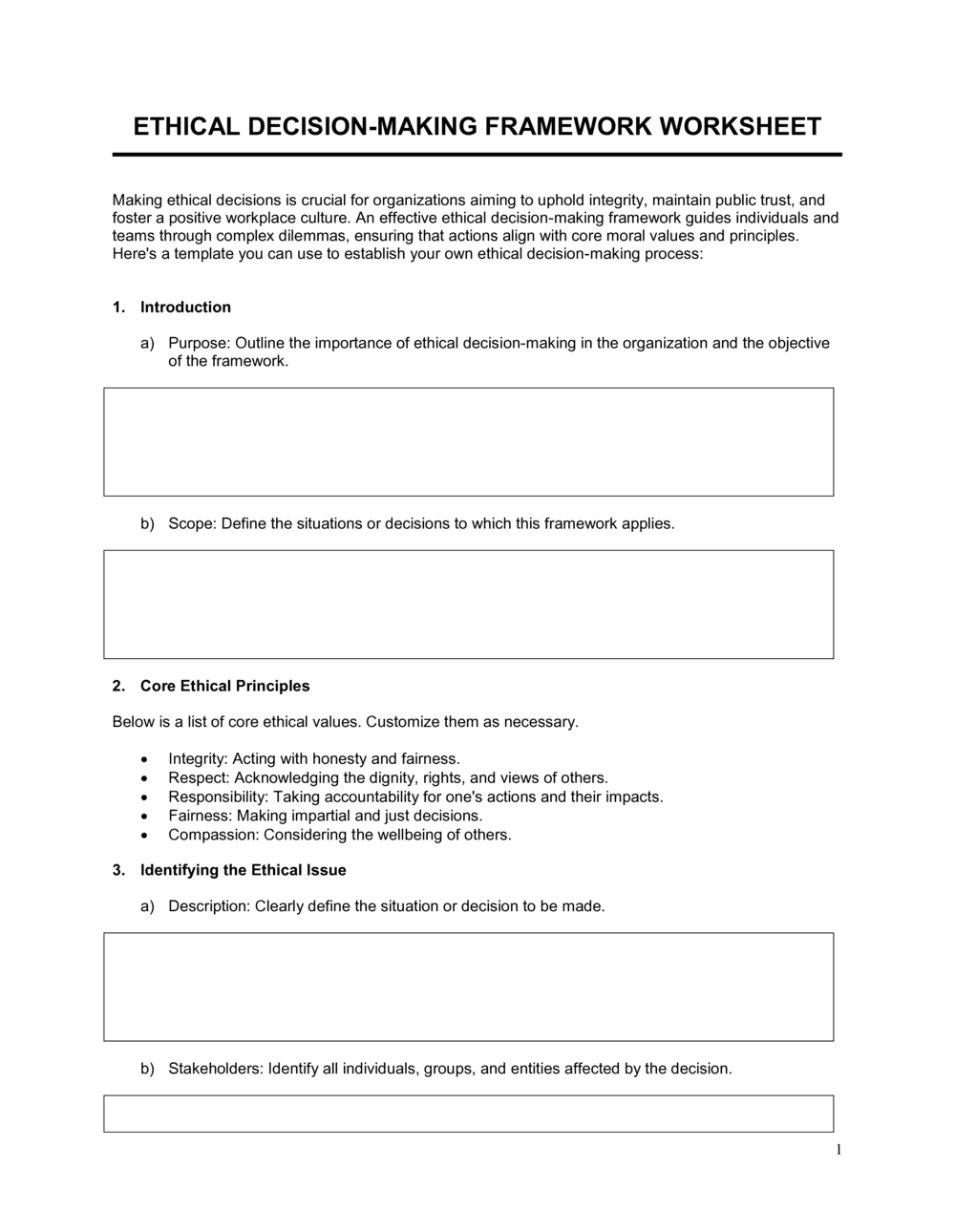
- Ethical Dilemma
- A situation in which two or more legitimate values, duties, or interests conflict, making a clear 'right' answer difficult to identify.
- Stakeholder
- Any person, group, or organization that has an interest in or is affected by a business decision — including employees, customers, suppliers, and the wider community.
- Consequentialism
- An ethical framework that judges a decision by its outcomes — specifically whether it produces the greatest benefit for the greatest number of people.
- Deontology
- An ethical framework that evaluates decisions by whether they follow a duty or rule, regardless of the outcome — for example, never deceiving a customer even if deception would produce a better result.
- Virtue Ethics
- An ethical framework that asks what a person of good character would do in a given situation, focusing on integrity, honesty, and fairness as guiding traits.
- Conflict of Interest
- A situation in which a person's private interests — financial, personal, or professional — could inappropriately influence a business decision they are responsible for making.
- Due Diligence
- A thorough, structured investigation or analysis of a decision, partner, or action before committing to it, aimed at identifying risks and hidden consequences.
- Accountability
- The obligation of an individual or team to accept responsibility for a decision and be answerable for its outcomes to relevant stakeholders.
- Ethical Lens
- A specific ethical theory or principle — such as fairness, rights, or harm avoidance — used as one analytical filter when evaluating options.
- Decision Justification
- A written explanation of why a particular course of action was chosen, including which ethical principles were applied and how competing interests were weighed.