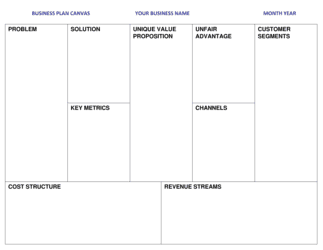
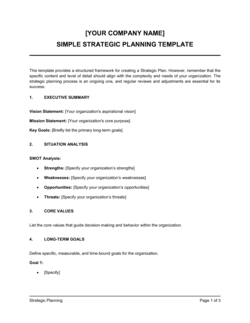
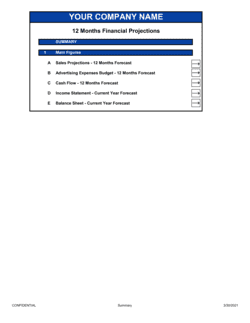
Engineering Business Plan Template

Free Word download β€’ Edit online β€’ Save & share with Drive β€’ Export to PDF

34 pagesβ€’2h 50m – 3h 50m to fillβ€’Difficulty: Expert
Learn more ↓
FreeEngineering Business Plan Template

At a glance

What it is
An Engineering Business Plan is a structured document that outlines the strategic, operational, and financial roadmap for an engineering firm or consultancy. This free Word download covers service offerings, target markets, staffing and licensing requirements, competitive positioning, and 3–5 year financial projections β€” giving founders, partners, and lenders a single source of truth for the business.
When you need it
Use it when launching a new engineering practice, applying for a bank loan or SBA financing, seeking equity partners, or repositioning an existing firm around a new service line or geographic market.
What's inside
Executive summary, company overview, market and competitive analysis, service offerings and technical capabilities, licensing and regulatory framework, marketing and client acquisition strategy, operations and staffing plan, and full financial projections including P&L, cash flow, and funding requirements.

What is an Engineering Business Plan?

An Engineering Business Plan is a structured strategic and operational document that maps a professional engineering firm's service offerings, target markets, licensing requirements, staffing model, and 3–5 year financial projections into a single reference document. Unlike a general business plan, it addresses the profession-specific considerations that define an engineering practice: PE licensing by state, professional entity structure, errors and omissions insurance, billable utilization rates, multiplier-based billing, and government contract certifications. The document serves as both an internal operating roadmap and the external-facing plan required by lenders, equity partners, and government certification programs.

Why You Need This Document

Without a formal engineering business plan, SBA and bank loan applications stall at the first request for financial projections, government clients question whether the firm has the capacity and credentials to perform, and founding partners operate against conflicting assumptions about utilization targets and service priorities. The absence of a documented licensing and insurance section alone can delay a loan approval or disqualify a firm from a government RFQ. A well-structured plan forces you to reconcile your billable hours model with your revenue targets before you commit to overhead β€” turning staffing and capacity assumptions into decisions you can defend. This template gives engineering firm founders and principals the structure to produce a plan that satisfies lender requirements, supports government certification applications, and keeps a growing team aligned around measurable financial and operational goals.

Which variant fits your situation?

If your situation is…Use this template
Starting a civil or structural engineering consultancyEngineering Business Plan
Launching a general small professional services firmProfessional Services Business Plan
Quick internal planning or early-stage ideationOne-Page Business Plan
Raising venture capital or angel investment for an engineering tech startupStartup Business Plan
Planning a construction contracting businessConstruction Company Business Plan
Aligning an existing firm's 3-year internal strategyStrategic Planning Template
Creating a financial forecast to accompany a bank loan applicationFinancial Projections (12 Months)

Common mistakes to avoid

❌ Omitting the licensing and insurance section

Why it matters: Lenders and government clients verify PE licenses and E&O coverage before approving loans or contracts. A plan without this section signals the firm has not addressed a basic operational prerequisite.

Fix: Dedicate a full section to licenses (by state and license number), insurance coverage limits, and any certifications. Attach copies as appendices.

❌ Projecting revenue as a market-share percentage

Why it matters: Claiming 2% of a $500M regional market tells a lender nothing about how you will actually generate that revenue β€” it looks like a guess dressed up as a number.

Fix: Build revenue projections from billable staff hours Γ— billing rates Γ— utilization. Every revenue dollar should trace back to a specific person and project type.

❌ Setting unrealistic utilization rates for founding principals

Why it matters: A founding principal who models themselves at 80% utilization while also running business development, HR, and administration will either miss revenue targets or burn out β€” either outcome damages the firm.

Fix: Model founding principals at 50–65% billable utilization in Year 1 and build in a dedicated business development budget to compensate for the non-billable time.

❌ Ignoring the accounts-receivable cycle in the cash flow model

Why it matters: Engineering firms routinely wait 45–90 days for payment. A P&L that shows profitability in Month 4 can still produce a cash crisis if the timing lag is not modeled in the cash flow statement.

Fix: Apply a 45–75 day collection lag to all revenue in the cash flow model and size the working capital request to bridge the gap.

❌ Listing every engineering discipline without client or revenue support

Why it matters: A services section that claims civil, structural, mechanical, electrical, environmental, and geotechnical capabilities for a two-person firm has no credibility with a lender or sophisticated client.

Fix: Limit service offerings to disciplines the current team can actually deliver. Add future services to a Year 2–3 roadmap tied to specific planned hires.

❌ No subconsultant or teaming strategy

Why it matters: Most engineering projects require multiple disciplines. A firm that cannot explain how it will cover gaps in its capabilities will lose bids to full-service competitors or prime consultants.

Fix: Name two to three subconsultant relationships or teaming partners for each capability gap, and include estimated subconsultant costs in the financial model.

The 10 key sections, explained

Executive summary

Company overview

Market analysis

Services and technical capabilities

Licensing, regulatory, and insurance requirements

Marketing and client acquisition strategy

Operations and staffing plan

Management team and credentials

Financial projections

Funding requirements and use of funds

How to fill it out

  1. 1

    Complete the company overview and licensing section first

    Enter the firm's legal entity type, state of formation, PE license numbers, insurance coverage amounts, and any diversity or small-business certifications. These facts anchor every other section and are the first things lenders verify.

    πŸ’‘ Confirm your state's engineering entity requirements before filing β€” some states mandate a PLLC or PC rather than a standard LLC for licensed professional practices.

  2. 2

    Build a bottom-up market estimate for your service area

    Research the number of active construction permits, infrastructure projects, or industrial facilities in your target geography. Multiply by an average engineering fee percentage (typically 5–15% of construction value) to estimate serviceable market size.

    πŸ’‘ State DOT and municipal procurement portals publish upcoming project lists β€” use these as a concrete demand proxy rather than relying solely on industry reports.

  3. 3

    Define your service lines and fee structure

    List each service offering with a typical project scope, fee range, and target client type. Include the engineering software and tools required for each service and your current licensing status for them.

    πŸ’‘ Rank service lines by gross margin, not by revenue potential β€” a high-volume, low-margin service can consume capacity needed for more profitable work.

  4. 4

    Document licensing, insurance, and certifications

    List every PE license by state, expiration date, and license holder. Specify your current E&O and general liability coverage limits. Note any small-business or diversity certifications you hold or plan to pursue.

    πŸ’‘ Lenders for SBA 7(a) loans require proof of professional licensing β€” attach copies of PE certificates as an appendix rather than referencing them without documentation.

  5. 5

    Build the staffing model and utilization targets

    List each role with a planned hire date, billing rate, and target utilization percentage. A principal doing business development should be modeled at 50–60% utilization, not 75–80%.

    πŸ’‘ Model a subconsultant line item for specialty work you will outsource in Year 1 before it makes sense to hire in-house β€” this keeps overhead low while expanding your service offering.

  6. 6

    Construct the financial model from billable hours up

    For each staff member, multiply available hours Γ— utilization rate Γ— billing rate to get gross revenue. Apply the indirect cost rate and overhead to calculate net fee revenue and operating expenses. Build monthly for Year 1, annual for Years 2–5.

    πŸ’‘ Include a 45–75 day accounts-receivable lag in your cash flow model β€” most engineering clients pay on Net 30–60 terms, and the timing gap is the top cause of early-stage cash shortfalls.

  7. 7

    State the funding ask with specific use-of-funds detail

    Break the capital request into at least four buckets: equipment and software, working capital, hiring costs, and business development. Tie each bucket to a specific operational milestone.

    πŸ’‘ If seeking an SBA loan, size the working capital request to cover 60–90 days of operating expenses β€” underestimating this is the most common reason engineering firm loan applications are revised or denied.

  8. 8

    Write the executive summary last

    Pull the single most compelling fact from each section β€” market opportunity, key credential, revenue target, and funding ask β€” and compress them into 1–2 pages. It should read as a trailer for the full document.

    πŸ’‘ Lead the executive summary with a named market opportunity (e.g., '$2.4B in state highway contracts awarded annually in [STATE]') rather than a generic mission statement.

Frequently asked questions

What is an engineering business plan?

An engineering business plan is a structured document that maps an engineering firm's service offerings, target clients, licensing and regulatory requirements, staffing model, and 3–5 year financial projections into a single operational and strategic roadmap. It is used to raise capital, secure bank financing, attract partners, and align the firm's leadership around measurable growth targets.

What sections should an engineering business plan include?

A complete engineering business plan covers ten core areas: executive summary, company overview, market analysis, services and technical capabilities, licensing and insurance, marketing and client acquisition strategy, operations and staffing plan, management team credentials, financial projections (P&L, cash flow, balance sheet), and funding requirements with use-of-funds detail. The financial model should be built from billable hours and utilization rates, not top-down market share estimates.

How is an engineering business plan different from a general business plan?

An engineering business plan addresses profession-specific considerations that a generic plan omits: PE licensing requirements by state, professional entity structure (PLLC, PC), E&O insurance, utilization rate modeling, multiplier-based billing rate analysis, and government contract certifications such as DBE or SDVOSB. A general business plan template will not prompt you to address these elements, which are among the first things lenders and clients evaluate.

Do I need a PE license to start an engineering firm?

In most US states, yes β€” at least one principal must hold a valid Professional Engineer license in the state where the firm practices, and the firm must register as a professional entity (PLLC or PC in most states, not a standard LLC). Requirements vary by state and discipline. Your business plan should document the specific license numbers, states of licensure, and any multi-state reciprocity arrangements the firm holds or plans to pursue.

What financial projections should an engineering business plan include?

Include a monthly P&L for Year 1 and annual statements for Years 2–5, a cash flow statement with a 45–75 day accounts-receivable lag, a projected balance sheet, and a staffing model showing billable hours, billing rates, and utilization rates for each role. Also include an indirect cost rate calculation and a backlog projection as leading indicators of near-term revenue. A sensitivity table showing 70% of plan revenue is standard for lender submissions.

How long should an engineering business plan be?

For bank or SBA loan submissions, 20–30 pages plus a financial model appendix is the accepted range. Internal operating plans can be shorter. The financial model β€” including the staffing model, P&L, cash flow, and balance sheet β€” should be a separate Excel or spreadsheet file attached as an appendix, not embedded as a table in the Word document.

Can a solo PE use this template to plan a one-person practice?

Yes. The template scales down to a sole practitioner β€” simply model a single billable staff member with a realistic utilization rate of 50–65% to account for non-billable business development, administration, and continuing education time. The licensing, insurance, and client acquisition sections are equally relevant regardless of firm size.

What utilization rate should I target in my engineering business plan?

Industry benchmarks vary by firm size and discipline, but 55–65% for founding principals (who also handle business development) and 70–80% for project engineers and staff are widely used targets. Modeling above 80% for any role assumes no time for training, administration, or unbillable project work β€” lenders and experienced partners will flag this as unrealistic.

What certifications should an engineering firm pursue and include in its plan?

Certifications worth documenting include Disadvantaged Business Enterprise (DBE), Small Business Enterprise (SBE), Service-Disabled Veteran-Owned Small Business (SDVOSB), Women-Owned Small Business (WOSB), and HUBZone. Each unlocks set-aside contracts from federal, state, and municipal clients. Include the certification status (held, applied, or planned), the certifying agency, and the specific contract programs each certification targets.

How do I estimate startup costs for a new engineering firm?

Primary startup cost categories include PE license fees and continuing education, E&O and general liability insurance premiums (typically $3,000–$12,000/year for a small firm), engineering software licenses (CAD, structural analysis, GIS), office setup or co-working space, legal fees for entity formation, and working capital to cover 60–90 days of operating expenses before client payments begin flowing. Include all of these in your use-of-funds section with specific dollar estimates.

How this compares to alternatives

vs General business plan

A general business plan template covers strategy, market analysis, and financials but omits engineering-specific content: PE licensing, professional entity structure, E&O insurance, utilization rate modeling, and government contract certifications. Use the engineering-specific template for any licensed professional practice β€” a generic plan will leave critical gaps that lenders and clients will notice.

vs Construction company business plan

A construction business plan focuses on contractor operations β€” bonding, subcontractor management, job costing, and equipment. An engineering business plan focuses on professional services β€” billable hours, multipliers, PE credentials, and design liability. The two documents serve different audiences and financial models even when the same firm does both design and construction.

vs Strategic planning template

A strategic plan is an internal alignment tool for an existing business β€” it sets goals, initiatives, and KPIs but does not include the market context, competitive analysis, or financial projections that external audiences require. An engineering business plan is the right document for capital raises and loan applications; a strategic plan supports annual operating alignment once the firm is established.

vs One-page business plan

A one-page plan is useful for early ideation and quick internal alignment but lacks the financial depth, licensing detail, and market evidence that lenders and equity partners require. Use it to test a concept or align a founding team, then build a full engineering business plan before any capital raise or formal client pursuit.

Industry-specific considerations

Civil and infrastructure engineering

Transportation, water/wastewater, and site development projects with government and municipal clients requiring DBE/SBE certifications and competitive RFQ/RFP responses.

Structural engineering

Building and bridge design for private developers and public agencies, with project fees tied to construction value and significant E&O exposure on stamped drawings.

MEP (mechanical, electrical, plumbing) consulting

Building systems design for commercial real estate developers, with high subconsultant coordination requirements and tight design-build schedule pressures.

Environmental and geotechnical engineering

Regulatory-driven demand from remediation, permitting, and site assessment work for industrial clients and government agencies, with long sales cycles and multi-year contract structures.

Template vs pro β€” what fits your needs?

PathBest forCostTime
Use the templateSolo PEs, small partnerships, and early-stage firms applying for SBA loans under $500K or pursuing initial government certificationsFree3–5 weeks (50–80 hours including financial modeling)
Template + professional reviewFirms seeking bank financing above $500K, pursuing equity partners, or entering a new discipline or geographic market$500–$2,500 for a financial model review or business advisor session4–6 weeks
Custom draftedMulti-discipline firms seeking institutional investment, firms preparing for acquisition or merger, or practices entering heavily regulated environmental or federal contracting markets$3,000–$10,000 for a professional business plan writer with engineering industry experience6–10 weeks

Glossary

Professional Engineer (PE) License
A state-issued credential authorizing an engineer to offer services directly to the public and to stamp and seal engineering documents.
Utilization Rate
The percentage of total staff hours billed to clients versus total available hours β€” the primary efficiency metric for engineering consultancies.
Multiplier
The ratio of total project revenue to direct labor cost, used to set billing rates and assess profitability on individual engagements.
Retainer
A recurring fixed fee paid by a client to secure ongoing access to an engineering firm's services over a defined period.
Subconsultant
A specialized engineering or technical firm engaged by the prime consultant to perform a defined scope within a larger project.
Backlog
The total value of contracted work not yet completed or billed β€” a key leading indicator of near-term revenue for engineering firms.
Indirect Cost Rate
The ratio of overhead costs to direct labor costs, used to calculate fully loaded billing rates and project profitability.
Scope of Work (SOW)
A written description of the specific tasks, deliverables, schedule, and boundaries of an engineering engagement.
Errors and Omissions (E&O) Insurance
Professional liability coverage protecting an engineering firm against claims arising from design errors, omissions, or negligent advice.
Design-Build
A project delivery model where a single firm handles both engineering design and construction, reducing owner risk and shortening schedules.
CAC (Client Acquisition Cost)
Total business development and marketing spend divided by the number of new clients secured in the same period.

Part of your Business Operating System

This document is one of 3,000+ business & legal templates included in Business in a Box.

  • Fill-in-the-blanks β€” ready in minutes
  • 100% customizable Word document
  • Compatible with all office suites
  • Export to PDF and share electronically

Create your document in 3 simple steps.

From template to signed document β€” all inside one Business Operating System.
1
Download or open template

Access over 3,000+ business and legal templates for any business task, project or initiative.

2
Edit and fill in the blanks with AI

Customize your ready-made business document template and save it in the cloud.

3
Save, Share, Send, Sign

Share your files and folders with your team. Create a space of seamless collaboration.

Save time, save money, and create top-quality documents.

β˜…β˜…β˜…β˜…β˜…

"Fantastic value! I'm not sure how I'd do without it. It's worth its weight in gold and paid back for itself many times."

Managing Director Β· Mall Farm
Robert Whalley
Managing Director, Mall Farm Proprietary Limited
β˜…β˜…β˜…β˜…β˜…

"I have been using Business in a Box for years. It has been the most useful source of templates I have encountered. I recommend it to anyone."

Business Owner Β· 4+ years
Dr Michael John Freestone
Business Owner
β˜…β˜…β˜…β˜…β˜…

"It has been a life saver so many times I have lost count. Business in a Box has saved me so much time and as you know, time is money."

Owner Β· Upstate Web
David G. Moore Jr.
Owner, Upstate Web

Run your business with a system β€” not scattered tools

Stop downloading documents. Start operating with clarity. Business in a Box gives you the Business Operating System used by over 250,000 companies worldwide to structure, run, and grow their business.

Free Forever PlanΒ Β·Β No credit card required