1
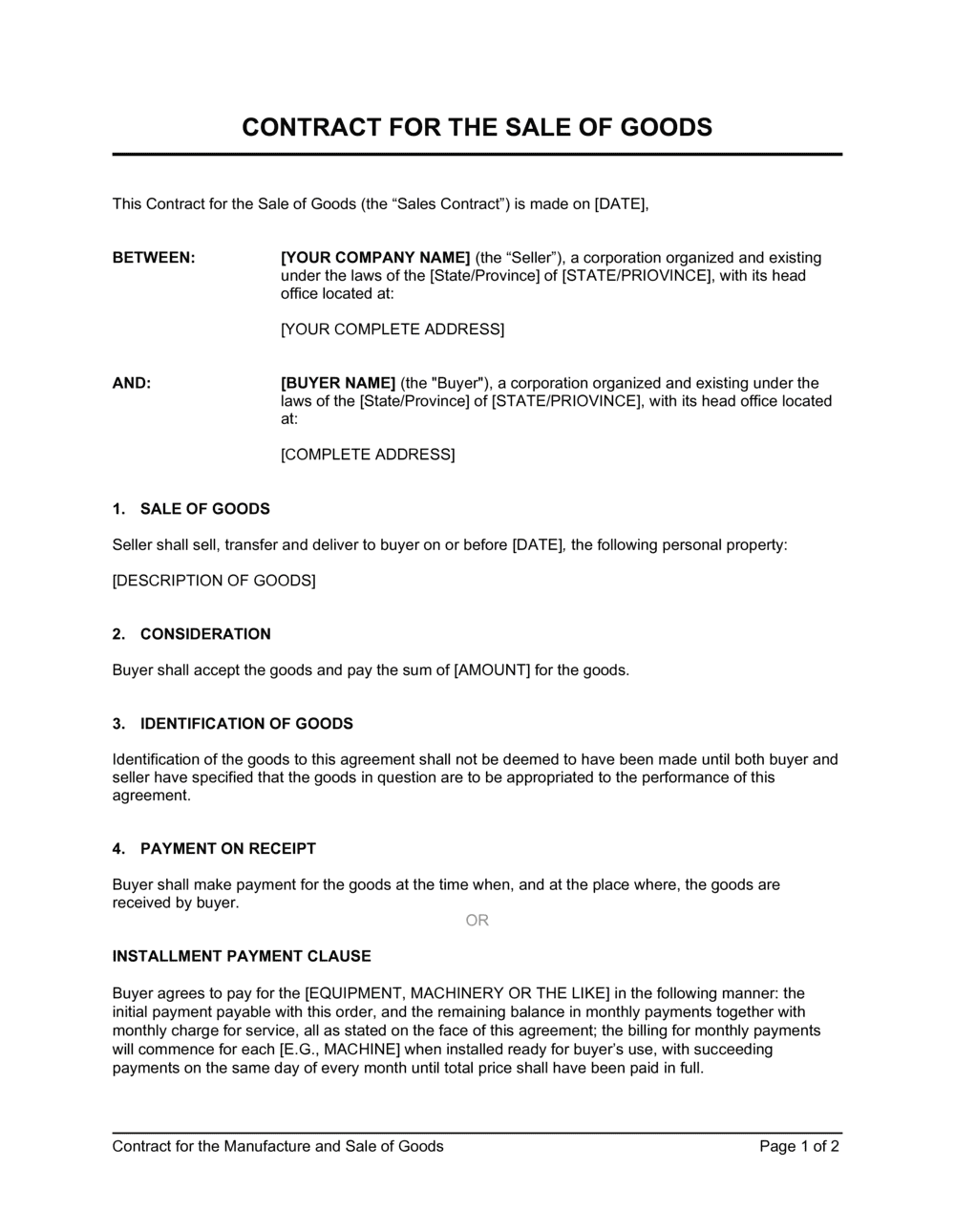
Enter the legal entity names and effective date
Use the full registered legal names of both seller and buyer — not trade names or DBAs. Confirm the entity type (LLC, corporation, sole proprietorship) and the state of formation for each party.
💡 Cross-reference the buyer's legal name against their purchase order or invoice header to ensure the contracting entity matches the paying entity.
2
Complete the goods description and attach specifications
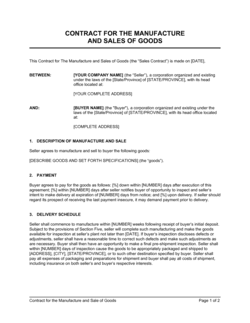
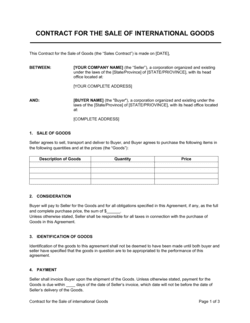
List product name, SKU or model number, quantity, and unit of measure in the body. Attach a detailed specification sheet, technical drawing, or product data sheet as Exhibit A and incorporate it by reference.
💡 If specifications are subject to change, include a version number and date on Exhibit A and add a clause requiring written consent to substitute alternate specifications.
3
Set the purchase price, currency, and payment terms
Enter total and per-unit price, state the currency explicitly, and specify payment method (wire, ACH, check). Set a clear due date (e.g., Net 30 from invoice date) and the late-payment interest rate.
💡 For large orders, consider tiered payment — 30% on signing, 70% on delivery — to reduce counterparty credit risk.
4
Define delivery and shipping terms using a recognized Incoterm or FOB designation
Choose FOB Origin, FOB Destination, or an Incoterm (DAP, CIF, EXW) and enter the specific location. State the delivery date or window and who arranges and pays for freight and insurance.
💡 For domestic US shipments, FOB Destination is simpler — it makes the seller responsible for delivery and removes ambiguity about who files freight claims.
5
Specify when title passes
State whether title transfers on delivery, on payment in full, or on another defined milestone. If the seller wants a security interest until paid, include a purchase-money security interest (PMSI) clause and consider filing a UCC-1 financing statement.
💡 For high-value transactions with extended payment terms, a PMSI protects the seller in a buyer bankruptcy — but it must be perfected by filing before delivery.
6
Set the inspection window and acceptance procedure
Enter the number of business days the buyer has to inspect after delivery, specify how rejection must be communicated (written notice, itemized defect list), and state the remedy — replacement, repair, or refund.
💡 Five business days is standard for most commercial goods; complex equipment may warrant 10–15 days to allow functional testing.
7
Tailor the warranties and add a conspicuous disclaimer
State the duration and scope of any express warranty. If you are disclaiming implied warranties of merchantability or fitness, use all-caps or bold text to satisfy the UCC's conspicuousness requirement.
💡 For equipment resale, confirm your upstream supplier's warranty passthrough rights before making downstream warranty promises you cannot honor.
8
Sign before goods are shipped or payment is made
Both parties must execute before the transaction begins. Use wet signatures or a timestamped e-signature platform. Distribute fully executed copies to both parties and retain with the associated invoice and shipping records.
💡 Attach the signed contract number to the invoice and bill of lading so all three documents can be matched quickly in any dispute or audit.