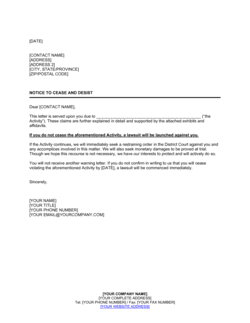
Covenant Not to Sue Template

Free Word download • Edit online • Save & share with Drive • Export to PDF

1 page20–30 min to fillDifficulty: StandardSignature requiredLegal review recommended
Learn more ↓
FreeCovenant Not to Sue Template

At a glance

What it is
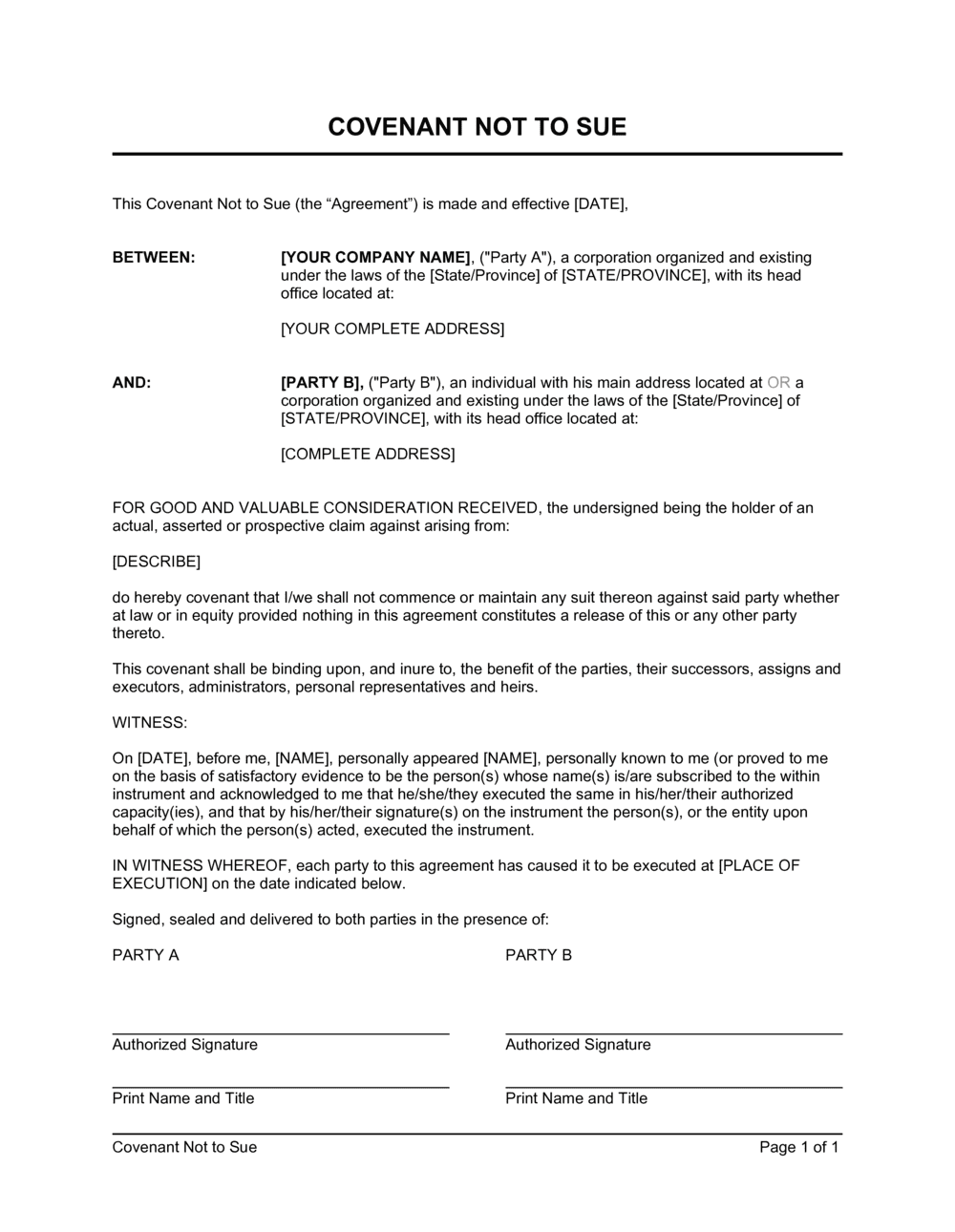
A Covenant Not To Sue is a binding legal agreement in which one party promises not to initiate or continue legal action against another party for a specified claim, while preserving the underlying legal right rather than extinguishing it entirely. This free Word download gives you a professionally structured starting point you can edit online and export as PDF — covering the scope of the promise, consideration, carve-outs, and governing law in a single concise document.
When you need it
Use it when you want to resolve a specific dispute or limit future litigation exposure without executing a full and final release — for example, when settling one claim in a multi-party dispute while preserving claims against other defendants, or when agreeing not to sue over a known defect in exchange for a repair or payment.
What's inside
Identification of the parties and covered claims, the covenant promise itself, consideration paid, any reserved rights or carve-outs, an indemnification obligation for breach, a representation of authority to sign, and the governing law and dispute resolution clause.

What is a Covenant Not To Sue?

A Covenant Not To Sue is a binding contractual agreement in which one party — the covenantor — promises not to initiate or maintain a specified legal action against another party — the covenantee — in exchange for consideration such as a payment, repair, or mutual promise. Unlike a general release of liability, a covenant not to sue does not extinguish the underlying legal claim; the covenantor retains the right in theory but has agreed by contract not to exercise it. This technical distinction matters most in multi-party disputes, where settling with one defendant through a covenant preserves the covenantor's ability to pursue remaining co-defendants without triggering a full release that might benefit those third parties under joint tortfeasor rules.

Why You Need This Document

Without a written covenant not to sue, any oral or informal agreement not to pursue a claim is unenforceable and easily disputed — leaving both parties exposed to litigation that the deal was designed to prevent. In multi-defendant matters, using the wrong document type — a full release instead of a covenant — can inadvertently extinguish claims against co-defendants who paid nothing to settle and contributed to the same harm. The covenantee gains no certainty without a signed document specifying exactly which claims are covered, for how long, and what happens if the covenantor breaches the promise. This template gives both parties a professionally structured, jurisdiction-neutral starting point that captures the scope of the promise, the consideration exchanged, the reserved rights, and an indemnification mechanism — so the agreement does the precise legal work intended rather than creating new disputes about what was settled.

Which variant fits your situation?

If your situation is…Use this template
Settling all claims between two parties with full finalityGeneral Release of Liability
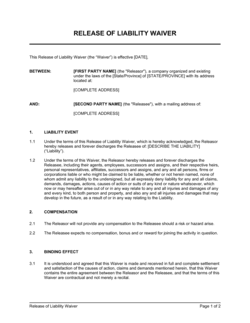
One party releasing another from injury or property damage claimsRelease of Liability Waiver
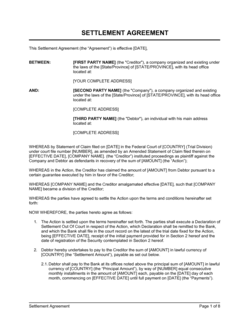
Resolving a specific monetary dispute under a contractSettlement Agreement
Preserving claims against co-defendants while settling with oneCovenant Not To Sue (Multi-Party)
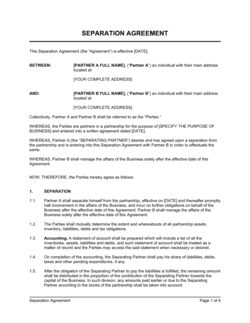
Discharging employment-related claims at terminationSeparation Agreement and Release
Settling a personal injury claim for a defined paymentPersonal Injury Release
Releasing a contractor from defect claims after remediationMutual Release Agreement

Common mistakes to avoid

❌ Drafting an overbroad scope that functions as an unintended full release

Why it matters: Courts in several jurisdictions interpret a covenant covering 'any and all claims' as effectively extinguishing the underlying right, defeating the document's strategic purpose and eliminating leverage against third parties.

Fix: Define the covered claims by specific cause of action, date range, and subject matter. Review the scope clause against the full list of pending and anticipated claims before execution.

❌ Omitting the reserved rights clause in multi-party disputes

Why it matters: Without an explicit carve-out, the remaining defendants may argue the covenant implicitly resolves the entire dispute, triggering pro tanto credits or proportionate fault reductions that under-compensate the covenantor.

Fix: Include a named carve-out for every co-defendant and every category of claim the covenantor intends to preserve, and confirm the language with counsel before signing.

❌ Signing after the covenantor has already assigned the claim to a litigation funder

Why it matters: If the underlying claim has been assigned, the covenantor no longer holds the right to covenant — the funded party may still file suit, rendering the covenant worthless to the covenantee.

Fix: Require the covenantor to represent and warrant no prior assignment has been made, and conduct a reasonable search for any recorded or disclosed funding agreements before accepting the covenant.

❌ Using a covenant when the parties actually intend a full and final settlement

Why it matters: A covenant not to sue preserves the underlying claim — if the covenantee later triggers additional liability from the same events, the covenantor retains the right to sue. This creates ongoing exposure the covenantee thought was resolved.

Fix: Evaluate the document type before drafting. If complete finality is the goal, use a General Release of Liability or a Settlement Agreement with a mutual release clause instead.

❌ Entering the covenant without addressing the applicable statute of limitations

Why it matters: A covenant does not toll or reset the statute of limitations on the preserved claim. If the covenantor waits too long after the covenant period to pursue reserved claims, the right may lapse before they act.

Fix: Note the statute of limitations deadline for every reserved claim in writing at the time of execution, and set calendar reminders so the covenantor can act before rights expire.

❌ Failing to include an indemnification clause for breach

Why it matters: Without an indemnification provision, a covenantee who is sued in breach of the covenant must litigate the breach as a defense — incurring full legal costs with no automatic right to recover them from the breaching covenantor.

Fix: Add an explicit indemnification clause covering all costs, expenses, and attorneys' fees incurred by the covenantee as a result of any breach of the covenant promise.

The 10 key clauses, explained

Parties and recitals

In plain language: Identifies the covenantor and covenantee by full legal name and entity type, and briefly describes the background dispute or circumstance giving rise to the covenant.

Sample language
This Covenant Not To Sue ('Covenant') is entered into as of [DATE] by and between [COVENANTOR FULL LEGAL NAME], a [ENTITY TYPE] ('Covenantor'), and [COVENANTEE FULL LEGAL NAME], a [ENTITY TYPE] ('Covenantee'). WHEREAS, a dispute has arisen between the parties relating to [BRIEF DESCRIPTION OF DISPUTE];

Common mistake: Using trade names or abbreviated names instead of the registered legal entity names. If the covenantor's name does not match the party on the underlying claim, the covenant may fail to bind the correct legal person.

Covenant promise and scope of claims covered

In plain language: The core operative clause — the covenantor's express, binding promise not to file or pursue the specified legal claims against the covenantee.

Sample language
Covenantor hereby covenants and agrees not to institute, maintain, or prosecute any action, suit, or proceeding against Covenantee arising from or relating to [SPECIFIC CLAIM DESCRIPTION], including but not limited to claims for [CAUSE OF ACTION 1] and [CAUSE OF ACTION 2], occurring on or before [DATE].

Common mistake: Defining the covered claims too broadly — sweeping in unrelated future claims the covenantor did not intend to waive. Courts may interpret an overbroad scope as a full release, destroying the document's strategic purpose.

Consideration

In plain language: States what the covenantee pays or provides in exchange for the promise, making the covenant a binding contract rather than a revocable gratuitous promise.

Sample language
In consideration of the payment of [AMOUNT] USD and other good and valuable consideration, the receipt and sufficiency of which are hereby acknowledged, Covenantor agrees to the terms of this Covenant.

Common mistake: Reciting 'nominal consideration of $1' without reflecting actual payment. Courts in some jurisdictions have found nominal consideration inadequate to support a covenant not to sue, particularly when the claim being covenanted is substantial.

Reserved rights and carve-outs

In plain language: Expressly lists any claims, parties, or matters excluded from the covenant's scope that the covenantor retains the right to pursue.

Sample language
Nothing in this Covenant shall be construed to release or limit Covenantor's rights against any third party, including [CO-DEFENDANT / RELATED PARTY NAME], or to waive any claims arising from events occurring after [DATE].

Common mistake: Omitting the reserved rights clause entirely. Without it, a covenantee or court may argue the covenant implicitly covers all claims between the parties, eliminating the strategic advantage of using a covenant rather than a full release.

Indemnification for breach

In plain language: Requires the covenantor to indemnify and hold harmless the covenantee against any losses, legal fees, or damages incurred if the covenantor violates the promise not to sue.

Sample language
In the event Covenantor breaches this Covenant by initiating or maintaining any action covered herein, Covenantor shall indemnify and hold harmless Covenantee from and against all claims, damages, losses, and expenses, including reasonable attorneys' fees, arising from such breach.

Common mistake: Limiting indemnification to direct damages only. Attorneys' fees and defense costs — often the largest exposure in a breach — must be explicitly included or they may not be recoverable.

Representations and warranties

In plain language: Each party confirms it has the authority and capacity to enter the covenant, has not previously assigned the covered claims to a third party, and is not aware of any competing rights.

Sample language
Covenantor represents and warrants that: (a) it has full authority to enter into this Covenant; (b) the covered claims have not been assigned, transferred, or encumbered; and (c) no other person or entity holds a right to assert the covered claims.

Common mistake: Omitting the no-assignment representation. If the covenantor previously assigned the covered claim to a litigation funder or attorney under a contingency fee arrangement, the covenant may not bind the actual claim holder.

Non-admission of liability

In plain language: Confirms that entering the covenant does not constitute an admission of fault, liability, or wrongdoing by either party.

Sample language
This Covenant is made in compromise of a disputed claim. Nothing herein shall be construed as an admission of liability, fault, or wrongdoing by Covenantee or any other party.

Common mistake: Omitting this clause in commercial settings. Without it, the covenant itself can be introduced as evidence of implied liability in related proceedings involving third parties.

Effect on co-defendants and joint tortfeasors

In plain language: Addresses how the covenant interacts with claims against other defendants in multi-party disputes, specifying whether the covenantee receives a pro tanto credit or whether the covenantor's claim against others is preserved in full.

Sample language
This Covenant shall not operate to release any other person or entity from liability for the covered claims. Any recovery by Covenantor against third parties shall be reduced by [the amount paid hereunder / the pro tanto credit applicable under governing law].

Common mistake: Ignoring jurisdiction-specific joint tortfeasor rules. Several US states apply a proportionate-fault credit rather than a pro tanto credit — using the wrong formula can expose the remaining defendants to a windfall or leave the covenantor under-compensated.

Governing law, jurisdiction, and dispute resolution

In plain language: States which jurisdiction's law governs the covenant's interpretation and enforcement, and how any dispute about the covenant itself is resolved — arbitration, mediation, or court.

Sample language
This Covenant shall be governed by the laws of the State of [STATE], without regard to its conflict-of-laws principles. Any dispute arising under this Covenant shall be resolved by binding arbitration in [CITY, STATE] under the rules of the [AAA / JAMS], except that either party may seek injunctive relief in any court of competent jurisdiction.

Common mistake: Choosing a governing law that has no connection to where the covered events occurred or where the parties operate. Courts may decline to enforce a choice-of-law clause that appears designed to evade mandatory local protections.

Integration, amendment, and counterparts

In plain language: Confirms the covenant is the entire agreement on the covered subject, superseding prior discussions, and states how it can be amended and whether electronic or multiple-copy execution is valid.

Sample language
This Covenant constitutes the entire agreement of the parties with respect to the subject matter hereof and supersedes all prior negotiations, representations, and agreements. This Covenant may be executed in counterparts, including by electronic signature, each of which shall be deemed an original.

Common mistake: Omitting the integration clause when prior correspondence included broader promises of settlement. Without it, emails or letters suggesting a full release could be admitted to expand the covenant's scope beyond what was intended.

How to fill it out

  1. 1

    Identify the parties with their full legal names

    Enter each party's complete registered legal name, entity type (LLC, corporation, individual), and state or country of formation. Cross-reference any prior contract or filing to confirm the exact names.

    💡 If the covenantor is an individual acting on behalf of a company, include both — 'Jane Smith, individually and as President of Acme LLC' — to avoid a gap in who is bound.

  2. 2

    Describe the covered claims with precision

    List the specific legal claims, events, or transactions the covenant covers. Include the approximate date range, the nature of the dispute, and any relevant case or claim number if litigation has already been filed.

    💡 Narrow is safer than broad — a tightly defined scope prevents the covenant from being read as a full release and preserves the covenantor's claims against third parties.

  3. 3

    State the consideration clearly

    Enter the exact dollar amount being paid, or describe the non-monetary consideration (repair, replacement, service, or mutual promise) with enough specificity to prove the exchange occurred.

    💡 If payment is being made in installments, include a schedule — 'three equal payments of $X on the 1st of each month beginning [DATE]' — and tie each installment to a condition if applicable.

  4. 4

    Draft the reserved rights and carve-out clause

    List every claim, party, or category the covenantor explicitly does not release — including claims against co-defendants, future claims, and unrelated disputes. Review this clause against the covenantor's full litigation posture before signing.

    💡 Have the covenantor's attorney confirm no prior assignments of the reserved claims exist before finalizing this section.

  5. 5

    Address co-defendant and joint tortfeasor implications

    Identify whether other defendants exist and which credit mechanism — pro tanto or proportionate fault — applies under the governing jurisdiction. Insert the correct formula to prevent an unintended windfall to remaining defendants.

    💡 In multi-defendant insurance matters, confirm with the insurer whether a covenant triggers any right of contribution or subrogation before execution.

  6. 6

    Choose governing law and dispute resolution

    Select the jurisdiction that has the strongest connection to the dispute — typically where the events occurred, where the contract was performed, or where the covenantee operates. Specify arbitration or court-based resolution and the seat.

    💡 If the parties are in different states or countries, check whether the chosen jurisdiction enforces covenants not to sue on the specific claim type — some states require a full release to bar future suit.

  7. 7

    Execute before any statute of limitations expires

    Both parties must sign and date the covenant. Confirm that the covenantor's authority to bind their entity is documented — a board resolution, operating agreement provision, or officer certificate.

    💡 If litigation is already pending, file a notice of covenant or stipulation with the court concurrently to prevent conflicting procedural steps while the covenant is in effect.

  8. 8

    Retain executed copies and update internal records

    Store the fully executed covenant in your contract management system alongside the original dispute file. Note the effective date and any renewal or expiration terms in your compliance calendar.

    💡 If the covenant was entered to avoid a specific lawsuit, set a calendar reminder for any applicable statute of limitations date — the underlying claim still exists and could theoretically be revived if the covenant is later challenged.

Frequently asked questions

What is a covenant not to sue?

A covenant not to sue is a binding contractual promise by one party not to initiate or continue a specified legal action against another party. Unlike a release of liability, it does not extinguish the underlying legal right — the covenantor still technically holds the claim but has contractually agreed not to assert it. This distinction matters most in multi-defendant disputes where the covenantor wants to settle with one party while preserving claims against others.

What is the difference between a covenant not to sue and a release of liability?

A release of liability permanently extinguishes the underlying legal claim — once signed, the releasing party has no right to sue, period. A covenant not to sue preserves the underlying right but creates a contractual obligation not to exercise it. Practically, both bar the same lawsuit, but a covenant allows the covenantor to maintain claims against joint tortfeasors without those parties arguing the entire dispute was resolved. Courts in some jurisdictions treat the two documents as functionally equivalent; in others the distinction is legally significant.

When should I use a covenant not to sue instead of a settlement agreement?

Use a covenant not to sue when you want to resolve a claim against one specific party without releasing co-defendants or settling every dispute simultaneously. Settlement agreements typically include mutual releases that extinguish all claims between the parties. A covenant is the right tool when the dispute is ongoing in a multi-party context, when the covenantor needs to preserve rights for strategic or insurance reasons, or when the parties want to avoid the finality of a full release.

Is a covenant not to sue legally enforceable?

Yes, a properly executed covenant not to sue is generally enforceable as a contract in most jurisdictions, provided it includes adequate consideration, clear identification of the covered claims, and is signed by parties with authority to bind themselves or their entities. Enforceability may be limited when the covenant covers claims that cannot be waived by contract — such as certain statutory employment or consumer rights — or when its scope is found to be unconscionable. Consider consulting a lawyer to confirm enforceability under the governing jurisdiction's specific rules.

Can a covenant not to sue protect against future claims?

A covenant can be written to cover future claims, but courts scrutinize prospective waivers carefully. Most covenants are limited to known claims arising from a defined event or time period. An overly broad future-claims covenant risks being struck down as unconscionable or against public policy — particularly in consumer, employment, and personal injury contexts where statutory protections may override contractual waivers. Limit future coverage to specific, identifiable categories of claims where the parties have fully assessed the risk.

Does a covenant not to sue affect claims against co-defendants?

In most jurisdictions, a properly drafted covenant not to sue does not release co-defendants — that is its primary advantage over a full release. However, many states apply a pro tanto or proportionate-fault credit rule, reducing the covenantor's potential recovery from remaining defendants by the amount received from the settling party. The specific credit mechanism depends on governing law, so the joint tortfeasor clause must reflect the applicable jurisdiction's rules to avoid unintended consequences.

Does signing a covenant not to sue require notarization?

In most commercial and civil contexts, notarization is not required for a covenant not to sue to be enforceable — the signatures of authorized parties with valid consideration are typically sufficient. Certain real estate or government-contract related covenants may require notarization or witnessing under local law. Electronic signatures are accepted in most jurisdictions under ESIGN, UETA (US), or equivalent statutes, though confirm this is acceptable for the specific claim type involved.

What happens if the covenantor breaches the covenant and files suit anyway?

If the covenantor files suit in breach, the covenantee may raise the covenant as a complete defense and seek dismissal. If an indemnification clause was included, the covenantee can also seek reimbursement of all legal costs incurred defending the action. In some jurisdictions, the covenantee may pursue a separate breach-of-contract claim for damages caused by the wrongful filing. Without an indemnification clause, the covenantee must still absorb defense costs even while winning on the covenant defense.

Should I get a lawyer to draft or review a covenant not to sue?

For straightforward single-party commercial disputes with clear claim boundaries, a well-prepared template is a solid starting point. Legal review is strongly recommended when the covenant involves multiple defendants, significant monetary claims, complex IP or real estate rights, pending litigation, or parties in different jurisdictions. An attorney can confirm the scope of covered claims, ensure the document does not inadvertently function as a full release, and tailor the joint tortfeasor language to the applicable jurisdiction — typically a 1–2 hour engagement costing $300–$700.

How this compares to alternatives

vs General Release of Liability

A general release permanently extinguishes the underlying legal claim — the releasing party has no further right to sue on that matter, ever. A covenant not to sue preserves the underlying right but creates a contractual obligation not to assert it. Use a general release when you need complete finality; use a covenant when you need to settle with one party while keeping claims alive against others.

vs Settlement Agreement

A settlement agreement is a broader document that resolves an entire dispute — typically including a mutual release, payment terms, confidentiality, and dismissal of any pending litigation. A covenant not to sue is a narrower tool that addresses only the promise not to sue, without necessarily resolving all outstanding obligations or claims between the parties. The two documents are sometimes used together.

vs Mutual Release Agreement

A mutual release discharges claims in both directions — each party releases the other simultaneously. A covenant not to sue is typically unilateral: one party promises not to sue the other, but the covenantee does not necessarily release counterclaims. Use a mutual release when both sides have live claims against each other and want a clean break in all directions.

vs Separation Agreement

A separation agreement resolves the full employment relationship at termination — severance, benefits continuation, non-disparagement, and a release of employment claims. A covenant not to sue covers only the promise not to litigate a specific claim and is not designed to address the broader obligations that arise when an employment relationship ends. Use a separation agreement for departing employees; a covenant when resolving a standalone commercial or IP dispute.

Industry-specific considerations

Insurance and Claims Management

Frequently used to settle a claimant's action against one insured in a multi-defendant loss while preserving subrogation rights or direct claims against co-defendants not covered by the settling policy.

Real Estate and Construction

Used to resolve a specific defect, boundary, or easement dispute between a developer and one contractor or neighbor while other claims or related proceedings against remaining parties continue.

Technology and Intellectual Property

Deployed in patent or trade secret disputes to limit enforcement against a specific licensee or co-founder while preserving broader IP rights against the market or other defendants.

Healthcare and Life Sciences

Used to resolve an individual patient or provider claim in a multi-claimant action, limiting the provider's or manufacturer's exposure on that specific matter without creating a precedent-setting full release applicable to the broader claim class.

Jurisdictional notes

United States

Enforceability and legal effect vary significantly by state. Some states — including New York and California — treat a covenant not to sue as functionally equivalent to a release for purposes of barring future suit, while others preserve the technical distinction. Joint tortfeasor credit rules differ: approximately half of US states apply a pro tanto credit, while others use proportionate-fault reduction. Several states require specific statutory language for covenants covering personal injury claims. Always confirm state-specific requirements before execution.

Canada

Canadian courts generally recognize the distinction between a covenant not to sue and a full release, but the practical effect depends on provincial law. Ontario and British Columbia courts have held that a covenant bars suit without discharging joint obligors, preserving contribution rights in multi-party matters. Quebec civil law applies different principles — under the Civil Code of Quebec, a renunciation of a right must be clear and unequivocal. French-language versions may be required for provincially regulated parties in Quebec.

United Kingdom

English law recognizes covenants not to sue as distinct from full releases and generally enforces them according to their terms. A covenant with one joint tortfeasor does not, at common law, release co-defendants, making it a preferred tool in multi-party disputes. However, the Civil Liability (Contribution) Act 1978 may still entitle a co-defendant to seek contribution from the covenantee depending on the circumstances. Scottish law applies different common-law principles; take separate advice for Scottish proceedings.

European Union

EU member states apply varying national contract laws to covenants not to sue — there is no harmonized EU instrument governing this document type. In civil law jurisdictions such as Germany and France, waiver of procedural rights is interpreted narrowly and future-claims waivers may be unenforceable. GDPR considerations arise when the covenant involves processing of personal data related to the dispute. Cross-border covenants involving parties in multiple member states should specify the governing national law and exclusive jurisdiction clause with care.

Template vs lawyer — what fits your deal?

PathBest forCostTime
Use the templateSingle-party commercial disputes with clearly defined claim scope, modest monetary stakes, and domestic partiesFree30–60 minutes
Template + legal reviewMulti-defendant disputes, IP or real estate claims, cross-border parties, or matters where pending litigation is involved$300–$700 for a 1–2 hour attorney review2–5 business days
Custom draftedHigh-value claims, complex joint tortfeasor calculations, regulated industries such as healthcare or financial services, or matters that will be filed with a court$1,000–$4,000+1–3 weeks

Glossary

Covenant Not To Sue
A contractual promise not to initiate or continue a specified legal action, which preserves the underlying cause of action rather than extinguishing it.
Release of Liability
A document that permanently extinguishes a legal claim, preventing the releasing party from ever asserting it again — stronger and more final than a covenant not to sue.
Consideration
Something of legal value exchanged between the parties — money, services, or a mutual promise — that makes the covenant enforceable as a contract.
Cause of Action
The specific legal claim or set of facts that entitles a party to seek relief from a court, such as breach of contract, negligence, or infringement.
Covenantor
The party making the promise not to sue — typically the party who holds or could assert the underlying legal claim.
Covenantee
The party receiving the benefit of the promise — the one protected from the threatened or potential litigation.
Reserved Rights
Claims explicitly excluded from the scope of the covenant, which the covenantor retains the right to pursue against the covenantee or third parties.
Indemnification
An obligation by the covenantor to compensate the covenantee for losses incurred if the covenantor breaches the promise not to sue.
Joint Tortfeasor
One of two or more parties whose concurrent negligence or wrongdoing contributed to the same harm — relevant when a covenant settles claims against one defendant while preserving claims against others.
Accord and Satisfaction
A method of discharging a claim by accepting a payment or performance different from what was originally owed — distinct from a covenant, which does not discharge the debt.
Pro Tanto Credit
A reduction in the judgment amount a plaintiff can recover from remaining defendants by the amount already received from a settling co-defendant.
Governing Law
The jurisdiction whose laws apply to interpret and enforce the covenant, typically stated explicitly to prevent disputes about which court or legal system controls.

Part of your Business Operating System

This document is one of 3,000+ business & legal templates included in Business in a Box.

  • Fill-in-the-blanks — ready in minutes
  • 100% customizable Word document
  • Compatible with all office suites
  • Export to PDF and share electronically

Create your document in 3 simple steps.

From template to signed document — all inside one Business Operating System.
1
Download or open template

Access over 3,000+ business and legal templates for any business task, project or initiative.

2
Edit and fill in the blanks with AI

Customize your ready-made business document template and save it in the cloud.

3
Save, Share, Send, Sign

Share your files and folders with your team. Create a space of seamless collaboration.

Save time, save money, and create top-quality documents.

★★★★★

"Fantastic value! I'm not sure how I'd do without it. It's worth its weight in gold and paid back for itself many times."

Managing Director · Mall Farm
Robert Whalley
Managing Director, Mall Farm Proprietary Limited
★★★★★

"I have been using Business in a Box for years. It has been the most useful source of templates I have encountered. I recommend it to anyone."

Business Owner · 4+ years
Dr Michael John Freestone
Business Owner
★★★★★

"It has been a life saver so many times I have lost count. Business in a Box has saved me so much time and as you know, time is money."

Owner · Upstate Web
David G. Moore Jr.
Owner, Upstate Web

Run your business with a system — not scattered tools

Stop downloading documents. Start operating with clarity. Business in a Box gives you the Business Operating System used by over 250,000 companies worldwide to structure, run, and grow their business.

Free Forever Plan · No credit card required