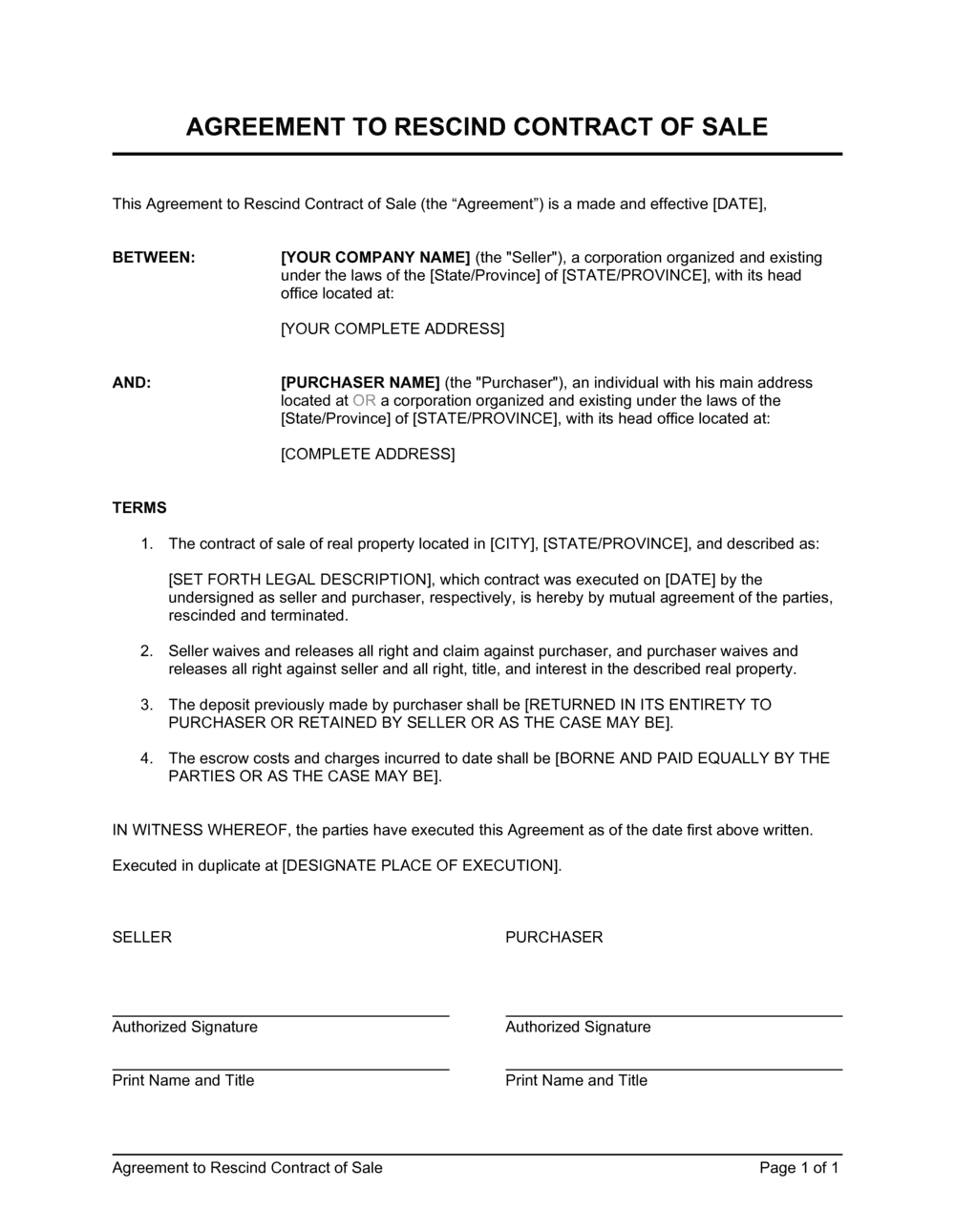
Agreement to Rescind Contract of Sale Template

Free Word download • Edit online • Save & share with Drive • Export to PDF

1 page20–30 min to fillDifficulty: StandardSignature requiredLegal review recommended
Learn more ↓
FreeAgreement to Rescind Contract of Sale Template

At a glance

What it is
An Agreement to Rescind Contract of Sale is a legally binding document that both a buyer and seller sign to mutually cancel an existing sale contract and restore each party to the position they occupied before the original agreement was made. This free Word download provides a structured template you can edit online and export as PDF — covering the identification of the original contract, the return of consideration, mutual releases, and any outstanding obligations between the parties.
When you need it
Use it when both parties agree to walk away from a completed or partially performed sale — whether due to changed circumstances, a failed condition precedent, or a mutual commercial decision to unwind the transaction. It is particularly important when deposit payments, partial deliveries, or ongoing obligations need to be formally addressed in writing before either party takes further action.
What's inside
Identification of the original contract and parties, the effective date of rescission, return-of-consideration terms (deposits, payments, delivered goods), mutual release of claims, confidentiality obligations, warranties of authority, a no-further-liability clause, and governing law with signature blocks for both parties.

What is an Agreement to Rescind Contract of Sale?

An Agreement to Rescind Contract of Sale is a legally binding document signed by both a buyer and a seller to mutually cancel an existing sale contract and restore each party to the legal and financial position they occupied before the original agreement was made. Unlike a termination that ends a contract going forward, rescission treats the contract as though it never came into existence — requiring the return of all consideration exchanged, whether that means refunding a deposit, returning delivered goods, or transferring assets back to the original owner. The agreement also provides a mutual release of claims, ensuring that neither party can later sue the other for breach of the contract being rescinded.

This template is a free Word download covering every essential clause: identification of the original contract, the effective rescission date, return-of-consideration terms with specific timelines, mutual releases with appropriate carve-outs for surviving obligations such as confidentiality, a no-admission-of-liability provision, and a governing law clause consistent with the original transaction.

Why You Need This Document

When two parties decide to walk away from a sale, a handshake or an email exchange is rarely sufficient protection for either side. Without a signed rescission agreement, the original contract remains technically in force — either party can still claim the other is in breach, seek damages, or demand specific performance. The return of a deposit without written documentation does not extinguish claims; it may even be characterized as a partial settlement that leaves residual liability on the table.

A properly executed agreement to rescind closes those gaps completely. It creates an unambiguous record that both parties consented to the cancellation, documents exactly what was returned and when, discharges all claims arising from the original contract, and preserves any obligations — confidentiality, indemnity, IP ownership — that the parties want to keep in force after the unwind. For businesses managing multiple transactions, having a documented rescission on file also protects against audit queries, future litigation, and disputes with insurers or financiers who need to verify that a particular sale is no longer active. This template gives both parties a clean, enforceable exit in under an hour.

Which variant fits your situation?

If your situation is…Use this template
Both parties agree to cancel the sale with all payments returnedAgreement to Rescind Contract of Sale (Full Rescission)
Only part of the transaction needs to be unwoundContract Amendment (Partial Modification)
The seller is at fault and the buyer wants to cancel unilaterallyNotice of Contract Termination
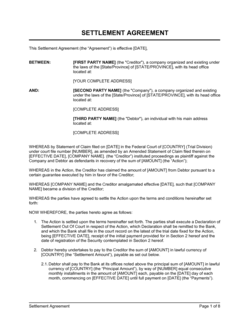
Settling a dispute over a failed sale with a financial paymentSettlement Agreement
Canceling a real estate purchase agreement specificallyReal Estate Contract Cancellation
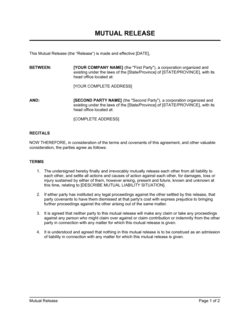
Releasing all claims after both parties performed and now want a clean breakMutual Release Agreement
Terminating a services contract rather than a sale of goodsContract Termination Agreement (Services)

Common mistakes to avoid

❌ Returning consideration before the agreement is signed

Why it matters: Returning money or goods before executing the rescission agreement can be interpreted as a unilateral gesture of goodwill rather than a contractually documented unwind, leaving the returning party without a signed release.

Fix: Always obtain fully executed signatures on the rescission agreement before initiating any return of payment or goods. Link the return obligation to a post-signature deadline.

❌ Omitting a carve-out for confidentiality obligations

Why it matters: Rescinding the original contract in its entirety — without preserving its confidentiality clause — can release the counterparty from obligations to protect sensitive pricing, technology, or customer information already shared.

Fix: Review the original contract's confidentiality clause before drafting the rescission and include an explicit carve-out preserving those obligations for a defined period post-rescission.

❌ Using vague return timelines such as 'as soon as possible'

Why it matters: Ambiguous return timelines generate follow-up disputes about whether one party is in breach of the rescission agreement itself — creating a second dispute on top of the one you were trying to close.

Fix: State the exact number of business days (e.g., 'within 10 business days of the Effective Date') and the specific payment method and destination for any monetary return.

❌ Failing to address partial performance before the rescission date

Why it matters: If work was completed, goods were partially delivered, or services were partially rendered before the rescission, failing to address how those are valued and settled leaves both parties exposed to claims for unjust enrichment.

Fix: Include a separate clause accounting for any pre-rescission performance — either by adjusting the return amount, issuing a credit, or documenting that the parties have agreed the partial performance is waived.

❌ Not including a no-admission-of-liability clause in disputed rescissions

Why it matters: When a rescission follows a performance dispute, courts and insurers have cited the act of rescission itself as evidence of an implied acknowledgment of fault, affecting indemnity coverage and future litigation.

Fix: Add an explicit no-admission clause any time the rescission arises from a dispute, warranty failure, or alleged breach — and have a lawyer review the clause wording if litigation has been threatened.

❌ Signing the rescission with someone who lacks authority

Why it matters: If the signatory was not authorized to bind the entity — for example, a mid-level manager signing without board or officer authorization — the rescission agreement may be voidable, meaning the original contract could still be enforceable.

Fix: Verify and document signing authority before execution. For entities, require the signature of a director, officer, or an individual with a board resolution confirming authorization to rescind.

The 10 key clauses, explained

Identification of the original contract

In plain language: Names both parties and precisely identifies the sale contract being rescinded — including its date, subject matter, and any reference number — so there is no ambiguity about what is being canceled.

Sample language
This Agreement to Rescind is entered into as of [DATE] between [PARTY A LEGAL NAME] ('Buyer') and [PARTY B LEGAL NAME] ('Seller'), with respect to the Contract of Sale dated [ORIGINAL CONTRACT DATE] for the purchase and sale of [DESCRIPTION OF GOODS / ASSETS / PROPERTY] ('Original Contract').

Common mistake: Describing the original contract vaguely — 'the sale agreement we signed last month' — instead of citing the exact date and subject matter. A loose reference creates a dispute about which contract is being rescinded.

Mutual agreement to rescind

In plain language: States that both parties freely and voluntarily agree to cancel the original contract and that the rescission is effective as of the stated date.

Sample language
The parties hereby mutually agree to rescind the Original Contract in its entirety, effective [EFFECTIVE DATE]. Upon the Effective Date, the Original Contract shall be of no further force or effect.

Common mistake: Omitting the word 'mutually' or framing the clause as one party terminating the other's rights. Courts treat unilateral termination differently from mutual rescission — the distinction affects liability and damages exposure.

Return of consideration

In plain language: Specifies exactly what each party must return to the other — purchase price, deposit, delivered goods, transferred assets — and the deadline and method for doing so.

Sample language
Within [X] business days of the Effective Date: (a) Seller shall return to Buyer the sum of $[AMOUNT], representing the deposit/purchase price paid under the Original Contract; (b) Buyer shall return to Seller all goods/assets received, in substantially the same condition as delivered.

Common mistake: Stating that consideration will be returned 'promptly' without specifying a number of days or a method of payment. 'Promptly' has been litigated to mean anywhere from 3 to 60 days depending on jurisdiction.

Mutual release of claims

In plain language: Each party releases the other from any and all claims, demands, and liabilities arising out of or related to the original contract and its rescission — past, present, and future.

Sample language
Each party hereby releases and discharges the other party from any and all claims, demands, causes of action, losses, and liabilities, known or unknown, arising out of or related to the Original Contract, except as expressly preserved in this Agreement.

Common mistake: Using a one-sided release that only discharges one party. If only the buyer releases the seller, the seller retains full ability to pursue claims arising from the buyer's conduct under the original contract.

Carve-outs and preserved obligations

In plain language: Lists any obligations that survive the rescission — such as confidentiality obligations already in force, indemnities for pre-rescission conduct, or intellectual property protections.

Sample language
Notwithstanding the foregoing, the following obligations under the Original Contract shall survive rescission: (a) confidentiality obligations under Section [X]; (b) indemnification for claims arising from [PARTY]'s conduct prior to the Effective Date.

Common mistake: Rescinding the entire contract without preserving confidentiality or indemnity clauses that were already triggered. Parties often discover this gap only after sensitive information is disclosed or a third-party claim arrives.

Representations and warranties of authority

In plain language: Each signatory represents that they are duly authorized to execute the rescission agreement and that doing so does not violate any other agreement or obligation.

Sample language
Each party represents and warrants that: (a) it has full authority to enter into and perform this Agreement; (b) execution of this Agreement does not violate any other contract, law, or obligation binding on it.

Common mistake: Skipping the authority warranty entirely for individual signatories acting on behalf of entities. If the signatory lacked authority, the rescission itself may be challenged.

No admission of liability

In plain language: Confirms that agreeing to rescind does not constitute an admission of fault or wrongdoing by either party — important if there was a dispute or performance failure leading to the decision to unwind.

Sample language
This Agreement and the rescission effected hereby do not constitute, and shall not be construed as, an admission of liability, wrongdoing, or breach of any obligation by either party.

Common mistake: Omitting this clause when the rescission follows a dispute. Without it, the counterparty — or a third party such as an insurer — may later argue the rescission was an implied acknowledgment of fault.

Confidentiality of rescission terms

In plain language: Restricts both parties from disclosing the terms of the rescission agreement to third parties, unless required by law or with written consent.

Sample language
The parties agree to keep the terms of this Agreement confidential and shall not disclose them to any third party without the prior written consent of the other party, except as required by applicable law, regulation, or court order.

Common mistake: Omitting a confidentiality clause when the rescission involves commercially sensitive pricing or product information. The absence of a clause means the counterparty can freely disclose the terms to competitors, suppliers, or the press.

Governing law and dispute resolution

In plain language: Specifies which jurisdiction's law governs the rescission agreement and how any disputes about the rescission will be resolved — litigation, arbitration, or mediation.

Sample language
This Agreement shall be governed by and construed in accordance with the laws of [STATE / PROVINCE / COUNTRY], without regard to its conflict-of-law principles. Any dispute arising under this Agreement shall be resolved by [binding arbitration / litigation] in [CITY / VENUE].

Common mistake: Choosing a governing law that differs from the one in the original contract without good reason. Inconsistent governing law clauses create jurisdictional uncertainty if a dispute arises about whether the rescission was validly executed.

Entire agreement and amendment

In plain language: States that the rescission agreement is the complete and final record of the parties' agreement to cancel the original contract, superseding all prior discussions, and can only be amended in writing signed by both parties.

Sample language
This Agreement constitutes the entire agreement between the parties with respect to the rescission of the Original Contract and supersedes all prior negotiations, representations, and understandings. This Agreement may only be amended by a written instrument signed by both parties.

Common mistake: Not including this clause after a drawn-out negotiation where many positions were exchanged by email. Without it, prior email threads and verbal concessions can be introduced as part of the agreement.

How to fill it out

  1. 1

    Identify and describe the original contract precisely

    Enter both parties' full legal names, the exact date the original contract was signed, and a clear description of the subject matter — goods, property, business assets, or IP — covered by the sale.

    💡 Attach a copy of the original contract as an exhibit and reference it by exhibit letter in the rescission agreement to eliminate any ambiguity about which contract is being canceled.

  2. 2

    Set the effective date of rescission

    Choose the specific calendar date on which the rescission takes legal effect. This may be the date of signing or a future date if time is needed to arrange the return of consideration.

    💡 If return of consideration requires more than a few days to arrange, set the effective date after the return deadline — this prevents a gap where the contract is technically rescinded but money or goods have not yet changed hands.

  3. 3

    Specify what is being returned and the timeline

    List every item of consideration to be returned: the exact dollar amount, the method of payment (wire transfer, check, ACH), and the number of business days from the effective date by which return must occur. If goods are being returned, describe their required condition.

    💡 Denominate the return amount in the same currency as the original contract and specify the bank account or delivery address to avoid delays.

  4. 4

    Draft the mutual release with appropriate carve-outs

    Write a broad mutual release covering all claims arising from the original contract, then identify specific obligations — confidentiality, indemnity, pre-existing IP rights — that should survive the rescission.

    💡 Check the original contract's survival clause before drafting carve-outs. Obligations already designated to survive termination in the original contract typically survive rescission as well unless you explicitly override them.

  5. 5

    Add the no-admission-of-liability clause if the rescission follows a dispute

    If the decision to rescind arose from a disagreement over performance, a breach allegation, or a warranty failure, include the no-admission clause to prevent the other party from using the rescission as evidence of fault.

    💡 If litigation has already been filed or threatened, have a lawyer review this clause before signing — a poorly worded no-admission provision may not be sufficient protection in court.

  6. 6

    Confirm governing law matches the original contract

    Unless there is a specific reason to change it, use the same governing law and dispute resolution mechanism as the original contract. Note that choice of law is checked against the actual transaction — parties cannot arbitrarily choose a jurisdiction with no connection to the deal.

    💡 For cross-border transactions, confirm that the chosen jurisdiction recognizes mutual rescission as a valid legal mechanism and that no local consumer protection or commercial law overrides the parties' agreement.

  7. 7

    Obtain signatures from authorized signatories before any money moves

    Both parties must sign before consideration is returned. Obtain a fully executed copy with wet or electronic signatures from individuals with documented authority to bind each organization.

    💡 Use dated signatures — even by one day — to establish a clear sequence of events if the rescission is later challenged. eSign platforms that timestamp execution provide the strongest evidence.

Frequently asked questions

What is an agreement to rescind a contract of sale?

An agreement to rescind a contract of sale is a signed document in which both a buyer and a seller mutually agree to cancel an existing sale contract and return each party to the position they held before the agreement was made. It typically covers the return of any deposit or purchase price paid, the return of goods or assets transferred, a mutual release of claims, and the discharge of all outstanding obligations under the original contract.

What is the difference between rescission and termination of a contract?

Rescission treats the contract as though it never existed and aims to restore the parties to the status quo ante — requiring the return of all consideration exchanged. Termination ends a contract prospectively, preserving obligations that accrued before the termination date. If a deposit was paid and goods were delivered, rescission requires everything to go back; termination may allow the parties to keep what they have earned up to the termination point.

Does a rescission agreement need to be in writing?

In most jurisdictions, mutual rescission can technically be oral, but a written agreement is strongly recommended and in practice essential for any commercial transaction. Without a written record, disputes arise over what was agreed, what is to be returned, and whether the release of claims was genuinely mutual. For sales of real property, written rescission is generally required by statute.

Can one party rescind a sale contract without the other party's agreement?

Unilateral rescission is only available in specific circumstances — typically where one party can demonstrate fraud, material misrepresentation, a fundamental breach, or a failed condition precedent. This template covers mutual rescission, where both parties agree. Unilateral rescission is a legal remedy that typically requires a formal demand letter and, if disputed, court proceedings. Consider consulting a lawyer before attempting to rescind unilaterally.

What happens to a deposit when a sale contract is rescinded?

In a mutual rescission, the deposit is typically returned to the buyer in full as part of restoring the status quo ante, unless the parties specifically agree to a different allocation — for example, the seller retaining a portion to cover administrative costs or partially performed obligations. The rescission agreement should state the exact amount to be returned, the method of return, and the deadline to prevent any ambiguity.

Is stamp duty or transfer tax refundable when a sale is rescinded?

This varies significantly by jurisdiction. In many US states, real estate transfer taxes may be partially refunded if the deed was not recorded or the sale did not close. In the UK, Stamp Duty Land Tax may be recoverable if the transaction is rescinded before completion. In Canada, provincial land transfer tax refund rules differ by province. Always check applicable tax authority rules and consult a tax advisor before assuming tax payments will be recoverable.

Can a partially performed sale contract be rescinded?

Yes, but partial performance complicates the rescission because restoring the parties to the status quo ante may not be fully possible if goods have been consumed, services rendered, or property altered. In these cases, the rescission agreement should include a clause addressing how partial performance is valued and whether any compensating payment is required. Courts in most jurisdictions will enforce a mutual agreement to rescind a partially performed contract provided the parties have genuinely consented and adequately addressed the value of what was exchanged.

Do I need a lawyer to rescind a contract of sale?

For straightforward commercial sale contracts with no dispute, no partial performance, and a clear return of consideration, a well-drafted template is typically sufficient. Engage a lawyer when the transaction involves real property, significant partial performance, an active dispute or litigation threat, cross-border parties, or complex assets such as IP or a business as a going concern. A one-hour legal review for a template-based rescission typically costs $200–$500 and provides meaningful protection against drafting errors.

How this compares to alternatives

vs Contract Termination Agreement

A contract termination agreement ends a contract prospectively from the termination date, allowing both parties to keep what they earned up to that point. An agreement to rescind treats the contract as though it never existed and requires the return of all consideration exchanged. Use termination when partial performance should stand; use rescission when you want a clean slate with everything returned.

vs Mutual Release Agreement

A mutual release discharges both parties from claims against each other but does not necessarily cancel the underlying contract or require the return of consideration. A rescission agreement does both — it cancels the contract and addresses the return of what was exchanged. When a sale has fully closed and both parties simply want to eliminate residual liability, a mutual release may suffice; when the sale needs to be fully unwound, a rescission agreement is the correct document.

vs Settlement Agreement

A settlement agreement resolves a specific dispute — typically with one party paying the other a negotiated sum — without necessarily canceling the original contract or requiring full return of consideration. A rescission agreement is not a dispute resolution tool; it is a structured unwind of a transaction that both parties agree to cancel. If the rescission is contested or involves a compensatory payment beyond pure return of consideration, a settlement agreement may be more appropriate.

vs Amendment to Contract of Sale

A contract amendment modifies specific terms of an existing sale agreement while keeping the contract alive and enforceable. A rescission agreement cancels the contract in its entirety. Use an amendment when the parties want to adjust price, delivery dates, or specifications; use a rescission agreement when they want to exit the transaction completely and return to their pre-contract positions.

Industry-specific considerations

Real Estate

Rescission of property purchase agreements before closing, addressing deposit return, title search costs, and any recorded instrument cancellation requirements.

Retail and Wholesale

Cancellation of bulk purchase orders for goods not yet delivered or in transit, including return logistics, restocking fee waivers, and currency adjustment clauses.

Technology and SaaS

Unwinding IP asset acquisitions or software license purchase agreements, with careful carve-outs preserving confidentiality and data deletion obligations.

Manufacturing

Rescinding equipment or raw materials purchase contracts where specifications changed or financing fell through, with provisions for return shipping costs and inspection.

Professional Services

Canceling the sale of a professional practice or client book, addressing client notification obligations, file transfer, and non-compete clause survival.

Financial Services

Unwinding asset purchase agreements in regulated contexts, with attention to regulatory notification requirements and the treatment of any escrowed funds.

Jurisdictional notes

United States

Mutual rescission is recognized in all US states under common-law contract principles. For real estate transactions, written rescission is required in virtually every state, and recorded deeds may require a formal deed of rescission to be filed with the county recorder. Some states impose specific timelines for returning deposits in residential real estate contexts. Tax implications — including any applicable transfer tax refunds — vary by state and should be verified with a local attorney or tax advisor.

Canada

Mutual rescission is enforceable across Canadian provinces under common-law and, in Quebec, under the Civil Code of Quebec. For real estate, the formal cancellation of a registered transfer or agreement of purchase and sale typically requires a release document filed with the provincial land registry. Provincial land transfer tax refund eligibility varies — Ontario, British Columbia, and Quebec each have distinct rules. French-language documentation requirements apply in Quebec for any agreement where at least one party is a Quebec resident.

United Kingdom

Rescission is a well-established equitable remedy in English, Scots, and Northern Irish law. Mutual rescission by agreement is enforceable without court involvement. For land transactions, any registered title changes resulting from a rescinded sale must be dealt with through HM Land Registry. Stamp Duty Land Tax paid on a transaction may be recoverable by application to HMRC if the rescission occurs before or shortly after completion, subject to strict time limits. Consumer sale transactions may also engage the Consumer Rights Act 2015 if one party is an individual purchaser.

European Union

Rescission rules vary significantly across EU member states — civil law jurisdictions such as France, Germany, Spain, and the Netherlands each have distinct statutory frameworks governing the unwinding of sale contracts. The EU Consumer Rights Directive provides withdrawal rights in B2C transactions, but B2B mutual rescission is governed by national contract law. GDPR obligations are relevant where the original contract involved the transfer of personal data, as rescission does not automatically satisfy data erasure or return obligations. Cross-border transactions should identify the governing law at the outset, as the Rome I Regulation determines which national law applies.

Template vs lawyer — what fits your deal?

PathBest forCostTime
Use the templateStraightforward commercial sale contracts with no dispute, no partial performance, and a clear cash return between domestic partiesFree30–60 minutes
Template + legal reviewTransactions involving partial delivery, an active disagreement, real property, or cross-border parties$200–$500 for a one-hour lawyer review1–3 days
Custom draftedBusiness acquisitions, regulated asset sales, multi-party transactions, or any rescission where litigation has been threatened or filed$1,000–$5,000+1–2 weeks

Glossary

Rescission
The legal cancellation of a contract that returns both parties to the positions they occupied before the agreement was made, as if the contract never existed.
Mutual Rescission
A rescission agreed to by both parties voluntarily, as opposed to a court-ordered rescission or one triggered by breach.
Consideration
The payment, goods, or other value exchanged when the original contract was formed — what must be returned to unwind the transaction.
Restitution
The obligation to restore benefits received under a contract that has been rescinded — typically the return of money paid or goods delivered.
Condition Precedent
An event or requirement that must occur before a contract obligation becomes enforceable — a failed condition precedent is a common trigger for rescission.
Mutual Release
A clause in which each party agrees to give up any claim it may have against the other arising from the original contract and its rescission.
Status Quo Ante
Latin for 'the state that existed before' — the goal of rescission is to return both parties to the status quo ante.
Void vs. Voidable Contract
A void contract has no legal effect from the start; a voidable contract is valid but can be canceled by one or both parties under certain conditions — rescission typically applies to voidable contracts.
Entire Agreement Clause
A provision stating that the rescission agreement supersedes all prior discussions and representations about the cancellation of the original contract.
Effective Date
The specific date on which the rescission takes legal effect, after which neither party has rights or obligations under the original contract.
Warranty of Authority
Each signatory's representation that they are authorized to bind their respective organization to the rescission agreement.

Part of your Business Operating System

This document is one of 3,000+ business & legal templates included in Business in a Box.

  • Fill-in-the-blanks — ready in minutes
  • 100% customizable Word document
  • Compatible with all office suites
  • Export to PDF and share electronically

Create your document in 3 simple steps.

From template to signed document — all inside one Business Operating System.
1
Download or open template

Access over 3,000+ business and legal templates for any business task, project or initiative.

2
Edit and fill in the blanks with AI

Customize your ready-made business document template and save it in the cloud.

3
Save, Share, Send, Sign

Share your files and folders with your team. Create a space of seamless collaboration.

Save time, save money, and create top-quality documents.

★★★★★

"Fantastic value! I'm not sure how I'd do without it. It's worth its weight in gold and paid back for itself many times."

Managing Director · Mall Farm
Robert Whalley
Managing Director, Mall Farm Proprietary Limited
★★★★★

"I have been using Business in a Box for years. It has been the most useful source of templates I have encountered. I recommend it to anyone."

Business Owner · 4+ years
Dr Michael John Freestone
Business Owner
★★★★★

"It has been a life saver so many times I have lost count. Business in a Box has saved me so much time and as you know, time is money."

Owner · Upstate Web
David G. Moore Jr.
Owner, Upstate Web

Run your business with a system — not scattered tools

Stop downloading documents. Start operating with clarity. Business in a Box gives you the Business Operating System used by over 250,000 companies worldwide to structure, run, and grow their business.

Start free · No credit card required