- Credit Limit
- The maximum outstanding balance a creditor authorizes the account holder to carry at any one time.
- Trade Credit
- An arrangement allowing a business customer to receive goods or services immediately and pay the supplier at a later agreed date.
- Net 30 / Net 60
- Payment terms requiring the full invoice balance to be paid within 30 or 60 days of the invoice date.
- Personal Guarantee
- A commitment by an individual — typically a director or owner — to repay the credit balance personally if the business defaults.
- Security Interest
- A creditor's legal right over a debtor's asset as collateral, which the creditor can claim if the debtor fails to pay.
- Default
- A failure to meet the payment obligations set out in the credit agreement, triggering the creditor's remedies such as suspension of the account or collection action.
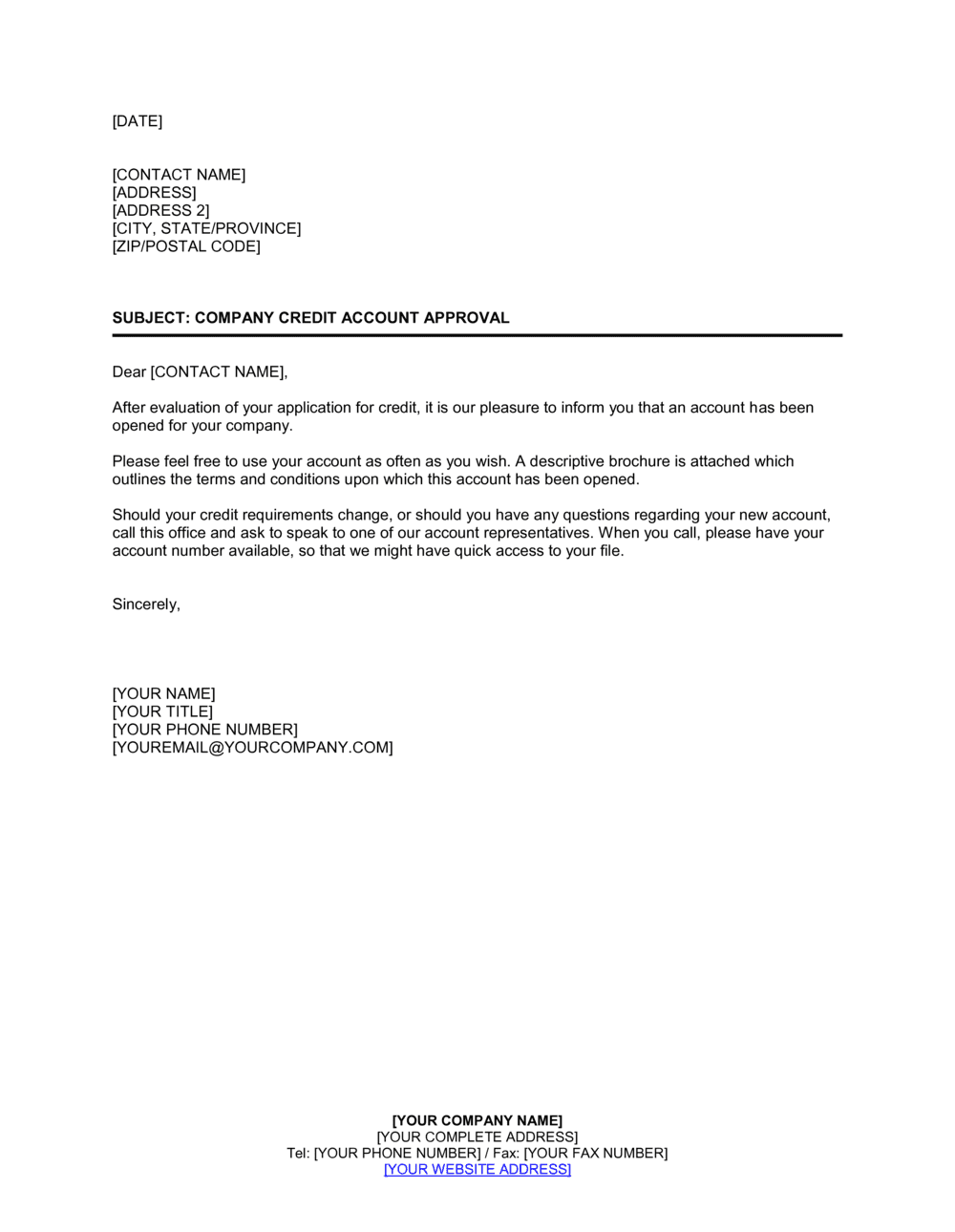
- Approbation
- Formal approval or sanction — in a credit context, the creditor's written confirmation that the applicant's credit account request has been reviewed and accepted on stated terms.
- Accounts Receivable
- Money owed to a creditor by customers for goods or services delivered on credit but not yet paid for.
- Late Payment Fee
- A charge applied to unpaid balances remaining after the due date, expressed as a fixed amount or a monthly percentage of the outstanding sum.
- Credit Review
- A periodic reassessment by the creditor of the account holder's creditworthiness, which may result in a limit increase, reduction, or account suspension.
- Recourse
- The creditor's legal right to pursue repayment through collection, litigation, or enforcement of a guarantee or security interest after default.
- Subordination
- An agreement in which one creditor ranks behind another in priority when recovering debt from a defaulting debtor.