- Adverse Action
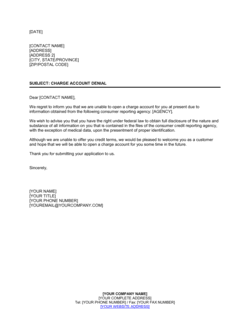
- Any denial of credit, reduction of credit, or change in credit terms that is unfavorable to an applicant, as defined under the Equal Credit Opportunity Act and Fair Credit Reporting Act.
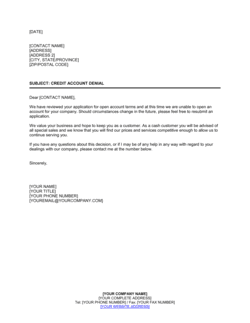
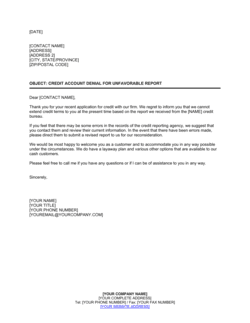
- Adverse Action Notice
- A written disclosure creditors must send to applicants when taking adverse action, stating the reasons and the applicant's rights under applicable credit law.
- FCRA (Fair Credit Reporting Act)
- A US federal law that regulates how consumer reporting agencies collect and use consumer information, and requires creditors to disclose when a credit report influenced a denial decision.
- ECOA (Equal Credit Opportunity Act)
- A US federal law that prohibits creditors from discriminating against applicants based on race, color, religion, national origin, sex, marital status, age, or receipt of public assistance.
- Consumer Reporting Agency (CRA)
- A company — such as Equifax, Experian, or TransUnion — that collects and sells consumer credit information to creditors and other permissible users.
- Credit Score
- A three-digit numerical score, typically ranging from 300 to 850, that summarizes a consumer's creditworthiness based on their credit history.
- Adverse Action Code
- A standardized numerical code from a regulatory list (such as the FFIEC list) that identifies a specific reason for a credit denial, such as insufficient income or delinquent past credit.
- Permissible Purpose
- A legally recognized reason under the FCRA that allows a creditor or other party to access a consumer's credit report without their direct consent.
- Counteroffer
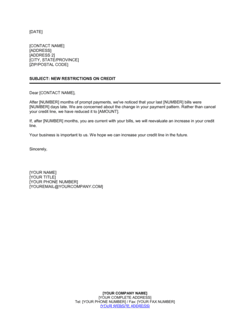
- An offer of credit on terms different from those applied for — for example, a lower credit limit — which itself constitutes an adverse action if the applicant did not request those terms.
- Regulation B
- The Federal Reserve regulation that implements the Equal Credit Opportunity Act, setting specific requirements for the content and timing of adverse action notices.
- Risk-Based Pricing Notice
- A separate disclosure required when a creditor offers credit on less favorable terms than those offered to other consumers, based on information in the applicant's consumer report.