1
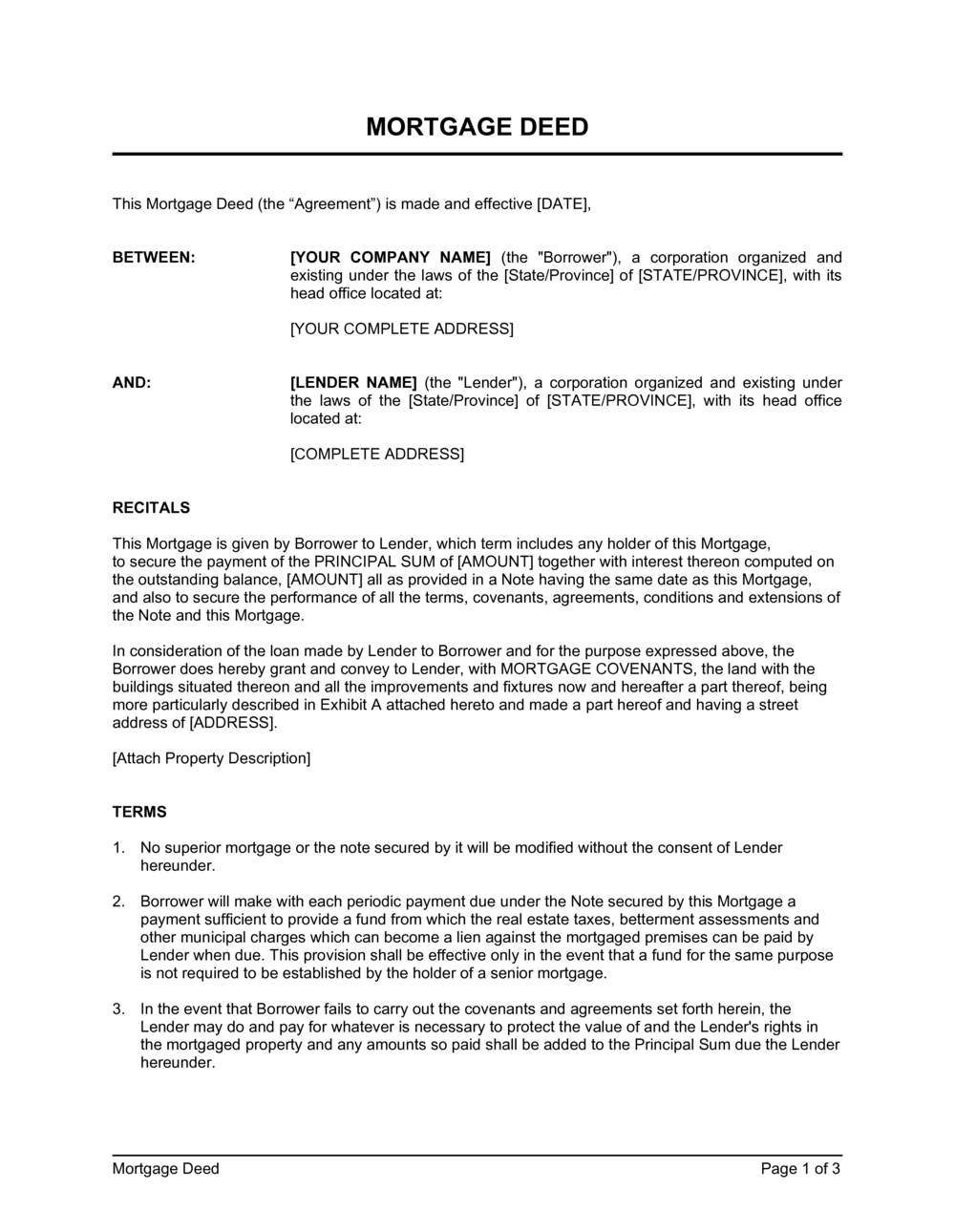
Enter the full legal names and addresses of both parties
Use the borrower's legal name exactly as it appears on the property title. For the lender, use the registered entity name. Include complete mailing addresses for both parties.
💡 If the property is held by a trust or LLC, the entity — not the individual — must appear as mortgagor, and you will need the entity's organizational documents at closing.
2
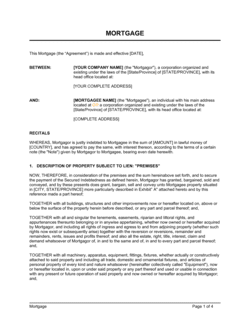
Insert the full legal property description
Obtain the legal description from the current title deed, survey, or title commitment. Copy it verbatim — lot number, block, subdivision, and any metes-and-bounds language — into the property description clause.
💡 Never rely on a street address or assessor parcel number alone. The legal description is the only description that perfects the lien against third parties in every jurisdiction.
3
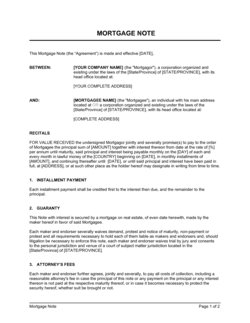
State the loan amount, interest rate, and repayment schedule
Enter the principal amount, whether the rate is fixed or variable (and if variable, the index, margin, and cap), the number and amount of monthly payments, and the maturity date.
💡 Cross-reference these figures against the Promissory Note executed simultaneously — any discrepancy between the two documents creates enforceability risk.
4
Complete the borrower covenants block
Specify minimum insurance coverage amounts, name the lender as additional insured or loss payee, and confirm the tax payment covenant. Add any property-specific restrictions the lender requires — no demolition, no subdivision, no unauthorized liens.
💡 Set a notice-and-cure period of at least 30 days for non-monetary covenant breaches to reduce wrongful-foreclosure exposure.
5
Define default events and cure periods
List each event of default with precision — number of days for a payment default, days for notice-and-cure on covenant breaches, and triggering events such as bankruptcy or unauthorized transfer.
💡 Check the statutory notice requirements in the governing jurisdiction before setting cure periods. Several US states mandate 30–90 day cure notices before a lender can accelerate or foreclose.
6
Select the applicable foreclosure remedy
Choose judicial foreclosure, power of sale, or deed of trust structure based on where the property is located. Remove inapplicable remedy language from the template to avoid conflict.
💡 In approximately 30 US states, a deed of trust (with a trustee) is the preferred security instrument over a traditional mortgage — consult local counsel before choosing the form.
7
Have the deed executed before a notary
Both parties must sign before a notary public (or, in the UK, before a witness). Notarization is required for recording in virtually every US state and Canadian province.
💡 Ensure the notary's commission has not expired before the signing appointment — an expired-commission notarization is a defective acknowledgment and will be rejected by the recorder's office.
8
Record the deed with the land registry immediately after closing
Submit the notarized original to the county recorder, land registry office, or relevant authority in the jurisdiction where the property is located. Pay the applicable recording or stamp duty fees.
💡 Recording priority is determined by the date and time of filing in most jurisdictions — delay in recording can allow a subsequent lender who records first to take a superior lien position.