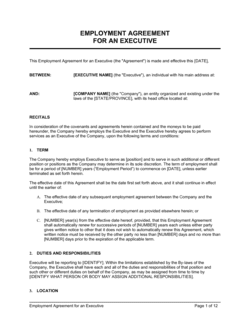
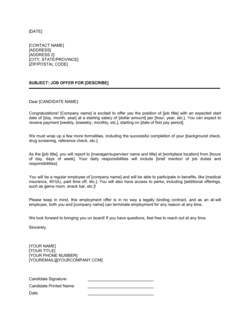
CEO Job Description Template

Free Word download β€’ Edit online β€’ Save & share with Drive β€’ Export to PDF

2 pagesβ€’20–30 min to fillβ€’Difficulty: Standardβ€’Signature requiredβ€’Legal review recommended
Learn more ↓
FreeCEO Job Description Template

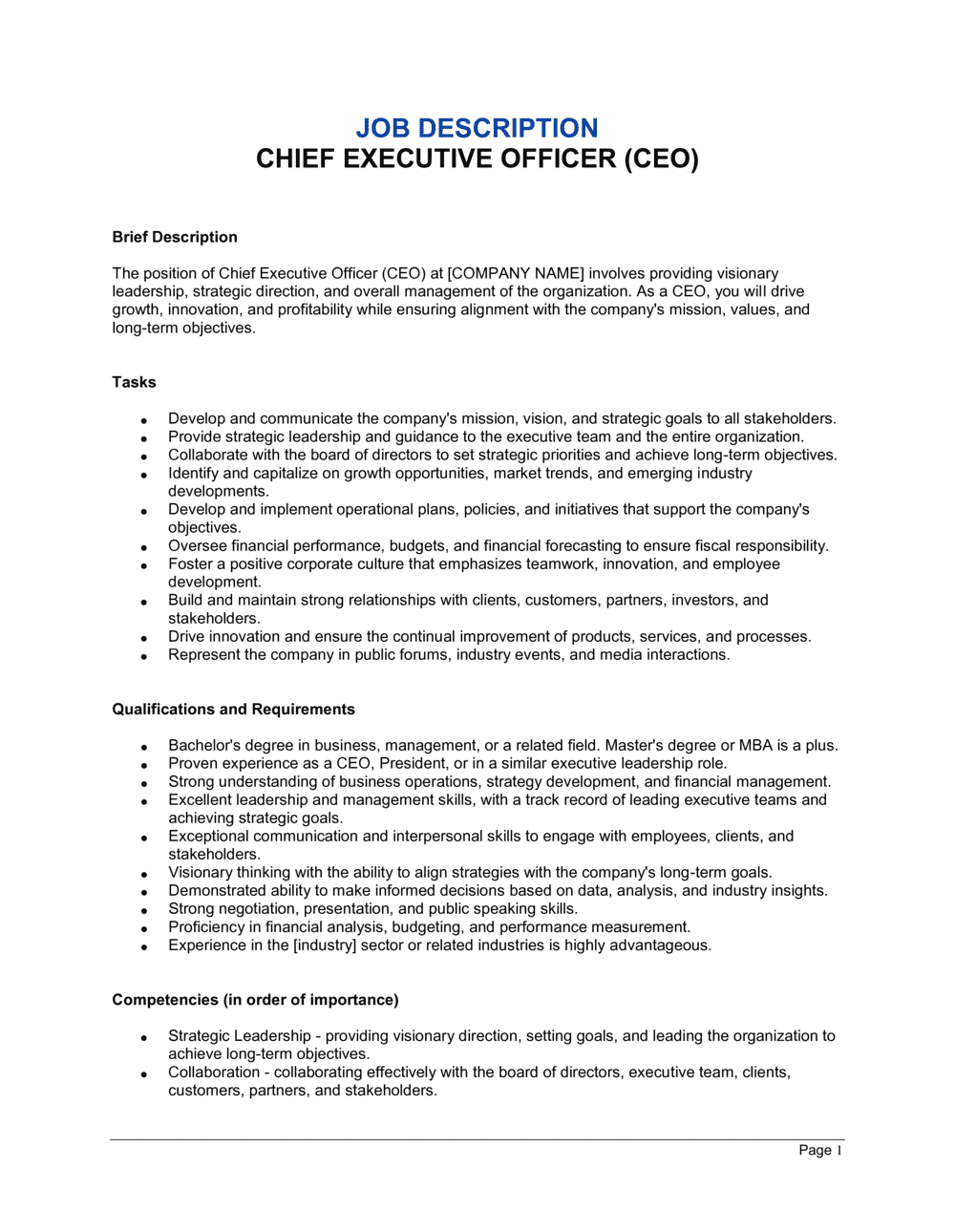
At a glance

What it is
A CEO Job Description is a formal document that defines the scope of authority, core responsibilities, reporting structure, required qualifications, and performance expectations of the Chief Executive Officer role. This free Word download gives boards, HR teams, and governance advisors a structured, board-ready starting point they can edit online and export as PDF for use in executive recruitment, employment agreements, and corporate governance records.
When you need it
Use it when recruiting a new CEO, formalizing an existing executive's role during a governance review, or attaching a position description to an executive employment agreement. Boards and compensation committees also reference it when setting performance targets and evaluating CEO compensation.
What's inside
Position summary, primary duties and strategic responsibilities, reporting structure and board relationship, required qualifications and experience, key performance indicators, authority limits, and compensation framework. The document is structured to attach directly to an executive employment agreement or board resolution as a governing schedule.

What is a CEO Job Description?

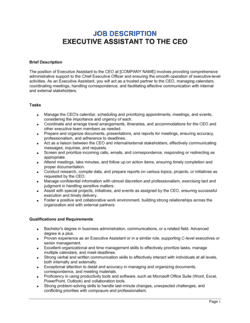
A CEO Job Description is a formal governance document that defines the scope of authority, core responsibilities, reporting structure, required qualifications, and performance expectations of the Chief Executive Officer role within an organization. Unlike a generic HR job posting, a board-approved CEO job description is a living governance instrument β€” approved by board resolution, attached as a schedule to the executive employment agreement, and referenced in annual performance reviews and compensation decisions. It establishes the boundaries of executive authority, the metrics against which the CEO will be evaluated, and the obligations owed to the board and the organization. When properly drafted and executed, it functions as a binding operational and governance reference that protects both the company and the executive throughout the CEO's tenure.

Why You Need This Document

Without a documented and board-approved CEO job description, organizations face four compounding risks. First, authority boundaries are undefined β€” executives and boards disagree on what requires approval and what the CEO can decide unilaterally, leading to either micromanagement or unauthorized commitments. Second, performance reviews become subjective contests rather than objective evaluations against agreed metrics, creating legal exposure when underperformance must be addressed. Third, fiduciary disputes are harder to resolve when the CEO's specific duties and obligations were never formally documented. Fourth, executive recruitment suffers β€” search firms and candidates expect a detailed, board-approved position description as a signal of organizational maturity. This template gives boards, HR leaders, and governance advisors a structured starting point that closes all four gaps, attaches cleanly to an executive employment agreement, and meets the documentation standards expected by institutional investors, lenders, and regulators.

Which variant fits your situation?

If your situation is…Use this template
Recruiting a CEO for a publicly traded companyCEO Job Description (Public Company)
Defining a CEO role for a startup at Series A or earlierCEO Job Description (Startup)
Hiring a CEO for a nonprofit or charitable organizationExecutive Director Job Description
Attaching a role description to a binding executive contractExecutive Employment Agreement
Defining duties for an interim or acting CEOInterim CEO Job Description
Documenting a COO role alongside the CEO descriptionCOO Job Description
Creating a full C-suite role definition suiteC-Suite Job Description Pack

Common mistakes to avoid

❌ Reporting line assigned to an individual instead of the board

Why it matters: When a CEO nominally reports to the chairman or a single controlling shareholder rather than the full board, it creates governance ambiguity that complicates performance reviews, terminations, and regulatory filings.

Fix: State clearly that the CEO reports to the Board of Directors as a whole and that individual directors hold no unilateral authority over the CEO outside of a formal board resolution.

❌ No specific dollar thresholds for board approval

Why it matters: Vague language like 'material transactions' or 'significant expenditures' is interpreted differently by every executive and director, leading to either micromanagement or unauthorized commitments.

Fix: Insert specific dollar amounts for every category of delegated authority β€” purchase approvals, contract execution, hiring above a salary threshold, and capital reallocation β€” and review them annually.

❌ KPIs that are not measurable or not within the CEO's control

Why it matters: Unmeasurable KPIs make annual performance reviews subjective and legally fragile β€” a CEO terminated for underperformance against vague targets is well-positioned to challenge the termination.

Fix: Each KPI must reference a data source, a baseline, and a target value. If you cannot answer 'how will we measure this in 12 months,' remove it.

❌ Job description not attached to the executive employment agreement

Why it matters: A standalone job description has limited enforceability. Without formal attachment to the employment agreement, duties and authority limits may be treated as aspirational rather than contractual.

Fix: Reference the job description as a named schedule in the employment agreement, have both documents signed on the same date, and store executed copies together in the governance record.

❌ Listing operational tasks that belong to direct reports

Why it matters: Including tasks owned by the COO, CFO, or other executives creates overlapping accountability, undermines the direct reports' authority, and makes the CEO's performance review impossible to anchor.

Fix: Audit every duty against the direct reports' job descriptions before finalizing. Anything that appears on both should be resolved β€” either the CEO owns it or the direct report does, not both.

❌ No amendment and board approval clause

Why it matters: Without a stated approval date and amendment process, the job description's governance standing is ambiguous. In disputes, courts have treated undated, unapproved descriptions as non-binding drafts.

Fix: Include the board resolution date, the resolution number if available, and a clause stating that any material amendment requires board approval. Attach the signed board minutes approving the document.

The 10 key clauses, explained

Position title and organizational context

In plain language: States the full title of the role, the employing legal entity, and where the CEO sits in the organizational hierarchy relative to the board and direct reports.

Sample language
Position Title: Chief Executive Officer | Employing Entity: [COMPANY LEGAL NAME] | Reports To: Board of Directors | Direct Reports: [CFO, COO, CMO, CTO, and other C-suite roles as applicable]

Common mistake: Listing the CEO as reporting to the 'Chairman' rather than the full Board of Directors β€” this misallocates accountability and can trigger governance disputes when board composition changes.

Position summary and strategic mandate

In plain language: A 3–5 sentence summary of why the role exists, the strategic outcomes it is accountable for, and the scope of authority it carries.

Sample language
The Chief Executive Officer is the senior-most executive of [COMPANY NAME] and is accountable for the company's overall strategic direction, operational performance, and financial results. The CEO leads a team of [X] employees, oversees a budget of $[X], and is responsible for delivering [STRATEGIC OBJECTIVE] by [DATE/PERIOD].

Common mistake: Writing a position summary that describes daily activities rather than strategic outcomes. Boards and investors read job descriptions to understand accountability, not schedules.

Primary duties and responsibilities

In plain language: An enumerated list of the CEO's core responsibilities β€” typically grouped into strategy, operations, financial management, people leadership, and external relations.

Sample language
1. Develop and execute the company's annual and long-term strategic plan in alignment with the board's mandate. 2. Ensure financial performance meets or exceeds targets approved by the board. 3. Build, develop, and retain the senior leadership team. 4. Serve as the primary external spokesperson for the company with investors, media, and key partners.

Common mistake: Including operational tasks that belong to the COO or CFO β€” bloating the list dilutes accountability and makes performance reviews harder to anchor.

Board relationship and governance obligations

In plain language: Defines how the CEO interacts with the board β€” meeting cadence, reporting obligations, matters requiring prior board approval, and the CEO's role in board committee support.

Sample language
The CEO shall attend all scheduled Board of Directors meetings, present monthly management reports to the board, and seek prior board approval for any transaction exceeding $[X] or any material deviation from the approved annual budget. The CEO shall support the Audit and Compensation Committees as required.

Common mistake: Omitting specific dollar thresholds for transactions requiring board approval. Vague language like 'material decisions' creates disputes about what required authorization after the fact.

Qualifications and experience requirements

In plain language: Lists the minimum and preferred educational background, years of relevant experience, functional expertise, and leadership track record required for the role.

Sample language
Required: Bachelor's degree in [FIELD] or equivalent; minimum [X] years of senior executive experience including [X] years as a P&L owner; demonstrated track record of scaling a business from $[X]M to $[X]M in revenue. Preferred: MBA or equivalent advanced degree; public company board experience; experience in [INDUSTRY].

Common mistake: Setting qualifications so narrowly β€” requiring a specific industry background or exact revenue range β€” that they eliminate qualified candidates who could transition from adjacent sectors.

Key performance indicators and success metrics

In plain language: Defines the measurable outcomes against which the CEO's performance will be evaluated, typically on an annual basis and tied to compensation review.

Sample language
The CEO's performance will be evaluated annually against the following KPIs: (a) Revenue growth of [X]% year-over-year; (b) Adjusted EBITDA margin of [X]%; (c) Employee engagement score above [X] percentile; (d) Achievement of [STRATEGIC MILESTONE] by [DATE].

Common mistake: Including KPIs that are not measurable or that the CEO cannot directly influence β€” such as stock price targets for pre-revenue companies or market share in markets with no tracking data.

Delegated financial and operational authority

In plain language: Explicitly states the financial and operational authority the CEO holds to act without prior board approval β€” purchase limits, hiring authority, contract execution, and capital allocation.

Sample language
Subject to the approved annual budget, the CEO is authorized to: (a) approve expenditures up to $[X] per transaction; (b) execute contracts with a total value not exceeding $[X]; (c) hire and terminate direct reports; and (d) reallocate up to [X]% of departmental budget within a fiscal quarter without board approval.

Common mistake: No delegated authority clause at all, which forces every operational decision to the board β€” creating bottlenecks and signaling a lack of trust that undermines the CEO's ability to lead.

Compensation and benefits framework

In plain language: Summarizes the compensation structure β€” base salary range, bonus target, equity participation, and benefits β€” acknowledging that full terms are governed by the executive employment agreement.

Sample language
Base Salary: $[RANGE] per annum | Annual Bonus Target: [X]% of base salary, subject to KPI achievement | Equity: As set out in the Executive Employment Agreement and applicable equity plan | Benefits: As per the company's executive benefits program.

Common mistake: Specifying exact bonus amounts or equity percentages in the job description rather than the employment agreement β€” creating an amendment obligation every time compensation is adjusted.

Confidentiality and conflict-of-interest obligations

In plain language: States the CEO's obligations to protect company information and to disclose and avoid conflicts of interest, with a reference to the fuller treatment in the employment agreement.

Sample language
The CEO shall maintain the confidentiality of all non-public information relating to [COMPANY NAME] and shall promptly disclose to the Board any actual or potential conflict of interest. The CEO shall not hold a board seat, advisory role, or material equity interest in a competing business without prior written board approval.

Common mistake: Treating this clause as optional because the employment agreement covers it β€” the job description serves as a standalone governance document, and its absence here creates a gap when the job description is referenced independently of the contract.

Amendment and approval

In plain language: States that the job description is subject to periodic review, identifies who has authority to amend it, and records the board approval date.

Sample language
This Position Description was approved by the Board of Directors of [COMPANY NAME] on [DATE] by resolution and is subject to annual review. Any material amendment requires approval by a majority of the Board. This document forms Schedule [X] to the Executive Employment Agreement dated [DATE].

Common mistake: No approval or amendment clause, leaving the document's governance status ambiguous β€” courts have treated unsigned, undated job descriptions as aspirational rather than binding when disputes arise.

How to fill it out

  1. 1

    Enter the company's legal name and organizational context

    Replace all [COMPANY NAME] placeholders with the registered legal entity name. Confirm the reporting line is to the Board of Directors β€” not to an individual director or chairman β€” and list the expected direct reports by title.

    πŸ’‘ Cross-reference the corporate bylaws to confirm the CEO's formal title matches the officer title designated in the charter.

  2. 2

    Write the position summary around strategic outcomes

    Draft a 3–5 sentence summary that defines why the role exists and what success looks like at a company level β€” revenue scale, market position, or transformation mandate. Avoid describing daily activities.

    πŸ’‘ Have the board chair review this section before the full document is finalized β€” the summary is the section most frequently quoted in compensation disputes and performance reviews.

  3. 3

    Enumerate primary duties by accountability area

    Group responsibilities into four to six categories β€” strategy, financial performance, people leadership, external relations, governance, and operations. List three to five duties per category. Assign only duties the CEO directly owns, not those delegated to other executives.

    πŸ’‘ If a duty appears in both the CEO and COO descriptions, resolve the overlap before finalizing β€” duplicated ownership is a governance red flag.

  4. 4

    Define board relationship and approval thresholds

    Specify the meeting cadence, reporting obligations, and exact dollar thresholds for transactions requiring prior board approval. Use specific numbers β€” $250,000, not 'material amounts.'

    πŸ’‘ Calibrate approval thresholds to the company's annual revenue β€” a $250K threshold is meaningful for a $10M company but creates bottlenecks for a $500M operation.

  5. 5

    Set qualifications that are necessary, not ideal

    Distinguish required qualifications from preferred ones. Required criteria should be the minimum necessary for the role β€” preferred criteria expand the pool. Avoid over-specifying industry experience unless it is genuinely non-transferable.

    πŸ’‘ Legal counsel in several jurisdictions recommends reviewing qualifications for inadvertent age, gender, or nationality bias before posting the description externally.

  6. 6

    Specify KPIs that are measurable and within the CEO's control

    Set three to five KPIs that can be tracked against existing data systems. Each KPI should have a baseline, a target, and a measurement date. Tie KPIs to the compensation review cycle.

    πŸ’‘ Avoid including KPIs that depend primarily on macroeconomic conditions β€” such as absolute stock price β€” unless the compensation committee has built a peer-benchmarking adjustment into the review process.

  7. 7

    State delegated financial authority with specific limits

    Enter the dollar thresholds for expenditure approval, contract execution, and budget reallocation. Confirm these limits align with the board's Delegation of Authority policy and the executive employment agreement.

    πŸ’‘ If the company has a formal Delegation of Authority matrix, reference it here by document name and date rather than repeating every limit.

  8. 8

    Obtain board approval and attach to the employment agreement

    Present the completed job description to the board for approval by resolution. Record the approval date and resolution number. Attach the signed document as a named schedule to the CEO's executive employment agreement.

    πŸ’‘ Store both the board-approved job description and the executed employment agreement in the same governance folder β€” having them in separate systems is the most common reason they fall out of sync.

Frequently asked questions

What is a CEO job description?

A CEO job description is a formal governance document that defines the Chief Executive Officer's scope of authority, core responsibilities, reporting structure, required qualifications, and performance expectations. Unlike a casual position summary in a job posting, a board-approved CEO job description is typically attached to the executive employment agreement as a binding schedule and used as the reference point for annual performance reviews and compensation decisions.

Who approves a CEO job description?

The Board of Directors approves the CEO job description, typically by formal resolution recorded in the board minutes. In most jurisdictions, this is a governance best practice and, in regulated industries, a compliance requirement. The compensation committee often leads the drafting process before presenting the final document to the full board for approval.

What is the difference between a CEO job description and an executive employment agreement?

A CEO job description defines the role β€” duties, authority, qualifications, and KPIs. An executive employment agreement is the binding contract governing compensation, termination, severance, IP, and confidentiality. The two documents work together: the job description is typically attached as a schedule to the employment agreement. Having one without the other creates legal and governance gaps.

Does a CEO job description need to be legally binding?

A CEO job description becomes legally binding when it is incorporated by reference into the executive employment agreement and both documents are executed together. A standalone job description that is board-approved but not attached to the employment contract carries persuasive weight in disputes but may not be enforceable as a standalone contract obligation. Attaching it as a named schedule to the employment agreement is the recommended approach in most jurisdictions.

What KPIs should be included in a CEO job description?

KPIs should cover the dimensions the board considers most critical β€” typically financial performance (revenue growth, EBITDA margin, cash runway), strategic milestones (product launches, market entries, funding rounds), people metrics (leadership team retention, engagement scores), and governance obligations (board meeting attendance, regulatory compliance). Each KPI must reference a specific target and a data source. Boards typically set three to five KPIs to keep the review process focused.

How often should a CEO job description be updated?

A CEO job description should be reviewed annually as part of the board's governance calendar and updated whenever there is a material change in the company's strategy, scale, or ownership structure. When a new CEO is appointed, the description should be reviewed and reapproved before the new executive's employment agreement is signed. A description more than two years old without review is typically out of alignment with the business's current needs.

Can a CEO job description be used for recruitment as well as governance?

Yes β€” a well-drafted CEO job description serves dual purposes. Externally, it forms the basis of the recruitment advertisement and briefing materials sent to executive search firms. Internally, it becomes the governance document attached to the employment agreement and referenced in performance reviews. Boards typically produce a shorter external-facing version that omits internal authority thresholds and compensation ranges while retaining duties and qualifications.

What authority limits should a CEO job description include?

At minimum, the job description should specify the dollar threshold above which the CEO must seek board approval for expenditures, contracts, and capital commitments. It should also address hiring authority (e.g., the CEO can hire and terminate direct reports without board approval), budget reallocation limits, and any restrictions on entering joint ventures or strategic partnerships. These limits should be calibrated to the company's revenue and risk tolerance and reviewed annually.

Do I need a lawyer to draft a CEO job description?

For most small to mid-size businesses, a high-quality template is sufficient for the job description itself β€” the legal complexity is concentrated in the executive employment agreement. Engage a lawyer when the CEO description is being used in a regulated industry, when it will be used as the basis for a performance-based termination, or when it involves cross-border governance with conflicting jurisdiction requirements. A 1–2 hour review by employment counsel typically costs $300–$600 and is advisable for any CEO hire above $250K in total compensation.

How this compares to alternatives

vs Executive Employment Agreement

An executive employment agreement is the binding contract covering compensation, termination, severance, and restrictive covenants. A CEO job description defines the role itself β€” duties, authority, and KPIs β€” and is typically attached to the employment agreement as a schedule. You need both: the job description defines the role; the agreement creates the enforceable obligations. Using only the employment agreement without a job description leaves duties and authority limits undefined.

vs CEO Employment Contract

A standard employment contract addresses the legal terms of the working relationship for any employee. A CEO job description is a role-specific governance document approved by the board and used independently in governance records, board reporting, and performance management. The two serve different functions and should coexist β€” the job description as the role definition, the employment contract as the legal instrument.

vs Offer Letter

An offer letter is a pre-acceptance document summarizing compensation and start date to secure the candidate's commitment. A CEO job description is a formal governance document approved by the board that survives the hiring process and governs the ongoing relationship. Relying on an offer letter alone leaves duties, authority thresholds, and KPIs undefined β€” which becomes a significant governance gap at the first performance review or board transition.

vs Job Description (General)

A general job description is an HR tool designed for recruitment and position management at any level. A CEO job description carries board-level governance weight β€” it is formally approved by resolution, attached to executive contracts, and used in regulatory filings. The CEO variant includes authority limits, board relationship terms, and KPIs that are not present in standard HR job descriptions and that have meaningful legal consequences if omitted.

Industry-specific considerations

Technology / SaaS

KPIs center on ARR growth, net revenue retention, and product roadmap milestones; delegated authority thresholds must account for high-velocity spend on cloud infrastructure and talent.

Financial Services

Regulatory obligations β€” FCA, SEC, OSFI β€” impose specific fitness-and-propriety standards that must be reflected in the qualifications clause; board reporting obligations are more frequent and more prescriptive.

Healthcare

Licensure and credentialing requirements vary by jurisdiction; the CEO's duties must address regulatory compliance (HIPAA, CQC, provincial health authorities) as a first-tier accountability.

Nonprofit / Charitable Organizations

The CEO (often titled Executive Director) reports to a volunteer board with governance obligations under charity law; KPIs balance financial sustainability with programmatic impact metrics.

Manufacturing

Operational KPIs include capacity utilization, OEE, and supply chain resilience; the CEO's authority thresholds must align with capex cycles and union agreement obligations.

Retail / E-commerce

CEO accountabilities emphasize omnichannel growth, inventory turns, and customer acquisition cost; high-volume transaction authority requires clear expenditure limits for marketing and logistics commitments.

Jurisdictional notes

United States

CEO job descriptions in US corporations are governed primarily by state corporate law β€” Delaware, California, and New York impose different fiduciary duty standards. The description should align with the company's bylaws and any applicable SEC disclosure requirements for public companies. Non-compete and non-solicit clauses referenced in the job description must be confirmed against applicable state law, particularly in California, Minnesota, and Oklahoma where post-employment restrictions are heavily restricted.

Canada

Canadian corporate law (CBCA or provincial equivalents) imposes statutory fiduciary and duty-of-care obligations on officers including the CEO β€” the job description should reference these rather than attempting to define them contractually. In Ontario and BC, employment standards legislation sets minimum notice obligations that the accompanying employment agreement must respect. Quebec-incorporated companies must produce French-language versions of governance documents for use within the province.

United Kingdom

UK company law under the Companies Act 2006 imposes specific duties on directors who also serve as executive officers β€” the CEO job description should cross-reference s.172 (duty to promote the success of the company) and s.174 (duty of care). For FCA-regulated firms, the Senior Managers and Certification Regime (SM&CR) requires a Statement of Responsibilities that closely parallels a CEO job description and must be filed with the regulator. The job description should be consistent with that filing.

European Union

EU member states impose varying requirements on corporate officer role documentation β€” Germany's two-tier board structure separates supervisory and management board responsibilities, directly affecting how a CEO job description is structured. France requires formal appointment by the board (Conseil d'Administration) with documented authority limits. GDPR considerations apply when the CEO job description is published externally or processed as part of a recruitment file containing personal data. The EU Corporate Sustainability Reporting Directive (CSRD) is increasingly causing boards to add ESG accountability clauses to CEO role descriptions.

Template vs lawyer β€” what fits your deal?

PathBest forCostTime
Use the templateBoards of small to mid-size private companies formalizing a CEO role for the first time or updating an existing descriptionFree1–3 hours
Template + legal reviewCompanies above $5M revenue, regulated industries, or any CEO hire above $250K total compensation$300–$600 for an employment counsel review2–5 business days
Custom draftedPublic companies, portfolio companies with institutional investors, or cross-border CEO appointments with multi-jurisdiction governance requirements$1,500–$5,000+1–3 weeks

Glossary

Position Description
A formal document defining a role's title, responsibilities, required qualifications, reporting structure, and authority β€” distinct from an employment contract but often attached to one.
Fiduciary Duty
A legal obligation to act in the best interest of another party β€” in a CEO's case, to the corporation, its shareholders, and in some jurisdictions, its stakeholders.
Duty of Care
The CEO's obligation to make informed, diligent decisions β€” requiring adequate investigation and reasonable reliance on expert advice before acting.
Duty of Loyalty
The obligation to place the company's interests above personal interests, avoiding conflicts of interest and self-dealing transactions.
Reporting Structure
The formal hierarchy defining who the CEO reports to (typically the Board of Directors) and who reports to the CEO (the direct leadership team).
KPI (Key Performance Indicator)
A measurable value used to evaluate whether the CEO is achieving the objectives set by the board β€” often tied to revenue, EBITDA, customer growth, or strategic milestones.
Delegated Authority
The specific financial and operational powers the board grants the CEO to act without prior board approval β€” typically expressed as a dollar threshold.
Board Resolution
A formal decision recorded in the board's minutes that authorizes a specific action β€” such as appointing a CEO or approving a job description.
Executive Employment Agreement
A legally binding contract between the company and the CEO covering compensation, termination, severance, IP, and confidentiality β€” to which the job description is typically attached as a schedule.
Succession Planning
The process by which a board identifies and develops internal or external candidates to fill the CEO role in the event of planned or unplanned departure.
Change of Control
An event β€” typically a merger, acquisition, or major ownership transfer β€” that triggers specific provisions in the CEO's employment agreement, such as accelerated vesting or enhanced severance.

Part of your Business Operating System

This document is one of 3,000+ business & legal templates included in Business in a Box.

  • Fill-in-the-blanks β€” ready in minutes
  • 100% customizable Word document
  • Compatible with all office suites
  • Export to PDF and share electronically

Create your document in 3 simple steps.

From template to signed document β€” all inside one Business Operating System.
1
Download or open template

Access over 3,000+ business and legal templates for any business task, project or initiative.

2
Edit and fill in the blanks with AI

Customize your ready-made business document template and save it in the cloud.

3
Save, Share, Send, Sign

Share your files and folders with your team. Create a space of seamless collaboration.

Save time, save money, and create top-quality documents.

β˜…β˜…β˜…β˜…β˜…

"Fantastic value! I'm not sure how I'd do without it. It's worth its weight in gold and paid back for itself many times."

Managing Director Β· Mall Farm
Robert Whalley
Managing Director, Mall Farm Proprietary Limited
β˜…β˜…β˜…β˜…β˜…

"I have been using Business in a Box for years. It has been the most useful source of templates I have encountered. I recommend it to anyone."

Business Owner Β· 4+ years
Dr Michael John Freestone
Business Owner
β˜…β˜…β˜…β˜…β˜…

"It has been a life saver so many times I have lost count. Business in a Box has saved me so much time and as you know, time is money."

Owner Β· Upstate Web
David G. Moore Jr.
Owner, Upstate Web

Run your business with a system β€” not scattered tools

Stop downloading documents. Start operating with clarity. Business in a Box gives you the Business Operating System used by over 250,000 companies worldwide to structure, run, and grow their business.

Start freeΒ Β·Β No credit card required