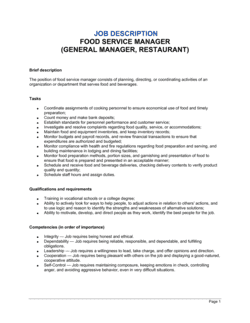
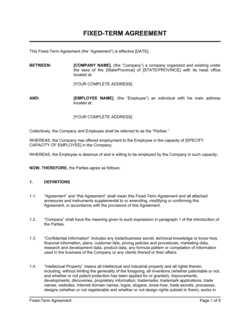
Bartender Job Description Template

Free Word download β€’ Edit online β€’ Save & share with Drive β€’ Export to PDF

3 pagesβ€’20–30 min to fillβ€’Difficulty: Standardβ€’Signature requiredβ€’Legal review recommended
Learn more ↓
FreeBartender Job Description Template

At a glance

What it is
A Bartender Job Description is a formal employment document that defines the duties, qualifications, reporting structure, scheduling expectations, and compliance obligations for a bartending role. This free Word download gives bar owners, restaurant managers, and hospitality operators a structured, legally defensible starting point they can edit online and export as PDF for onboarding, posting, or inclusion in an employment contract.
When you need it
Use it when hiring a new bartender, formalizing an existing role, or updating position requirements after a menu, licensing, or operational change. It is also required when posting a role on job boards that mandate a written job description for compliance with equal employment opportunity rules.
What's inside
Role summary and reporting structure, core duties and service responsibilities, alcohol service compliance and certification requirements, physical and scheduling requirements, required and preferred qualifications, compensation range, and acknowledgment signature block.

What is a Bartender Job Description?

A Bartender Job Description is a formal employment document that defines the duties, qualifications, scheduling requirements, alcohol service compliance obligations, and compensation terms for a bartending position at a bar, restaurant, hotel, or event venue. It functions as the authoritative written record of what the role requires β€” used for job postings, candidate screening, onboarding, and performance management β€” and, when signed by the employee, serves as a legally referenced component of the employment relationship. Unlike a casual verbal briefing, a written description creates a documented baseline that protects the employer in wage disputes, disciplinary proceedings, and dram shop liability claims.

Why You Need This Document

Operating a bar without a written bartender job description creates four distinct risks that materialize quickly. First, without documented compliance requirements, an employer cannot demonstrate that a bartender was formally instructed to verify age, refuse service to intoxicated guests, or hold a required certification β€” which is material evidence in any dram shop liability claim. Second, tip pooling arrangements described only verbally expose the venue to back-wage claims under the FLSA and applicable provincial statutes. Third, performance management becomes legally fragile when there is no signed record of what duties the employee agreed to perform β€” a gap that undermines disciplinary action and termination proceedings. Fourth, job postings that lack a written description struggle to meet equal employment opportunity compliance standards required by major job boards and government contracting programs. This template closes all four gaps in under 30 minutes, giving every venue β€” from a single-location cocktail bar to a multi-unit hospitality group β€” a defensible, jurisdiction-ready starting point.

Which variant fits your situation?

If your situation is…Use this template
Hiring a lead or head bartender with supervisory responsibilityHead Bartender Job Description
Posting a bar-back or barback support roleBarback Job Description
Hiring a server who also performs limited bar dutiesServer Job Description
Engaging a bartender on a temporary or event basisIndependent Contractor Agreement
Formalizing the full employment relationship after postingEmployment Contract (At-Will)
Hiring a bartender for a fixed event or seasonal periodFixed-Term Employment Contract
Documenting a restaurant manager who oversees bar operationsRestaurant Manager Job Description

Common mistakes to avoid

❌ Omitting alcohol compliance certification requirements

Why it matters: If a bartender serves an underage or visibly intoxicated guest and causes harm, the absence of a documented certification requirement increases the employer's dram shop liability exposure.

Fix: Name the specific certification required for your jurisdiction and state the deadline for obtaining it β€” either before the first shift or within a defined number of days of hire.

❌ Listing tip pool terms only verbally

Why it matters: Under the FLSA and most provincial wage statutes, tip pool arrangements must be disclosed in writing before employees begin tipped work. Undisclosed pooling can result in back-wage claims.

Fix: Include a tip policy summary in the compensation clause and reference the venue's written tip pool policy by name, with a copy provided at onboarding.

❌ Using identical job descriptions for bartenders and bar managers

Why it matters: Applying the same duty list to both roles makes it legally difficult to justify pay differences or to hold a bartender to supervisory performance standards they were never formally assigned.

Fix: Maintain separate job descriptions for each distinct role. If a senior bartender has supervisory duties, use a Head Bartender or Lead Bartender template with those duties explicitly listed.

❌ No acknowledgment signature obtained before the first shift

Why it matters: Without a signed acknowledgment, the employer has no documented evidence that the employee agreed to the duties, conduct standards, or compliance requirements β€” undermining any subsequent disciplinary action.

Fix: Treat the signed acknowledgment as a non-negotiable onboarding step. Use eSign or a wet signature process and file the executed copy before the employee appears on the floor.

❌ Guaranteeing a fixed number of weekly hours in a variable-demand venue

Why it matters: In slow periods, a guaranteed-hours clause may create a wage obligation exceeding what the business can operationally justify, and in some jurisdictions constitutes a minimum contractual entitlement.

Fix: State expected shift ranges and availability requirements instead of guaranteed minimums. Use language such as 'typically [X–Y] shifts per week based on business needs.'

❌ Setting overstated physical requirements to screen out candidates

Why it matters: Physical requirements that exceed genuine job demands can constitute a discriminatory barrier under the ADA, the Canadian Human Rights Act, and the UK Equality Act 2010.

Fix: Audit each physical requirement against the actual role demands. Add a reasonable accommodation statement and ensure requirements are defensible as bona fide occupational requirements.

The 9 key clauses, explained

Role summary and reporting structure

In plain language: Describes the bartender's purpose within the venue, their primary reporting line, and how the role fits within the broader front-of-house team.

Sample language
[EMPLOYEE NAME / BARTENDER] reports to the [BAR MANAGER / GENERAL MANAGER] and is responsible for delivering efficient, compliant beverage service at [VENUE NAME] in accordance with all applicable liquor laws and venue standards.

Common mistake: Leaving the reporting line blank or listing two conflicting supervisors. Ambiguous reporting structures create discipline and scheduling disputes that are difficult to resolve without a written baseline.

Core duties and service responsibilities

In plain language: Lists the day-to-day tasks the bartender is expected to perform β€” mixing drinks, maintaining cleanliness, interacting with guests, and managing their station.

Sample language
Duties include: preparing and serving alcoholic and non-alcoholic beverages to recipe standards; maintaining a clean and organized bar station; engaging guests professionally; and processing payments accurately via [POS SYSTEM].

Common mistake: Using vague language such as 'perform other duties as assigned' without any core duty list. Courts and tribunals treat overly vague duty clauses as unenforceable when used to justify disciplinary action.

Alcohol service compliance and certification

In plain language: States the legal and venue-specific obligations around responsible alcohol service, including required certifications and the consequences of non-compliance.

Sample language
Employee must hold a valid [TIPS / RSA / SMART Serve / equivalent] certification and comply with all applicable liquor control laws, including verifying guest age, refusing service to visibly intoxicated patrons, and reporting incidents to the [BAR MANAGER] immediately.

Common mistake: Omitting the certification requirement entirely. If a staff member serves alcohol without required certification and a dram shop incident occurs, the employer's liability exposure increases significantly.

Scheduling, hours, and availability

In plain language: Defines the expected weekly hours, shift structure, weekend and holiday availability, and the process for requesting schedule changes.

Sample language
This position requires availability for [X] shifts per week, including evenings, weekends, and [public holidays / holiday periods]. Shift schedules are posted [X] days in advance. Requests for schedule changes must be submitted to [MANAGER] at least [48 hours] before the affected shift.

Common mistake: Guaranteeing a fixed number of hours per week for a variable-demand role. If business is slow, a guaranteed-hours clause can create a wage obligation the employer cannot meet and is not legally required to promise.

Physical requirements

In plain language: Documents the physical demands of the role to support compliant job postings, accommodation requests, and workers' compensation documentation.

Sample language
The role requires the ability to stand and walk for up to [X] hours per shift, lift and carry stock weighing up to [50 lbs / 23 kg], reach overhead shelving, and operate in a high-noise, high-paced environment.

Common mistake: Inflating physical requirements beyond what the role genuinely demands. Overstated requirements can constitute a disability discrimination barrier and expose the employer to human rights complaints.

Qualifications, experience, and certifications

In plain language: States the minimum required and preferred qualifications β€” experience, certifications, and skills β€” the employer will use to screen and evaluate candidates.

Sample language
Required: [X] years of bartending experience in a high-volume venue; valid [TIPS / RSA / provincial liquor service] certification; legal entitlement to work in [COUNTRY/STATE]. Preferred: experience with [POS SYSTEM], cocktail competition background, or bilingual service capability.

Common mistake: Listing preferences as requirements. Marking 'preferred' items as mandatory disqualifies qualified candidates and can create adverse impact claims if the requirement has no business necessity justification.

Compensation, tips, and benefits

In plain language: States the base wage, tipping arrangement (pooled or kept), any gratuity-related policies, and any applicable benefits such as meal allowances or health coverage.

Sample language
Base wage: $[X] per hour. Tips: [retained by employee / pooled across bar and server staff per the venue's tip pool policy]. Benefits: [meal per shift / staff discounts / health coverage if applicable]. Overtime governed by applicable law.

Common mistake: Describing tip pool terms vaguely or omitting them entirely. Under the FLSA and provincial wage laws, tip pooling arrangements must be documented and disclosed to employees before service begins.

Conduct, appearance, and venue standards

In plain language: Defines behavioral and presentation expectations β€” uniform requirements, guest interaction standards, and prohibited conduct such as personal alcohol consumption during shifts.

Sample language
Employee shall wear the designated [UNIFORM / dress code] and maintain personal hygiene standards consistent with food-service regulations. Consumption of alcohol during scheduled shifts is strictly prohibited and constitutes grounds for immediate dismissal.

Common mistake: Relying solely on a verbal dress code explanation and omitting it from the written description. Without documentation, appearance-based discipline is difficult to defend against discrimination or wrongful termination claims.

Acknowledgment and signature block

In plain language: Confirms that the employee has read, understood, and agreed to the job description as a condition of employment.

Sample language
I, [EMPLOYEE FULL NAME], acknowledge that I have read and understood this Job Description and agree to perform the duties described to the best of my ability as a condition of my employment at [VENUE NAME]. Signature: _____ Date: [DATE].

Common mistake: Treating the acknowledgment as optional. An unsigned job description cannot be used to support a performance improvement plan or termination decision in most jurisdictions.

How to fill it out

  1. 1

    Enter the venue and role details

    Add the legal business name, venue location, job title (e.g., Bartender, Lead Bartender), and the direct reporting line. Use the employer's registered entity name, not a trading name.

    πŸ’‘ If the role spans multiple locations, list each location explicitly β€” a single job description covering three venues without specifying which duties apply where creates scheduling and compliance confusion.

  2. 2

    Customize the core duties list

    Review the duties clause and edit it to match your specific service format β€” high-volume cocktail bar, hotel lounge, brewery taproom, or restaurant bar. Remove duties that don't apply and add any venue-specific tasks.

    πŸ’‘ Limit the duties list to 8–12 items. A list longer than 15 tasks is difficult to use for performance management and signals a role that needs to be split into two positions.

  3. 3

    Confirm the required certifications for your jurisdiction

    Check which alcohol server certification applies in your state or province β€” TIPS (US), Smart Serve (Ontario), Serving It Right (BC), RSA (Australia), or an equivalent. Insert the exact certification name and any renewal period.

    πŸ’‘ Some jurisdictions β€” California, for example β€” require certification completion within a specific number of days of hire. Insert that deadline into the compliance clause.

  4. 4

    Set realistic scheduling and availability requirements

    State the expected number of shifts, the typical shift window (e.g., 4 PM–2 AM), and the minimum availability for weekends and holidays. Avoid guaranteeing a specific number of hours unless your labor model supports it.

    πŸ’‘ Phrase availability as 'required to be available for' rather than 'guaranteed,' particularly in jurisdictions that impose on-call pay obligations.

  5. 5

    Define compensation and tip policy clearly

    Enter the base wage, confirm whether the role is tipped and whether tips are pooled, and reference the venue's written tip pool policy if one exists. State whether the position is classified as non-exempt for overtime purposes.

    πŸ’‘ If your tip pool includes back-of-house staff, note this explicitly β€” FLSA rules on who may participate in tip pools changed in 2018 and differ from state law in several jurisdictions.

  6. 6

    Review physical requirements for accuracy

    Edit the physical requirements to match what the role genuinely demands β€” lifting weight, hours on feet, noise levels. Remove any requirement you could not defend as essential to job performance.

    πŸ’‘ Add a line offering reasonable accommodation for qualified individuals with disabilities β€” this is required under the ADA in the US and equivalent laws in Canada and the UK.

  7. 7

    Have both parties sign before the first shift

    Print or send the completed document for electronic signature before the employee's first day of work. File the signed copy in the employee's personnel record.

    πŸ’‘ Use Business in a Box eSign to timestamp and archive the executed document β€” a timestamped record is particularly valuable if a wage or termination dispute arises months later.

Frequently asked questions

What is a bartender job description?

A bartender job description is a formal document that defines the duties, qualifications, scheduling expectations, compliance obligations, and compensation terms for a bartending position. It serves as the basis for job postings, candidate screening, onboarding, performance management, and β€” when signed β€” a legally referenced component of the employment relationship. A complete description protects both the employer and the employee by removing ambiguity about what the role requires.

Is a bartender job description legally required?

No law in most jurisdictions mandates a written job description as a standalone document. However, written descriptions are effectively required by equal employment opportunity posting rules, performance management best practices, and the evidentiary standards applied in wrongful termination and wage disputes. In unionized environments, collective agreements often require written job descriptions as a condition of role assignment.

What certifications should a bartender job description require?

The required certification depends on the jurisdiction. In the US, TIPS or ServSafe Alcohol certifications are widely accepted, and several states β€” including California and Texas β€” have state-specific mandatory training programs. In Ontario, Smart Serve certification is required by law before a server or bartender may sell or serve alcohol. In British Columbia, Serving It Right applies. In the UK, there is no single mandatory certification, though many employers require a personal licence or Challenge 25 training. Always check the current requirements of your specific licensing authority.

Should a bartender be classified as exempt or non-exempt?

In nearly all cases, bartenders are classified as non-exempt employees under the US Fair Labor Standards Act, meaning they are entitled to at least the federal minimum wage (or the applicable state tip credit wage) and overtime pay at 1.5Γ— their regular rate for hours over 40 per week. Misclassifying a bartender as exempt is a common payroll compliance error that can trigger back-wage claims and penalties. Consult an employment lawyer if you are unsure about your specific situation.

Can I use the same job description for all bar staff?

No. A single job description covering bartenders, barbacks, and bar managers creates legal and operational problems β€” it makes pay differentiation harder to justify and holds workers to duties they were never formally assigned. Maintain separate descriptions for each distinct role, even if the duties partially overlap. This also simplifies compliance with equal pay audits and wage transparency laws.

Does a bartender job description need to be signed?

A signed acknowledgment is not legally required in every jurisdiction, but it is strongly recommended. A signed job description provides documented evidence that the employee understood their duties and compliance obligations at the time of hire β€” which is the evidentiary baseline for any subsequent disciplinary action, performance improvement plan, or termination proceeding. Without a signature, the employer is relying solely on verbal evidence.

How should tip pooling be documented in a bartender job description?

The compensation clause should state clearly whether tips are retained by the individual or pooled, and β€” if pooled β€” which positions participate and the distribution formula. Under the FLSA as amended in 2018, employers without a tip credit may include back-of-house employees in a tip pool, but this must be disclosed in writing before tipped work begins. Several states apply stricter rules that override federal law. Reference your venue's full written tip pool policy in the job description.

How often should a bartender job description be updated?

Review and update the job description whenever there is a material change to the role β€” menu overhaul requiring new skills, change in certification requirements, shift to a new POS system, or restructuring of the bar team. For stable roles, an annual review aligned to contract renewals is standard. A job description that is more than two years old may not reflect current liquor law requirements, particularly in jurisdictions that update alcohol service training mandates frequently.

What is dram shop liability and how does the job description address it?

Dram shop liability is the legal exposure a bar or restaurant faces when an employee serves alcohol to a visibly intoxicated person or a minor who subsequently causes harm. The job description addresses this by formally documenting the employer's alcohol service compliance requirements β€” certification mandates, refusal-of-service obligations, and incident reporting procedures. This documentation demonstrates a duty of care and is material evidence in any dram shop claim.

How this compares to alternatives

vs Employment Contract (At-Will)

An employment contract is the binding governing agreement covering IP, confidentiality, termination, and severance. A job description defines the role's duties, qualifications, and compliance requirements. The two documents work together β€” the job description is typically incorporated by reference or attached as a schedule to the employment contract. Neither document fully replaces the other.

vs Server Job Description

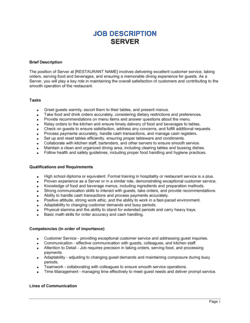
A server job description covers table service, order taking, and food-safety compliance without the alcohol mixing, dram shop liability language, or certification requirements specific to bartending. Use the bartender template when the role involves primary responsibility for beverage preparation and alcohol service; use the server template for front-of-house service roles with only incidental bar duties.

vs Restaurant Manager Job Description

A restaurant manager job description covers supervisory authority, P&L responsibility, staff scheduling, and vendor relationships across the full venue β€” including the bar. A bartender job description covers an individual contributor role with no direct reports or budget authority. If the role includes supervising bar staff, use a Head Bartender or Bar Manager template rather than this document.

vs Independent Contractor Agreement

An independent contractor agreement governs a self-employed bartender engaged for events or short-term work β€” no employment entitlements, no withholding, and the worker controls how the service is delivered. A job description applies to an employee subject to scheduling, conduct, and compliance oversight. Misclassifying an employee bartender as a contractor triggers back-tax and benefit liability.

Industry-specific considerations

Bars and nightclubs

High-volume cocktail production, cash handling, late-night scheduling, and crowd management compliance are central role requirements.

Restaurants and dining

Bartenders often support dual roles β€” full-service bar and table-side wine service β€” requiring broader menu knowledge and tableside etiquette standards.

Hotels and resorts

Union or franchise standards may govern job description language, compensation floors, and tip pooling eligibility across property-level food and beverage outlets.

Event venues and catering

Event-based bartending involves variable scheduling, temporary liquor licensing compliance, and mobile bar setup requirements not present in fixed-venue roles.

Jurisdictional notes

United States

Bartenders are almost universally classified as non-exempt under the FLSA, entitling them to overtime at 1.5Γ— their regular rate for hours over 40 per week. Tip credit rules vary sharply by state β€” federal minimum cash wage for tipped employees is $2.13/hr, but many states (including California and Minnesota) require full minimum wage regardless of tips. Alcohol server certification requirements differ by state; California mandates RBS training, and Texas requires TABC certification. Tip pool participation rules were updated by the Consolidated Appropriations Act of 2018 and differ from several state statutes.

Canada

Employment standards for bartenders are governed provincially. Ontario requires Smart Serve certification before alcohol service. British Columbia mandates Serving It Right. Alberta uses ProServe. Minimum wage floors apply even in tipped roles, though some provinces maintain a lower liquor-server minimum wage. Tip pooling must be disclosed in writing and, in Ontario, is regulated under the Employment Standards Act, 2000 as amended in 2016 to prohibit employer tip retention. Quebec job descriptions must be available in French for provincially regulated employers.

United Kingdom

There is no single mandatory alcohol server certification in England and Wales, though Challenge 25 training and personal licence holder supervision requirements apply under the Licensing Act 2003. Scotland requires the Licensing (Scotland) Act 2005 framework, including mandatory training for premises licence holders. Bartenders are entitled to the National Living Wage (age 23+) and are non-exempt from Working Time Regulations 1998, including rest break entitlements. Written employment particulars must be provided on or before day one under the Employment Rights Act 1996.

European Union

Alcohol service certification requirements vary by member state β€” France, Germany, and Spain each have distinct licensing frameworks. The EU Transparent and Predictable Working Conditions Directive (2019/1152) requires written employment terms within 7 days of hire, including a description of duties. Working time is regulated under Directive 2003/88/EC, capping weekly hours at 48 on average and mandating minimum rest periods. GDPR applies to the collection and retention of employee personal data during hiring and onboarding processes.

Template vs lawyer β€” what fits your deal?

PathBest forCostTime
Use the templateSingle-venue operators hiring standard hourly bartenders in a straightforward domestic jurisdictionFree20–30 minutes
Template + legal reviewMulti-location operators, unionized venues, or jurisdictions with complex tip pool or alcohol certification rules$200–$500 for an HR advisor or employment lawyer review1–3 days
Custom draftedLarge hospitality groups, franchise systems with brand-standard requirements, or venues facing active wage and hour scrutiny$500–$2,000 for a custom employment lawyer draft1–2 weeks

Glossary

Responsible Beverage Service (RBS)
A training standard requiring alcohol service staff to verify age, recognize intoxication, and refuse service where required by law.
TIPS Certification
Training for Intervention ProcedureS β€” a nationally recognized alcohol server certification program used across the US hospitality industry.
Dram Shop Liability
Legal liability imposed on a bar or restaurant that serves alcohol to a visibly intoxicated person who later causes injury or property damage.
Par Level
The minimum stock quantity of a product that must be maintained behind the bar to cover expected service demand without running out.
FIFO (First In, First Out)
A stock rotation method requiring older inventory to be used before newer stock to minimize spoilage and waste.
Upselling
The practice of suggesting premium spirits, add-ons, or larger pours to increase the average check value per customer.
Mise en Place
The preparation of all ingredients, tools, and garnishes before service begins so the bartender can operate without interruption during peak hours.
At-Will Employment
Employment that either party may end at any time for any lawful reason β€” the default arrangement in most US states.
Tip Pooling
An arrangement where gratuities collected by bartenders and servers are combined and redistributed according to a set formula among eligible staff.
Non-Exempt Employee
Under the FLSA, a worker who must receive at least federal minimum wage and overtime pay at 1.5Γ— their regular rate for hours worked over 40 per week.

Part of your Business Operating System

This document is one of 3,000+ business & legal templates included in Business in a Box.

  • Fill-in-the-blanks β€” ready in minutes
  • 100% customizable Word document
  • Compatible with all office suites
  • Export to PDF and share electronically

Create your document in 3 simple steps.

From template to signed document β€” all inside one Business Operating System.
1
Download or open template

Access over 3,000+ business and legal templates for any business task, project or initiative.

2
Edit and fill in the blanks with AI

Customize your ready-made business document template and save it in the cloud.

3
Save, Share, Send, Sign

Share your files and folders with your team. Create a space of seamless collaboration.

Save time, save money, and create top-quality documents.

β˜…β˜…β˜…β˜…β˜…

"Fantastic value! I'm not sure how I'd do without it. It's worth its weight in gold and paid back for itself many times."

Managing Director Β· Mall Farm
Robert Whalley
Managing Director, Mall Farm Proprietary Limited
β˜…β˜…β˜…β˜…β˜…

"I have been using Business in a Box for years. It has been the most useful source of templates I have encountered. I recommend it to anyone."

Business Owner Β· 4+ years
Dr Michael John Freestone
Business Owner
β˜…β˜…β˜…β˜…β˜…

"It has been a life saver so many times I have lost count. Business in a Box has saved me so much time and as you know, time is money."

Owner Β· Upstate Web
David G. Moore Jr.
Owner, Upstate Web

Run your business with a system β€” not scattered tools

Stop downloading documents. Start operating with clarity. Business in a Box gives you the Business Operating System used by over 250,000 companies worldwide to structure, run, and grow their business.

Free Forever PlanΒ Β·Β No credit card required