Reply Apology and Notice of Shipment in Replacement Template

Free Word download β€’ Edit online β€’ Save & share with Drive β€’ Export to PDF

1 pageβ€’15–25 min to fillβ€’Difficulty: Standard
Learn more ↓
FreeReply Apology and Notice of Shipment in Replacement Template

At a glance

What it is
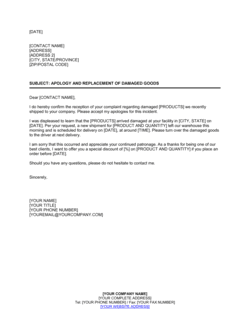
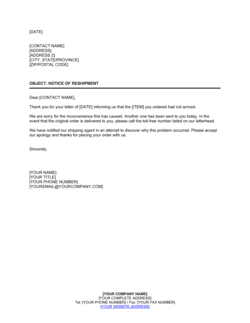
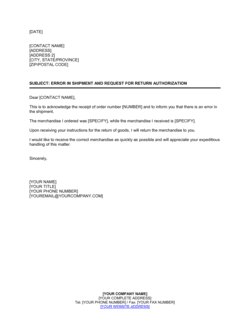
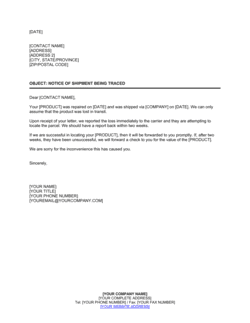
A Reply Apology and Notice of Shipment in Replacement is a formal business letter a seller or supplier sends to a customer after a shipping error β€” such as a wrong item, damaged goods, or missing order. This free Word download gives you a ready-to-edit template that acknowledges the mistake, delivers a sincere apology, and confirms that a corrected shipment is on its way, including tracking and expected delivery details.
When you need it
Use it as soon as a customer reports a fulfillment error β€” wrong product, incorrect quantity, damaged goods, or a shipment that never arrived. Sending a prompt, professional response stops the complaint from escalating and protects the business relationship.
What's inside
A professional salutation and acknowledgment of the specific complaint, a clear apology without deflection, confirmation of the replacement shipment with tracking details and estimated delivery date, any goodwill gesture or compensation offered, and a closing statement that reaffirms the relationship.

What is a Reply Apology and Notice of Shipment in Replacement?

A Reply Apology and Notice of Shipment in Replacement is a formal business letter a seller or supplier sends to a customer after a fulfillment error β€” such as dispatching the wrong product, incorrect quantity, or damaged goods. The letter serves two purposes simultaneously: it delivers a direct, accountable apology for the mistake, and it confirms that the correct replacement has already been dispatched, including the carrier name, tracking number, and estimated delivery date. Unlike a generic apology, this document ties the expression of regret to a verified corrective action, giving the customer both acknowledgment and resolution in a single communication.

Why You Need This Document

A fulfillment error that receives no written response β€” or a slow, vague one β€” frequently escalates into a chargeback, a negative public review, or a lost account. Customers who receive a prompt, specific letter confirming their replacement shipment are significantly less likely to dispute the charge or disengage from the relationship. Without a standardized template, different team members draft responses inconsistently, some omitting the tracking number, others skipping the apology, creating a patchwork of quality that reflects poorly on the business. This template ensures every replacement response is professional, complete, and sent quickly β€” protecting customer relationships and reducing the volume of follow-up contacts that drain support capacity.

Which variant fits your situation?

If your situation is…Use this template
Responding to a customer who received the completely wrong productReply Apology and Notice of Shipment in Replacement
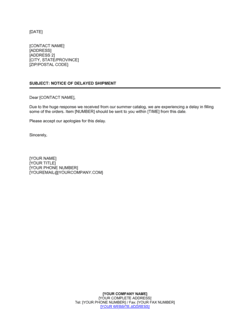
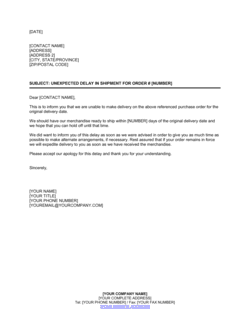
Acknowledging a delayed shipment with no replacement neededApology for Delayed Shipment Letter
Notifying a customer that a refund has been issued instead of a replacementRefund Confirmation Letter
Responding to a complaint about damaged goods with an insurance claim referenceDamaged Goods Claim Letter
Following up after a replacement shipment has been deliveredCustomer Follow-Up Letter
Addressing a B2B partner's formal complaint about order discrepanciesResponse to Customer Complaint Letter

Common mistakes to avoid

❌ Sending the apology before the replacement has shipped

Why it matters: If the replacement is delayed after the letter promises a specific date, the customer now has two grievances β€” the original error and the broken promise in the apology.

Fix: Confirm the replacement tracking number before drafting the letter, and use the carrier's confirmed dispatch date rather than an estimated one.

❌ Using a vague or passive apology

Why it matters: Phrases like 'we are sorry for any inconvenience' minimize the error and come across as insincere, increasing the likelihood the customer escalates or leaves a negative review.

Fix: State the apology directly and in the active voice: 'We apologize for sending the wrong item. This was our error.' One clear sentence carries more weight than two cautious ones.

❌ Omitting the tracking number from the replacement notice

Why it matters: Without a tracking number, the customer has no way to verify the replacement is real, which generates unnecessary follow-up contacts and extends the resolution time.

Fix: Always include the tracking number, carrier name, and estimated delivery date range in the replacement confirmation clause before the letter is sent.

❌ Writing the letter from 'the company' with no named contact

Why it matters: Customers who have experienced a fulfillment error want a person to hold accountable. An unsigned letter from 'Customer Service' signals the complaint was not escalated and invites further frustration.

Fix: Close with the full name, title, direct email, and phone number of a specific team member who can field follow-up questions.

The 9 key clauses, explained

Reference and date line

In plain language: Identifies the letter's date, the original order number or reference, and links the response directly to the customer's complaint.

Sample language
Date: [DATE] | Re: Order #[ORDER NUMBER] β€” Replacement Shipment Confirmation

Common mistake: Omitting the original order number. Without it, the customer cannot match the letter to their complaint, causing confusion and follow-up calls.

Salutation and recipient details

In plain language: Addresses the customer by name and title, using the contact information from the original order or complaint.

Sample language
Dear [CUSTOMER FIRST NAME] [CUSTOMER LAST NAME],

Common mistake: Using 'Dear Valued Customer' instead of the customer's name. Impersonal salutations signal a form letter and undermine the sincerity of the apology.

Acknowledgment of the error

In plain language: Confirms that the company has reviewed the complaint and specifically acknowledges what went wrong β€” wrong item, damaged goods, missing quantity, etc.

Sample language
We have reviewed your complaint regarding Order #[ORDER NUMBER] placed on [DATE] and confirm that you received [DESCRIPTION OF ERROR] instead of [CORRECT ITEM/QUANTITY].

Common mistake: Writing a vague acknowledgment like 'we understand there was an issue.' Naming the specific error shows the company took the complaint seriously and investigated.

Sincere apology

In plain language: Delivers a direct, unconditional apology for the inconvenience caused β€” without deflecting blame to a third party or making excuses.

Sample language
We sincerely apologize for this error and for the inconvenience it has caused you. This does not reflect the standard of service we hold ourselves to.

Common mistake: Softening the apology with phrases like 'we are sorry you feel that way.' This reads as dismissive rather than accountable and can escalate the complaint.

Explanation (brief, optional)

In plain language: A one-sentence explanation of what caused the error, if known and relevant β€” not as an excuse but as transparency.

Sample language
This error was the result of [BRIEF CAUSE, e.g., a picking error at our fulfillment center on [DATE]].

Common mistake: Over-explaining the cause across multiple sentences. A lengthy internal explanation shifts focus away from the resolution and can expose the company to unnecessary criticism.

Confirmation of replacement shipment

In plain language: States clearly that the correct item has been dispatched, with the carrier name, tracking number, and estimated delivery date.

Sample language
We have dispatched a replacement shipment of [CORRECT ITEM/QUANTITY] via [CARRIER NAME]. Your tracking number is [TRACKING NUMBER], and estimated delivery is [DATE RANGE].

Common mistake: Promising a replacement without including the tracking number. A customer who cannot verify the shipment will contact support again within 24 hours.

Return instructions (if applicable)

In plain language: Provides instructions for returning the incorrect or damaged item, including an RMA number or prepaid label reference.

Sample language
A prepaid return label is enclosed / attached. Please use RMA #[RMA NUMBER] when returning the original shipment. No action is required on your part until the replacement arrives.

Common mistake: Demanding the customer return the incorrect item before the replacement is sent. This creates friction and signals distrust, damaging the relationship further.

Goodwill gesture

In plain language: Offers a concrete concession β€” discount code, store credit, or complimentary item β€” to compensate for the inconvenience.

Sample language
As a gesture of goodwill, please accept a [X]% discount on your next order. Use code [DISCOUNT CODE] at checkout, valid through [EXPIRY DATE].

Common mistake: Omitting any goodwill gesture for a significant fulfillment error. A bare apology with no concession is perceived as insufficient for errors that cost the customer time.

Closing and contact information

In plain language: Reaffirms commitment to the customer relationship, provides a direct contact for follow-up questions, and closes professionally.

Sample language
We value your business and appreciate your patience. If you have any questions, please contact [NAME] at [EMAIL] or [PHONE NUMBER]. Sincerely, [SENDER NAME], [TITLE], [COMPANY NAME].

Common mistake: Closing with a generic 'contact our support team' without a specific name or direct line. Customers who have already experienced a problem need a named point of contact, not a queue.

How to fill it out

  1. 1

    Pull the original order details

    Before opening the template, gather the order number, order date, the item(s) ordered, what the customer actually received, and the customer's contact information from your order management system.

    πŸ’‘ Cross-reference the customer's complaint with your shipping records so the acknowledgment matches exactly what happened β€” discrepancies between the letter and the actual error erode trust.

  2. 2

    Fill in the reference line and date

    Enter today's date and the original order number in the reference line at the top of the letter so the customer can immediately connect it to their complaint.

    πŸ’‘ If the customer also has a complaint or ticket reference number, include that too β€” it signals your team is organized and has reviewed the full history.

  3. 3

    Address the customer by name

    Replace the salutation placeholder with the customer's actual first and last name. Use the name as it appears on the order, not an informal nickname.

    πŸ’‘ For B2B customers, use the contact's professional title (e.g., 'Dear Ms. [LAST NAME]') rather than first name only.

  4. 4

    Describe the error specifically

    In the acknowledgment clause, name exactly what went wrong: state the item received versus the item ordered, or describe the damage. Be precise β€” one sentence is enough.

    πŸ’‘ Avoid legalese or hedging language. 'You received a size M blue jacket instead of a size L black jacket' is clearer and more reassuring than 'there appears to have been an item discrepancy.'

  5. 5

    Enter the replacement shipment details

    Add the carrier name, tracking number, and the estimated delivery date range provided by the carrier. If the replacement has not yet shipped, state the dispatch date and update the letter before sending.

    πŸ’‘ Never send the letter before the replacement has actually been dispatched β€” promising a shipment that is not yet in transit creates a second failure if there is a delay.

  6. 6

    Add return instructions and goodwill gesture

    If you need the incorrect item returned, include the RMA number and prepaid label instructions. Then fill in the goodwill offer β€” discount code, credit amount, or complimentary item β€” with its expiry date.

    πŸ’‘ Make the return as friction-free as possible. Attaching the prepaid label directly to the email rather than asking the customer to print or request one significantly increases return compliance.

  7. 7

    Sign off with a named contact

    Replace the closing placeholder with the sender's full name, job title, company name, direct email, and phone number. The customer should have a specific person to contact, not just a department.

    πŸ’‘ For high-value B2B accounts, have the account manager or a senior team member sign the letter rather than a general customer service representative β€” it signals the complaint was escalated and taken seriously.

Frequently asked questions

What is a reply apology and notice of shipment in replacement?

It is a formal business letter a seller sends to a customer after a fulfillment error β€” such as a wrong item, damaged goods, or missing quantity. The letter acknowledges the specific mistake, delivers a direct apology, confirms that the correct replacement has been shipped with carrier and tracking details, and often includes a goodwill gesture such as a discount or store credit.

When should I send this letter?

Send it as soon as the replacement shipment has been dispatched β€” ideally within 24 to 48 hours of receiving the customer's complaint. Prompt communication prevents the complaint from escalating to a chargeback, a negative review, or a lost account. Do not send the letter before the replacement is confirmed with a tracking number.

Does this letter need to be signed?

A formal signature is not legally required for this type of letter to be effective, but including the name and title of a real sender β€” rather than closing anonymously as 'Customer Service' β€” significantly improves the customer's perception of the response. For B2B complaints involving large orders, having a manager or account owner sign the letter is recommended.

Should I ask the customer to return the incorrect item in this letter?

Only if the return is genuinely necessary for your business. If you do request a return, include a prepaid label or RMA number and make the process as frictionless as possible. Avoid conditioning the replacement on the return β€” dispatching the replacement first and requesting the return separately is the approach that preserves customer goodwill.

What goodwill gesture should I offer?

The appropriate gesture depends on the severity of the error and the value of the customer relationship. A 10–15% discount on a future order is standard for minor shipping errors. For damaged goods, a significant order error, or a long-standing B2B client, a larger credit or a complimentary item is more appropriate. The gesture should feel proportionate, not token.

Can I use this template for B2B customers as well as individual consumers?

Yes. The template works for both contexts with minor adjustments. For B2B customers, use formal titles in the salutation, reference any purchase order number alongside the order number, and consider having a senior account manager or operations lead sign the letter. The tone should remain professional in both cases.

What is the difference between this letter and a standard apology letter?

A standard apology letter acknowledges an error and expresses regret but does not necessarily include a resolution. This letter combines the apology with a concrete action β€” the confirmed replacement shipment β€” which is far more effective at retaining customer trust. The inclusion of tracking details and an estimated delivery date transforms the letter from an expression of regret into a verified resolution.

How long should the letter be?

One page or fewer is the target β€” typically four to six short paragraphs. The customer wants to know three things: that you acknowledge what happened, that you are fixing it, and when the fix will arrive. A letter that exceeds one page usually contains unnecessary explanation or justification that dilutes the apology and tests the reader's patience.

How this compares to alternatives

vs Response to customer complaint letter

A response to customer complaint letter addresses a broad range of grievances β€” service quality, billing issues, or policy disputes β€” and focuses on explaining the company's position. This replacement shipment letter is narrower: it is specifically triggered by a fulfillment error and must include confirmed shipment details. Use the complaint response for disputes; use this letter when the fix is a physical replacement.

vs Apology letter to a customer

A general apology letter acknowledges an error and expresses regret but does not include a concrete resolution. This letter goes further by confirming the corrective action β€” the replacement shipment β€” with verifiable tracking information. When you have a resolution ready, this template is the appropriate choice over a standalone apology.

vs Shipment confirmation letter

A standard shipment confirmation letter notifies a customer that their order has been dispatched as expected. This letter is a corrective version of that confirmation β€” it acknowledges the prior error before presenting the shipment details. The tone and structure differ significantly: one is routine, the other is remedial.

vs Refund confirmation letter

A refund confirmation letter resolves a fulfillment error with a monetary credit rather than a physical replacement. Use this letter when the customer prefers a replacement shipment and the item is available to re-dispatch; use a refund confirmation when the item is out of stock, discontinued, or the customer has explicitly requested their money back.

Industry-specific considerations

Retail and e-commerce

High shipment volumes make fulfillment errors common; a templated response ensures consistency across customer service representatives and reduces per-complaint handling time.

Manufacturing and wholesale

B2B clients expect formal written correspondence for order discrepancies; the letter creates a paper trail that supports invoice adjustments and inventory reconciliation.

Food and beverage

Perishable or temperature-sensitive goods require rapid replacement; the letter must include expiry-date-aware delivery commitments and may reference cold-chain carrier specifics.

Professional services

Firms that ship physical deliverables β€” printed materials, branded merchandise, or sample kits β€” use this letter to address misfulfillment without disrupting the client relationship.

Template vs pro β€” what fits your needs?

PathBest forCostTime
Use the templateCustomer service teams and small business owners handling individual or occasional fulfillment errorsFree5–10 minutes per letter
Template + professional reviewBusinesses with high complaint volumes who want to create a standardized, brand-reviewed response workflow$50–$200 (copywriter or customer experience consultant review)1–2 hours
Custom draftedEnterprise accounts managing high-value B2B clients where tone and legal language are strategically important$200–$600 (senior copywriter or account manager drafting)Half a day to one day

Glossary

Replacement Shipment
A new order dispatched to the customer to correct a prior fulfillment error, sent at the seller's expense.
Tracking Number
A carrier-issued alphanumeric code that allows the sender and recipient to monitor a shipment's location and estimated delivery date in real time.
Fulfillment Error
Any mistake in picking, packing, or shipping that results in the customer receiving the wrong item, wrong quantity, or damaged goods.
Goodwill Gesture
A voluntary concession β€” discount, credit, or complimentary item β€” offered by a business to acknowledge inconvenience and retain goodwill.
Return Merchandise Authorization (RMA)
A reference number issued by the seller that authorizes the customer to return a defective or incorrect item, often included alongside a replacement notice.
Estimated Delivery Date
The date range a carrier projects for a shipment's arrival, based on service level, origin, and destination.
Acknowledgment of Complaint
The opening section of a response letter that confirms the seller has received and understood the customer's reported issue.
Carrier
The logistics company β€” such as UPS, FedEx, DHL, or USPS β€” responsible for transporting the replacement shipment to the customer.
Bill of Lading
A shipping document issued by the carrier that details the shipment's contents, origin, destination, and terms of transport.

Part of your Business Operating System

This document is one of 3,000+ business & legal templates included in Business in a Box.

  • Fill-in-the-blanks β€” ready in minutes
  • 100% customizable Word document
  • Compatible with all office suites
  • Export to PDF and share electronically

Create your document in 3 simple steps.

From template to signed document β€” all inside one Business Operating System.
1
Download or open template

Access over 3,000+ business and legal templates for any business task, project or initiative.

2
Edit and fill in the blanks with AI

Customize your ready-made business document template and save it in the cloud.

3
Save, Share, Send, Sign

Share your files and folders with your team. Create a space of seamless collaboration.

Save time, save money, and create top-quality documents.

β˜…β˜…β˜…β˜…β˜…

"Fantastic value! I'm not sure how I'd do without it. It's worth its weight in gold and paid back for itself many times."

Managing Director Β· Mall Farm
Robert Whalley
Managing Director, Mall Farm Proprietary Limited
β˜…β˜…β˜…β˜…β˜…

"I have been using Business in a Box for years. It has been the most useful source of templates I have encountered. I recommend it to anyone."

Business Owner Β· 4+ years
Dr Michael John Freestone
Business Owner
β˜…β˜…β˜…β˜…β˜…

"It has been a life saver so many times I have lost count. Business in a Box has saved me so much time and as you know, time is money."

Owner Β· Upstate Web
David G. Moore Jr.
Owner, Upstate Web

Run your business with a system β€” not scattered tools

Stop downloading documents. Start operating with clarity. Business in a Box gives you the Business Operating System used by over 250,000 companies worldwide to structure, run, and grow their business.

Free Forever PlanΒ Β·Β No credit card required