1
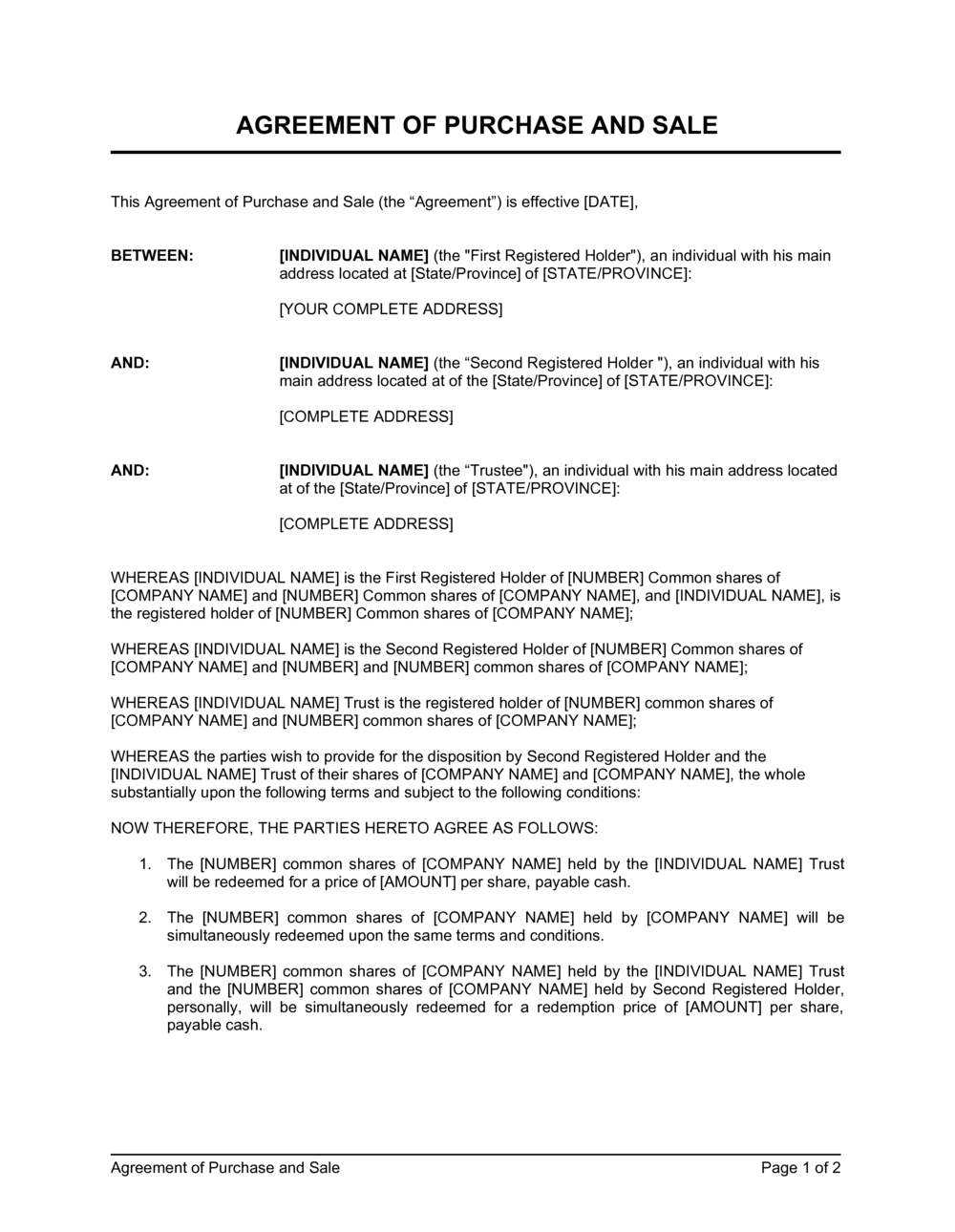
Identify all parties with their full legal names
Enter the seller's and buyer's registered legal names exactly as they appear in corporate registries or on government ID. State the corporation's full registered name, jurisdiction of incorporation, and corporate registration number.
💡 Pull the corporate registry certificate the same day you draft — registered names change and stale records create closing risk.
2
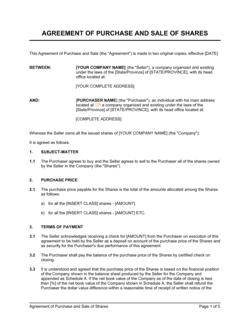
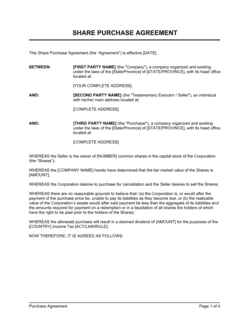
Specify the purchased shares precisely
State the exact number of shares, the class (e.g., Class A Common), and the certificate numbers being transferred. Confirm this matches the current share register and any existing shareholders agreement.
💡 Cross-reference the shareholders agreement for any right of first refusal or co-sale rights that must be waived before the sale can proceed.
3
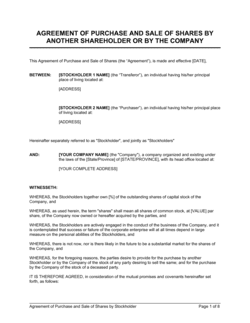
Set the purchase price and payment structure
Enter the total consideration, the deposit amount and due date, the balance payable at closing, and any holdback amount with its release conditions. If an earnout applies, define the metric, measurement period, and payment formula precisely.
💡 Earnout disputes are among the most litigated post-closing issues — define every variable (revenue vs. EBITDA, GAAP or IFRS, inclusions and exclusions) before signing.
4
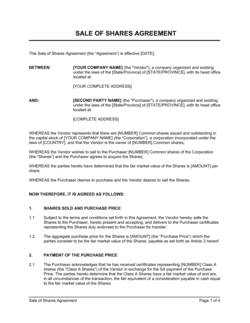
Complete the seller representations and attach the disclosure schedule
Review each representation carefully and note any known exceptions in Schedule A (the disclosure schedule). Undisclosed exceptions discovered after closing become indemnifiable breaches.
💡 Err on the side of over-disclosure. A disclosed risk shifts the loss to the buyer; an undisclosed one creates indemnity liability for the seller.
5
Define closing conditions and the closing date
List every condition each party must satisfy, the deadline by which each must be met, and the consequences of a failed condition — waiver, extension, or termination with or without a break fee.
💡 Build at least 30 days between signing and the targeted closing date to allow time for regulatory filings, third-party consents, and due diligence follow-up.
6
Draft the indemnification framework
Set the survival period (typically 12–24 months for general representations; indefinitely for fundamental representations and tax matters), the basket deductible, and the aggregate indemnity cap. Tie the cap to a percentage of the purchase price.
💡 A common starting point is a deductible basket of 0.5–1% of purchase price and an aggregate cap of 10–25% — adjust based on deal size and risk profile.
7
Prepare the closing checklist as a schedule
List every deliverable each party must bring to closing — share certificates, board resolutions, officer resignations, regulatory clearances, and payment confirmations. Number each item and assign a responsible party.
💡 Send a draft closing checklist to both sides at least 5 business days before closing so missing items surface before the closing meeting, not during it.
8
Execute with wet-ink or qualified electronic signatures before transfer
Both parties must sign before any share certificates are delivered or funds transferred. Confirm your jurisdiction permits electronic signatures for share purchase agreements — most do, but some require wet-ink originals for corporate registration.
💡 Retain a fully executed copy with all schedules in a secure document repository immediately after signing — reconstruction after a dispute is both expensive and unreliable.