Acknowledgment of Customer Praise of Employee Template

Free Word download • Edit online • Save & share with Drive • Export to PDF

1 page15–25 min to fillDifficulty: Standard
Learn more ↓
FreeAcknowledgment of Customer Praise of Employee Template

At a glance

What it is
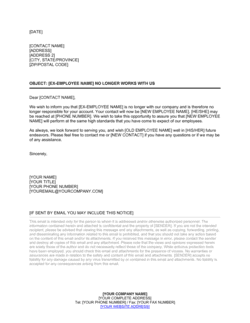
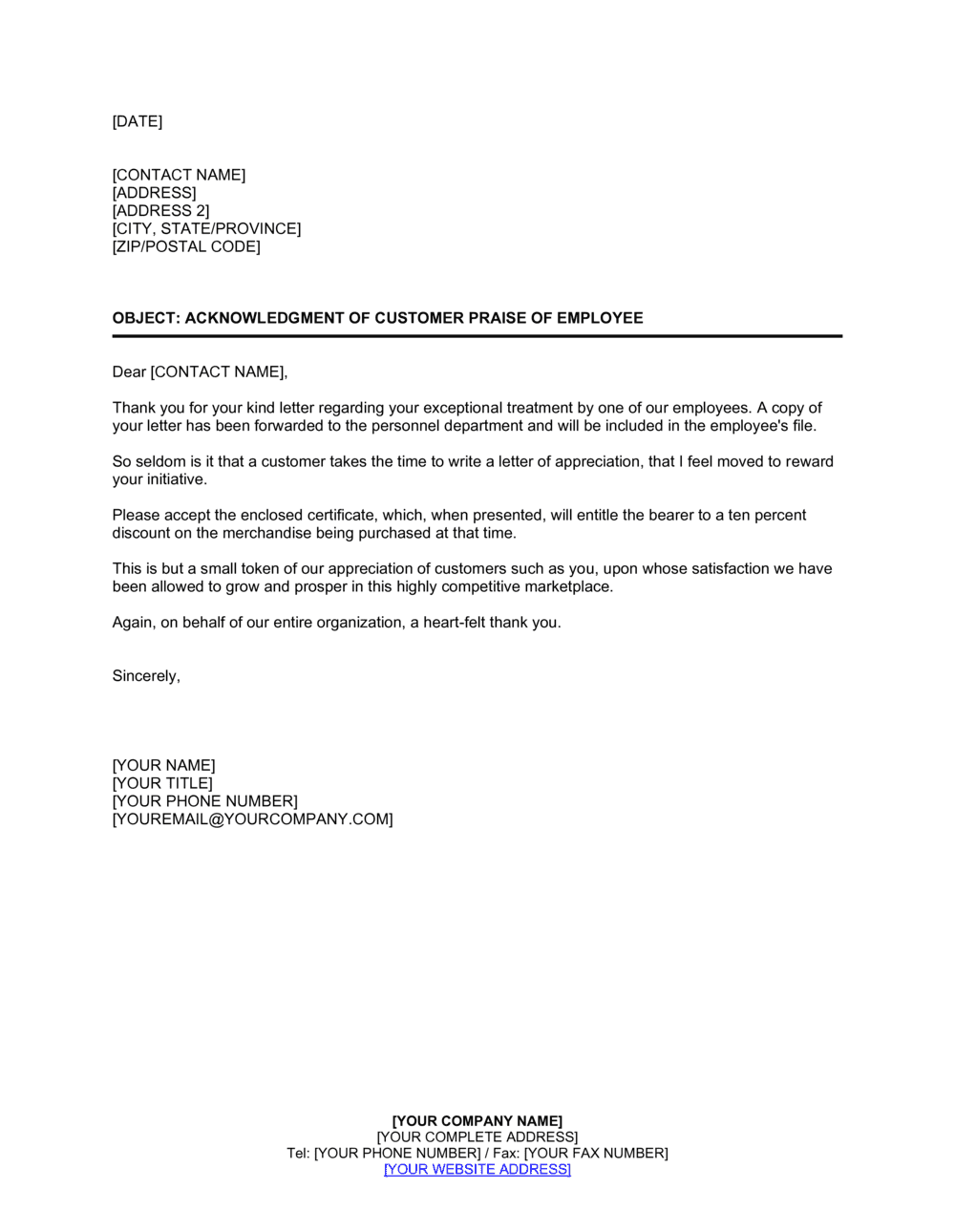
An Acknowledgment of Customer Praise of Employee is a formal business letter a manager or HR representative issues to an employee to document and recognize positive feedback received from a customer. This free Word download gives you a ready-to-edit template you can personalize in minutes and export as PDF for the employee's personnel file or direct delivery.
When you need it
Use it whenever a customer submits a compliment — by email, survey, phone call, or written letter — that specifically names or describes an employee's conduct or contribution. Issuing the letter promptly ties the recognition to the event and reinforces the behavior you want repeated.
What's inside
A date and addressee block, a clear statement of the customer's praise, specific details of the commended behavior, the manager's personal endorsement, and a forward-looking note encouraging continued performance — all in a single professional letter format.

What is an Acknowledgment of Customer Praise of Employee?

An Acknowledgment of Customer Praise of Employee is a formal business letter a manager or HR representative issues to a staff member to document and communicate positive feedback received from a customer. The letter quotes or summarizes the customer's commendation, ties the praised behavior to specific actions and company values, adds a personal endorsement from management, and creates an official record for the employee's personnel file. Unlike an informal verbal compliment, a written acknowledgment gives the recognition permanence and makes it available as documented evidence during performance reviews, promotion discussions, and compensation decisions.

Why You Need This Document

When a customer takes the time to praise a specific employee, that feedback is actionable intelligence — about what your team is doing right and which behaviors drive satisfaction. Failing to formally acknowledge it wastes a low-cost opportunity to reinforce strong performance and leaves the employee without a tangible record of their contribution. Verbal praise evaporates; a filed letter does not. Organizations that systematically issue acknowledgment letters build richer personnel files, reduce reliance on subjective manager recall during reviews, and create a recognition culture that directly supports retention. This template gives you a professionally structured letter you can complete in under ten minutes, ensuring every customer commendation translates into a documented moment of recognition — not just a forwarded email.

Which variant fits your situation?

If your situation is…Use this template
Recognizing an employee for outstanding service cited in a customer surveyAcknowledgment of Customer Praise of Employee
Issuing a formal commendation for an employee's overall performanceEmployee Commendation Letter
Thanking a customer directly for submitting the positive feedbackCustomer Thank You Letter
Recognizing an employee at year-end with a merit-based awardEmployee Award Letter
Documenting a pattern of excellent performance for a performance reviewEmployee Performance Review
Promoting an employee partly on the basis of consistent customer praiseEmployee Promotion Letter

Common mistakes to avoid

❌ Generic behavioral descriptions

Why it matters: Vague praise like 'great attitude' fails to reinforce the specific behavior the customer commended, reducing the motivational value of the letter.

Fix: Describe the exact action — for example, 'proactively called the customer back within two hours to confirm the issue was resolved' — so the employee knows precisely what to repeat.

❌ Delayed delivery after the customer feedback is received

Why it matters: Recognition loses impact with time. A letter issued three weeks after the customer's commendation feels like an administrative formality rather than genuine appreciation.

Fix: Set a standard of issuing the acknowledgment letter within five business days of receiving the customer's feedback.

❌ Omitting the personnel file notation

Why it matters: Without a formal record, the recognition cannot be referenced during performance reviews, promotion decisions, or compensation discussions — limiting its long-term value to the employee.

Fix: Always include a statement that the letter will be placed in the employee's personnel file and CC the HR department on the issued letter.

❌ No manager endorsement — forwarding the customer message as the letter

Why it matters: Simply copying a customer's email into a letter template signals minimal effort and fails to establish management's personal stake in the recognition.

Fix: Add at least two original sentences in the manager's voice before closing, affirming the praise and expressing direct appreciation from leadership.

The 9 key clauses, explained

Date and addressee block

In plain language: Opens the letter with the issue date, the employee's full name, job title, and department — establishing the formal record.

Sample language
[DATE] | [EMPLOYEE FULL NAME] | [JOB TITLE] | [DEPARTMENT] | [COMPANY NAME]

Common mistake: Using only the employee's first name or omitting the department. A complete addressee block ensures the letter is filed correctly in the personnel record.

Subject line

In plain language: A one-line header that summarizes the letter's purpose, making it easy to identify in a file.

Sample language
Subject: Acknowledgment of Customer Commendation — [CUSTOMER NAME], [DATE OF INCIDENT]

Common mistake: Writing a vague subject line like 'Positive Feedback.' Including the customer's name and the date of the interaction makes the letter searchable and specific.

Opening salutation and purpose statement

In plain language: Addresses the employee by name and states directly that the letter is to share positive feedback received from a customer.

Sample language
Dear [EMPLOYEE NAME], I am pleased to write to you regarding an outstanding commendation we received from [CUSTOMER NAME / CUSTOMER REFERENCE] on [DATE].

Common mistake: Burying the purpose in the second or third sentence. The first sentence should make the positive nature of the letter immediately clear.

Customer feedback summary

In plain language: Quotes or paraphrases the customer's praise, citing the source — email, survey, phone call, or written letter — and the date it was received.

Sample language
In a [customer satisfaction survey / email / phone call] received on [DATE], [CUSTOMER NAME] specifically noted that you [DESCRIPTION OF PRAISED BEHAVIOR OR OUTCOME].

Common mistake: Paraphrasing so heavily that the employee cannot recognize the original compliment. Where possible, quote the customer's words directly to give the recognition authenticity.

Description of commended behavior

In plain language: Identifies the specific actions or qualities the customer praised, connecting the behavior to the company's service standards or values.

Sample language
Your [SPECIFIC ACTION — e.g., prompt resolution of the billing issue / clear product explanation / courteous follow-up call] directly contributed to [CUSTOMER OUTCOME] and reflects our commitment to [COMPANY VALUE OR SERVICE STANDARD].

Common mistake: Keeping the description generic — 'great attitude' or 'good work.' Specific behavioral detail is what makes the letter meaningful and reinforces exactly what to repeat.

Manager's personal endorsement

In plain language: A sentence or two in which the manager adds their own voice, confirming the praise and expressing genuine appreciation.

Sample language
I want to personally add that this type of feedback is a direct reflection of the dedication and professionalism you bring to your role every day. It is noted and genuinely appreciated.

Common mistake: Omitting this paragraph and relying solely on the customer's words. A manager's endorsement transforms the letter from a forwarded message into a meaningful act of recognition.

Statement of record

In plain language: Informs the employee that a copy of the letter — and the underlying customer feedback — will be placed in their personnel file.

Sample language
A copy of this letter and the original customer [feedback / commendation] will be placed in your personnel file as a formal record of this recognition.

Common mistake: Not mentioning the personnel file at all. Employees who know the recognition is on record are more likely to view it as a lasting, meaningful acknowledgment.

Forward-looking closing

In plain language: Closes with encouragement for continued performance, reinforcing the connection between the commended behavior and the employee's career development.

Sample language
We look forward to seeing you continue to set this standard. Please know that contributions like this do not go unnoticed and are taken into consideration as you grow with [COMPANY NAME].

Common mistake: Ending abruptly after the statement of record. A forward-looking sentence converts a backward-looking acknowledgment into a motivational message.

Sender signature block

In plain language: Closes with the manager's or HR representative's name, title, and department, and optionally a CC line to HR or the employee's personnel file.

Sample language
Sincerely, [MANAGER NAME] | [TITLE] | [DEPARTMENT] | cc: Human Resources / Personnel File

Common mistake: Signing with only a first name or omitting the title. A complete signature block establishes the authority behind the recognition and ensures proper filing.

How to fill it out

  1. 1

    Enter the date and the employee's full details

    Fill in today's date, the employee's legal full name, their current job title, and their department in the addressee block at the top of the letter.

    💡 Use the same name format that appears in the employee's HR record to ensure the letter is filed and retrieved correctly.

  2. 2

    Write a specific subject line

    Include the customer's name or reference number and the date of the interaction in the subject line so the letter is immediately identifiable in a personnel file.

    💡 If the customer submitted feedback anonymously, reference the survey date and response ID instead.

  3. 3

    Summarize the customer's feedback accurately

    Describe the source of the feedback — email, survey, phone call, or letter — and the date it was received. Quote the customer's exact words where possible.

    💡 Attach a printed copy of the original customer feedback to the letter when filing it in the personnel record.

  4. 4

    Describe the specific behavior that was praised

    Name the precise action or quality the customer commended and connect it explicitly to a company value, service standard, or team goal.

    💡 Avoid adjectives like 'excellent' or 'great' without a behavioral anchor — 'resolved the billing dispute in one call' is more useful than 'handled it well.'

  5. 5

    Add your personal endorsement

    Write one to two sentences in your own voice affirming the praise and expressing appreciation. This distinguishes the letter from a forwarded email.

    💡 If you witnessed the behavior firsthand, say so — first-person observations add credibility to the recognition.

  6. 6

    Confirm the personnel file notation and close

    State that the letter will be placed in the employee's personnel file, add a forward-looking sentence, and complete the signature block with your full name and title.

    💡 CC the HR department on the letter so the file copy is routed automatically without requiring a separate step.

Frequently asked questions

What is an acknowledgment of customer praise of employee?

It is a formal business letter a manager or HR representative issues to an employee to document and communicate positive feedback submitted by a customer. The letter summarizes the customer's commendation, adds the manager's personal endorsement, and creates an official record in the employee's personnel file. It serves both as a motivational tool and as documented evidence of strong performance.

When should I send an acknowledgment of customer praise letter?

Send it within five business days of receiving the customer's feedback. Prompt delivery ties the recognition directly to the commended event and reinforces the specific behavior while it is fresh. Delays of more than two weeks significantly reduce the motivational impact and can make the letter feel procedural rather than genuine.

Does the employee need to sign the letter?

No signature is required on a recognition letter. Unlike a disciplinary notice or a policy acknowledgment, this letter is informational and motivational. Some organizations ask the employee to sign a copy confirming receipt for the personnel file, but this is optional and at the employer's discretion.

Should a copy go in the employee's personnel file?

Yes. Filing the letter — along with the original customer feedback — creates a formal record of documented positive performance. This record is valuable during annual performance reviews, promotion decisions, and compensation discussions. It also provides a balanced picture of the employee's history alongside any disciplinary records.

Can I use this letter to support a future promotion decision?

Yes. A pattern of acknowledgment letters citing customer commendations provides concrete, third-party evidence of strong performance that supplements manager observations. Reference the letters by date in the employee's promotion justification document to build a documented case based on real customer outcomes rather than subjective assessments.

What is the difference between this letter and a general employee commendation letter?

An acknowledgment of customer praise is specifically triggered by external customer feedback and quotes or references that feedback directly. A general commendation letter is initiated by management based on internal observation, without a customer prompt. Both belong in the personnel file, but the customer-praise letter carries the added credibility of a third-party source.

How detailed should the description of the commended behavior be?

Specific enough that the employee understands exactly what action or quality earned the praise. One or two sentences naming the behavior — for example, the specific problem solved, the manner of communication, or the outcome achieved for the customer — is the right level of detail. Vague references to 'good service' or 'professionalism' undermine the purpose of the letter.

Can this letter be used for team-level praise, or only for individuals?

The template is designed for a named individual. If a customer praised a team collectively, issue individual letters to each team member named or involved, referencing the shared commendation. Personalized letters carry more weight than a single group notice and ensure each team member has a recognition record in their own personnel file.

How this compares to alternatives

vs Employee Performance Evaluation

A performance evaluation is a comprehensive periodic review covering all dimensions of an employee's work over a defined period. An acknowledgment of customer praise is a single-event letter triggered by specific external feedback. The two documents complement each other — praise letters serve as supporting evidence within the broader evaluation.

vs Employee Promotion Letter

A promotion letter formally announces a change in role, title, or compensation. An acknowledgment of customer praise documents a specific positive event without changing the employment relationship. Praise letters often accumulate in a personnel file as evidence that informs a later promotion decision.

vs Employee Disciplinary Notice

A disciplinary notice formally documents a performance or conduct problem. An acknowledgment of customer praise documents the opposite — exemplary conduct cited by a third party. Both belong in the personnel file and together provide a balanced, factual record of the employee's history.

vs Customer Thank You Letter

A customer thank you letter is addressed to the customer to acknowledge their feedback and reinforce the relationship. An acknowledgment of customer praise is addressed to the employee. Both may be issued in response to the same customer commendation, but they serve entirely different audiences and purposes.

Industry-specific considerations

Retail and Hospitality

High volume of customer-facing interactions means customer praise letters serve as a primary formal recognition tool alongside verbal feedback.

Financial Services

Client commendations are particularly meaningful in trust-dependent roles; letters support compliance-aware personnel documentation practices.

Healthcare

Patient satisfaction feedback is systematically collected, making formal acknowledgment letters a natural extension of HCAHPS or internal survey processes.

Professional Services

Client praise for a specific consultant or advisor directly supports performance reviews, billable-rate justifications, and partner-track decisions.

Template vs pro — what fits your needs?

PathBest forCostTime
Use the templateManagers and HR teams issuing standard single-employee recognition lettersFree5–10 minutes per letter
Template + professional reviewOrganizations building a formal recognition program with standardized language and HR policy alignment$0–$100 (HR advisor or policy review)1–2 hours
Custom draftedEnterprises requiring recognition letters integrated with HRIS workflows, legal review of language, or multi-language versions for international teams$200–$5001–3 days

Glossary

Acknowledgment Letter
A formal written notice confirming that a specific event, action, or communication has been received and recognized.
Customer Commendation
Positive feedback submitted by a customer that specifically names or describes an employee's conduct, service, or contribution.
Personnel File
The official employer-maintained record of an employee's employment history, including performance evaluations, disciplinary actions, and recognition letters.
Positive Reinforcement
A management practice of acknowledging desired behaviors promptly to increase the likelihood they will be repeated.
Commendation
A formal expression of praise or approval issued by a superior, often in writing, recognizing an employee's conduct or achievement.
Formal Recognition
An official, documented acknowledgment of an employee's contribution, distinct from informal verbal praise.
Addressee Block
The section at the top of a formal letter identifying the recipient's name, title, department, and address.
CC (Carbon Copy)
A notation at the bottom of a business letter indicating that a copy has been sent to one or more additional recipients, such as HR or a department head.
Closing Salutation
The sign-off phrase at the end of a formal letter — such as 'Sincerely' or 'With appreciation' — followed by the sender's name and title.

Part of your Business Operating System

This document is one of 3,000+ business & legal templates included in Business in a Box.

  • Fill-in-the-blanks — ready in minutes
  • 100% customizable Word document
  • Compatible with all office suites
  • Export to PDF and share electronically

Create your document in 3 simple steps.

From template to signed document — all inside one Business Operating System.
1
Download or open template

Access over 3,000+ business and legal templates for any business task, project or initiative.

2
Edit and fill in the blanks with AI

Customize your ready-made business document template and save it in the cloud.

3
Save, Share, Send, Sign

Share your files and folders with your team. Create a space of seamless collaboration.

Save time, save money, and create top-quality documents.

★★★★★

"Fantastic value! I'm not sure how I'd do without it. It's worth its weight in gold and paid back for itself many times."

Managing Director · Mall Farm
Robert Whalley
Managing Director, Mall Farm Proprietary Limited
★★★★★

"I have been using Business in a Box for years. It has been the most useful source of templates I have encountered. I recommend it to anyone."

Business Owner · 4+ years
Dr Michael John Freestone
Business Owner
★★★★★

"It has been a life saver so many times I have lost count. Business in a Box has saved me so much time and as you know, time is money."

Owner · Upstate Web
David G. Moore Jr.
Owner, Upstate Web

Run your business with a system — not scattered tools

Stop downloading documents. Start operating with clarity. Business in a Box gives you the Business Operating System used by over 250,000 companies worldwide to structure, run, and grow their business.

Start free · No credit card required