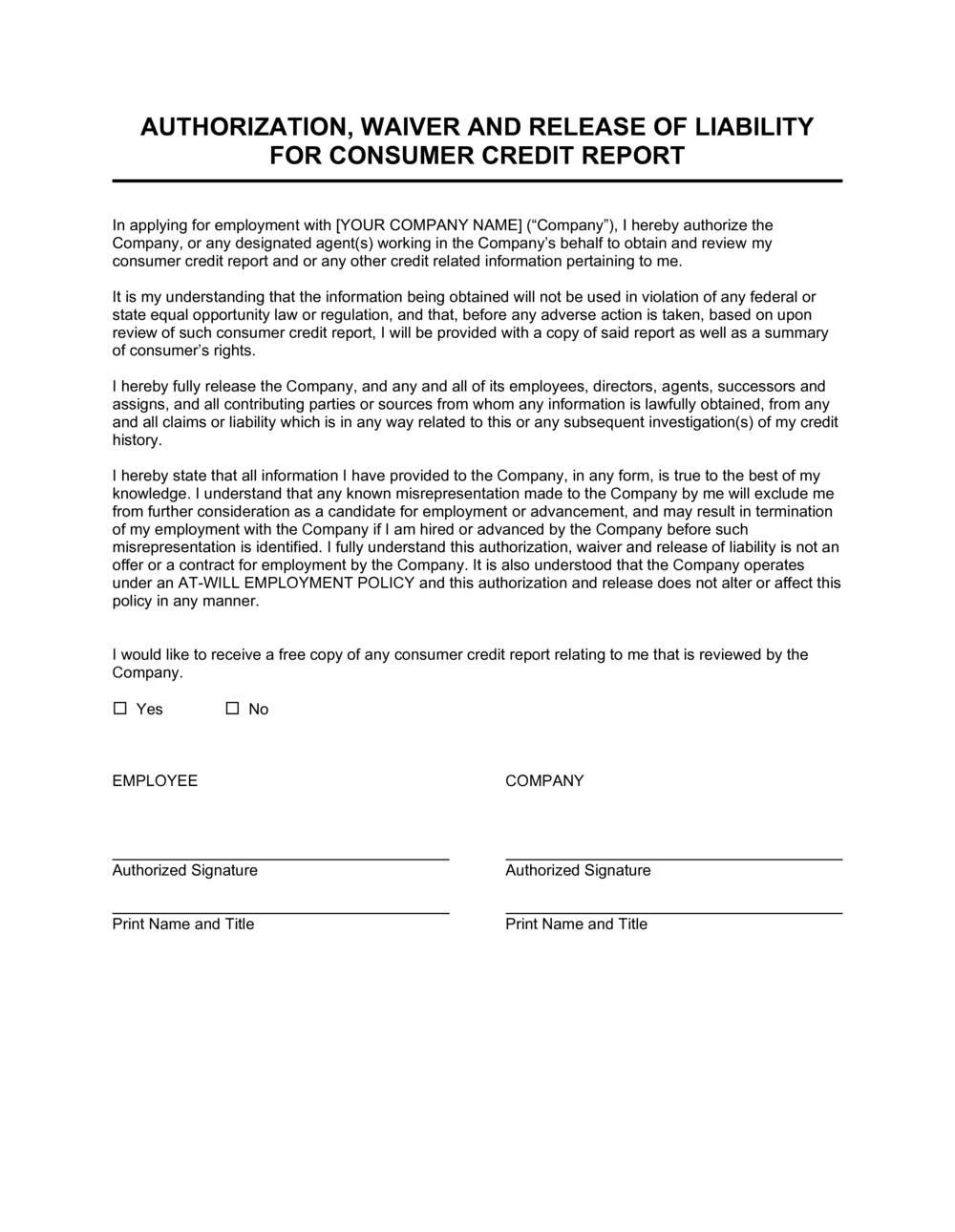
- Consumer Report
- Any written, oral, or electronic communication from a consumer reporting agency bearing on a person's creditworthiness, character, or fitness for employment.
- Consumer Reporting Agency (CRA)
- A company that assembles or evaluates consumer credit information and furnishes consumer reports to third parties, such as employers.
- FCRA (Fair Credit Reporting Act)
- The US federal law that regulates how consumer credit information is collected, shared, and used — including specific rules for employment-related credit checks.
- Adverse Action
- Any decision that negatively affects an applicant or employee — such as denying a job offer — based in whole or in part on information in a consumer credit report.
- Pre-Adverse Action Notice
- A required notice sent to the consumer before the employer takes adverse action, giving the individual a chance to dispute inaccuracies in the report.
- Disclosure
- A clear, written statement informing the applicant or employee that a consumer credit report may be obtained for employment purposes.
- Authorization
- The applicant's or employee's written consent giving the employer permission to obtain a consumer credit report.
- Release of Liability
- A clause in which the employee waives certain claims against the employer and the reporting agency arising from the procurement or use of the credit report.
- Permissible Purpose
- A legally valid reason for obtaining a consumer report under the FCRA, which includes employment screening when proper disclosure and authorization procedures are followed.
- Investigative Consumer Report
- A more detailed type of consumer report that includes interviews with the subject's neighbors, friends, or associates about their character and reputation.