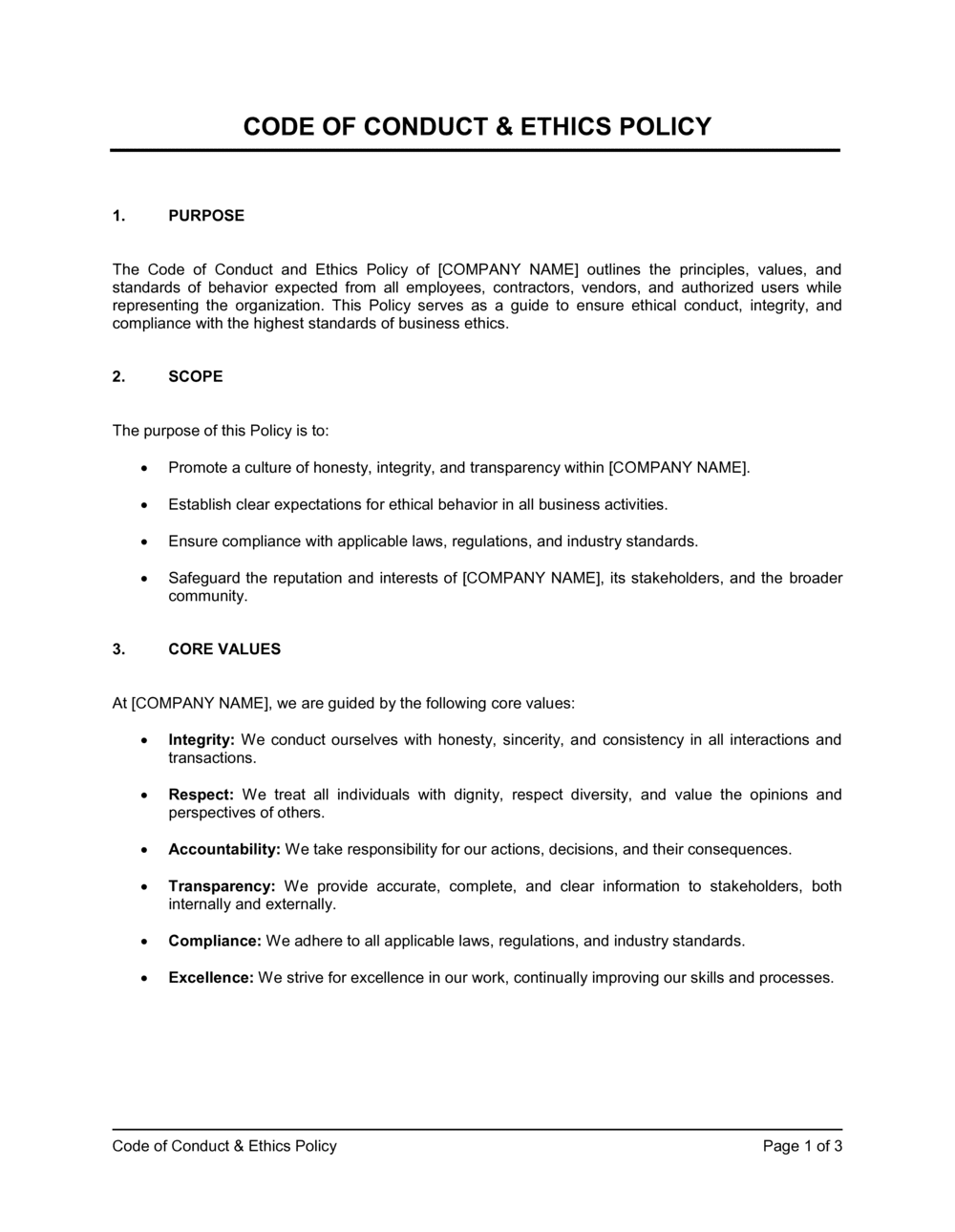
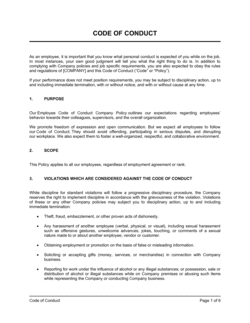
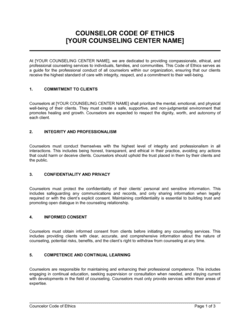
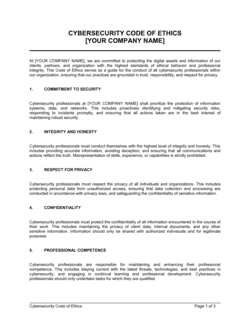
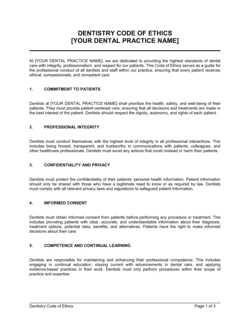
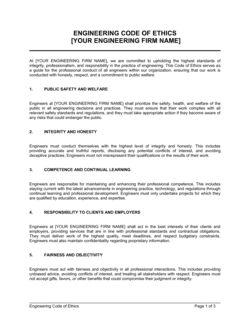
- Code of Conduct
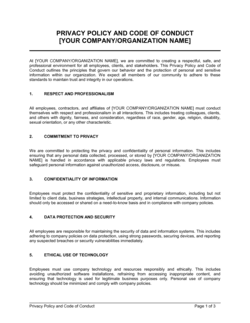
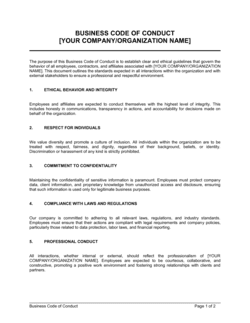
- A written policy stating the behavioral standards and ethical expectations all employees and representatives of an organization must follow.
- Conflict of Interest
- A situation where an employee's personal interests — financial, relational, or otherwise — could improperly influence their professional decisions.
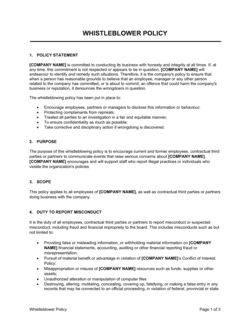
- Whistleblower
- An employee who reports suspected misconduct, fraud, or policy violations internally or to a regulatory body, typically protected from retaliation by law.
- Confidential Information
- Non-public business data — including trade secrets, financial results, customer lists, and strategic plans — that employees are obligated not to disclose.
- Anti-Harassment Policy
- A policy prohibiting unwanted conduct based on protected characteristics such as gender, race, religion, or age that creates a hostile work environment.
- Disciplinary Action
- A formal employer response to a policy violation, ranging from a written warning to suspension or termination depending on severity.
- Scope of Policy
- A clause defining which individuals — employees, contractors, directors, or third parties — are bound by the policy and under what circumstances.
- Ethics Hotline
- A confidential reporting channel, typically a phone line or web portal, where employees can report suspected misconduct without identifying themselves.
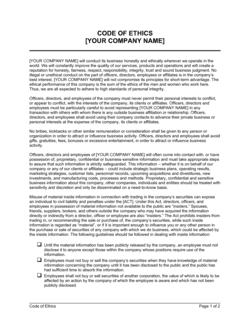
- Material Non-Public Information (MNPI)
- Information about a company that has not been disclosed to the public and that, if known, could influence an investor's decision to buy or sell securities.
- Retaliation
- Adverse action taken against an employee for reporting a policy violation, filing a complaint, or participating in an investigation — prohibited under most employment laws.