1
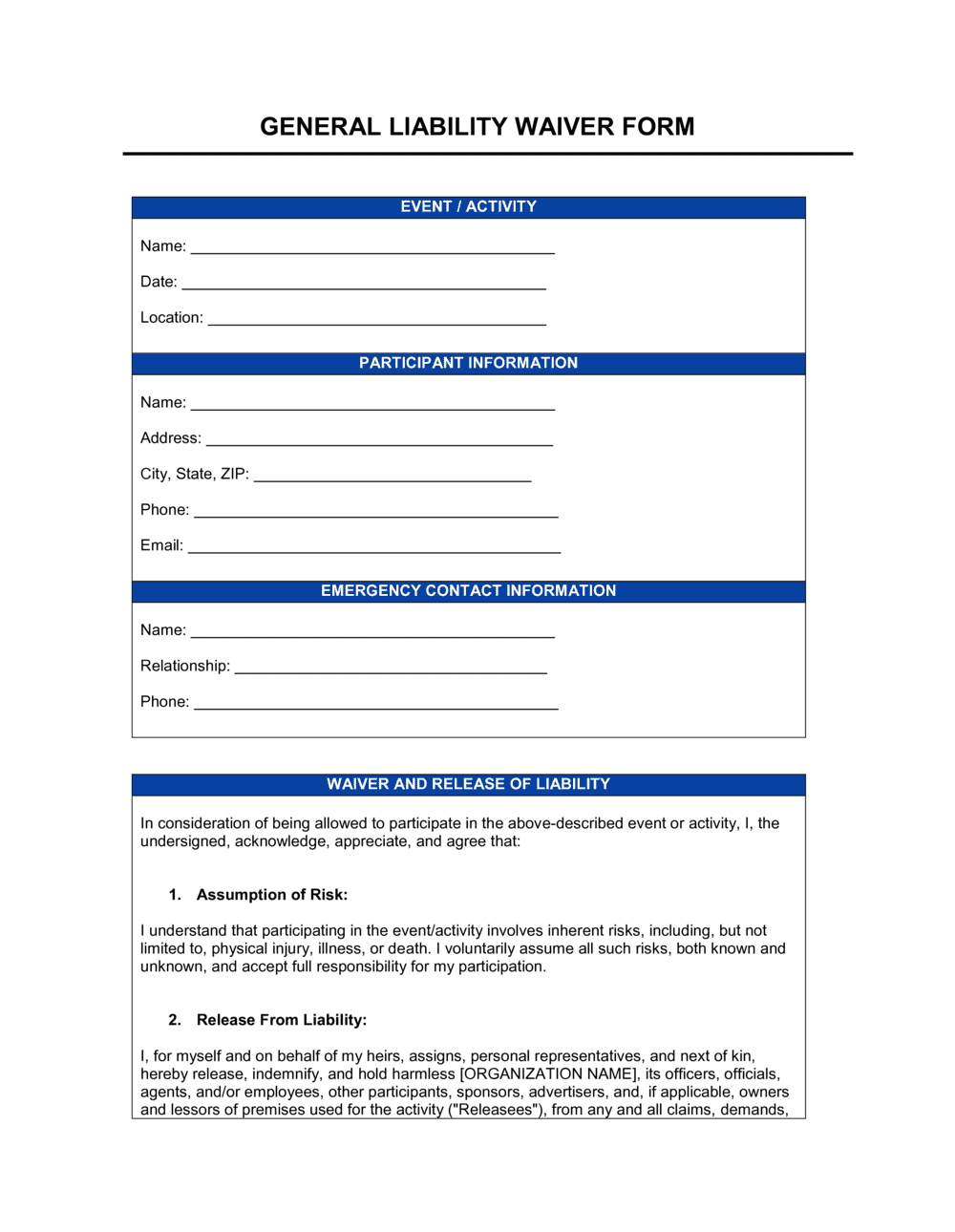
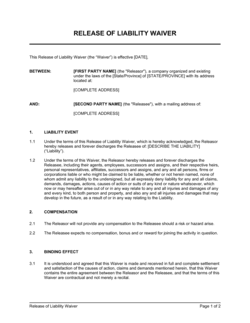
Identify the releasee using the registered legal entity name
Enter the business's full legal name — exactly as it appears on its articles of incorporation or registration — along with the entity type, state or province of incorporation, and business address.
💡 Cross-check the name against your state or provincial business registry before finalizing. A mismatched name is one of the most common grounds for challenging a waiver.
2
Describe the activity with specific detail
Name the exact activity, include the date range or ongoing-activity language, and identify the specific location. Avoid catch-all language like 'any activity' — specificity strengthens enforceability.
💡 If the waiver will be reused for a recurring class or program, draft the activity description to cover all sessions under that program rather than creating a new waiver each time.
3
List the specific inherent risks of the activity
Replace the generic placeholder list with risks actually relevant to your activity — fall hazards, equipment failure, weather exposure, contact injuries, or specific chemicals or machinery involved.
💡 Review your liability insurance policy's exclusions and incident reports from similar businesses to build a complete risk list. Courts give more weight to specific, realistic risk disclosures than to boilerplate lists.
4
Confirm indemnification scope with a legal adviser
Decide whether the indemnification clause should cover only the participant's own negligence or also include the operator's ordinary negligence. The language differs meaningfully and must be stated explicitly to be enforced.
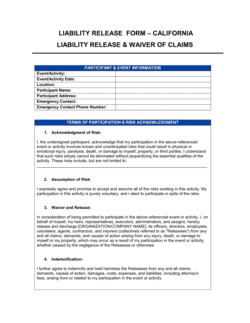
💡 If your state prohibits indemnification of the indemnitee's own negligence (California, for instance), remove that language or risk tainting the entire clause.
5
Add medical authorization details
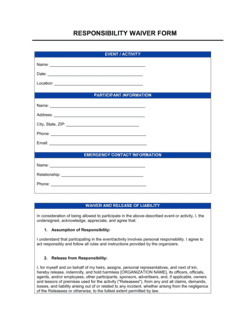
If minors may participate, ensure the parental consent and medical authorization language is present and that parents — not minors — are signing. For adults, verify the emergency contact field is completed.
💡 For activities involving minors, a separate minor-specific waiver signed by the parent or legal guardian is more defensible than a single document signed by the child.
6
Set the governing law to match the activity location
Enter the state, province, or country where the activity physically takes place. If the waiver will be used in multiple jurisdictions, consult a lawyer about creating separate jurisdiction-specific versions.
💡 Virginia, Louisiana, and Montana have statutory provisions that can void certain waiver clauses — confirm your governing-law choice is consistent with those statutes if applicable.
7
Collect signatures before the activity begins
Present the waiver to participants far enough in advance that they can read it without time pressure — ideally at registration, not at the gate. Keep signed originals in a secure file for at least as long as the statute of limitations for personal injury claims in your jurisdiction.
💡 For high-volume events, use an e-signature platform to collect and timestamp waivers digitally. A timestamped digital record is often easier to produce in litigation than a box of paper forms.
8
Have the waiver reviewed for jurisdiction-specific limits
Once the template is completed, have a local attorney confirm that the release, indemnification, and assumption-of-risk language meets enforceability standards in the governing jurisdiction before you collect the first signature.
💡 A one-hour attorney review ($150–$400) is inexpensive insurance against a clause that would be struck entirely under local law, rendering your waiver substantially weaker than intended.