Budgeting and Cost Management Templates
★★★★★4.7from 280+ reviews· Trusted by 20M+ businesses
Plan, control, and reduce costs with ready-to-use budgeting templates for every stage of your financial cycle.
WordEditable onlinePDF18+ budgeting and cost management templates
Other Finance & Accounting categories
Most popular budgeting templates
Cost analysis and reduction
Financial and budgeting policies
Operational cost management
250K+Clients
20M+Free users
20+Years
190+Countries
10,000+Law firms
50M+Downloads
Trusted across review platforms
- Capterra★★★★☆4.649 reviews
- G2★★★★☆4.713 reviews
- GetApp★★★★☆4.649 reviews
- Google Play★★★★☆4.6179 ratings
- Google Reviews★★★★☆4.567 reviews
Frequently asked questions
What is capital budgeting and why does it matter?
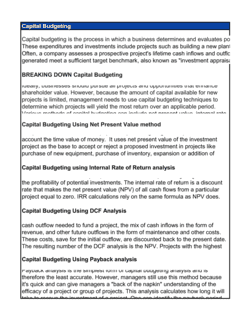
Capital budgeting is the process of evaluating and selecting long-term investments — equipment, property, technology, acquisitions — that will affect the business for multiple years. It matters because capital commitments are large, difficult to reverse, and directly shape a company's future cost structure and competitive position. Common techniques include net present value (NPV), internal rate of return (IRR), and payback period analysis.
How is a cost-benefit analysis different from a financial forecast?
A cost-benefit analysis is a decision-support tool for a specific choice — it weighs the total expected costs against the total expected benefits of a project or initiative. A financial forecast is a forward- looking projection of revenues, expenses, and cash flows for the business as a whole over a future period. CBAs inform individual decisions; forecasts inform overall business planning.
What should a budgeting policy include?
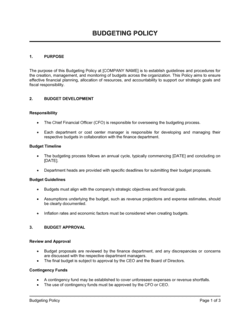
A budgeting policy should cover the budget preparation timeline, submission and approval process, approval authority thresholds, cost classification standards, variance monitoring frequency, amendment procedures, and document retention requirements. Some organizations also include guidance on capital vs. operating expense treatment and multi-year planning cycles.
How do I start a cost reduction initiative?
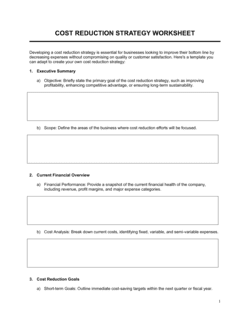
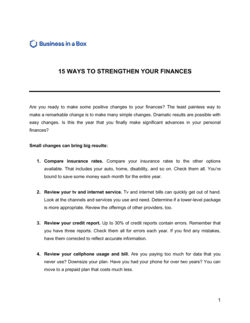
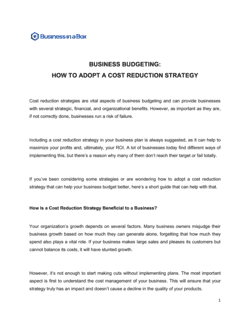
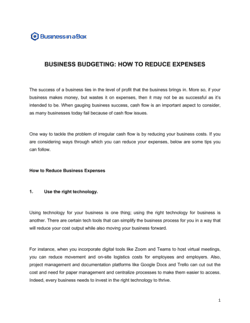
Start by auditing current spending by category to identify the largest or fastest-growing cost lines. Prioritize categories where cuts have low operational impact — subscriptions, discretionary travel, underused vendors. Set a specific dollar or percentage target, assign an owner to each initiative, and track progress monthly. The cost reduction strategy templates and worksheets in this folder provide a structured starting point.
What is the difference between a fixed cost and a variable cost?
A fixed cost stays roughly constant regardless of output volume — rent, salaries, insurance. A variable cost changes in proportion to activity — raw materials, sales commissions, transaction fees. Understanding this distinction is essential for accurate budgeting because cost reduction strategies and breakeven analyses require you to treat the two categories differently.
How often should a business budget be reviewed?
Most businesses review budget-versus-actual performance monthly and conduct a formal reforecast quarterly. Annual budgets are typically prepared 6–8 weeks before the start of the new fiscal year. High-growth or high-volatility businesses may reforecast monthly. The key is that the review cadence is documented in the budgeting policy and followed consistently.
Do small businesses need a formal budgeting policy?
Not always at the earliest stage, but a documented policy becomes valuable as soon as you have more than one person approving expenditures. Without a policy, approval decisions are inconsistent and harder to audit. Even a one-page budgeting policy that defines approval thresholds and submission deadlines can prevent costly overruns and disputes.
What is a breakeven analysis and when should I use one?
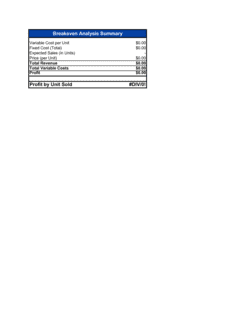
A breakeven analysis identifies the level of revenue or unit sales at which total costs equal total revenue — the point where the business neither profits nor loses. Use it when launching a new product, setting a pricing strategy, or evaluating whether a new cost is justified by incremental revenue. The Breakeven and Profit-Volume-Cost Analysis template in this folder walks through the calculation.
Budgeting and Cost Management vs. related documents
A cost analysis examines only the expense side of a decision — what something will cost and how costs break down. A cost-benefit analysis (CBA) goes further by also quantifying expected benefits, then comparing the two to determine net value. Use a cost analysis when you need to understand or control spending; use a CBA when you need to justify a specific investment or project to stakeholders.
A capital budget covers long-term investments in assets — equipment, property, technology infrastructure — typically with multi-year payback periods. An operating budget covers day-to-day revenues and expenses within a single fiscal year. Most businesses maintain both: capital budgeting for growth decisions and an operating budget for managing ongoing costs. The templates in this folder address both dimensions.
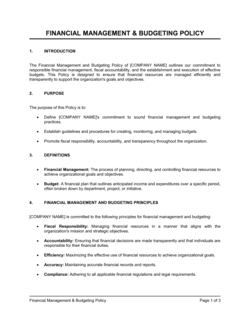
A budgeting policy focuses specifically on how budgets are prepared, approved, monitored, and amended. A financial management policy is broader and covers the full range of financial governance: accounting standards, internal controls, reporting obligations, and investment authority — with budgeting as one chapter within it. Start with the financial management policy if you are building governance from scratch; use the standalone budgeting policy if you only need to formalize the budget process.
A cost reduction strategy is a deliberate, time-bound initiative aimed at permanently lowering a specific cost category. Expense management is an ongoing operational process for approving, recording, and reporting routine spending. Cost reduction is a project; expense management is a system. The worksheets and how-to guides in this folder support the former; accounting and ERP tools typically handle the latter.
Key clauses every Budgeting and Cost Management contains
Well-designed budgeting and cost management documents share a common set of components regardless of whether they are a policy, a worksheet, or a planning guide.
- Scope and applicability. Defines which departments, projects, or cost categories the document covers and who is bound by it.
- Budget preparation and submission process. Outlines the steps, timeline, and responsible parties for building and submitting budget requests.
- Approval authority and thresholds. Specifies who can approve expenditures at each dollar level, from department managers to the board.
- Cost classification. Distinguishes fixed vs. variable, direct vs. indirect, and capital vs. operating costs for consistent reporting.
- Variance monitoring and reporting. Establishes how actual spending is compared to budget, how often, and what triggers a formal review.
- Cost reduction targets and accountability. Sets quantified savings goals, names responsible owners, and defines the review cadence.
- Amendment and re-forecasting procedures. Describes conditions under which a budget can be revised mid-cycle and who must approve changes.
- Audit and compliance requirements. States internal or external audit obligations and how budget documentation must be retained.
How to write a business budget or cost management policy
Whether you are building a budget from scratch or formalizing cost controls for a growing team, the same core steps apply.
1
Define the scope
State which entity, department, or project the document applies to and which fiscal period it covers.
2
Identify all cost categories
List every relevant cost line — payroll, facilities, technology, vendors, capital items — before estimating any amounts.
3
Gather historical data and forward assumptions
Pull prior-period actuals and document the growth, inflation, or headcount assumptions that drive your forward estimates.
4
Set approval authority
Assign specific dollar thresholds to each management level so every expenditure has a clearly authorized approver.
5
Build the variance monitoring process
Decide how often actuals are compared to budget — monthly is standard — and what deviation percentage triggers a formal review.
6
Document cost reduction targets
For cost management plans, quantify savings goals by category and assign an owner to each reduction initiative.
7
Define amendment rules
Specify the conditions under which the budget can be revised and require the same approval process as the original submission.
8
Distribute, train, and review annually
Share the finalized document with all relevant managers, confirm understanding, and schedule an annual policy review.
At a glance
- What it is
- Budgeting and cost management documents are the structured tools businesses use to plan expenditures, track actual spending against targets, and systematically reduce costs. They cover everything from high-level financial policies to line-by-line cost analysis worksheets.
- When you need one
- Any time you are setting annual budgets, evaluating a capital investment, preparing for a cost-reduction initiative, or formalizing financial controls for a growing team.
Which Budgeting and Cost Management do I need?
The right template depends on whether you are setting policy, analyzing a specific cost decision, or building an operational plan. Match your immediate task to the scenarios below.
Your situation
Recommended template
Setting organization-wide rules for how budgets are created and approved
Covers governance, approval authority, and budget cycle in one document.Evaluating whether a large capital investment is worth making
Structures cash flow projections and return metrics for investment decisions.Deciding whether a project or initiative delivers sufficient return
Quantifies costs against expected benefits to support a go/no-go decision.Working through the numbers of a cost-benefit decision in a spreadsheet
Spreadsheet format for itemizing and totaling costs and benefits row by row.Launching a formal cost-reduction program across the business
Step-by-step guide for identifying, prioritizing, and executing savings.Documenting your company's standing budgeting rules and procedures
Standalone policy document for teams that need a budget governance reference.Finding specific line-item expenses to cut without disrupting operations
Structured worksheet for cataloguing, ranking, and acting on expense cuts.Understanding the fully loaded cost of an employee role before hiring
Breaks down base pay, benefits, and employer taxes into a total-cost view.Glossary
- Capital expenditure (CapEx)
- Spending on long-term assets such as equipment or property that is capitalized on the balance sheet rather than expensed immediately.
- Operating expenditure (OpEx)
- Day-to-day spending on goods and services consumed within the current fiscal period, expensed directly on the income statement.
- Cost-benefit analysis (CBA)
- A structured comparison of the total expected costs and total expected benefits of a decision or project to determine net value.
- Variance
- The difference between a budgeted amount and the actual amount spent or earned, reported as favorable or unfavorable.
- Breakeven point
- The level of sales or revenue at which total costs exactly equal total revenue, resulting in zero profit or loss.
- Fixed cost
- A cost that does not change with output volume in the short run, such as rent or salaried payroll.
- Variable cost
- A cost that increases or decreases in direct proportion to production or sales activity.
- Net present value (NPV)
- The value today of a series of future cash flows, discounted at the organization's required rate of return; used to evaluate capital investments.
- Internal rate of return (IRR)
- The discount rate at which the net present value of a project's cash flows equals zero; higher IRR generally indicates a more attractive investment.
- Reforecast
- A mid-period revision of the annual budget based on actual results and updated assumptions, replacing the original budget as the operating target.
- Approval authority
- The designated person or role empowered to authorize expenditures up to a specified dollar threshold.
- Cost allocation
- The process of assigning shared or indirect costs to specific departments, products, or projects using a defined methodology.
What is budgeting and cost management?
Budgeting and cost management is the discipline of planning where money will be spent, monitoring actual expenditures against those plans, and taking deliberate action to control or reduce costs over time. In practice, it produces two categories of documents: governance documents — policies and procedures that define how financial decisions are made and approved — and analytical tools — worksheets, analyses, and planning templates that support specific cost decisions.
Effective budgeting is not a once-a-year exercise. It is a continuous cycle: setting targets before the fiscal year begins, reviewing actuals against budget monthly or quarterly, reforecasting when conditions change, and closing the year with a variance report that informs the next cycle. Cost management sits alongside this cycle as an ongoing effort to ensure that every dollar spent is necessary and delivering the expected return.
Businesses of every size need both. A startup building its first annual budget and a mid-market company launching a cost-reduction initiative are solving different problems, but both need structured documents to keep decisions accountable, visible, and auditable.
When you need a budgeting or cost management template
The clearest trigger is the start of the annual planning cycle — but budgeting and cost management documents are needed throughout the year, not just in Q4. You need one of these templates when:
- You are building or formalizing the annual budget for the first time and need a structured starting point
- A capital investment decision — new equipment, a facility expansion, a technology platform — requires a documented analysis before approval
- A cost overrun has prompted leadership to launch a formal cost-reduction initiative
- You are onboarding a new finance manager or controller and need written policies to hand off
- A lender, investor, or board member is asking for evidence of financial controls
- You are comparing the fully loaded cost of hiring vs. contracting for a role
- A vendor or procurement decision needs a documented cost-benefit rationale
- You are preparing for an internal or external financial audit and need policy documentation
Without written budgets and cost controls, spending decisions are made inconsistently, overruns go undetected until they are material, and accountability is difficult to establish after the fact. The templates in this folder give finance teams, business owners, and managers the structure they need to make spending decisions with confidence.
Award-winning platform
- Great Place to Work 2025
- BIG Award — Product of the Year 2025
- Smartest Companies 2025
- Global 100 Excellence 2026
- Best of the Best 2025