Letter Announcing New Product Template

Free Word download β€’ Edit online β€’ Save & share with Drive β€’ Export to PDF

2 pagesβ€’20–25 min to fillβ€’Difficulty: Standard
Learn more ↓
FreeLetter Announcing New Product Template

At a glance

What it is
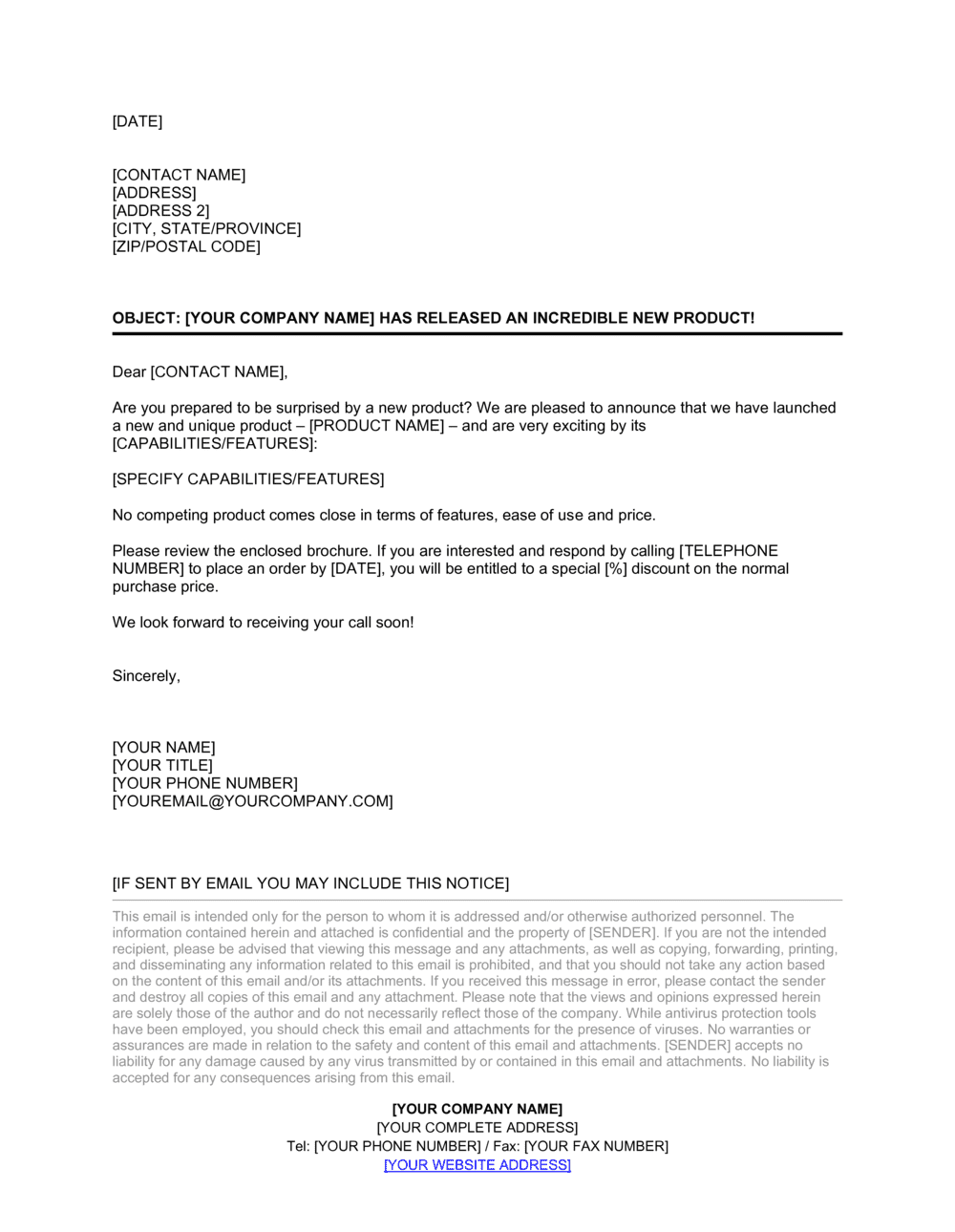
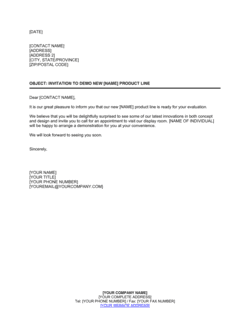
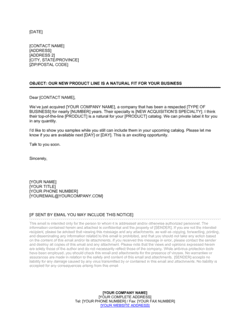
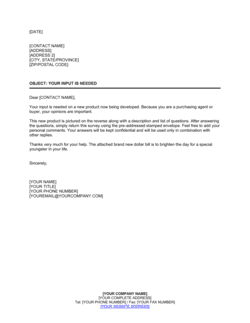
A Letter Announcing a New Product is a formal business letter sent to existing customers, partners, or distributors to introduce a new product, explain its positioning and key benefits, and direct recipients toward a next step β€” placing an order, requesting a demo, or visiting a product page. This free Word download is ready to edit online and export as PDF or send directly.
When you need it
Use it when launching a new product or product line and you want to notify your existing network before or alongside a broader public release. It is especially valuable when your audience β€” loyal customers, channel partners, or distributors β€” deserves a personalized, direct communication rather than a mass-marketing blast.
What's inside
A professional header with sender and recipient details, an opening that establishes the announcement context, product positioning and key benefit statements, availability and pricing information, and a clear call to action with contact details for follow-up.

What is a Letter Announcing a New Product?

A Letter Announcing a New Product is a formal business letter sent to existing customers, channel partners, or distributors to introduce a new product, communicate its positioning and key benefits, and direct recipients toward a specific next step β€” placing an order, requesting a demonstration, or visiting a product page. Unlike a press release or social media post, this letter is addressed to a known audience with an existing relationship, making it one of the most direct and cost-effective tools in a product launch communication plan. It typically covers the product's name and category, two to four outcome-focused benefits, pricing and availability details, and a single clear call to action.

Why You Need This Document

Launching a product without a direct communication to your existing network means your most likely buyers β€” people who already trust your brand β€” learn about it the same way strangers do, through advertising or social media. That wastes a competitive advantage. A well-crafted announcement letter reaches loyal customers and distribution partners before the public launch window, giving them time to budget, place early orders, and stock inventory. It also prevents pricing confusion: without a formal written communication, customers and distributors rely on second-hand information, leading to order errors and expectation mismatches. This template gives you a complete, professional structure in under 30 minutes β€” so your product reaches the right people with the right message at exactly the right moment.

Which variant fits your situation?

If your situation is…Use this template
Announcing to existing retail or wholesale customersLetter Announcing New Product
Introducing a product to channel partners or distributorsLetter Announcing New Product
Notifying customers of a price change on an existing productLetter Announcing Price Increase
Launching a product to a broad public audience via pressPress Release β€” New Product Launch
Sending a formal product proposal to a prospective buyerProduct Sales Proposal
Introducing your company alongside the new product to a new prospectLetter Introducing a Company to a Prospective Client
Following up after a new product demonstration or trade showFollow-Up Sales Letter

Common mistakes to avoid

❌ Features listed instead of benefits

Why it matters: Readers make purchase decisions based on outcomes, not specifications. A feature-heavy letter requires the reader to do the translation work themselves, and most won't.

Fix: For each feature, write the sentence 'which means you can...' and use that completion as your benefit statement instead.

❌ No specific availability date or pricing

Why it matters: A letter without concrete details gives recipients nothing to act on. They may file it away and forget it, or assume the product is not ready.

Fix: Always include a specific availability date and price point. If either is still being finalized, delay sending the letter until they are confirmed.

❌ Multiple calls to action

Why it matters: Asking recipients to visit a website, call a rep, attend a webinar, and follow on social media in the same letter produces decision paralysis and reduces response rates.

Fix: Choose the single most valuable next step β€” typically placing an order or booking a demonstration β€” and make it the only CTA in the letter.

❌ Sending to a cold list without relationship context

Why it matters: This template is designed for existing customers and partners. Sending it to cold prospects without adapting the opening reads as impersonal and may damage the brand.

Fix: For cold audiences, rewrite the opening to introduce the company before the product, or use a dedicated prospecting letter template instead.

The 9 key clauses, explained

Header and contact information

In plain language: Sender's company name, address, date, and the recipient's full name, title, company, and address β€” formatted as a standard business letter.

Sample language
[YOUR COMPANY NAME] [ADDRESS LINE 1] [CITY, STATE, ZIP] [DATE] [RECIPIENT NAME] [RECIPIENT TITLE] [RECIPIENT COMPANY] [RECIPIENT ADDRESS]

Common mistake: Using a generic 'Dear Customer' salutation instead of the recipient's name. Personalized letters get higher response rates, and mass-printing a template without updating the name signals a low-effort communication.

Subject line

In plain language: A brief, specific line below the salutation that tells the reader exactly what the letter is about before they read the body.

Sample language
Re: Introducing [PRODUCT NAME] β€” Now Available for Order

Common mistake: Writing a vague subject line like 'Exciting News' or 'Important Update.' A specific subject line β€” product name plus availability status β€” helps busy recipients prioritize and file the letter.

Opening β€” relationship acknowledgment

In plain language: One to two sentences that recognize the existing relationship with the recipient and frame the announcement as relevant to them specifically.

Sample language
As one of our valued [customers / partners / distributors], we are pleased to be the first to share news of a product we believe will make a meaningful difference for [your business / your customers].

Common mistake: Jumping straight into the product description without acknowledging the relationship. Skipping context makes the letter read like a cold sales pitch rather than a trusted communication.

Product announcement and positioning

In plain language: Names the product, states what it is, identifies who it is for, and clearly articulates what makes it different from existing options.

Sample language
We are excited to announce the launch of [PRODUCT NAME], a [BRIEF DESCRIPTION] designed specifically for [TARGET USER]. Unlike [ALTERNATIVE], [PRODUCT NAME] [KEY DIFFERENTIATOR].

Common mistake: Describing the product entirely in technical specifications. Recipients respond to outcomes β€” what the product does for them β€” not to a list of features.

Key benefits

In plain language: Two to four concise benefit statements that explain the specific, tangible outcomes the recipient can expect from the product.

Sample language
With [PRODUCT NAME], you can expect to: - [BENEFIT 1 β€” specific outcome, e.g., 'reduce setup time by 40%'] - [BENEFIT 2] - [BENEFIT 3]

Common mistake: Listing features instead of benefits. 'Includes a stainless-steel housing' is a feature; 'withstands daily industrial use without corrosion' is the benefit that compels action.

Pricing and introductory offer

In plain language: States the product price clearly, including any introductory pricing, volume discount, or promotional period, and specifies when standard pricing takes effect.

Sample language
[PRODUCT NAME] is available at an introductory price of $[X] per [unit / case / license] through [DATE], after which the standard price of $[Y] will apply. Volume pricing is available for orders of [MINIMUM QUANTITY] or more.

Common mistake: Omitting pricing entirely to 'drive inquiry.' For established customers and distributors, missing pricing forces an extra step and lowers conversion. Include it, or clearly state where to find it.

Availability and ordering information

In plain language: Specifies when the product ships or is available in stock, where it can be ordered, and any lead-time or minimum-order requirements.

Sample language
[PRODUCT NAME] is available to order effective [DATE] with an estimated ship date of [DATE]. Orders can be placed by contacting [NAME] at [PHONE / EMAIL] or through [PORTAL URL]. Minimum order quantity: [X] units.

Common mistake: Stating availability as 'coming soon' without a specific date. Vague timelines prevent recipients from acting and make the letter feel premature.

Call to action

In plain language: A clear, single instruction telling the recipient what to do next β€” one action, one contact point, one deadline if applicable.

Sample language
To place your first order or schedule a product demonstration, please contact [CONTACT NAME] at [PHONE NUMBER] or [EMAIL ADDRESS] by [DATE] to take advantage of introductory pricing.

Common mistake: Providing multiple competing calls to action β€” visit the website, call the rep, and attend a webinar. Multiple CTAs dilute response. Pick the single most important next step.

Closing and signature

In plain language: A professional closing sentence that reinforces the relationship and invites questions, followed by a formal sign-off with name, title, and company.

Sample language
We look forward to your feedback and are confident that [PRODUCT NAME] will exceed your expectations. Please do not hesitate to reach out with any questions. Sincerely, [SENDER NAME] [TITLE] [COMPANY NAME] [PHONE] [EMAIL]

Common mistake: Closing without a contact detail in the signature. Recipients who want to respond should not have to search for the sender's information β€” it belongs in the closing block of every business letter.

How to fill it out

  1. 1

    Personalize the header with sender and recipient details

    Replace all placeholder fields in the header with your company's full address and the recipient's legal name, title, company, and mailing address. Set the date to the planned send date, not today's draft date.

    πŸ’‘ If sending to a list, mail-merge the recipient fields from your CRM rather than editing each letter manually β€” this prevents salutation errors at scale.

  2. 2

    Write a specific subject line

    Enter the product name and a status indicator β€” 'Now Available,' 'Launching [DATE],' or 'Pre-Order Open' β€” so the reader immediately knows the purpose of the letter.

    πŸ’‘ Avoid superlatives like 'Exciting' or 'Revolutionary' in the subject line. Specificity β€” the actual product name and date β€” is more persuasive.

  3. 3

    Craft the opening to acknowledge the relationship

    Reference how long you have worked together, a shared outcome, or the recipient's specific business context to frame why this product is relevant to them in particular.

    πŸ’‘ A one-line personalization β€” 'Given your focus on [INDUSTRY/NEED]' β€” increases engagement significantly compared to a generic opening.

  4. 4

    Write the product positioning in plain language

    State the product name, what category it falls into, who it is designed for, and the single most important differentiator. Keep this to three sentences maximum.

    πŸ’‘ Read your positioning aloud. If it sounds like a brochure rather than a conversation, simplify the language.

  5. 5

    List two to four specific, outcome-focused benefits

    Translate each feature into a customer outcome. For each feature you are tempted to include, ask 'so what?' until you reach a concrete result the recipient cares about.

    πŸ’‘ Limit benefits to four. More than four dilutes focus and implies you are not confident in the core value proposition.

  6. 6

    Fill in pricing, availability date, and ordering instructions

    Enter the introductory price, standard price, the date introductory pricing expires, the availability or ship date, and the exact contact or URL for placing an order.

    πŸ’‘ Double-check that the pricing in the letter matches what has been loaded into your order management system before sending.

  7. 7

    Set a single call to action with a deadline

    Choose one next step β€” order, demo request, or reply β€” and pair it with a specific date to create urgency. Include the name and direct contact of the person handling responses.

    πŸ’‘ A named contact ('call Sarah at 555-0100') outperforms a generic email address or web form for B2B letter responses.

  8. 8

    Proofread and sign before sending

    Check that every [PLACEHOLDER] has been replaced, all dates are consistent, pricing is accurate, and the signature block contains complete contact information. Have a second person read it before it goes out.

    πŸ’‘ Print a physical copy before final review β€” errors in formatting and spacing that are invisible on screen become obvious on paper.

Frequently asked questions

What is a new product announcement letter?

A new product announcement letter is a formal business letter sent to existing customers, partners, or distributors to introduce a new product, explain its key benefits and pricing, and direct recipients to place an order or learn more. It differs from a press release β€” which targets media β€” in that it is addressed to a known audience with an existing relationship and a specific call to action.

Who should receive a new product announcement letter?

The primary audiences are existing customers who may have an immediate need for the product, channel partners and distributors who need to stock or resell it, and key accounts you want to give early or preferential access. Cold prospects are better reached with a company introduction letter or sales proposal rather than a product announcement letter, which assumes a prior relationship.

When should I send a product announcement letter?

Send it one to three weeks before the public launch date so that existing customers and partners have time to plan, budget, and place orders before broader availability. For major product launches, a second letter at the time of launch reinforces the message. Sending too far in advance β€” more than six weeks β€” risks the announcement being forgotten before recipients can act.

What is the difference between a product announcement letter and a press release?

A press release is distributed to journalists and media outlets to generate public coverage. A product announcement letter is a direct, personalized communication to a known audience β€” customers, partners, or distributors β€” with a specific purchase or ordering call to action. Press releases are written for publication; announcement letters are written for decision-makers at specific companies.

Should I include pricing in the letter?

Yes, for letters sent to customers and distributors who need pricing to make a purchase decision. Omitting it forces recipients to make an additional inquiry, reducing conversion. Include both the introductory price and the standard price so recipients understand the value of acting quickly. If pricing is still being finalized, wait until it is confirmed before sending the letter.

How long should a new product announcement letter be?

One page is the standard length for a business announcement letter. A well-structured letter covers the product positioning, two to four key benefits, pricing, availability, and a call to action in 250–400 words. Longer letters lose attention before the call to action. If the product requires detailed technical explanation, attach a one-page product sheet rather than expanding the letter body.

Can I use this template for an email announcement instead of a printed letter?

Yes. The structure adapts directly to a formal business email β€” the header becomes the subject line and email signature, and the body paragraphs remain the same. For email, keep the total length under 300 words and make the call-to-action link prominent. If the email list is large, consider using an email marketing platform to track open and click rates.

How do I personalize a product announcement letter for different audience segments?

Adjust the opening paragraph and benefits section for each segment. For existing customers, reference their past purchases and explain how the new product extends or complements what they already use. For distributors, emphasize margin, sell-through potential, and ordering minimums. For partners, highlight co-selling opportunities and positioning against competitors. The core product description and pricing can remain consistent across versions.

How this compares to alternatives

vs Press release β€” new product

A press release is written for journalists and media distribution, using an inverted pyramid structure and a third-person voice. A product announcement letter is written directly to a known customer or partner, is personalized, and includes a purchase or ordering call to action. Use a press release for public coverage; use this letter for your existing network.

vs Letter introducing a company to a prospective client

A company introduction letter establishes a first relationship with a cold prospect β€” it leads with the company's credentials and capabilities. A product announcement letter assumes an existing relationship and focuses entirely on the new product and the next step. If you are introducing both a company and a new product to someone unfamiliar with your business, use the introduction letter first.

vs Product sales proposal

A sales proposal is a detailed document that responds to a specific need, includes pricing options, timelines, and terms, and is designed to close a defined opportunity. A product announcement letter is a broadcast communication to a broad audience with a single call to action. Use the proposal for a qualified prospect who has expressed interest; use this letter to generate that initial interest.

vs Letter announcing a price increase

A price increase letter communicates a change to an existing product's pricing β€” its primary purpose is to manage expectations and retain the customer relationship through a potentially unwelcome change. A product announcement letter introduces something new and creates an opportunity for incremental revenue. The tone, structure, and objective of the two letters are fundamentally different.

Industry-specific considerations

Manufacturing and wholesale

Letters to retail accounts and distributors include SKU codes, minimum order quantities, MSRP, and wholesale pricing tiers to enable immediate purchasing decisions.

Technology / SaaS

Announcements to existing users or resellers focus on new plan tiers, feature releases, or integrations, with a demo or trial link as the primary call to action.

Retail and e-commerce

Letters to loyalty program members or wholesale buyers include early-access windows, introductory discount codes, and direct links to the product page or order form.

Professional services

Firms introducing new service offerings use the letter format to explain the scope, pricing structure, and which existing client engagements the service complements.

Template vs pro β€” what fits your needs?

PathBest forCostTime
Use the templateSmall business owners, sales teams, and marketing managers announcing a product to an existing customer or partner listFree15–30 minutes per version
Template + professional reviewCompanies sending to large enterprise accounts or key distribution partners where the wording needs to align with a broader campaign or legal review$100–$300 for a copywriter or marketing consultant review1–2 days
Custom draftedMajor product launches requiring multiple audience-specific versions, integration with a PR campaign, and brand-voice alignment at scale$500–$2,000 for a copywriter or marketing agency3–7 days

Glossary

Product Positioning
A statement that explains who the product is for, what it does, and why it is meaningfully different from alternatives.
Value Proposition
The specific benefit a customer receives from the product, expressed in terms of outcomes rather than features.
Call to Action (CTA)
A direct instruction telling the reader what to do next β€” call a number, visit a URL, reply to the letter, or place an order.
Introductory Pricing
A temporary price offered at launch, typically below the standard retail price, to incentivize early adoption.
Availability Date
The specific date on which the product is ready to ship, available in stores, or accessible for ordering.
Channel Partner
A third-party business β€” distributor, retailer, or reseller β€” that sells or delivers the product on behalf of the manufacturer or brand.
MSRP (Manufacturer's Suggested Retail Price)
The price a manufacturer recommends that retailers charge end customers for a product.
SKU (Stock Keeping Unit)
A unique identifier assigned to each distinct product or product variant for inventory and ordering purposes.
Early Adopter
A customer who purchases a new product close to its launch date, often in exchange for lower pricing, exclusive access, or direct input into the product.

Part of your Business Operating System

This document is one of 3,000+ business & legal templates included in Business in a Box.

  • Fill-in-the-blanks β€” ready in minutes
  • 100% customizable Word document
  • Compatible with all office suites
  • Export to PDF and share electronically

Create your document in 3 simple steps.

From template to signed document β€” all inside one Business Operating System.
1
Download or open template

Access over 3,000+ business and legal templates for any business task, project or initiative.

2
Edit and fill in the blanks with AI

Customize your ready-made business document template and save it in the cloud.

3
Save, Share, Send, Sign

Share your files and folders with your team. Create a space of seamless collaboration.

Save time, save money, and create top-quality documents.

β˜…β˜…β˜…β˜…β˜…

"Fantastic value! I'm not sure how I'd do without it. It's worth its weight in gold and paid back for itself many times."

Managing Director Β· Mall Farm
Robert Whalley
Managing Director, Mall Farm Proprietary Limited
β˜…β˜…β˜…β˜…β˜…

"I have been using Business in a Box for years. It has been the most useful source of templates I have encountered. I recommend it to anyone."

Business Owner Β· 4+ years
Dr Michael John Freestone
Business Owner
β˜…β˜…β˜…β˜…β˜…

"It has been a life saver so many times I have lost count. Business in a Box has saved me so much time and as you know, time is money."

Owner Β· Upstate Web
David G. Moore Jr.
Owner, Upstate Web

Run your business with a system β€” not scattered tools

Stop downloading documents. Start operating with clarity. Business in a Box gives you the Business Operating System used by over 250,000 companies worldwide to structure, run, and grow their business.

Free Forever PlanΒ Β·Β No credit card required