New Product Business Plan Template

Free Word download β€’ Edit online β€’ Save & share with Drive β€’ Export to PDF

34 pagesβ€’2h 50m – 3h 50m to fillβ€’Difficulty: Expert
Learn more ↓
FreeNew Product Business Plan Template

At a glance

What it is
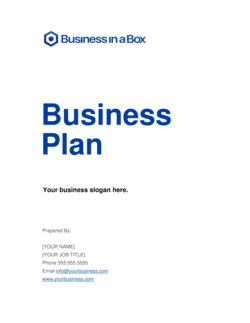
A New Product Business Plan is a structured document that maps the market opportunity, product definition, go-to-market strategy, operational requirements, and financial projections for a single new product launch. This free Word download gives you an investor- and executive-ready framework you can edit online and export as PDF for internal approval, funding conversations, or board presentations.
When you need it
Use it before committing significant resources to a new product β€” when seeking internal sign-off, raising capital for a product launch, or presenting to a board or leadership team that needs a full business case before greenlighting development.
What's inside
Executive summary, product description and development status, market and customer analysis, competitive positioning, go-to-market strategy, operations and production plan, management team, and financial projections including revenue model, cost structure, and break-even analysis.

What is a New Product Business Plan?

A New Product Business Plan is a structured document that makes the complete business case for launching a single new product β€” covering the market opportunity, product definition, competitive landscape, go-to-market strategy, operational requirements, and financial projections in one consolidated reference. Unlike a company-wide business plan, it focuses exclusively on one product's market fit, unit economics, and path to profitability, making it the right tool for internal stage-gate reviews, executive budget approval, investor pitches tied to a specific product launch, and bank loan applications funding product development or manufacturing.

Why You Need This Document

Committing development budget, headcount, or manufacturing capacity to a new product without a written business plan is one of the most common and expensive operational mistakes a business can make. Without it, cross-functional teams execute against conflicting assumptions about the target customer, pricing, and launch timeline β€” and disagreements surface after money has been spent rather than before. Investors and lenders who ask for a new product plan and receive only a pitch deck or a one-page summary consistently move on to more prepared teams. Internal reviewers and finance committees require a documented financial model before approving any material budget allocation. This template gives you a proven structure to stress-test your market sizing, unit economics, and operational assumptions before they become expensive commitments β€” and presents your case in the format decision-makers expect.

Which variant fits your situation?

If your situation is…Use this template
Launching a new SaaS or software productSaaS Business Plan
Taking a physical consumer product to marketProduct Launch Plan
Quick internal alignment before a full plan is writtenOne-Page Business Plan
Raising equity capital for the product from investorsStartup Business Plan
Expanding an existing product into a new geographic marketBusiness Expansion Plan
Documenting a new service offering rather than a physical productNew Services Plan
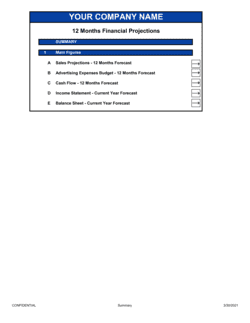
Presenting financials only to a lender or CFOFinancial Projections (12 Months)

Common mistakes to avoid

❌ Writing the executive summary first

Why it matters: A summary written before the full plan is complete will contradict details in the body, making the document feel uncoordinated and undermining reviewer confidence.

Fix: Finish every other section before writing the executive summary. Then pull the strongest data point from each section into a two-page distillation.

❌ Top-down market sizing with no bottom-up validation

Why it matters: Claiming 1% of a $5B market sounds credible until a reviewer asks how many customers that represents β€” and you have no path to that number.

Fix: Build a bottom-up model: number of reachable target customers Γ— win rate Γ— average contract value = your realistic revenue ceiling.

❌ Claiming no meaningful competition exists

Why it matters: Every buyer has a current solution. Ignoring it signals poor market understanding and immediately reduces the plan's credibility with executives and investors.

Fix: Identify at least four alternatives β€” including the status quo β€” and write one specific sentence on why your product wins against each.

❌ Projecting revenue without showing the underlying assumptions

Why it matters: A Year 3 revenue number with no unit-economics model behind it cannot be stress-tested, and reviewers will either reject it or discount it heavily.

Fix: Show every assumption driving each revenue line: unit count, price, conversion rate, and churn. Put the assumptions in a clearly labeled section or model tab.

❌ Ignoring the operations section for digital or software products

Why it matters: Reviewers expect to see cloud infrastructure costs, customer support staffing, and onboarding workflows β€” omitting them suggests the team hasn't thought through delivery at scale.

Fix: Include at minimum: infrastructure cost per customer, support headcount at target scale, and the step-by-step process between a closed deal and a live customer.

❌ Requesting budget without a milestone-level allocation

Why it matters: A lump-sum request with no breakdown tells the approver you haven't planned execution β€” or that you're uncertain enough about the plan that you don't want it scrutinized.

Fix: Break the ask into at least four buckets (product, sales/marketing, operations, G&A) with a dollar amount and the measurable output each bucket funds.

The 9 key sections, explained

Executive Summary

Product Description and Development Status

Market and Customer Analysis

Competitive Analysis

Go-to-Market Strategy

Operations and Production Plan

Management and Team

Financial Projections

Funding Requirements and Use of Funds

How to fill it out

  1. 1

    Define the product and its current development stage

    Open with a clear, jargon-free description of what the product is, what problem it solves, and which development milestone it has reached β€” concept, MVP, beta, or general availability.

    πŸ’‘ Frame the product description around customer outcome first, then feature detail. If you can't state the outcome in one sentence, the product concept needs more work before the plan is written.

  2. 2

    Build the market analysis from the bottom up

    Research TAM using at least two independent sources. Then build a bottom-up SAM by counting reachable target customers and multiplying by average contract or unit value. Both estimates should land within 30% of each other.

    πŸ’‘ Cite your data sources directly in the document β€” unnamed market figures are dismissed immediately by experienced reviewers.

  3. 3

    Map at least four competitors honestly

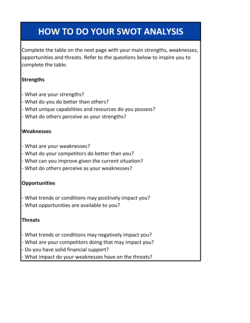
    List direct and indirect competitors with their pricing, key strengths, and the specific dimension on which your product wins. A 2Γ—2 positioning matrix (e.g., price vs. capability) makes this section scannable.

    πŸ’‘ Include the status quo β€” doing nothing or using a spreadsheet β€” as a competitor. It is often the hardest to displace.

  4. 4

    Define the go-to-market strategy with channel prioritization

    Choose two or three primary acquisition channels. For each, estimate the cost to acquire a customer, the expected conversion rate, and the payback period. Link these assumptions directly to your revenue projections.

    πŸ’‘ If your CAC payback exceeds 18 months for a recurring-revenue product or 12 months for a transactional one, flag it explicitly and describe how you will improve it.

  5. 5

    Complete the operations and production section

    Describe how the product will reach the customer β€” manufacturing process, fulfillment workflow, or software deployment steps. Identify your key suppliers or infrastructure dependencies and your capacity ceiling at current investment.

    πŸ’‘ State the single biggest operational risk and how you plan to mitigate it. Reviewers who spot a risk you haven't addressed will ask about it β€” answering proactively builds credibility.

  6. 6

    Build the financial model from unit economics up

    Start with unit count, pricing, and gross margin per unit. Layer in fixed costs, then build the P&L, cash flow, and balance sheet month by month for Year 1 and annually for Years 2–3. Run a break-even calculation.

    πŸ’‘ Include a sensitivity table showing revenue at 70% of base case. Reviewers always test the downside β€” a plan with no scenario analysis signals overconfidence.

  7. 7

    State the funding ask with specific milestone outputs

    Enter the total budget or capital required, broken into at least four spending categories. Tie each category to a measurable output β€” number of customers, units produced, features shipped, or months of runway reached.

    πŸ’‘ A funding ask tied to 'reach 500 paying customers by Month 18' is far more fundable than one tied to 'grow the business.'

  8. 8

    Write the executive summary last

    Pull the single most compelling data point from each section and compress them into one to two pages. The summary is a trailer for the full plan β€” it should make the reader want to keep reading.

    πŸ’‘ If the executive summary exceeds two pages, cut it. Decision-makers read the summary and financials first; everything else serves as supporting evidence.

Frequently asked questions

What is a new product business plan?

A new product business plan is a structured document that makes the full business case for launching a specific product β€” covering the market opportunity, product definition, competitive positioning, go-to-market strategy, operational requirements, and financial projections. It is used both internally to secure executive and budget approval and externally to raise capital from investors or lenders funding the launch.

How is a new product business plan different from a standard business plan?

A standard business plan covers the entire company β€” its history, all products, overall financials, and company-wide strategy. A new product business plan focuses exclusively on a single product launch: the specific market problem it solves, its development status, the go-to-market plan for that product, and the unit economics and projections tied to it. It is narrower and more operationally specific than a company-level plan.

Who needs a new product business plan?

Product managers seeking internal budget approval, startup founders pitching a new product to investors, small business owners applying for a loan to fund a new line, corporate innovation teams presenting to a stage-gate review board, and CEOs aligning leadership around a new product's revenue targets and launch timeline all use this document.

What financial projections should a new product business plan include?

At minimum: a monthly P&L for Year 1 and annual P&L for Years 2–3, a cash flow statement on the same cadence, a break-even analysis, and a unit economics summary covering CAC, LTV, gross margin per unit, and LTV:CAC ratio. A sensitivity analysis showing the 70%-of-plan downside is expected by any experienced reviewer or investor.

How long should a new product business plan be?

For an internal stage-gate or executive review, 15–25 pages plus a financial model appendix is the standard range. For an investor audience, 20–30 pages is appropriate. A one-page plan works for early ideation but is insufficient for any capital raise or formal budget approval above a nominal threshold.

Do I need competitive analysis in a new product business plan?

Yes β€” and it must include indirect competitors and the status quo, not just direct product competitors. A competitive analysis that claims no meaningful competition exists will be rejected by any experienced executive or investor. Map at least four alternatives with their pricing, strengths, and the specific dimension on which your product wins.

Can I use this template for a product within an existing business?

Yes. The new product business plan template works equally well for a net-new product launch within an established company and for a standalone startup built around a single product. For internal use, you may abbreviate the company overview section and focus the plan on the product-specific market analysis, go-to-market strategy, and financial projections.

How long does it take to write a new product business plan?

First-time writers typically spend 20–40 hours over one to three weeks on a complete plan. The financial model alone takes 6–12 hours to build from scratch. Using a structured template reduces the structural and formatting work by roughly 60%, concentrating your time on market research and financial modeling β€” the sections that require original analysis and cannot be templated.

What makes reviewers reject a new product business plan?

The most common rejection triggers are: hockey-stick revenue projections with no unit-economics model to support them, a market sizing section that cannot be validated bottom-up, a competitive analysis that claims no real alternatives exist, and a funding request with no milestone-level allocation. Any one of these signals a team that has not stress-tested its own assumptions before asking for money or approval.

How this compares to alternatives

vs Standard Business Plan

A standard business plan covers the entire company β€” history, all product lines, company-wide financials, and overall strategy. A new product business plan focuses exclusively on a single launch: its market, unit economics, and go-to-market plan. Use the new product plan when seeking approval or capital for one product; use the full business plan when representing the whole company to a lender or investor.

vs Product Launch Plan

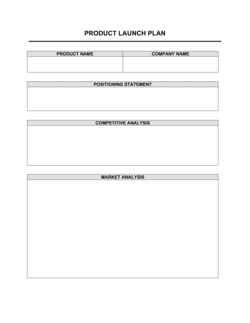
A product launch plan is a tactical execution document β€” it covers launch timeline, marketing activities, channel readiness, and launch-day logistics. A new product business plan is the strategic business case that precedes and justifies the launch. The business plan is written to get approval; the launch plan is written to execute it.

vs One-Page Business Plan

A one-page plan is a rapid-alignment tool useful for early ideation or internal team discussions. It lacks the financial depth, market evidence, and competitive analysis required for budget approval above a nominal amount or any external capital raise. Use the one-page plan to test the concept, then build the full new product business plan before committing resources.

vs Financial Projections (12 Months)

A financial projections document is a standalone model of revenue, expenses, and cash flow. A new product business plan contextualizes those numbers with market evidence, competitive positioning, and go-to-market strategy β€” the narrative that explains why the numbers are credible. Reviewers and investors never evaluate a financial projection in isolation from the business case behind it.

Industry-specific considerations

SaaS / Technology

MRR/ARR model, churn rate, net revenue retention, CAC payback, and cloud infrastructure cost per customer are the core metrics driving every section.

Consumer Products / Retail

Bill of materials, contract manufacturing lead times, retail channel margin structure, and sell-through rate are the operational and financial drivers.

Healthcare / MedTech

Regulatory pathway (FDA clearance, CE mark), clinical validation timeline, reimbursement code strategy, and compliance cost are required elements of the market and operations sections.

Manufacturing

Cost of goods sold breakdown by materials, labor, and overhead; capacity utilization at launch and at scale; and capex requirements for tooling or equipment are central to the financial model.

Template vs pro β€” what fits your needs?

PathBest forCostTime
Use the templateProduct managers, founders, and small business owners building an internal business case or presenting to a first-round investorFree1–3 weeks (20–40 hours)
Template + professional reviewRaises up to $500K, bank loan applications, or stage-gate reviews at established companies with a CFO or finance team$500–$2,000 for a financial model review or advisor session2–4 weeks
Custom draftedSeries A raises, institutional lenders, regulated industries (healthcare, fintech), or products with complex supply chains requiring specialist input$3,000–$10,000 for a professional business plan writer4–8 weeks

Glossary

Product-Market Fit
The degree to which a product satisfies a strong market demand β€” typically evidenced by measurable retention, referral, or willingness to pay.
TAM / SAM / SOM
Total Addressable Market, Serviceable Addressable Market, and Serviceable Obtainable Market β€” three nested estimates of market size and realistic reach.
Go-to-Market Strategy
The specific channels, pricing, and sequencing a company uses to acquire its first customers and scale revenue for a new product.
Break-Even Point
The revenue level at which total costs equal total revenue β€” the point after which the product begins generating profit.
Unit Economics
Revenue and cost metrics at the level of a single unit sold or customer acquired, including gross margin, CAC, and LTV.
Stage-Gate Review
A structured decision process where a product's progress is evaluated at defined milestones before additional resources are committed.
Minimum Viable Product (MVP)
The simplest version of a product that can be released to validate a core assumption with real users before full development investment.
CAC (Customer Acquisition Cost)
Total sales and marketing spend divided by the number of new customers acquired in the same period.
LTV (Customer Lifetime Value)
The total gross profit expected from a single customer over the entire relationship, used to assess whether acquisition costs are sustainable.
Revenue Model
The mechanism by which a product generates income β€” for example, one-time purchase, subscription, usage-based pricing, or licensing.

Part of your Business Operating System

This document is one of 3,000+ business & legal templates included in Business in a Box.

  • Fill-in-the-blanks β€” ready in minutes
  • 100% customizable Word document
  • Compatible with all office suites
  • Export to PDF and share electronically

Create your document in 3 simple steps.

From template to signed document β€” all inside one Business Operating System.
1
Download or open template

Access over 3,000+ business and legal templates for any business task, project or initiative.

2
Edit and fill in the blanks with AI

Customize your ready-made business document template and save it in the cloud.

3
Save, Share, Send, Sign

Share your files and folders with your team. Create a space of seamless collaboration.

Save time, save money, and create top-quality documents.

β˜…β˜…β˜…β˜…β˜…

"Fantastic value! I'm not sure how I'd do without it. It's worth its weight in gold and paid back for itself many times."

Managing Director Β· Mall Farm
Robert Whalley
Managing Director, Mall Farm Proprietary Limited
β˜…β˜…β˜…β˜…β˜…

"I have been using Business in a Box for years. It has been the most useful source of templates I have encountered. I recommend it to anyone."

Business Owner Β· 4+ years
Dr Michael John Freestone
Business Owner
β˜…β˜…β˜…β˜…β˜…

"It has been a life saver so many times I have lost count. Business in a Box has saved me so much time and as you know, time is money."

Owner Β· Upstate Web
David G. Moore Jr.
Owner, Upstate Web

Run your business with a system β€” not scattered tools

Stop downloading documents. Start operating with clarity. Business in a Box gives you the Business Operating System used by over 250,000 companies worldwide to structure, run, and grow their business.

Start freeΒ Β·Β No credit card required