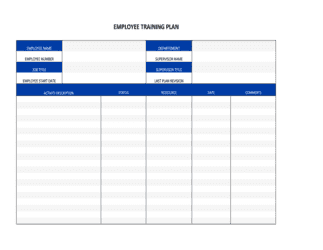
Leadership Development Plan Template

Free Word download β€’ Edit online β€’ Save & share with Drive β€’ Export to PDF

8 pagesβ€’25–30 min to fillβ€’Difficulty: Complex
Learn more ↓
FreeLeadership Development Plan Template

At a glance

What it is
A Leadership Development Plan is a structured document that maps an individual leader's or leadership cohort's current competency gaps, development goals, learning activities, and measurable milestones into a single actionable roadmap. This free Word download gives HR teams, managers, and executives a ready-to-edit framework they can tailor for any leadership level β€” from emerging team leads to senior executives β€” and export as PDF to share with participants and stakeholders.
When you need it
Use it when onboarding high-potential employees into management roles, building a succession pipeline for critical positions, or responding to a performance review that identifies leadership skill gaps. It is also the primary deliverable in formal leadership academies and management training programs.
What's inside
Participant profile and current role context, leadership competency assessment, development goals with success criteria, structured learning activities and timelines, mentoring and coaching assignments, progress check-in schedule, and a final evaluation framework to confirm readiness for the next role or responsibility level.

What is a Leadership Development Plan?

A Leadership Development Plan is a structured document that identifies a leader's current competency gaps, defines targeted development goals with measurable success criteria, and maps specific learning activities β€” on-the-job experiences, coaching relationships, and formal training β€” to a concrete timeline for building readiness toward a target role or level. Unlike a general professional development plan, it focuses specifically on the skills, behaviors, and judgment required for leadership effectiveness: coaching others, strategic thinking, decision-making under uncertainty, cross-functional influence, and managing through change. Organizations use it both as a personal growth roadmap for the individual and as a management tool for tracking succession pipeline readiness.

Why You Need This Document

Without a written leadership development plan, high-potential employees receive informal encouragement but no structured path β€” and the most capable ones, who have options, leave when growth feels stalled. Succession pipelines exist on spreadsheets but not in practice, leaving critical roles exposed when a key leader exits unexpectedly. Managers default to sending employees to training courses rather than designing the on-the-job experiences that actually build leadership capability, and readiness decisions at promotion time become subjective and inconsistent. A formal plan closes all of these gaps: it creates shared accountability between the participant, their manager, and HR; it ties every development activity to a specific competency gap and a measurable outcome; and it produces the documented evidence trail that makes promotion and succession decisions defensible. This template gives you a complete, ready-to-edit framework so you can launch a structured leadership development process in hours, not weeks.

Which variant fits your situation?

If your situation is…Use this template
Developing a single high-potential employee for a future management roleIndividual Development Plan
Planning succession for a specific critical or senior positionSuccession Planning Template
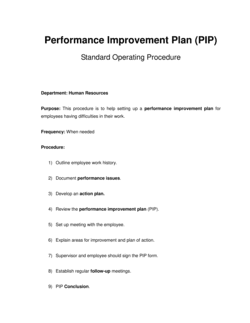
Addressing a specific leadership performance gap identified in a reviewPerformance Improvement Plan
Structuring a 30-60-90 day onboarding path for a newly promoted manager30-60-90 Day Plan
Setting annual goals and development objectives for a leadership teamEmployee Development Plan
Formalizing mentoring relationships as part of a development programMentorship Agreement
Mapping leadership competencies across the whole organizationCompetency Framework Template

Common mistakes to avoid

❌ Writing activity goals instead of outcome goals

Why it matters: A goal like 'attend three leadership workshops' is complete the moment the participant shows up β€” regardless of whether any capability actually changed. Activities are inputs; behavior change is the output.

Fix: Reframe every goal as an observable behavioral outcome with a measurement method: 'Demonstrate improved delegation by achieving a team autonomy score of 4/5 on the next pulse survey.'

❌ Skipping the opening competency assessment

Why it matters: Without a documented baseline, there is no objective way to measure growth at plan completion, and readiness decisions become subjective and legally harder to defend in the context of promotion or succession.

Fix: Complete a structured rating against a defined competency framework before writing any goals β€” using at least two sources of input.

❌ Overloading the plan with formal training

Why it matters: Research consistently shows that classroom and e-learning account for only about 10% of lasting leadership development. A plan built primarily on courses produces course completions, not better leaders.

Fix: Apply the 70-20-10 framework: anchor each goal to at least one real on-the-job experience and one coaching relationship before adding any formal training.

❌ No interim check-ins between plan launch and final review

Why it matters: Without structured progress reviews, obstacles go unaddressed, activities slip without consequence, and the final evaluation has no longitudinal evidence to draw on.

Fix: Schedule and protect at least one formal check-in per quarter, and document outcomes in writing after each session.

❌ Assigning mentors without briefing them on the participant's goals

Why it matters: A mentor who doesn't know the specific competency gaps being targeted defaults to giving general career advice, which rarely maps to the plan's development objectives.

Fix: Share the participant's development goals and success criteria with assigned mentors and sponsors before the first meeting, and confirm their willingness to engage at the required frequency.

❌ Creating the plan without the participant's input

Why it matters: A development plan written entirely by HR or a manager, without the participant's self-assessment and buy-in, is perceived as a performance document rather than a growth investment β€” and completion rates drop sharply.

Fix: Include a structured self-assessment step before the planning session and co-author the final goals with the participant. Ownership drives follow-through.

The 9 key sections, explained

Participant profile and current role context

Leadership competency assessment

Development goals and success criteria

Structured learning activities

Mentor and sponsor assignments

Stretch assignments and experiential milestones

Progress check-in schedule

Resources and budget

Final evaluation and readiness assessment

How to fill it out

  1. 1

    Define the target role and plan horizon

    Before filling in any development content, agree on the specific role or responsibility level the plan is preparing the participant for, and set the plan duration β€” typically 6 to 18 months.

    πŸ’‘ A plan without a defined destination cannot be evaluated for success. 'Becoming a better leader in general' produces unfocused activity and no accountability.

  2. 2

    Complete the competency assessment with multiple inputs

    Rate the participant against each competency in your framework using at least two sources β€” manager observation plus self-assessment, and ideally a 360-degree review. Identify the two to four gaps with the highest impact on readiness for the target role.

    πŸ’‘ Prioritize gaps that are both critical for the target role and developable within the plan period. Ignore traits that are either not role-critical or fundamentally fixed.

  3. 3

    Write outcome-based development goals

    Convert each priority gap into a specific development goal with an observable success criterion and a target date. Frame goals as behavioral outcomes ('demonstrates X by doing Y, evidenced by Z') rather than activities.

    πŸ’‘ Limit the plan to three or four goals. More than four active development goals compete for attention and typically means none are achieved well.

  4. 4

    Design a 70-20-10 activity mix

    For each development goal, assign at least one on-the-job experience (70%), one coaching or feedback mechanism (20%), and one formal learning resource (10%). Link every activity explicitly to a goal.

    πŸ’‘ The on-the-job component is the most powerful and the most commonly underdeveloped. Identify a real project or expanded scope that genuinely requires the target skill.

  5. 5

    Assign and brief mentors and sponsors

    Name specific individuals for each support role and document their agreed focus and meeting cadence. Brief them on the participant's goals before the plan launches.

    πŸ’‘ A sponsor β€” a senior advocate who creates opportunities β€” accelerates development faster than a mentor alone. Identify at least one sponsor for high-potential participants.

  6. 6

    Confirm budget and resource approvals

    List every external cost in the resources section and confirm budget approval before sharing the plan with the participant. Unconfirmed commitments undermine credibility if they later fall through.

    πŸ’‘ Build in a 15% contingency for schedule changes β€” training programs shift dates, and having a backup option prevents momentum loss.

  7. 7

    Set check-in dates and add them to shared calendars immediately

    Schedule all monthly and quarterly review meetings at plan launch rather than booking them one at a time. Recurring scheduled touchpoints have far higher completion rates than ad-hoc meetings.

    πŸ’‘ Send the participant a summary email after each check-in with key observations and any goal or activity adjustments. Written records prevent 'but I thought we agreed' conversations at the final evaluation.

  8. 8

    Conduct the final evaluation with documented evidence

    At plan completion, re-run the competency assessment using the same method as the opening, review each success criterion with specific behavioral evidence, and document the readiness decision with supporting rationale.

    πŸ’‘ Even if the participant is not yet ready for the target role, document what was achieved and launch a second plan cycle immediately. A gap between plan completion and the next plan signals a broken process.

Frequently asked questions

What is a leadership development plan?

A leadership development plan is a structured document that maps an individual's leadership competency gaps to specific development goals, learning activities, and measurable milestones over a defined period β€” typically 6 to 18 months. It functions as both a personal growth roadmap for the participant and a management tool for tracking readiness for a target role or the next level of responsibility.

Who should have a leadership development plan?

Any employee identified as a high-potential candidate for a more senior role, any newly promoted manager transitioning into leadership, and any experienced leader being prepared for succession into a critical position should have a formal plan. Organizations with structured leadership academies typically extend plans to all management levels as standard practice.

How is a leadership development plan different from a performance improvement plan?

A leadership development plan is a proactive investment in a capable employee's future growth β€” it starts from identified potential and builds toward a target role. A performance improvement plan (PIP) is a reactive corrective document triggered by underperformance against current role expectations. Conflating the two damages trust; high-potential employees who receive what looks like a PIP often disengage or exit.

How long should a leadership development plan be?

Most plans run 6 to 18 months, with 12 months being the most common standard. Shorter plans (6 months) suit targeted gap closure or new-manager onboarding. Longer plans (18–24 months) are appropriate for preparing a leader for a significantly more senior role where multiple competencies need development in sequence.

What is the 70-20-10 model and should I use it?

The 70-20-10 model is a development framework that allocates roughly 70% of learning to on-the-job experience, 20% to coaching and feedback, and 10% to formal training. It is supported by decades of organizational research and is widely used by HR and L&D professionals. Applying it ensures development plans are grounded in real work rather than classroom hours, which produces faster and more durable behavior change.

How many development goals should a leadership development plan include?

Two to four goals is the recommended range. Fewer than two goals may suggest the plan is too narrow to address meaningful growth; more than four goals dilute focus and are rarely all achieved. Prioritize gaps that are both critical for the target role and realistically developable within the plan period.

How do you measure progress on a leadership development plan?

Progress is best measured through a combination of structured competency re-assessments (using the same framework and rating scale as the opening), behavioral observation by the manager and peers, 360-degree feedback at plan midpoint and completion, and documentation of stretch assignment outcomes. Success criteria written at the goal level should drive the evaluation β€” not activity completion counts.

Can a small business use a leadership development plan?

Yes β€” the format scales down easily for small businesses. A one-page version covering two or three goals, a clear target role, and a quarterly check-in cadence is sufficient for most small-business contexts. The most important elements for small businesses are defining a specific target role, confirming any training budget in advance, and scheduling check-ins at the start rather than booking them ad hoc.

How often should a leadership development plan be reviewed?

At minimum, a formal review should occur at the plan midpoint and at completion. Best practice is a monthly 30-minute check-in between the participant and their manager, plus a quarterly formal review with HR involvement for participants in a structured succession program. Plans reviewed more frequently stay relevant; plans reviewed only at the end are rarely completed as written.

How this compares to alternatives

vs Individual Development Plan

An individual development plan (IDP) covers any employee's professional growth across all skill areas β€” technical, functional, and interpersonal. A leadership development plan specifically targets leadership competencies and readiness for a management or senior role. Use an IDP for broad career development and a leadership development plan when the explicit goal is preparing someone for a defined leadership position.

vs Performance Improvement Plan

A performance improvement plan (PIP) is triggered by a failure to meet current role expectations and carries corrective intent with defined consequences. A leadership development plan is a proactive investment in a capable employee's future growth. Mixing their formats or tone damages the psychological safety needed for genuine development.

vs Succession Plan

A succession plan identifies which roles are critical, names the candidates in the pipeline, and tracks their aggregate readiness. A leadership development plan is the action document for each individual in that pipeline β€” the specific goals and activities that move them from their current readiness rating to ready now. Both are needed; one without the other produces either a list with no action or action with no strategic alignment.

vs 30-60-90 Day Plan

A 30-60-90 day plan covers the onboarding and transition priorities for someone who has already been promoted or hired into a new leadership role. A leadership development plan prepares someone for a role they have not yet assumed. The 30-60-90 day plan picks up where the leadership development plan ends.

Industry-specific considerations

Technology / SaaS

Heavy emphasis on coaching and people management competencies as individual contributors transition into engineering or product leadership roles for the first time.

Financial Services

Regulatory knowledge, risk judgment, and client relationship management are core competencies tracked in leadership plans, with compliance training integrated as a formal 10% component.

Healthcare

Clinical-to-administrative leadership transitions require specific competency development in operational management, budget accountability, and cross-disciplinary team leadership.

Manufacturing

Front-line supervisor development is a high-volume use case, with safety leadership, shift management, and lean process skills as the primary competency targets.

Professional Services

Partner and senior manager development plans typically focus on business development, client relationship depth, and firm leadership alongside billable delivery excellence.

Retail / Hospitality

High internal promotion rates make leadership pipeline plans a core HR tool, with store management readiness, customer experience leadership, and team retention as key competency areas.

Template vs pro β€” what fits your needs?

PathBest forCostTime
Use the templateHR managers, direct managers, and small business owners creating development plans for individual leaders or small cohortsFree2–4 hours per participant
Template + professional reviewOrganizations building a formal leadership academy or succession program for 10 or more participants$500–$2,000 for an L&D consultant review or program design session1–2 weeks
Custom draftedLarge enterprises integrating leadership development into an HRIS or talent management platform with 360-degree assessment tools$5,000–$25,000+ for a full program design and technology integration4–12 weeks

Glossary

Leadership Competency
A specific, observable skill or behavior β€” such as strategic thinking, coaching others, or change management β€” that defines effective leadership at a given level.
Development Goal
A targeted outcome a leader commits to achieving within a defined timeframe, directly linked to a competency gap or a future role requirement.
High-Potential Employee (HiPo)
An employee identified as having the ability, aspiration, and engagement to advance into significantly more senior roles within the organization.
Succession Pipeline
A pool of identified and actively developed candidates who are being prepared to fill critical or senior roles as they become vacant.
70-20-10 Model
A learning framework stating that roughly 70% of development comes from on-the-job experience, 20% from coaching and feedback, and 10% from formal training.
Stretch Assignment
A role, project, or responsibility that is deliberately beyond the employee's current skill level in order to accelerate learning and build new capabilities.
360-Degree Feedback
A structured assessment in which a leader receives input from their manager, peers, direct reports, and sometimes clients to create a well-rounded picture of their strengths and gaps.
Readiness Rating
A structured judgment β€” often scored as ready now, ready in 1–2 years, or ready in 3+ years β€” that assesses how close a candidate is to taking on a target role.
Sponsor
A senior leader who actively advocates for and creates opportunities for a developing leader, distinct from a mentor who primarily advises.
Learning Agility
The ability to learn from experience quickly and apply new lessons effectively to unfamiliar situations β€” considered a primary predictor of leadership potential.

Part of your Business Operating System

This document is one of 3,000+ business & legal templates included in Business in a Box.

  • Fill-in-the-blanks β€” ready in minutes
  • 100% customizable Word document
  • Compatible with all office suites
  • Export to PDF and share electronically

Create your document in 3 simple steps.

From template to signed document β€” all inside one Business Operating System.
1
Download or open template

Access over 3,000+ business and legal templates for any business task, project or initiative.

2
Edit and fill in the blanks with AI

Customize your ready-made business document template and save it in the cloud.

3
Save, Share, Send, Sign

Share your files and folders with your team. Create a space of seamless collaboration.

Save time, save money, and create top-quality documents.

β˜…β˜…β˜…β˜…β˜…

"Fantastic value! I'm not sure how I'd do without it. It's worth its weight in gold and paid back for itself many times."

Managing Director Β· Mall Farm
Robert Whalley
Managing Director, Mall Farm Proprietary Limited
β˜…β˜…β˜…β˜…β˜…

"I have been using Business in a Box for years. It has been the most useful source of templates I have encountered. I recommend it to anyone."

Business Owner Β· 4+ years
Dr Michael John Freestone
Business Owner
β˜…β˜…β˜…β˜…β˜…

"It has been a life saver so many times I have lost count. Business in a Box has saved me so much time and as you know, time is money."

Owner Β· Upstate Web
David G. Moore Jr.
Owner, Upstate Web

Run your business with a system β€” not scattered tools

Stop downloading documents. Start operating with clarity. Business in a Box gives you the Business Operating System used by over 250,000 companies worldwide to structure, run, and grow their business.

Start freeΒ Β·Β No credit card required