1
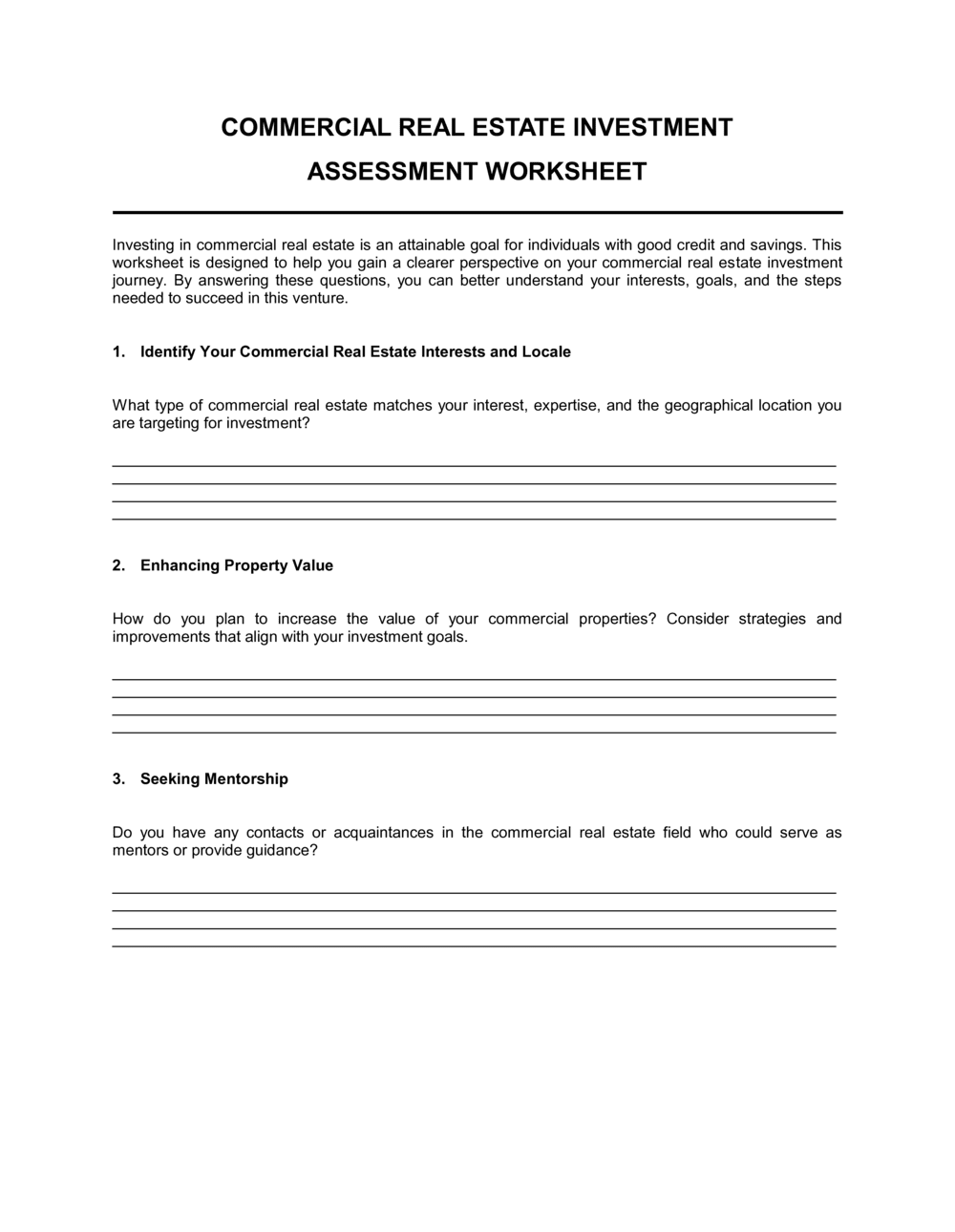
Populate the property identification block
Enter the full property address, asset class, total leasable area in square feet, year built, current owner, asking price, and your target closing date. Cross-reference the asking price against your independent valuation before proceeding.
💡 Pull the legal parcel description from the county assessor's record — this catches address discrepancies that sometimes appear in broker marketing materials.
2
Obtain and verify the rent roll
Request the current executed lease abstracts from the seller. Enter each tenant's name, leased area, lease start and expiration, base rent, and any rent escalation clauses. Flag leases expiring within 24 months as a risk item.
💡 Ask for the trailing 12-month rent collection history alongside the rent roll — actual collected rent often differs from scheduled rent on older leases.
3
Build the income and expense analysis from verified source documents
Use the verified rent roll to calculate potential gross income. Apply a vacancy and credit loss rate benchmarked to the current submarket vacancy. For expenses, use the seller's trailing 12-month actuals and independently verify property tax and insurance figures.
💡 Cap the seller's stated management fee at market rate — self-managed properties often understate this cost, which inflates the apparent NOI.
4
Calculate NOI and the going-in cap rate
Subtract total verified operating expenses from effective gross income to arrive at NOI. Divide NOI by the proposed purchase price to calculate the going-in cap rate. Compare this to the current market cap rate range for comparable assets in the same submarket.
💡 If the going-in cap rate is more than 50 basis points below the market range, document the specific value-add or rent-growth thesis that justifies paying a premium.
5
Model the financing structure and calculate DSCR
Enter the proposed loan amount, LTV, interest rate, amortization period, and loan term. Calculate annual debt service and divide it into NOI to determine the DSCR. Model at least two scenarios: one at the quoted rate and one at +150 basis points.
💡 A DSCR below 1.20x in the stress scenario should trigger a note in the risk section — most lenders require a minimum of 1.20x–1.25x even in the base case.
6
Complete the sensitivity and risk matrix
Build a matrix showing NOI, DSCR, and cash-on-cash return at three vacancy scenarios (base, downside, and stress) and at least two exit cap rate assumptions. Note any single-tenant concentration, lease rollover risk, or deferred maintenance items as named risk factors.
💡 Include a combined stress scenario where vacancy is 5 percentage points above base and rents are 10% below current asking — this is the scenario most institutional lenders will run independently.
7
Gather and enter comparable market data
Source at least three comparable sales from the last 12 months in the same submarket. Enter the address, sale price per square foot, and implied cap rate for each. Summarize current submarket vacancy and average asking rent.
💡 CoStar, LoopNet, and local broker market reports are acceptable sources — note the source and date for each comparable in the worksheet so the data trail survives the file.
8
Complete the investment recommendation and obtain signatures
Write a 2–3 sentence rationale summarizing the key return metrics, the primary risks, and the basis for the recommendation. Have the preparing analyst and the approving principal sign and date the document before any letter of intent is submitted.
💡 If the recommendation is 'proceed subject to conditions,' list each condition as a numbered item with a responsible party and a deadline — vague conditions are never actioned.