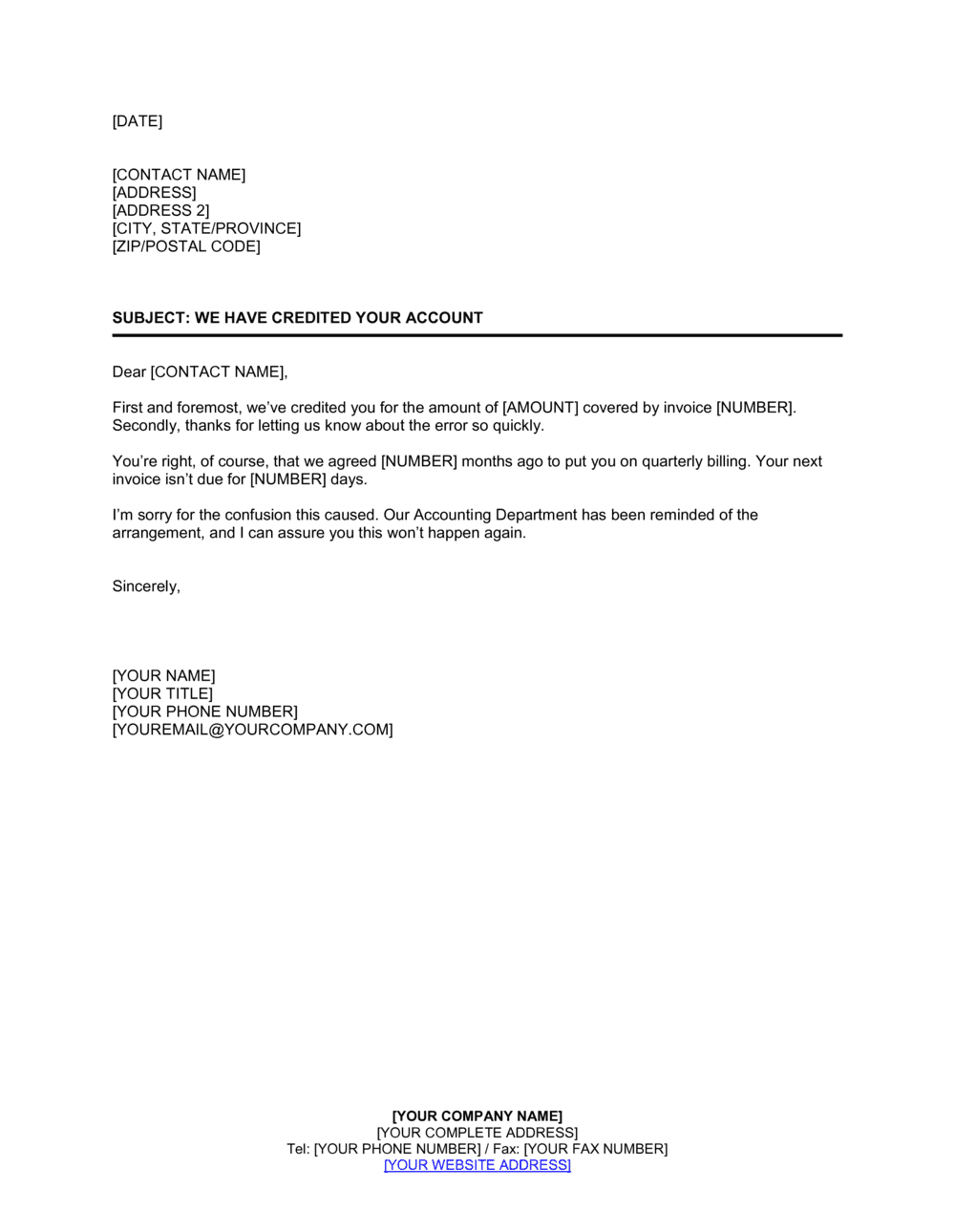
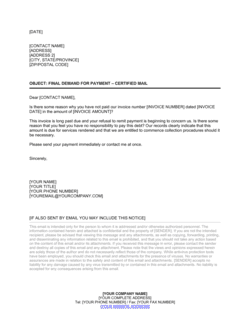
We've Credited Your Account_You're Right Template

Free Word download β€’ Edit online β€’ Save & share with Drive β€’ Export to PDF

1 pageβ€’20–30 min to fillβ€’Difficulty: Standardβ€’Signature requiredβ€’Legal review recommended
Learn more ↓
FreeWe've Credited Your Account_You're Right Template

At a glance

What it is
A Credit Acknowledgment Letter ("We've Credited Your Account β€” You're Right") is a formal written communication a business sends to a customer or client confirming that a billing dispute, overcharge, or payment error has been reviewed, accepted, and corrected by crediting the customer's account. This free Word download gives you a professionally structured, editable template you can customize, sign, and deliver in minutes.
When you need it
Use it any time a customer raises a valid billing dispute, overcharge claim, or invoice error and you have verified the complaint is correct. It closes the dispute formally, documents the credit applied, and prevents the matter from escalating to a chargeback, regulatory complaint, or legal claim.
What's inside
The letter covers party identification, a clear acknowledgment of the customer's complaint, the specific credit amount and account reference, the corrected account balance, a brief explanation of the error, an apology, and a closing statement confirming the matter is resolved. It is signed by an authorized company representative.

What is a Credit Acknowledgment Letter?

A Credit Acknowledgment Letter β€” commonly titled "We've Credited Your Account β€” You're Right" β€” is a formal written communication a business sends to a customer confirming that a billing dispute has been investigated, the customer's complaint has been validated, and a credit has been applied to the account. It identifies both parties and the relevant account, describes the specific billing error that occurred, states the exact credit amount and the date it was applied, confirms the corrected account balance, and formally closes the dispute. Unlike a simple system-generated notification, this letter creates a signed, auditable record that the matter has been reviewed at an authorized level and resolved in the customer's favor.

Why You Need This Document

Processing a credit silently β€” without a formal written acknowledgment β€” is one of the most common and costly mistakes in billing dispute management. Customers who receive no written confirmation that their complaint was accepted frequently reopen the dispute, contact their bank to initiate a chargeback, or file a complaint with a consumer protection agency, even after the credit has posted to their account. Each of those escalations costs far more in staff time, processing fees, and regulatory exposure than the original credit amount. Beyond customer retention, a signed credit acknowledgment letter creates the paper trail that finance, compliance, and legal teams need when a dispute is re-raised months later, when an audit examines your credit adjustment practices, or when a class-action plaintiff's counsel requests records of how billing complaints were handled. This template gives you a professionally structured, legally sound document you can complete in 15 minutes and deliver with confidence β€” closing the dispute cleanly the first time.

Which variant fits your situation?

If your situation is…Use this template
You agree the customer's complaint is fully validCredit Acknowledgment Letter β€” You're Right
You partially agree and are issuing a partial credit onlyPartial Credit Adjustment Letter
You disagree with the complaint and are denying the creditBilling Dispute Denial Letter
The dispute involves a returned product requiring a refundRefund Confirmation Letter
A chargeback has already been filed and you are responding to the bankChargeback Response Letter
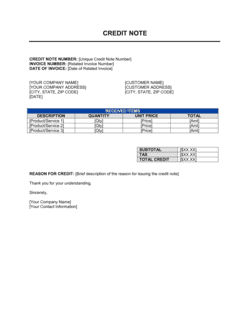
You need to issue a formal credit note adjusting a prior invoiceCredit Note
The account credit applies to a future invoice rather than a cash refundAccount Credit Memo

Common mistakes to avoid

❌ Issuing the letter before verifying the error

Why it matters: Acknowledging a billing error you have not independently confirmed creates a binding admission that is difficult to retract, even if the customer's complaint turns out to be incorrect or exaggerated.

Fix: Establish a two-step internal process β€” billing review first, letter second. Document the verification with a dated internal memo before drafting the acknowledgment.

❌ Vague or hedged acknowledgment language

Why it matters: Phrases like 'we have reviewed your concern' or 'it appears there may have been an issue' do not constitute a clear acknowledgment of error, so the customer continues to dispute β€” often escalating to a chargeback or regulatory complaint.

Fix: Use direct language: 'A billing error did occur on [DATE] in the amount of [AMOUNT]. You were correct.' One clear sentence closes more disputes than three hedged paragraphs.

❌ Omitting the corrected account balance

Why it matters: A customer who receives a credit letter but cannot verify the credit on their statement will reopen the dispute within days, doubling the customer service workload and creating duplicate credit risk.

Fix: Always state the post-credit balance in the letter body and attach the updated account statement. Confirming the number in two places eliminates the most common follow-up call.

❌ Using overly broad resolution language

Why it matters: Language like 'this credit resolves all claims between the parties' can be interpreted as a general release of unrelated claims β€” a waiver the company did not intend and that may not have been communicated to the customer as such.

Fix: Scope the resolution clause precisely: 'This credit constitutes full resolution of the billing dispute relating to Invoice [NUMBER] dated [DATE].' Reference the specific transaction, nothing broader.

❌ Routing the letter through an unauthorized signatory

Why it matters: A credit acknowledgment signed by a frontline agent or junior employee without signing authority may not constitute a binding admission or a valid resolution of the dispute in a legal proceeding.

Fix: Establish a clear signing-authority matrix for credit letters above defined thresholds β€” for example, credits over $500 require a manager signature; over $5,000 require a VP or director.

❌ Failing to retain an executed copy in the customer file

Why it matters: If the customer later claims the credit was never confirmed, or if a chargeback is filed despite the letter, you have no documentary evidence that the dispute was formally resolved.

Fix: File the signed letter in the customer's account record in your CRM, link it to the original invoice, and retain it for at least the applicable statute-of-limitations period β€” typically 3–6 years depending on jurisdiction.

The 10 key clauses, explained

Parties and account identification

In plain language: Identifies the business sending the letter and the customer receiving it, including account number and contact information, so the credit can be matched to the correct record.

Sample language
Dear [CUSTOMER FULL NAME], Account Number: [ACCOUNT NUMBER]. This letter is issued by [COMPANY LEGAL NAME], [COMPANY ADDRESS], in response to your billing inquiry dated [DATE OF COMPLAINT].

Common mistake: Using a customer nickname or trade name rather than the legal account holder name. A mismatch between the letter and the account record creates accounting discrepancies and complicates any future dispute.

Acknowledgment of the complaint

In plain language: Explicitly states that the company has reviewed the customer's complaint and agrees that the billing error occurred β€” validating the customer's position without ambiguity.

Sample language
After reviewing your account and the details of your complaint, we confirm that a billing error did occur on [DATE] in the amount of [AMOUNT]. You were correct to bring this to our attention.

Common mistake: Using vague language like 'we have looked into your concern' without a clear admission that the error occurred. Vagueness leaves the dispute legally open and invites escalation.

Description of the error

In plain language: Briefly explains what went wrong β€” duplicate charge, incorrect rate, service not delivered, or system error β€” so the customer understands the root cause.

Sample language
The error arose as a result of [BRIEF DESCRIPTION OF ERROR β€” e.g., a duplicate charge processed on [DATE] / an incorrect rate of [AMOUNT] applied instead of the contracted rate of [AMOUNT]].

Common mistake: Providing so much technical detail about the internal cause that the letter reads as self-serving rather than customer-focused. Two sentences explaining the error is sufficient.

Credit amount and application

In plain language: States the exact dollar amount credited, the date it was applied, and whether it appears as an account credit, invoice adjustment, or cash refund.

Sample language
A credit of [CURRENCY][AMOUNT] has been applied to your account as of [DATE]. This credit will appear on your next statement dated [DATE] and may be applied against future invoices or requested as a cash refund.

Common mistake: Stating the credit amount without specifying how and when it will appear. Customers who cannot see the credit on their next statement reopen the dispute, creating duplicate processing and customer service overhead.

Corrected account balance

In plain language: Confirms the customer's updated account balance after the credit is applied, giving them a clear figure to verify against their own records.

Sample language
Following this adjustment, your corrected account balance as of [DATE] is [CURRENCY][CORRECTED BALANCE]. Please verify this against your records and contact us at [CONTACT DETAILS] if any discrepancy remains.

Common mistake: Omitting the corrected balance entirely. Without it, customers cannot confirm the credit was applied correctly, which generates follow-up calls and potential re-escalation.

Apology and goodwill statement

In plain language: Expresses a sincere apology for the error and any inconvenience caused, which is both a customer-relations best practice and relevant to limiting goodwill damages in regulated industries.

Sample language
We sincerely apologize for this error and for any inconvenience it may have caused. We value your relationship with [COMPANY NAME] and are committed to ensuring this does not recur.

Common mistake: Skipping the apology entirely on the basis that it implies liability. In consumer-facing disputes, the absence of an apology is more likely to escalate the matter than the apology itself.

Steps taken to prevent recurrence

In plain language: Briefly notes what internal action has been taken β€” system fix, process change, staff retraining β€” to demonstrate the error has been addressed operationally.

Sample language
We have [CORRECTIVE ACTION β€” e.g., updated our billing system / reviewed and corrected the rate schedule / retrained the relevant team members] to prevent a recurrence of this error.

Common mistake: Overpromising a specific technical fix by a specific date. If the fix is delayed, the promise creates a second dispute. Use general corrective language unless a specific commitment has been operationally confirmed.

Full and final resolution statement

In plain language: Confirms that the credit fully resolves the billing complaint and that no further amount is owed or claimed by either party in respect of this specific dispute.

Sample language
This credit of [CURRENCY][AMOUNT] constitutes full and final resolution of your billing complaint referenced above. We consider this matter resolved and no further amounts are outstanding in respect of this dispute.

Common mistake: Using resolution language so broad that it could be read as a waiver of all claims between the parties, not just the specific billing dispute. Scope the resolution clause to the specific transaction or invoice number.

Contact information and invitation to follow up

In plain language: Provides a specific contact β€” name, phone, and email β€” the customer can reach if the credit does not appear as stated or if a further discrepancy is identified.

Sample language
If you have any questions regarding this credit or your account balance, please contact [REPRESENTATIVE NAME] at [PHONE NUMBER] or [EMAIL ADDRESS]. We are available [BUSINESS HOURS].

Common mistake: Providing only a generic customer service number. Routing a follow-up dispute through a general queue delays resolution and signals the company treats the customer as a ticket, not a client.

Authorized signature block

In plain language: Closes the letter with the printed name, title, and signature of the authorized company representative who reviewed and approved the credit β€” creating an enforceable written record.

Sample language
Sincerely, [AUTHORIZED REPRESENTATIVE FULL NAME] | [TITLE] | [COMPANY LEGAL NAME] | Signature: _________________ | Date: [DATE]

Common mistake: Having an unauthorized employee sign the letter. A credit acknowledgment signed by someone without authority to bind the company may not constitute a valid admission or binding resolution of the dispute.

How to fill it out

  1. 1

    Verify the complaint before drafting

    Pull the customer's billing history, original invoice, and payment records to confirm the error occurred as claimed. Do not issue this letter until you have independently verified the overcharge.

    πŸ’‘ Document your verification steps in an internal memo dated before the letter β€” this protects the company if the credit is later questioned in an audit or legal proceeding.

  2. 2

    Enter party and account details

    Fill in the customer's legal name, account number, and billing address exactly as they appear in your accounting system. Enter your company's full legal name and address in the header.

    πŸ’‘ Cross-reference the account number against your CRM and billing platform simultaneously β€” discrepancies between systems are a common source of misdirected credits.

  3. 3

    Describe the error specifically and briefly

    State what error occurred, on which date, and in what amount. Keep the explanation to two or three sentences β€” enough to validate the customer's complaint without creating additional liability exposure.

    πŸ’‘ Avoid using internal system error codes or jargon the customer cannot interpret. Write as if the customer will share this letter with their own accountant.

  4. 4

    State the credit amount, date, and method

    Enter the exact credit amount in the correct currency, the date it was applied to the account, and whether it appears as an account credit, invoice reduction, or cash refund. Include the reference number of the original invoice.

    πŸ’‘ If the credit spans multiple invoices, list each one with its own line β€” a single lump-sum credit against multiple invoices is nearly impossible to reconcile later.

  5. 5

    Confirm the corrected account balance

    Calculate the customer's balance after the credit is applied and enter the figure. If the credit brings the balance to zero or creates a positive balance, state that explicitly.

    πŸ’‘ Have your accounts receivable system generate the updated balance statement on the same day you issue the letter, and attach it as a one-page statement for the customer's records.

  6. 6

    Scope the resolution clause to the specific dispute

    Confirm the credit resolves this specific billing complaint by referencing the complaint date and invoice number. Do not use language that could be read as a general release of all claims.

    πŸ’‘ If your legal team has any concern about broader liability, have them review the resolution clause before the letter is signed β€” a 15-minute review is faster than defending an unintended waiver.

  7. 7

    Have an authorized representative sign

    Route the letter for signature to a person whose title gives them authority to bind the company β€” a manager, director, VP, or officer. Enter their full printed name and title beneath the signature line.

    πŸ’‘ If your company uses DocuSign or another eSign platform, route this letter through it so the execution timestamp is captured automatically β€” this is valuable if the customer later claims they never received the credit.

  8. 8

    Deliver and file the executed letter

    Send the signed letter by email with read receipt, or by certified mail if the dispute amount is significant. Retain a fully executed copy in the customer's account file and flag the credit in your billing system.

    πŸ’‘ Set a calendar reminder for the date the credit should appear on the customer's next statement, and proactively confirm it posted correctly β€” this prevents the dispute from being re-opened.

Frequently asked questions

What is a credit acknowledgment letter?

A credit acknowledgment letter β€” sometimes called a 'we've credited your account' letter β€” is a formal written communication from a business to a customer confirming that a billing error has been reviewed, accepted, and corrected by applying a credit to the customer's account. It documents the error, states the exact credit amount and corrected balance, and formally closes the billing dispute. It creates a paper trail that protects both parties if the matter is later revisited.

When should I send a credit acknowledgment letter instead of just processing the credit?

You should always issue a written credit acknowledgment when the dispute involves a meaningful dollar amount, when the customer has put the complaint in writing, or when the error could have regulatory implications (such as a consumer finance or utility billing dispute). Processing the credit silently without a letter leaves no record that the dispute was resolved, which frequently leads to the customer re-raising the issue or filing a chargeback even after the credit posts.

What is the difference between a credit acknowledgment letter and a credit note?

A credit note is an accounting document that formally reduces the balance on a specific invoice β€” it lives in your accounting system and is sent to the customer's accounts payable department. A credit acknowledgment letter is a customer-facing communication that explains the dispute, confirms the error, states the credit, and formally closes the matter. For significant disputes, you typically issue both: the credit note for accounting purposes and the acknowledgment letter as the formal written resolution.

How quickly should I send a credit acknowledgment letter after receiving a billing complaint?

In most jurisdictions, consumer billing disputes must be acknowledged within 30 days and resolved within 60–90 days under applicable consumer protection laws. For B2B disputes, the timeframe is typically governed by your contract terms or general commercial practice. Best practice is to verify the error and issue the letter within 5–10 business days of receiving a written complaint β€” delays increase the probability of a chargeback, regulatory filing, or escalation to collections.

Does the letter need to be signed?

Yes. A credit acknowledgment letter should be signed by an authorized company representative β€” a manager, director, or officer with authority to bind the company. An unsigned letter carries less legal weight as an admission of error and provides weaker evidence that the dispute was formally resolved. Electronic signatures via DocuSign or similar platforms are generally valid in most jurisdictions and provide a useful timestamp for the record.

Can I use this letter for partial credits?

This template is designed for a full credit β€” cases where you agree the customer's complaint is entirely valid. For partial credits, where you accept some but not all of the disputed amount, you should use a separate partial credit adjustment letter that clearly states what portion of the complaint is accepted and what portion is declined, with an explanation for each. Issuing a full-credit letter for a partial credit creates an expectation gap that typically reopens the dispute immediately.

What records should I keep after issuing a credit acknowledgment letter?

Retain the signed letter, the original complaint or dispute record, the internal verification memo, the credit note or accounting entry, and the customer's updated account statement β€” all linked in the customer's file. Most jurisdictions require businesses to retain financial records for 3–7 years; retain dispute resolution documents for the full applicable statute of limitations period. This documentation is essential if the customer later files a chargeback or if the credit is questioned in an audit.

What happens if I issue a credit acknowledgment letter but the credit never posts?

If you have issued a signed letter confirming the credit but it fails to appear on the customer's account, you have a documented commitment that has not been fulfilled β€” creating a breach of the written resolution and potentially re-exposing you to all of the original dispute consequences plus a new claim. Always verify the credit has posted in your billing system before sending the letter, and set a follow-up date to confirm it appears on the customer's next statement.

How this compares to alternatives

vs Billing dispute denial letter

A billing dispute denial letter is used when the company has reviewed the complaint and determined the original charge was correct. The denial letter explains the basis for the decision and declines to issue a credit. Use the credit acknowledgment letter when the error is confirmed; use the denial letter when the charge is upheld after investigation. Issuing the wrong letter creates a binding record that contradicts your actual position.

vs Credit note

A credit note is an accounting instrument that reduces the balance on a specific invoice and lives in both parties' accounting systems. A credit acknowledgment letter is a customer-facing communication that explains the dispute, confirms the error, and formally closes the matter. They serve complementary purposes β€” the credit note handles the ledger; the acknowledgment letter handles the relationship and the legal record.

vs Refund confirmation letter

A refund confirmation letter confirms that money has been returned to the customer's payment method β€” card, bank account, or check. A credit acknowledgment letter confirms that the amount has been applied to the customer's account balance for use against future charges. Use the refund letter when cash is returned; use the credit letter when the adjustment stays on account. The distinction matters for accounting treatment and customer expectation management.

vs Account adjustment memo

An internal account adjustment memo records a billing correction in your accounting system for audit purposes but is not sent to the customer. A credit acknowledgment letter is the external-facing counterpart β€” it documents the same adjustment in a form the customer receives, signs, and retains. Both documents should be generated for every material credit to create a complete internal and external paper trail.

Industry-specific considerations

Financial Services and Banking

Heavily regulated billing dispute resolution with mandatory acknowledgment and resolution timelines under consumer finance laws such as FCBA in the US and FCA rules in the UK.

SaaS and Subscription Technology

Subscription overcharges, duplicate billing runs, and incorrect tier upgrades are the most common error types, often requiring same-day credit confirmation to prevent chargeback filings.

Retail and E-commerce

Pricing errors, duplicate orders, and shipping-charge overcharges require rapid written credit confirmation to satisfy consumer protection timelines and prevent payment processor disputes.

Professional Services and Consulting

Time-and-materials billing disputes and incorrect rate applications require a detailed error description and corrected invoice, often issued alongside the credit acknowledgment letter.

Jurisdictional notes

United States

The Fair Credit Billing Act (FCBA) requires businesses to acknowledge written billing disputes within 30 days and resolve them within two billing cycles (not exceeding 90 days). State consumer protection statutes in California, New York, and Texas impose additional requirements. For credit card billing errors, Regulation Z under the Truth in Lending Act sets parallel obligations. Businesses in regulated sectors β€” banking, utilities, telecom β€” face additional agency-specific dispute resolution rules.

Canada

Federal and provincial consumer protection laws require businesses to address billing disputes promptly and in good faith. The Financial Consumer Agency of Canada (FCAC) sets specific dispute resolution requirements for federally regulated financial institutions. Quebec's Consumer Protection Act imposes stricter written-notice requirements than other provinces. Businesses should retain dispute resolution records for a minimum of six years to align with the Canada Revenue Agency's general record-keeping requirement.

United Kingdom

The FCA's Consumer Duty rules (effective July 2023) require regulated firms to handle billing disputes promptly and deliver good customer outcomes, with an 8-week resolution window before a complaint can be referred to the Financial Ombudsman Service. The Consumer Rights Act 2015 provides a statutory basis for billing error claims. Written credit acknowledgment letters serve as evidence of compliance with FCA dispute-handling standards and should be retained for a minimum of three years.

European Union

The EU Consumer Rights Directive and member-state implementing legislation require transparent, timely responses to billing complaints. GDPR applies to any personal data processed in connection with the dispute, including the credit acknowledgment letter itself β€” ensure the letter is retained in a GDPR-compliant manner and that data subjects' rights to access and erasure are documented. Alternative dispute resolution (ADR) mechanisms are mandatory in many member states for consumer-facing disputes that cannot be resolved bilaterally within a defined timeframe.

Template vs lawyer β€” what fits your deal?

PathBest forCostTime
Use the templateStandard billing error credits under $5,000 in B2B or consumer contexts without regulatory complexityFree15 minutes
Template + legal reviewCredits over $5,000, regulated industries (banking, insurance, utilities), or disputes where the customer has threatened legal action$150–$400 for a one-hour legal review1–2 days
Custom draftedMaterial credits in heavily regulated sectors, disputes involving potential class-action exposure, or cross-border consumer protection compliance$500–$2,000+3–7 days

Glossary

Credit Adjustment
A reduction applied to a customer's outstanding balance or future invoice to correct an overcharge or billing error.
Account Credit
A positive balance placed on a customer's account that can be applied against future charges or paid out as a refund.
Billing Dispute
A formal challenge by a customer who believes they were charged incorrectly, for services not rendered, or at the wrong rate.
Chargeback
A forced reversal of a credit or debit card transaction initiated by the customer's bank when a billing dispute is unresolved.
Credit Note
A separate accounting document issued to formally reduce the amount owed on a specific invoice, acting as the mirror of that invoice.
Acknowledgment of Fault
A written statement by one party confirming that an error or wrong was committed on their side β€” relevant to liability and dispute resolution.
Dispute Resolution Period
The timeframe β€” typically defined in the original contract or by regulation β€” within which a billing complaint must be investigated and resolved.
Authorized Representative
A person with legal authority to bind a company in writing, such as a director, manager, or designated officer.
Statute of Limitations
The maximum period after a billing error during which a customer may legally bring a claim β€” after which the right to sue is generally extinguished.
Audit Trail
A chronological record of documents and communications supporting a financial transaction or adjustment, used in accounting reviews and legal proceedings.
Consumer Protection Regulation
Government rules requiring businesses to handle billing errors and refund requests within defined timeframes and in a defined manner.

Part of your Business Operating System

This document is one of 3,000+ business & legal templates included in Business in a Box.

  • Fill-in-the-blanks β€” ready in minutes
  • 100% customizable Word document
  • Compatible with all office suites
  • Export to PDF and share electronically

Create your document in 3 simple steps.

From template to signed document β€” all inside one Business Operating System.
1
Download or open template

Access over 3,000+ business and legal templates for any business task, project or initiative.

2
Edit and fill in the blanks with AI

Customize your ready-made business document template and save it in the cloud.

3
Save, Share, Send, Sign

Share your files and folders with your team. Create a space of seamless collaboration.

Save time, save money, and create top-quality documents.

β˜…β˜…β˜…β˜…β˜…

"Fantastic value! I'm not sure how I'd do without it. It's worth its weight in gold and paid back for itself many times."

Managing Director Β· Mall Farm
Robert Whalley
Managing Director, Mall Farm Proprietary Limited
β˜…β˜…β˜…β˜…β˜…

"I have been using Business in a Box for years. It has been the most useful source of templates I have encountered. I recommend it to anyone."

Business Owner Β· 4+ years
Dr Michael John Freestone
Business Owner
β˜…β˜…β˜…β˜…β˜…

"It has been a life saver so many times I have lost count. Business in a Box has saved me so much time and as you know, time is money."

Owner Β· Upstate Web
David G. Moore Jr.
Owner, Upstate Web

Run your business with a system β€” not scattered tools

Stop downloading documents. Start operating with clarity. Business in a Box gives you the Business Operating System used by over 250,000 companies worldwide to structure, run, and grow their business.

Start freeΒ Β·Β No credit card required