1
Enter sender and recipient details
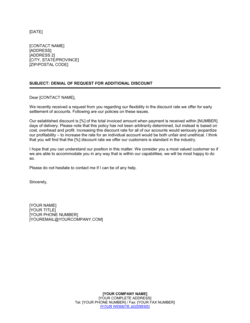
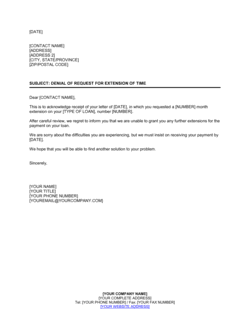
Add your company's full legal name, address, and the date at the top of the letter. Then enter the customer's full legal name, their title, company name, and billing address. Include the relevant account number.
💡 Use the customer's legal entity name — not a trade name or contact-person nickname — to ensure the denial is unambiguously addressed to the contracting party.
2
Reference the original request precisely
Record the date the customer submitted their billing change request and summarize what they asked for — specifically, a change to quarterly billing and the date they proposed it to take effect.
💡 If the request was made verbally or by phone, note the date and the name of the person who communicated it. This creates a paper trail if the customer later claims they never received a denial.
3
State the denial clearly in the opening paragraph
Write one unambiguous sentence declining the request. Avoid conditional or tentative language. The denial should be unmistakable on a first reading.
💡 Test the sentence by asking: could a customer reasonably interpret this as anything other than a no? If yes, rewrite it.
4
Cite the governing contract and relevant clause
Insert the name of the agreement, its execution date, and the section number that specifies the current billing frequency. If the agreement does not specify, reference the payment terms stated on the invoices.
💡 Pull the exact clause language from the contract and quote it briefly. Paraphrasing increases the risk of misrepresentation.
5
State your business reason in one to two sentences
Explain the denial in terms of credit policy, billing policy, or account status — enough for the customer to understand the basis without exposing internal credit scoring or financial details.
💡 Avoid language that implies the customer is a credit risk unless you are prepared to document that assessment. Stick to policy-based language: 'consistent with our standard billing policy for accounts at this tier.'
6
Confirm outstanding invoices remain due
Add a sentence explicitly stating that all previously issued invoices and future invoices remain due under the original terms. This closes any implied-suspension argument.
💡 If any invoices are already overdue, list the invoice numbers and amounts in a separate paragraph or attach a current statement of account.
7
Add the authorized signature block
Have the letter signed by a manager, director, or officer with authority over billing terms. Include their printed name, title, and the signing date.
💡 For large accounts, consider having both the account manager and the CFO or finance director co-sign — it signals the decision was made at a senior level and reduces escalation risk.
8
Deliver and retain proof of receipt
Send the letter by email with a read receipt, by certified mail, or by the method specified in the contract for formal notices. Retain a copy in the customer's account file.
💡 Check the notice clause in your governing agreement — many contracts require formal notices to be sent to a specific address or by a specific method to be legally effective.