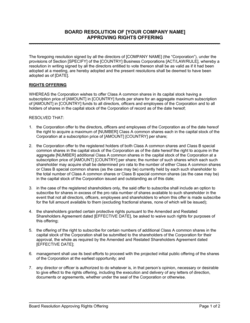
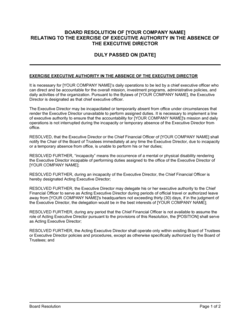
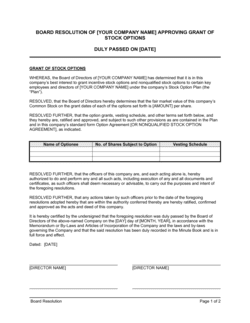
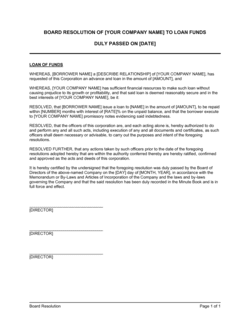
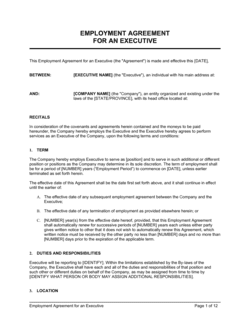
Board Resolution Approving Compensation for Board of Directors Template

Free Word download • Edit online • Save & share with Drive • Export to PDF

2 pages20–30 min to fillDifficulty: StandardSignature requiredLegal review recommended
Learn more ↓
FreeBoard Resolution Approving Compensation for Board of Directors Template

At a glance

What it is
A Board Resolution Approving Compensation for Board of Directors is a formal corporate document in which a company's board of directors (or shareholders, where required) officially votes to authorize and record the compensation paid to directors for their service. This free Word download gives you a ready-to-edit template you can complete in minutes and export as PDF for your corporate minute book.
When you need it
Use it whenever a company sets, revises, or renews director compensation — including annual retainer fees, per-meeting fees, equity grants, committee chair stipends, or expense reimbursement policies. It is also required when auditors, investors, or regulators ask for documented evidence that director pay was properly authorized.
What's inside
The resolution identifies the corporation and the meeting at which the vote was taken, specifies each component of director compensation (cash retainer, per-meeting fees, equity, and expenses), confirms the effective date, and records the vote. A signature block documents execution by the corporate secretary or authorized officer.

What is a Board Resolution Approving Compensation for Board of Directors?

A Board Resolution Approving Compensation for Board of Directors is a formal corporate document in which a company's board of directors votes to authorize and officially record the compensation paid to directors for their board service. It specifies every component of director remuneration — annual cash retainers, per-meeting fees, committee chair stipends, equity grants, and expense reimbursement — and establishes the effective date those terms apply. Once adopted and certified by the corporate secretary, the resolution becomes the authoritative record in the corporate minute book confirming that director pay was properly approved under the company's bylaws and applicable corporate law.

Why You Need This Document

Paying directors without a formally adopted resolution is one of the most common and costly governance oversights in private companies. Compensation disbursed without documented board authorization can be characterized as an unauthorized use of corporate funds — potentially requiring directors to return amounts received — and creates accounting entries that lack supporting documentation. During due diligence for a financing round, acquisition, or bank loan, investors and lenders routinely request minute books, and missing compensation resolutions are a frequent finding that delays or conditions closing. The document also protects individual directors: a properly adopted resolution is evidence that their fees were approved by disinterested colleagues acting under the business judgment rule, not self-awarded. This template gives you the structure to document that authorization clearly, covering every compensation component in a single, certifiable record.

Which variant fits your situation?

If your situation is…Use this template
Setting annual cash retainer and per-meeting fees for all directorsBoard Resolution Approving Compensation for Board of Directors
Granting stock options or restricted shares to directorsBoard Resolution Approving Stock Option Grant
Approving compensation for a specific committee chair or lead directorBoard Resolution Approving Committee Chair Compensation
Setting or revising executive officer salariesBoard Resolution Approving Officer Compensation
Confirming that directors serve without compensation (nonprofit or early-stage)Board Resolution Confirming Volunteer Director Status
Approving a director expense reimbursement policy onlyBoard Resolution Approving Expense Reimbursement Policy
Ratifying prior director compensation payments not previously documentedBoard Resolution Ratifying Prior Corporate Actions

Common mistakes to avoid

❌ Failing to document director recusals

Why it matters: Directors who vote on their own compensation without disclosing a conflict expose the resolution to shareholder challenge and themselves to claims of breach of fiduciary duty.

Fix: Add a recusal clause to every compensation resolution. Even if no conflicts exist, state that explicitly — 'No director disclosed a conflict of interest with respect to this resolution.'

❌ Approving equity grants without a shareholder-approved plan

Why it matters: Director equity grants made outside an approved equity incentive plan may be void, require retroactive shareholder ratification, and trigger securities law disclosure failures.

Fix: Confirm that your equity plan is in place and has sufficient authorized shares before referencing it in the resolution. If no plan exists, a separate resolution authorizing the plan is required first.

❌ Omitting an effective date

Why it matters: Without an explicit effective date, there is no authoritative record of when the new pay rate applies, creating ambiguity for payroll, accounting entries, and any mid-year director transitions.

Fix: Always include a specific effective date in the resolution, even if it matches the resolution date. For retroactive adjustments, state that the terms are 'effective as of [PRIOR DATE]' and note the rationale.

❌ Using a trade name instead of the legal entity name

Why it matters: A resolution that names 'Acme' instead of 'Acme Holdings Inc.' may not be recognized by banks, auditors, or courts as authorizing action on behalf of the correct legal entity.

Fix: Pull the exact entity name from your articles of incorporation or certificate of formation and use it verbatim throughout the resolution.

❌ Storing the resolution outside the corporate minute book

Why it matters: Investors, lenders, and auditors request minute books during due diligence. A resolution that cannot be located in an organized minute book may be treated as if it never existed.

Fix: File the executed original in the minute book immediately after signing, and maintain a digital backup. During funding rounds, you will need to produce these documents on short notice.

❌ Setting per-meeting fees without addressing virtual attendance

Why it matters: If the resolution is silent on remote attendance, directors who join by video may claim the fee is owed while the company disputes it, creating unnecessary friction and governance uncertainty.

Fix: Add one sentence explicitly confirming that attendance by telephone or video conference counts as attendance for per-meeting fee purposes — or excludes it if that is the board's intent.

The 10 key clauses, explained

Corporation identification and recitals

In plain language: States the full legal name of the corporation, its state or province of incorporation, and the date and type of meeting at which the resolution was passed.

Sample language
The undersigned, being the duly elected directors of [CORPORATION LEGAL NAME], a [STATE/PROVINCE] [ENTITY TYPE], hereby certify that at a duly convened meeting held on [DATE], at which a quorum was present, the following resolution was adopted.

Common mistake: Using a trade name instead of the full registered corporate name. If the entity name on the resolution doesn't match the articles of incorporation, the document may be challenged as improperly authorized.

Quorum and vote confirmation

In plain language: Confirms that the required number of directors was present and that the resolution passed by the necessary majority under the bylaws.

Sample language
A quorum of the Board of Directors was present throughout the meeting. The resolution set forth below was adopted by [unanimous vote / a vote of [X] in favor and [Y] opposed].

Common mistake: Omitting the vote count or simply stating 'approved' without confirming quorum. Auditors and courts look for explicit quorum and vote language to confirm the resolution is valid.

Recusal and conflict disclosure

In plain language: Records whether any director disclosed a conflict of interest and recused themselves from the vote, protecting the resolution from later challenge.

Sample language
[DIRECTOR NAME] disclosed a potential conflict of interest and recused himself/herself from discussion and the vote on this matter. The remaining [X] directors voted as follows: [VOTE TALLY].

Common mistake: Failing to record a director's recusal when they have a financial interest in the compensation being approved. Undisclosed conflicts are among the most common bases for shareholder challenges to director pay.

Annual retainer amount and payment schedule

In plain language: States the fixed annual cash fee each director will receive and when it will be paid — quarterly, semi-annually, or annually in arrears.

Sample language
Each non-employee director of the Corporation shall receive an annual cash retainer of $[AMOUNT], payable in equal quarterly installments on [DATES], beginning [DATE].

Common mistake: Setting the retainer without specifying the payment schedule or pro-ration formula for directors who join or depart mid-year, leading to payroll disputes later.

Per-meeting fee structure

In plain language: Specifies the additional fee paid for each board or committee meeting attended, and whether telephone or video attendance qualifies.

Sample language
Each director shall receive $[AMOUNT] per board meeting attended and $[AMOUNT] per committee meeting attended. Attendance by telephone or video conference shall qualify for the per-meeting fee.

Common mistake: Not addressing whether remote attendance qualifies for per-meeting fees. As virtual meetings have become standard, omitting this creates inconsistent payment practices and director grievances.

Committee chair and lead director stipends

In plain language: Records any additional compensation payable to directors who chair a committee (e.g., audit, compensation, or nominating) or serve as lead independent director.

Sample language
The Chair of the Audit Committee shall receive an additional annual stipend of $[AMOUNT]. The Chair of the Compensation Committee shall receive an additional annual stipend of $[AMOUNT]. The Lead Independent Director shall receive an additional annual stipend of $[AMOUNT].

Common mistake: Omitting committee chair stipends from the resolution and handling them informally. Informal arrangements are not documented in the minute book and cannot be relied upon if a director disputes their pay.

Equity compensation grant

In plain language: Authorizes the issuance of stock options, restricted stock units (RSUs), or shares to directors, and references the governing equity plan under which the grant is made.

Sample language
Each non-employee director shall receive an annual grant of [X] restricted stock units under the [EQUITY PLAN NAME], with a grant date of [DATE] and vesting over [PERIOD], subject to continued service on the Board.

Common mistake: Approving equity grants in the compensation resolution without confirming shareholder approval of the underlying equity plan. Director equity grants made outside an approved plan may be void or require ratification.

Expense reimbursement policy

In plain language: Confirms that directors will be reimbursed for reasonable, documented expenses incurred in attending board meetings and carrying out board duties.

Sample language
The Corporation shall reimburse each director for all reasonable and documented out-of-pocket expenses incurred in connection with attending board and committee meetings, subject to the Corporation's standard expense reimbursement policy.

Common mistake: Using this clause as a substitute for a proper expense policy. The resolution should reference a written expense policy rather than defining reimbursable categories in the resolution itself — policies are easier to update than resolutions.

Effective date and term

In plain language: Specifies when the compensation terms take effect and whether they apply for a fixed term (e.g., one year) or until superseded by a subsequent resolution.

Sample language
The foregoing compensation terms shall be effective as of [EFFECTIVE DATE] and shall remain in effect until amended or superseded by a subsequent resolution of the Board of Directors.

Common mistake: Not including an effective date separate from the resolution date. When pay structures change mid-year, the absence of an explicit effective date creates ambiguity about which period each rate applies to.

Certification and signature block

In plain language: Records the name and signature of the corporate secretary (or other authorized officer) certifying that the resolution was duly adopted and is a true record.

Sample language
I, [NAME], Secretary of [CORPORATION LEGAL NAME], hereby certify that the foregoing is a true and correct copy of a resolution duly adopted by the Board of Directors on [DATE]. IN WITNESS WHEREOF, I have executed this Certificate as of [DATE]. [SIGNATURE LINE]

Common mistake: Having only one director sign the resolution without having the corporate secretary certify it. Many banks, investors, and regulators require certification by the secretary as evidence the resolution is a true extract from the minute book.

How to fill it out

  1. 1

    Enter the corporation's full legal name and incorporation details

    Open the template and replace every instance of [CORPORATION LEGAL NAME] with the exact name as it appears in your articles of incorporation or certificate of formation. Add the state, province, or country of incorporation.

    💡 Cross-reference your corporate registry filing before filling in — a misspelled entity name can delay bank processing or investor diligence.

  2. 2

    Record the meeting date, type, and quorum confirmation

    Enter the date and location (or 'virtual meeting via [PLATFORM]') of the board meeting at which the resolution was adopted. Confirm in the recitals that a quorum was present as defined in your bylaws.

    💡 If the resolution is adopted by written consent without a meeting, replace meeting language with a written-consent recital and have all required directors sign.

  3. 3

    Identify and record any director conflicts and recusals

    Before recording the vote, check whether any director receiving the compensation is voting on it. If so, document their conflict disclosure and recusal. Record the vote tally of the remaining directors.

    💡 In most jurisdictions, interested directors may be counted for quorum purposes but must abstain from the vote itself — check your bylaws and applicable corporate statute.

  4. 4

    Complete the annual retainer and per-meeting fee fields

    Enter the dollar amount for the annual cash retainer, the payment schedule (quarterly is most common), the per-board-meeting fee, and the per-committee-meeting fee. Confirm whether remote attendance qualifies.

    💡 Benchmark against your industry and stage — early-stage private companies often pay $0–$5,000 annual retainers; later-stage or public boards typically range from $30,000 to $100,000+.

  5. 5

    Add committee chair stipends and lead director fees

    List any additional stipends for committee chairs (audit, compensation, nominating/governance) and for the lead independent director role if one exists at your company.

    💡 Audit committee chairs typically receive the highest stipend — $5,000 to $30,000 above the standard retainer — due to the additional regulatory and oversight burden.

  6. 6

    Describe the equity grant terms and reference the plan

    If directors receive equity, specify the grant type (options, RSUs, or shares), the number of units or shares, the grant date, the vesting schedule, and the name of the governing equity incentive plan.

    💡 Never grant equity without confirming the plan has sufficient shares authorized. A grant that exceeds plan capacity is void and must be ratified or re-granted.

  7. 7

    Set the effective date and have the corporate secretary certify

    Enter the date the compensation terms take effect — which may be retroactive to the start of the fiscal year. Then have the corporate secretary sign and date the certification block.

    💡 File the executed resolution in the corporate minute book within 48 hours of signing. Auditors and investors verify that minute-book records are contemporaneous, not created after the fact.

Frequently asked questions

What is a board resolution approving compensation for directors?

A board resolution approving compensation for directors is a formal corporate document in which the board of directors (or shareholders, depending on jurisdiction and company structure) votes to authorize and record the fees, retainers, equity grants, and expense reimbursements paid to directors for their board service. It creates the official written record that the compensation was properly authorized and protects the company and its directors from later disputes or challenges.

Do directors have to be compensated?

No — directors are not legally required to receive compensation, and many directors of early-stage startups, nonprofits, and family businesses serve without pay. However, if compensation is paid, it must be formally authorized by resolution. Paying directors without a resolution risks characterizing the payments as unauthorized, creating accounting and tax complications and potential shareholder liability.

Who votes on director compensation?

In most corporations, the full board votes to approve director compensation, with directors who have a conflict of interest recusing themselves. Some corporate statutes and governance best practices require that director pay be set by a compensation committee composed of independent directors. In certain jurisdictions — particularly for publicly traded companies — shareholder approval is required for equity compensation plans or above a statutory threshold.

Can a director vote on their own compensation?

In most jurisdictions, a director who will receive the compensation being voted on is considered an interested party and should disclose the conflict and recuse from the vote. The remaining non-interested directors then constitute the quorum and cast the approving vote. Interested-director transactions that are approved without disclosure and recusal can be challenged by shareholders as unauthorized or in breach of fiduciary duty.

What components of director compensation should the resolution cover?

A complete director compensation resolution typically covers: the annual cash retainer, per-meeting fees for full board and committee meetings, additional stipends for committee chairs or the lead independent director, equity grants (options, RSUs, or shares) with vesting terms, expense reimbursement policy, and the effective date. Covering all components in a single resolution creates a clean, auditable record.

How often should a board resolution on director compensation be updated?

Best practice is to review and reauthorize director compensation annually, typically at the first board meeting of each fiscal year. Any mid-year change — a new retainer rate, an additional equity grant, or a new committee chair stipend — requires a separate amending resolution. Annual reauthorization ensures the minute book reflects current rates and eliminates ambiguity about which resolution governs which period.

Do nonprofits need a board resolution to confirm directors are unpaid?

Yes — nonprofits and charities benefit from documenting that their board members serve without compensation, particularly when the organization must demonstrate compliance with tax-exempt status requirements. A resolution confirming zero compensation (or expense-only reimbursement) creates a clean record for IRS Form 990 disclosures and state charity registration filings.

What happens if director compensation is paid without a resolution?

Compensation paid to directors without formal authorization can be challenged by shareholders as an unauthorized use of corporate funds, potentially requiring disgorgement. It also creates tax reporting complications — undocumented director fees may be treated differently by tax authorities than documented, authorized compensation. In due diligence for a financing round or acquisition, missing compensation resolutions are a common finding that delays closing.

Is a board resolution on director compensation legally binding?

A properly adopted board resolution is generally enforceable as a binding corporate act when it is adopted by a quorum of the board, documented in the minute book, and consistent with the company's bylaws and applicable corporate statute. It creates an enforceable obligation for the company to pay the approved compensation and a record that directors relied upon in accepting their board roles.

How this compares to alternatives

vs Board Resolution Approving Compensation for Officers

An officer compensation resolution authorizes salaries, bonuses, and benefits for the CEO, CFO, and other executive officers — individuals who are employees of the company. A director compensation resolution governs non-employee directors who provide oversight, not day-to-day management. The two are legally distinct: officer pay is typically employment compensation subject to withholding, while director fees may be treated as self-employment income depending on jurisdiction.

vs Corporate Bylaws

Bylaws establish the general framework for how director compensation may be set — for example, stating that the board has authority to fix director fees. A compensation resolution is the specific, dated act of exercising that authority for a given period and amount. Bylaws authorize; resolutions implement. Both must be consistent: a resolution that conflicts with the bylaws is invalid.

vs Employment Contract

An employment contract governs a director who also serves as an executive employee (e.g., a CEO who sits on the board). In that case, the employment contract covers the employment relationship and executive compensation, while a separate board resolution may address any additional director fees. Non-employee directors do not have employment contracts with the company.

vs Board Meeting Minutes

Board meeting minutes are a narrative record of everything discussed and decided at a board meeting, including votes, attendees, and discussion summaries. A board resolution is a standalone formal statement of a specific decision, designed to be extracted from the minutes and presented to third parties — banks, investors, auditors — as self-contained proof of authorization. The resolution is typically reproduced verbatim within the meeting minutes.

Industry-specific considerations

Technology / SaaS

Equity-heavy compensation structures with RSU grants referenced to an approved stock plan, vesting tied to continued board service, and annual reauthorization before each funding round.

Financial Services

Heightened regulatory scrutiny of director pay disclosure; compensation committee independence requirements; clawback provisions for audit or risk committee members.

Healthcare

Anti-kickback and Stark Law considerations for healthcare entities require careful documentation that director fees are fair market value and unrelated to referral volume.

Nonprofit / Charitable Organizations

Most nonprofit boards serve without compensation; the resolution documents zero-fee or expense-only status to support IRS Form 990 disclosures and state attorney general filings.

Jurisdictional notes

United States

Delaware and most other states permit the board to fix director compensation unless the certificate of incorporation or bylaws reserve that power to shareholders. The business judgment rule generally protects director pay decisions made by independent, disinterested directors. The SEC requires public companies to disclose director compensation in the annual proxy statement. Director fees are typically reported on Form 1099-NEC as self-employment income, not W-2 wages.

Canada

Under the Canada Business Corporations Act and most provincial statutes, the board has statutory authority to fix director remuneration unless restricted by the articles or bylaws. Directors who are also officers should ensure their fees are distinguishable from employment income for payroll tax purposes. Publicly traded Canadian companies must disclose director compensation in their annual information form and management information circular under National Instrument 51-102.

United Kingdom

Under the Companies Act 2006, the articles of association govern how director remuneration is approved — many model articles require shareholder authorization for director fees above a threshold. For UK public companies, the Directors' Remuneration Report must be put to a shareholder advisory vote annually. Director fees are subject to income tax and Class 1 National Insurance contributions, and must be reported on a P11D or through the company payroll.

European Union

The EU Shareholder Rights Directive II (SRD II) requires listed companies to submit a remuneration policy — covering both executive and non-executive directors — to a shareholder vote at least every four years and whenever material changes are made. Member state implementations vary: France requires shareholder approval of director fees (jetons de présence) annually; Germany separates supervisory board remuneration from management board compensation under the two-tier board structure. GDPR considerations apply when compensation data is processed.

Template vs lawyer — what fits your deal?

PathBest forCostTime
Use the templatePrivate companies with straightforward cash retainer and expense reimbursement structures and no equity componentFree15–30 minutes
Template + legal reviewCompanies granting director equity, operating in multiple jurisdictions, or preparing for a financing round where governance records will be scrutinized$300–$6001–2 days
Custom draftedPublic companies, heavily regulated entities (financial services, healthcare), or situations involving interested-director transactions requiring independent committee approval$1,000–$3,000+3–7 days

Glossary

Board Resolution
A formal written record of a decision made by a company's board of directors, which serves as the official authorization for that action.
Annual Retainer
A fixed cash fee paid to a director each year in exchange for their ongoing service on the board, regardless of the number of meetings attended.
Per-Meeting Fee
A cash payment made to a director for each board or committee meeting they attend, in addition to any annual retainer.
Quorum
The minimum number of directors who must be present at a meeting for resolutions passed at that meeting to be valid under the corporation's bylaws.
Equity Compensation
Director remuneration paid in the form of stock options, restricted stock units (RSUs), or shares rather than — or in addition to — cash fees.
Conflict of Interest
A situation in which a director has a personal financial interest in the matter being voted on, typically requiring recusal from that vote.
Recusal
The act of a director removing themselves from discussion and voting on a matter in which they have a personal or financial conflict of interest.
Minute Book
The official corporate record in which all board resolutions, meeting minutes, and key corporate documents are stored and maintained.
Effective Date
The specific date on which the approved compensation terms come into force, which may differ from the date the resolution is signed.
Fiduciary Duty
The legal obligation of directors to act in the best interests of the corporation and its shareholders, not in their own personal interest.
Written Consent Resolution
A resolution adopted by directors signing a written document rather than meeting in person, permitted in most jurisdictions when all directors consent.

Part of your Business Operating System

This document is one of 3,000+ business & legal templates included in Business in a Box.

  • Fill-in-the-blanks — ready in minutes
  • 100% customizable Word document
  • Compatible with all office suites
  • Export to PDF and share electronically

Create your document in 3 simple steps.

From template to signed document — all inside one Business Operating System.
1
Download or open template

Access over 3,000+ business and legal templates for any business task, project or initiative.

2
Edit and fill in the blanks with AI

Customize your ready-made business document template and save it in the cloud.

3
Save, Share, Send, Sign

Share your files and folders with your team. Create a space of seamless collaboration.

Save time, save money, and create top-quality documents.

★★★★★

"Fantastic value! I'm not sure how I'd do without it. It's worth its weight in gold and paid back for itself many times."

Managing Director · Mall Farm
Robert Whalley
Managing Director, Mall Farm Proprietary Limited
★★★★★

"I have been using Business in a Box for years. It has been the most useful source of templates I have encountered. I recommend it to anyone."

Business Owner · 4+ years
Dr Michael John Freestone
Business Owner
★★★★★

"It has been a life saver so many times I have lost count. Business in a Box has saved me so much time and as you know, time is money."

Owner · Upstate Web
David G. Moore Jr.
Owner, Upstate Web

Run your business with a system — not scattered tools

Stop downloading documents. Start operating with clarity. Business in a Box gives you the Business Operating System used by over 250,000 companies worldwide to structure, run, and grow their business.

Start free · No credit card required