Create A Vision Board and Reach Your Goals Template

Free download β€’ Use as a template β€’ Print or share

2 pagesβ€’20–30 min to useβ€’Difficulty: Standardβ€’Signature requiredβ€’Legal review recommended
Learn more ↓
FreeCreate A Vision Board and Reach Your Goals Template

At a glance

What it is
A Vision Board and Goal-Reaching Plan is a structured Word document that translates your personal or business aspirations into concrete, time-bound objectives with defined actions, accountability commitments, and progress checkpoints. This free Word download gives you a guided framework to capture your vision, break it into achievable milestones, and track outcomes β€” exportable as PDF for sharing with coaches, partners, or leadership teams.
When you need it
Use it at the start of a new fiscal year, business quarter, or personal planning cycle when you need to move from aspirational thinking to a committed, structured action plan. It is also valuable when onboarding a business coach, preparing for a strategic planning retreat, or formalizing a shared goal agreement between partners.
What's inside
Vision statement and core values, short-term and long-term goal categories, SMART goal breakdowns, milestone timelines, accountability commitments, progress review checkpoints, and a signature block for formal adoption of the plan by all relevant parties.

What is a Vision Board and Goal-Reaching Plan?

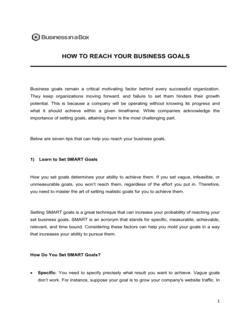
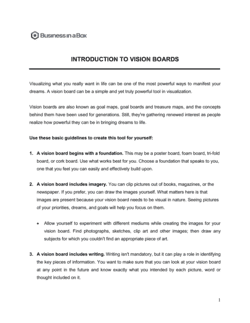
A Vision Board and Goal-Reaching Plan is a structured written document that translates personal or business aspirations into a concrete, signed commitment plan with defined goals, action steps, accountability checkpoints, and measurable KPIs. Unlike an informal collage or a list of resolutions, this template guides you through a disciplined process: declaring a specific long-term vision, identifying core values, ranking goal categories, setting SMART short-term and long-term objectives, mapping action steps to milestones, and scheduling formal progress reviews. The signature and adoption block at the close of the document converts an aspirational exercise into a formal commitment β€” one that can be witnessed by a coach, business partner, or accountability partner.

Why You Need This Document

Without a written, structured, and signed goal plan, aspirations remain intentions β€” and intentions without a tracking system and a review schedule are consistently abandoned within the first 90 days. A completed vision board plan eliminates the three most common reasons goals fail: no clear success metric, no scheduled review, and no formal accountability. For coaches and consultants, having clients sign a documented goal plan at the engagement's start creates a baseline that every subsequent session can be measured against β€” turning open-ended conversations into outcome-driven reviews. For business owners and executives, aligning personal vision with organizational strategy in a single signed document ensures individual decisions stay oriented toward the same long-term destination. This template gives you the structure to move from "I want to grow my business" to "Monthly recurring revenue reaches $25,000 by December 31, reviewed monthly, signed and committed today."

Which variant fits your situation?

If your situation is…Use this template
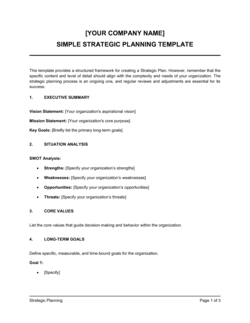
Setting company-wide strategic goals for a full fiscal yearStrategic Planning Template
Tracking individual employee performance and development goalsEmployee Performance Review Template
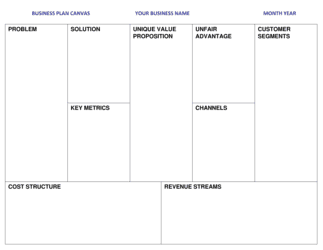
Aligning a leadership team around a 3-year business visionBusiness Plan Template
Creating a one-page summary of goals for a coaching sessionOne-Page Business Plan
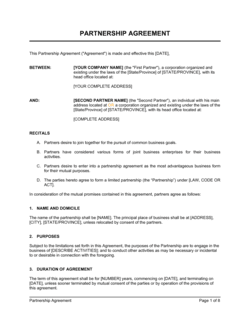
Documenting a shared goal agreement between business partnersPartnership Agreement
Setting measurable marketing and sales targets for the quarterMarketing Plan Template
Planning a major product or project milestone roadmapProject Plan Template

Common mistakes to avoid

❌ Setting too many goals across too many categories

Why it matters: Research on goal achievement consistently shows that pursuing more than three to five active goals at once reduces the probability of completing any of them. Attention and willpower are finite.

Fix: Select no more than five priority categories and no more than three active goals per category. Park the rest in a 'future goals' list to revisit next planning cycle.

❌ Writing goals without a measurable metric

Why it matters: Vague goals like 'grow my business' or 'get healthier' cannot be tracked, which means you cannot tell whether you are making progress β€” or whether the goal has been achieved.

Fix: Rewrite every goal so it contains a number, a unit, and a deadline: 'Grow monthly recurring revenue from $8,000 to $15,000 by December 31.'

❌ Skipping the obstacles and contingency section

Why it matters: Plans built only on best-case assumptions stall at the first real barrier. Without a pre-written contingency response, the default reaction to obstacles is to abandon the goal.

Fix: For every major goal, write at least one anticipated obstacle and a specific response. This transforms setbacks from plan-ending events into expected detours with a mapped route back.

❌ Not signing or formalizing the plan

Why it matters: An unsigned plan is a wish list. Psychological research on commitment and consistency shows that a signed, witnessed document significantly increases follow-through compared to private or informal goal-setting.

Fix: Always complete and sign the adoption block β€” ideally with an accountability partner, coach, or colleague who will participate in review sessions.

The 10 key clauses, explained

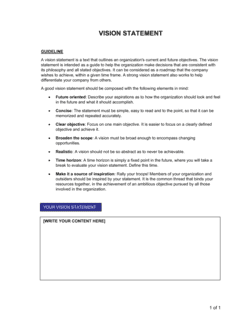
Vision statement and core values declaration

In plain language: The opening section where the individual or organization articulates their overarching long-term vision and the core values that will guide every goal and decision in the plan.

Sample language
My / Our vision is: [VISION STATEMENT]. The core values guiding this plan are: [VALUE 1], [VALUE 2], [VALUE 3]. All goals set within this document are aligned with these values.

Common mistake: Writing a vision statement that describes activities rather than outcomes β€” 'I want to work hard' instead of 'I lead a $5M business by [YEAR].' Activity-based vision statements produce unfocused goal lists.

Goal categories and priority ranking

In plain language: Defines the life or business areas addressed by the plan β€” financial, career, health, relationships, personal growth β€” and ranks them by priority to focus effort where it matters most.

Sample language
Priority 1: [CATEGORY β€” e.g., Financial Independence]. Priority 2: [CATEGORY]. Priority 3: [CATEGORY]. Goals in higher-priority categories receive the majority of allocated time and resources.

Common mistake: Listing every possible life category without ranking them, resulting in a plan too diluted to produce meaningful progress in any single area.

Short-term goals (0–12 months)

In plain language: Specific, measurable goals to be achieved within the current calendar or fiscal year, each written in SMART format with a defined success metric and deadline.

Sample language
Goal: [SPECIFIC GOAL]. Metric: [HOW SUCCESS IS MEASURED]. Deadline: [DATE]. Current status: [BASELINE MEASURE]. Target: [TARGET MEASURE].

Common mistake: Setting short-term goals that depend entirely on factors outside the individual's control β€” such as 'get promoted' without specifying the actions that make a promotion likely.

Long-term goals (1–5 years)

In plain language: Aspirational but concrete goals spanning one to five years, with an annual milestone breakdown so long-term ambitions are tied to near-term actions.

Sample language
5-Year Goal: [GOAL STATEMENT] by [TARGET DATE]. Year 1 Milestone: [MILESTONE]. Year 3 Milestone: [MILESTONE]. Year 5 Target: [FINAL OUTCOME].

Common mistake: Writing long-term goals without breaking them into annual milestones β€” goals without intermediate checkpoints are consistently abandoned within three months.

Action steps and timeline

In plain language: A sequenced list of concrete tasks required to achieve each goal, each with an assigned deadline and, where applicable, a named responsible party.

Sample language
Action Step 1: [TASK]. Owner: [NAME]. Deadline: [DATE]. Action Step 2: [TASK]. Owner: [NAME]. Deadline: [DATE]. Completion criteria: [DEFINITION OF DONE].

Common mistake: Creating action steps that are too large to complete in a single session β€” 'build the website' instead of 'finalize homepage copy by [DATE]' β€” which makes it impossible to mark real progress.

Resources and support needed

In plain language: Identifies the tools, budget, skills, relationships, and external support required to execute the plan, and names how each resource will be obtained.

Sample language
Resources required: [RESOURCE 1 β€” e.g., business coach, $X/month], [RESOURCE 2 β€” e.g., online course, $X]. Accountability partner: [NAME]. Target acquisition date: [DATE].

Common mistake: Omitting this section and assuming goals are achievable with current resources β€” undercounting the time, money, or skill gaps leads to stalled plans by Month 2.

Obstacles and contingency plan

In plain language: Documents foreseeable obstacles to each major goal and defines a contingency action so that when barriers arise, the response is pre-planned rather than reactive.

Sample language
Anticipated obstacle: [OBSTACLE]. Probability: [High / Medium / Low]. Contingency: If [OBSTACLE] occurs, I / we will [SPECIFIC ACTION] by [DATE] to stay on track.

Common mistake: Skipping the obstacles section because it feels negative β€” plans with no obstacle analysis are consistently derailed by the first significant setback.

Accountability commitments and review schedule

In plain language: A signed commitment by the planner and any accountability partner or coach to review progress on a fixed schedule β€” typically monthly or quarterly β€” and take corrective action when milestones are missed.

Sample language
I / We commit to reviewing progress against this plan on [MONTHLY / QUARTERLY] basis, beginning [DATE]. Review meetings will be held on [DAY / TIME]. If a milestone is missed, corrective action will be documented within [X] days.

Common mistake: Setting review dates without a defined agenda or decision criteria β€” without knowing what to measure at a review, the meeting becomes a check-in rather than a course-correction session.

Progress tracking and KPI log

In plain language: A running record of KPI measurements taken at each review checkpoint, showing the starting baseline, current value, and target β€” so progress (or lack of it) is visible at a glance.

Sample language
KPI: [METRIC NAME]. Baseline (as of [DATE]): [VALUE]. Target (by [DATE]): [VALUE]. Month 1 actual: [VALUE]. Month 3 actual: [VALUE]. Month 6 actual: [VALUE].

Common mistake: Tracking only outcomes (revenue, weight, clients) without tracking leading indicators (calls made, proposals sent, workouts completed) β€” outcome metrics lag reality by weeks or months.

Signature and adoption block

In plain language: A formal acknowledgment section where the planner β€” and any coach, partner, or sponsor β€” signs to confirm they have reviewed and committed to the plan as written.

Sample language
I, [FULL NAME], commit to executing this vision and goal plan as documented above. Signature: ______________ Date: [DATE]. Witness / Coach / Partner: [NAME]. Signature: ______________ Date: [DATE].

Common mistake: Treating the signature block as optional β€” unsigned plans have significantly lower follow-through rates because the absence of a formal commitment reduces psychological accountability.

How to fill it out

  1. 1

    Write your vision statement before anything else

    Spend 15–20 minutes writing a single paragraph describing where you want to be in five years, in present tense and specific enough to be measurable. Pin it at the top of the document.

    πŸ’‘ Use the prompt 'It is [YEAR] and I am...' to force present-tense, concrete language rather than vague future-oriented wishes.

  2. 2

    List and rank your goal categories

    Identify the three to five life or business areas most relevant to your vision β€” financial, career, health, relationships, or personal development. Rank them so your action plan allocates time proportionally.

    πŸ’‘ Limit yourself to five categories maximum. More than five dilutes focus to the point where no category receives enough attention to move.

  3. 3

    Set short-term SMART goals for each priority category

    Write one to three SMART goals per category for the next 12 months. For each goal, record the specific metric, the current baseline, the target, and the deadline.

    πŸ’‘ If you cannot state how you will measure success in one sentence, the goal is not specific enough yet β€” keep rewriting until the metric is unambiguous.

  4. 4

    Break long-term goals into annual milestones

    For each 3–5 year goal, work backward from the end state to set Year 1, Year 2, and Year 3 milestones. These become the targets your short-term actions must serve.

    πŸ’‘ A milestone should be a state change, not a task β€” 'revenue at $500K' not 'complete sales training.'

  5. 5

    Define concrete action steps with deadlines

    For each short-term goal, list the three to five most critical actions required. Assign a specific deadline to each and, if working with a team or partner, name the responsible person.

    πŸ’‘ Action steps should be completable in one to five business days each β€” if a step takes longer, break it down further.

  6. 6

    Identify resource gaps and obstacles

    For each major goal, write down the top one or two obstacles likely to arise and the resources you currently lack. For each obstacle, document your contingency response before it happens.

    πŸ’‘ Review this section with your accountability partner before signing β€” an outside perspective often surfaces blind spots the planner has normalized.

  7. 7

    Set a fixed review schedule and sign the plan

    Choose monthly or quarterly review dates, enter them into your calendar, and document the review agenda (which KPIs to check, what triggers a plan revision). Then sign the document with your accountability partner or coach.

    πŸ’‘ Block review sessions in your calendar the same day you sign the plan β€” the most common reason goals are abandoned is that review sessions are never scheduled.

  8. 8

    Update the KPI log at every review checkpoint

    At each review, record actual values against every tracked KPI and compare to target. If an outcome metric is off-track, check whether the corresponding leading-indicator action steps were completed.

    πŸ’‘ Color-coding the KPI log β€” green for on-track, yellow for lagging, red for missed β€” makes it immediately obvious where to focus during the review meeting.

Frequently asked questions

What is a vision board template?

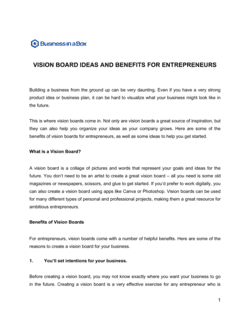
A vision board template is a structured document β€” in this case a Word file β€” that guides you through capturing your long-term vision, setting SMART goals across priority life or business categories, defining action steps, and scheduling accountability reviews. Unlike a paper collage, a digital vision board template produces a written, signed commitment plan you can track, update, and share with coaches or partners.

How is a vision board template different from a regular goal-setting worksheet?

A standard goal worksheet lists goals and perhaps assigns deadlines. A vision board template starts from a holistic vision statement, filters goals through declared core values, maps short-term and long-term objectives across multiple life or business categories, and includes an accountability and review structure. The result is a living document rather than a one-time exercise, with a signature block that creates a formal commitment.

Who should use this vision board and goal-reaching template?

Entrepreneurs, executives, business coaches, HR professionals, and anyone who wants to convert aspirational thinking into a structured, accountable action plan. It is particularly useful for annual planning sessions, coaching engagements, business partner goal-alignment conversations, and employee development planning where a documented commitment is valuable.

How often should I update my vision board plan?

Review it at least quarterly and update KPIs at every review session. Revisit the full goal set annually or after a major life or business change β€” a new role, a funding event, a significant personal transition. The plan is a working document, not an archive. Goals that remain unchanged for more than 12 months despite missed milestones are typically goals that need to be either renegotiated or removed.

Does a vision board plan need to be signed?

While not legally required for a personal planning document, a signed commitment significantly increases follow-through. When the template is used in a coaching, partnership, or employment context β€” where one party is accountable to another β€” the signature block creates a documented commitment that can be referenced in future review conversations. In formal business or coaching agreements, the signed plan may accompany a broader service or partnership contract.

How is a vision board plan used in a coaching or consulting engagement?

Business coaches and consultants typically use this document at the intake stage to baseline a client's vision and goals, then reference it at every subsequent session to measure progress. The signed accountability commitment section formalizes the client's ownership of the plan, while the review schedule keeps sessions focused on measurable outcomes rather than open-ended discussion. Some coaches attach the completed plan as an exhibit to their service agreement.

What is the difference between short-term and long-term goals in this template?

Short-term goals cover a 0–12 month horizon and should be specific enough to drive weekly action. Long-term goals span one to five years and define the destination the short-term goals are building toward. The template connects the two by asking you to break each long-term goal into annual milestones β€” so every short-term action can be traced back to a long-term outcome.

Can this template be used for team or organizational goal-setting?

Yes. While the template is framed around an individual planner, the vision statement, goal categories, accountability commitments, and review schedule sections are easily adapted for a leadership team or department. Multiple signature blocks can be added to formalize shared ownership. For company-wide strategic planning, the Business Plan or Strategic Planning templates are more appropriate complements.

What makes a SMART goal different from a regular goal?

A SMART goal is Specific (it names exactly what will be achieved), Measurable (it includes a numeric target or clear success criterion), Achievable (it is ambitious but realistic given current resources), Relevant (it directly supports the stated vision), and Time-bound (it has a fixed deadline). A goal that fails any one of these criteria is significantly harder to track and consistently less likely to be accomplished.

How this compares to alternatives

vs Strategic planning template

A strategic planning template is designed for organizational use β€” defining company-wide objectives, initiatives, and KPIs across departments. A vision board plan is individual-first, starting from personal values and vision before addressing business goals. The two are complementary: executives often complete a personal vision board plan before participating in a company strategic planning session.

vs Business plan template

A business plan is an external-facing document built for investors, lenders, and partners β€” it emphasizes market analysis, competitive positioning, and financial projections. A vision board plan is an internal commitment tool focused on personal and professional goal-setting, motivation, and accountability. The vision board often informs the business plan's mission and goals sections.

vs One-page business plan

A one-page business plan condenses a company's model, market, and objectives into a single rapid-alignment tool. A vision board plan addresses the person behind the business β€” their values, multi-year goals, and daily action commitments. They serve different audiences: the one-pager is for external stakeholders, the vision board is for the founder's own accountability.

vs Employee performance review template

A performance review template evaluates past performance against pre-set organizational criteria and sets objectives for the coming period. A vision board plan is self-directed and forward-looking, driven by personal vision rather than manager-assigned targets. In some coaching-led organizations, employees complete a vision board plan alongside their formal review to integrate personal and professional goal alignment.

Industry-specific considerations

Professional services

Used by consultants and coaches to formalize client goal-setting engagements, with the signed plan attached as an exhibit to the service agreement.

Technology / SaaS

Founders and product leaders use the template to align personal and company vision at the start of each fiscal year, tying individual OKRs to the broader business roadmap.

Education and training

Instructors and learning-and-development professionals embed vision board exercises into leadership programs and career development curricula, with the signed plan serving as a student commitment artifact.

Healthcare and wellness

Health coaches, therapists, and wellness practitioners use the template to help clients document personal health goals alongside professional milestones, with review checkpoints built into appointment cycles.

Jurisdictional notes

United States

A signed vision board and goal plan is generally not a legally binding contract in isolation under US contract law β€” it lacks the consideration and mutual obligation elements required for enforceability. However, when incorporated by reference into a coaching, consulting, or employment agreement, the documented commitments can carry contractual weight. State laws on coaching service agreements vary; California, in particular, has consumer protection requirements for personal development services.

Canada

In Canada, personal development and coaching agreements β€” which may reference a signed vision plan β€” are governed by provincial consumer protection legislation. Coaching contracts in Quebec must comply with French-language requirements under the Charter of the French Language. Standalone signed goal plans without a broader service contract are motivational tools rather than enforceable obligations under Canadian common law.

United Kingdom

In the UK, a signed vision board plan does not constitute a binding contract without offer, acceptance, consideration, and intention to create legal relations. When used within a coaching or consulting engagement governed by a service agreement, the plan's commitments may be incorporated as deliverables. UK coaches should ensure their service terms reference the plan clearly if they intend the client's commitments to be contractually meaningful.

European Union

Across EU member states, personal development plans and coaching goal documents are motivational rather than legally binding unless embedded in a broader services contract. GDPR applies to any personal data recorded in the document β€” coaches and organizations storing completed vision board plans must have a lawful basis for processing and provide appropriate data retention and access rights notices to the individual.

Template vs lawyer β€” what fits your deal?

PathBest forCostTime
Use the templateIndividuals, entrepreneurs, and coaches using the plan for personal or informal professional goal-settingFree2–4 hours to complete
Template + legal reviewCoaches or consultants attaching the signed plan to a formal service agreement, or HR teams using it in employee development programs$150–$400 for a brief legal or HR review1–3 days
Custom draftedOrganizations embedding vision and goal commitments into binding partnership, employment, or coaching contracts with enforceability requirements$500–$2,000+1–2 weeks

Glossary

Vision Statement
A concise declaration of the long-term future state a person or organization is committed to achieving, written in present tense as if already realized.
SMART Goals
Goals that are Specific, Measurable, Achievable, Relevant, and Time-bound β€” a framework that converts vague intentions into actionable targets.
Milestone
A defined, measurable checkpoint along the path to a larger goal, used to confirm progress and trigger course corrections.
Accountability Commitment
A documented promise β€” often signed β€” by which a person accepts responsibility for taking specific actions toward a stated goal.
Core Values
The non-negotiable principles that guide decisions and behavior, used to filter which goals and opportunities align with a person's or organization's identity.
Action Plan
A sequenced list of specific tasks, deadlines, and owners that translates a goal from intention into scheduled execution.
Key Performance Indicator (KPI)
A quantifiable metric used to evaluate whether progress toward a goal is on track β€” such as revenue, number of clients, or completion percentage.
Review Checkpoint
A scheduled date on which progress against goals is measured, obstacles are assessed, and the plan is updated to reflect current reality.
Affirmation
A short, positive, present-tense statement reinforcing belief in one's ability to achieve a stated goal, used to sustain motivation during the planning cycle.
Goal Category
A thematic grouping β€” such as financial, personal development, relationships, or health β€” used to ensure the vision board addresses all dimensions of success.

Part of your Business Operating System

This document is one of 3,000+ business & legal templates included in Business in a Box.

  • Fill-in-the-blanks β€” ready in minutes
  • 100% customizable Word document
  • Compatible with all office suites
  • Export to PDF and share electronically

Create your document in 3 simple steps.

From template to signed document β€” all inside one Business Operating System.
1
Download or open template

Access over 3,000+ business and legal templates for any business task, project or initiative.

2
Edit and fill in the blanks with AI

Customize your ready-made business document template and save it in the cloud.

3
Save, Share, Send, Sign

Share your files and folders with your team. Create a space of seamless collaboration.

Save time, save money, and create top-quality documents.

β˜…β˜…β˜…β˜…β˜…

"Fantastic value! I'm not sure how I'd do without it. It's worth its weight in gold and paid back for itself many times."

Managing Director Β· Mall Farm
Robert Whalley
Managing Director, Mall Farm Proprietary Limited
β˜…β˜…β˜…β˜…β˜…

"I have been using Business in a Box for years. It has been the most useful source of templates I have encountered. I recommend it to anyone."

Business Owner Β· 4+ years
Dr Michael John Freestone
Business Owner
β˜…β˜…β˜…β˜…β˜…

"It has been a life saver so many times I have lost count. Business in a Box has saved me so much time and as you know, time is money."

Owner Β· Upstate Web
David G. Moore Jr.
Owner, Upstate Web

Run your business with a system β€” not scattered tools

Stop downloading documents. Start operating with clarity. Business in a Box gives you the Business Operating System used by over 250,000 companies worldwide to structure, run, and grow their business.

Free Forever PlanΒ Β·Β No credit card required