Acknowledgment of Unsolicited Ideas Template

Free Word download β€’ Edit online β€’ Save & share with Drive β€’ Export to PDF

1 pageβ€’15–25 min to fillβ€’Difficulty: Standard
Learn more ↓
FreeAcknowledgment of Unsolicited Ideas Template

At a glance

What it is
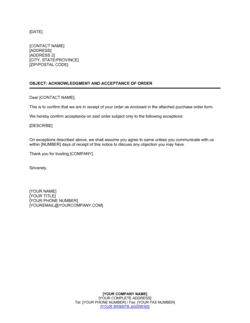
An Acknowledgment of Unsolicited Ideas is a formal business letter a company sends in response to an outside party who has submitted an idea, concept, or suggestion the company did not request. This free Word download gives you a ready-to-send letter that confirms receipt, sets clear expectations about ownership, and limits the company's liability for independently developing similar ideas in the future.
When you need it
Send it any time a member of the public, a vendor, a former employee, or an unaffiliated third party submits an unsolicited business idea, product concept, marketing suggestion, or invention disclosure β€” whether by email, mail, or through a contact form on your website.
What's inside
A receipt confirmation, a clear statement that the submission was unsolicited, a disclaimer that the company may already be working on similar ideas, an intellectual property non-obligation clause, and a courteous closing that preserves the business relationship without creating legal exposure.

What is an Acknowledgment of Unsolicited Ideas?

An Acknowledgment of Unsolicited Ideas is a formal business letter a company sends in response to receiving an idea, concept, or suggestion it did not request from an outside party β€” such as a customer, member of the public, or unaffiliated third party. The letter confirms that the submission was received, explicitly states that no confidentiality obligation or duty to compensate has been created, and puts on record that the company may independently develop similar concepts without liability to the submitter. This free Word download gives you a ready-to-send template you can personalize and dispatch in under ten minutes.

Why You Need This Document

Without a written acknowledgment, a company that reviews an unsolicited idea and later develops something similar β€” even coincidentally β€” can face implied contract or intellectual property misappropriation claims. Courts have found that the simple act of receiving and reviewing an outside submission, without a clear disclaimer, can create an enforceable confidentiality or compensation obligation. Sending a consistent, dated acknowledgment letter every time an unsolicited idea arrives eliminates that ambiguity, creates a paper trail of your standard handling process, and closes the door on claims before they form. For companies in consumer products, technology, or entertainment that regularly receive outside suggestions, a standard acknowledgment template is a basic operational safeguard β€” not a legal formality.

Which variant fits your situation?

If your situation is…Use this template
Responding to an unsolicited idea submitted via your public website or contact formAcknowledgment of Unsolicited Ideas (Standard)
Responding to an idea pitched in person at a meeting with no prior NDAAcknowledgment of Unsolicited Ideas (Post-Meeting)
Inviting third parties to submit ideas under defined termsIdea Submission Agreement
Protecting confidential information when reviewing a solicited submissionNon-Disclosure Agreement
Declining an unsolicited business proposal from a vendor or partnerRejection of Proposal Letter
Responding to an unsolicited invention or patent disclosureUnsolicited Invention Submission Policy Letter

Common mistakes to avoid

❌ Omitting the no-confidentiality disclaimer

Why it matters: Without it, a court may infer a confidentiality obligation from the simple act of receiving and reviewing the submission, particularly if the company later develops something similar.

Fix: Include an explicit statement that the submission will not be held in confidence and that no confidential relationship has been established by receipt of the letter.

❌ Using non-committal language on compensation

Why it matters: Phrases like 'we cannot guarantee payment' imply compensation is possible under certain conditions, leaving open a claim that the company benefited from the idea without paying.

Fix: State directly that the company owes no compensation, royalties, or remuneration of any kind arising from the submission.

❌ Closing the letter with an offer to 'keep the idea on file'

Why it matters: This phrase directly contradicts the no-obligation and no-confidentiality clauses, and could be used by the submitter to argue the company retained their idea for future use.

Fix: Close with a neutral goodwill statement that thanks the submitter for their interest without any suggestion of ongoing consideration or file retention.

❌ Sending the letter without a named signatory

Why it matters: An unsigned or generically signed letter appears automated and unprofessional, reducing its credibility as a formal company position and increasing the likelihood of a follow-up dispute.

Fix: Always sign with a named individual's full name and title so the letter reads as an official, considered response from the company.

The 9 key clauses, explained

Date and addressee block

In plain language: Opens the letter with the date sent and the full name and address of the person who submitted the idea.

Sample language
[DATE] | [SUBMITTER FULL NAME] | [STREET ADDRESS] | [CITY, STATE, ZIP]

Common mistake: Using a generic 'Dear Valued Customer' salutation instead of the submitter's actual name β€” this signals the letter was not reviewed and can feel dismissive, increasing the chance the person escalates.

Receipt confirmation

In plain language: Acknowledges that the company received the submission, including the date it arrived and a brief description of the idea as submitted.

Sample language
We are writing to acknowledge receipt of your submission dated [DATE], in which you described [BRIEF DESCRIPTION OF IDEA] ('the Submission').

Common mistake: Omitting the date of receipt. Without a timestamped acknowledgment, the submitter can later claim the company had access to their idea for longer than it did.

Unsolicited status statement

In plain language: Explicitly states that the company did not request or invite the submission, which is the foundation of the letter's legal protection.

Sample language
Please be advised that [COMPANY NAME] did not solicit the Submission and does not accept unsolicited ideas, suggestions, or concepts from outside parties under any implied obligation of confidentiality or compensation.

Common mistake: Softening the language to sound polite at the cost of clarity β€” phrases like 'we appreciate all ideas' can imply an obligation to evaluate or respond further.

No-confidentiality disclaimer

In plain language: States that the company will not treat the submitted idea as confidential and is under no obligation to protect it from internal use or development.

Sample language
The Submission will not be held in confidence by [COMPANY NAME], and no fiduciary or confidential relationship has been established by virtue of your submission or our receipt of it.

Common mistake: Failing to include this clause entirely. Without it, courts in some jurisdictions may infer a duty of confidentiality from the mere act of receiving and reviewing an outside submission.

Independent development notice

In plain language: Notifies the submitter that the company may be working on identical or similar ideas independently, and that any such parallel development creates no obligation to the submitter.

Sample language
[COMPANY NAME] may currently be developing, or may in the future develop, products, services, or concepts similar or identical to the Submission. Nothing in this letter creates any obligation to the submitter with respect to such development.

Common mistake: Omitting this clause when the company's product roadmap actually includes something similar β€” without it, the submitter could argue the company used their idea after receiving it.

No-compensation statement

In plain language: Makes clear that the company owes the submitter no payment, royalties, or other compensation in connection with the submission.

Sample language
[COMPANY NAME] shall not be liable for any compensation, royalties, or remuneration of any kind arising from or related to the Submission or any similar work developed by the Company.

Common mistake: Using vague language like 'we cannot promise payment' instead of a direct statement. Hedged language leaves open the possibility of a future claim.

Reference to company policy

In plain language: Points the submitter to the company's published idea submission policy, if one exists, for further context on how all unsolicited submissions are handled.

Sample language
For more information on how [COMPANY NAME] handles unsolicited submissions, please refer to our Idea Submission Policy, available at [URL / on request].

Common mistake: Referencing a policy that doesn't actually exist or is not publicly accessible β€” this can undermine the letter's credibility and expose the company to claims of inconsistent treatment.

Goodwill closing

In plain language: Closes the letter on a courteous note that thanks the submitter for their interest without implying any intent to act on the idea.

Sample language
We appreciate your interest in [COMPANY NAME] and thank you for taking the time to write to us. We wish you success with your endeavors.

Common mistake: Writing 'we will keep your idea on file for future consideration' β€” this implies the company may act on it later and directly contradicts the no-obligation and no-confidentiality clauses above.

Signature block

In plain language: Identifies the company representative sending the letter, including name, title, and contact information.

Sample language
Sincerely, [AUTHORIZED REPRESENTATIVE NAME] | [TITLE] | [COMPANY NAME] | [EMAIL] | [PHONE]

Common mistake: Leaving the signature block generic with no named individual. A letter signed by a real person with a title carries more weight and is harder to dismiss as an automated response.

How to fill it out

  1. 1

    Enter the date and submitter's contact details

    Add today's date and the full name and mailing or email address of the person who sent the idea. Use their actual name in the salutation.

    πŸ’‘ If the submission came by email, use the email address as the delivery address and note the original email date in the receipt confirmation.

  2. 2

    Describe the submission briefly and accurately

    In the receipt confirmation clause, write a one-sentence description of the idea as submitted β€” close enough to be identifiable, neutral enough not to validate it.

    πŸ’‘ Copy the submitter's own words where possible. Using their phrasing reduces the risk they later claim you mischaracterized or omitted their concept.

  3. 3

    Confirm the unsolicited status

    Keep the unsolicited status statement direct and unambiguous. Do not add qualifiers that soften the disclaimer.

    πŸ’‘ If your company has a published idea submission policy, hyperlink or reference it here so the submitter understands this is standard procedure, not a personal rejection.

  4. 4

    Include the no-confidentiality and independent development clauses

    Ensure both clauses appear in the body of the letter. These are the core legal protections β€” do not remove or abbreviate them.

    πŸ’‘ If your legal team has approved specific boilerplate for these clauses, use that exact language every time for consistency across all responses.

  5. 5

    Add the no-compensation statement

    State clearly that no payment, royalty, or remuneration is owed. Keep the language direct rather than conditional.

    πŸ’‘ Avoid any language that could be read as a contingent promise β€” 'we may consider compensation if we use your idea' creates exactly the obligation the letter is designed to prevent.

  6. 6

    Write a courteous but non-committal closing

    Thank the submitter for their interest and wish them well. Do not offer to 'stay in touch' or invite further submissions unless your policy explicitly supports that.

    πŸ’‘ A warm but clear closing reduces the chance the submitter replies with follow-up questions or escalates the matter out of frustration.

  7. 7

    Sign from a named company representative

    Identify the sender by name and title. In most cases, a communications manager, legal officer, or executive assistant is the appropriate signatory.

    πŸ’‘ Keep a copy of every sent acknowledgment in a dedicated folder β€” date-stamped records are your primary defense if the submitter later claims the company used their idea.

Frequently asked questions

What is an acknowledgment of unsolicited ideas?

An acknowledgment of unsolicited ideas is a formal letter a company sends in response to receiving an idea, concept, or suggestion it did not request from an outside party. It confirms receipt, states that no confidentiality or compensation obligation has been created, and notifies the submitter that the company may independently develop similar concepts. The letter protects the company from implied contract or intellectual property claims arising from the submission.

Why does a company need to send this letter?

Without a written acknowledgment, a company that receives and later develops something similar to an unsolicited idea may face claims of misappropriation or implied contract. Courts in several jurisdictions have found that reviewing an outside submission without disclaiming obligation can create an enforceable duty. Sending a clear, consistent acknowledgment letter eliminates that ambiguity and creates a dated record of the company's position.

Does this letter mean the company won't use the submitted idea?

Not necessarily β€” the letter means the company is not obligated to pay for or keep confidential the submitted idea. If the company was already developing something similar, or independently develops a similar concept after the submission, the letter establishes that the submitter has no claim to compensation or credit. The letter does not prevent the company from using publicly known or independently developed ideas.

Is this letter legally binding?

This letter is a statement of the company's position, not a bilateral contract. It does not require the submitter's signature to be effective. Its value is evidentiary β€” it creates a dated, written record that the company disclaimed obligation at the time of receipt. A well-drafted letter is generally effective at defeating implied contract claims in most jurisdictions, though specific enforceability depends on local law.

Should the letter be sent even if the company has no interest in the idea?

Yes β€” especially in that case. If the company later develops something that resembles the submission, even coincidentally, a submitter who never received an acknowledgment may claim their idea was used. Sending the letter every time an unsolicited idea is received creates a consistent paper trail that demonstrates the company's standard handling process.

What's the difference between this letter and an NDA?

An NDA creates a mutual confidentiality obligation β€” it protects the submitter's idea from being disclosed or used without permission. This acknowledgment letter does the opposite: it disclaims any confidentiality obligation on the company's part and limits liability. NDAs are appropriate when a company has solicited a submission and wants to evaluate it seriously. This letter is appropriate when the submission was unsolicited and the company wants to protect itself from IP claims.

How quickly should this letter be sent after receiving an idea?

Send it as soon as practicable after the submission arrives β€” ideally within 5 to 10 business days. Prompt response strengthens the company's position by establishing a clear date on which the company disclaimed obligation. A delayed response can imply the company evaluated the idea before deciding whether to acknowledge it, which weakens the disclaimer.

Do I need a lawyer to send this letter?

For routine unsolicited submissions from members of the public or individual consumers, a well-drafted template is generally sufficient. Consider having a lawyer review the letter if the submission involves a patent-pending invention, the submitter has explicitly claimed proprietary rights, or the company is in a highly competitive industry where IP disputes are common.

How this compares to alternatives

vs Non-Disclosure Agreement

An NDA creates a binding confidentiality obligation protecting the submitter's idea from being disclosed or used without permission. An acknowledgment of unsolicited ideas does the opposite β€” it disclaims confidentiality. Use an NDA when you have solicited a submission and intend to evaluate it seriously; use this acknowledgment when the submission arrived uninvited and you need to limit IP exposure.

vs Idea Submission Agreement

An idea submission agreement is a bilateral contract signed by both the submitter and the company before the idea is shared. It sets the terms under which the company will review the idea, typically disclaiming compensation and confidentiality upfront. This acknowledgment letter is a unilateral response sent after an unsolicited idea has already arrived, without requiring the submitter's signature.

vs Rejection of Proposal Letter

A rejection of proposal letter declines a solicited business proposal β€” such as a vendor bid or partnership offer β€” and typically includes reasons for the decision. An acknowledgment of unsolicited ideas does not evaluate or decline the idea on its merits; it simply confirms receipt and disclaims obligation. The two letters address different triggering events and serve different purposes.

vs Cease and Desist Letter

A cease and desist letter is sent when IP rights have already been violated and demands the recipient stop infringing activity. An acknowledgment of unsolicited ideas is sent proactively, before any dispute arises, to prevent IP claims from forming in the first place. The acknowledgment is defensive and relationship-preserving; the cease and desist is adversarial.

Industry-specific considerations

Consumer Products

High volumes of customer product suggestions submitted via social media, email, and web forms make a standard acknowledgment letter essential for consistent IP liability management.

Technology / SaaS

Feature requests and product ideas from users and developers frequently arrive outside formal channels, and the rapid pace of parallel internal development makes clear disclaimers especially important.

Entertainment and Media

Studios, publishers, and broadcasters receive unsolicited scripts, concepts, and pitches regularly and face elevated risk of misappropriation claims without a documented acknowledgment process.

Manufacturing

Suppliers and members of the public sometimes submit process improvement or product design ideas, and companies with active R&D pipelines need to document independent development clearly.

Template vs pro β€” what fits your needs?

PathBest forCostTime
Use the templateCompanies responding to routine unsolicited submissions from members of the public or individual consumersFree5–10 minutes per letter
Template + professional reviewCompanies in IP-sensitive industries or responding to submissions that reference a patent or explicit ownership claim$150–$400 for a one-time legal review of your standard template1–3 days
Custom draftedLarge enterprises or media companies handling high volumes of unsolicited pitches who need a tailored policy and letter suite$500–$2,000 for a lawyer-drafted policy and accompanying letter templates1–2 weeks

Glossary

Unsolicited Idea
A concept, suggestion, invention, or creative work submitted to a company by an outside party without the company having requested or invited the submission.
Intellectual Property (IP)
Creations of the mind β€” inventions, designs, brand names, written works β€” that can be owned and protected under patent, copyright, trademark, or trade secret law.
Non-Obligation Clause
A statement in the acknowledgment letter declaring that the company is under no duty to evaluate, compensate for, or keep confidential the submitted idea.
Prior Art
Existing knowledge, products, or disclosures that predate a submission and may independently demonstrate that a company was already working on a similar idea.
Implied Contract
An unwritten agreement courts may infer from conduct or communications β€” such as reviewing an idea without disclaiming obligation β€” that creates enforceable duties.
Idea Submission Policy
A company's documented rules governing how third-party idea submissions are received, evaluated, and handled, often referenced in the acknowledgment letter.
Disclosure
The act of revealing information, in this context the submission of an idea or concept to a company by an external party.
Waiver
A voluntary relinquishment of a known right β€” here, the submitter's potential right to compensation or confidentiality by accepting the acknowledgment terms.
Good Faith
An honest, fair-dealing intention in conducting a transaction, used in this context to convey that the company's response is genuine and not dismissive.

Part of your Business Operating System

This document is one of 3,000+ business & legal templates included in Business in a Box.

  • Fill-in-the-blanks β€” ready in minutes
  • 100% customizable Word document
  • Compatible with all office suites
  • Export to PDF and share electronically

Create your document in 3 simple steps.

From template to signed document β€” all inside one Business Operating System.
1
Download or open template

Access over 3,000+ business and legal templates for any business task, project or initiative.

2
Edit and fill in the blanks with AI

Customize your ready-made business document template and save it in the cloud.

3
Save, Share, Send, Sign

Share your files and folders with your team. Create a space of seamless collaboration.

Save time, save money, and create top-quality documents.

β˜…β˜…β˜…β˜…β˜…

"Fantastic value! I'm not sure how I'd do without it. It's worth its weight in gold and paid back for itself many times."

Managing Director Β· Mall Farm
Robert Whalley
Managing Director, Mall Farm Proprietary Limited
β˜…β˜…β˜…β˜…β˜…

"I have been using Business in a Box for years. It has been the most useful source of templates I have encountered. I recommend it to anyone."

Business Owner Β· 4+ years
Dr Michael John Freestone
Business Owner
β˜…β˜…β˜…β˜…β˜…

"It has been a life saver so many times I have lost count. Business in a Box has saved me so much time and as you know, time is money."

Owner Β· Upstate Web
David G. Moore Jr.
Owner, Upstate Web

Run your business with a system β€” not scattered tools

Stop downloading documents. Start operating with clarity. Business in a Box gives you the Business Operating System used by over 250,000 companies worldwide to structure, run, and grow their business.

Free Forever PlanΒ Β·Β No credit card required