1
Define the scope and transfer types your organization uses
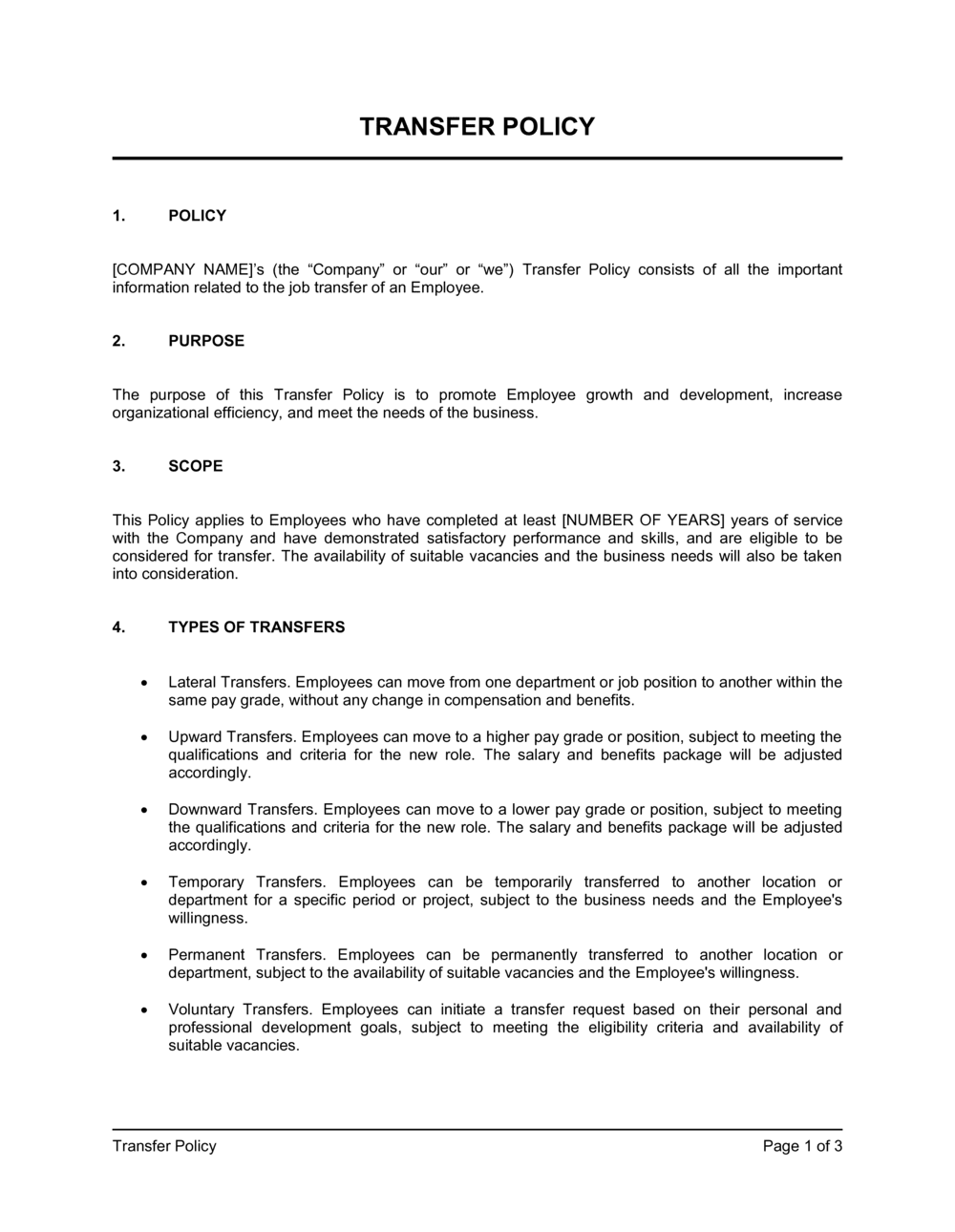
Start by listing every type of transfer that occurs in your business — lateral, promotional, geographic, temporary, and involuntary. Confirm which business units and employee categories the policy will cover.
💡 Talk to your payroll and IT teams before drafting — they often manage transfer-related tasks (pay changes, access updates) without a formal process and can identify gaps you haven't considered.
2
Set eligibility criteria that balance control with mobility
Define the minimum tenure, performance rating, and disciplinary standing required. Consider whether eligibility criteria should vary by role level or department.
💡 A 12-month tenure minimum is standard, but consider reducing it to 6 months for high-growth roles where internal mobility is a retention tool.
3
Map the approval workflow with named roles, not individuals
Document each approval step, the responsible role (e.g., 'HR Business Partner', not 'Jane Smith'), the decision timeframe, and what happens if a step is not completed within the target window.
💡 Add a default-approve rule: if a step is not completed within the target timeframe and the delay is not justified in writing, the request automatically advances to the next step.
4
Specify notice periods by transfer type
Assign a standard notice period to each transfer category. Lateral transfers in operational roles may need only 2–3 weeks; senior technical transfers may require 6–8 weeks for proper knowledge handover.
💡 State the notice period in calendar days, not business days — calendar days are unambiguous and harder to dispute.
5
Write the compensation and benefits treatment for each transfer type
For each category, state explicitly what happens to base pay, bonus eligibility, PTO balance, benefits enrollment, and seniority date.
💡 If your organization uses pay bands, state whether a transfer triggers a band review or locks to the new band minimum — ambiguity here creates the most common payroll disputes.
6
Create or reference an asset and access handover checklist
Either attach a checklist directly to the policy or reference a numbered form. The checklist should cover physical equipment, system accounts, shared drives, project documentation, and client or account briefing notes.
💡 Include IT deprovisioning as a mandatory checklist item with a specific completion deadline — this is the step most frequently skipped.
7
Define the exception and appeals process
Name the role with authority to approve exceptions, set a written appeal deadline for denied requests (10 business days is common), and specify the response timeframe.
💡 An appeals process reduces informal escalations to the CEO or founders — document it clearly and communicate it to managers so they don't feel bypassed when employees use it.
8
Distribute, communicate, and set a review date
Publish the final policy in your HRIS or company intranet, notify all people managers by email, and set a calendar reminder to review the policy annually or after any significant organizational change.
💡 Include a version number and effective date in the document header — this prevents confusion when you update the policy and managers are referencing an old version.