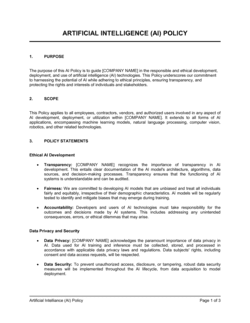
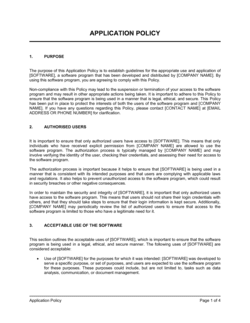
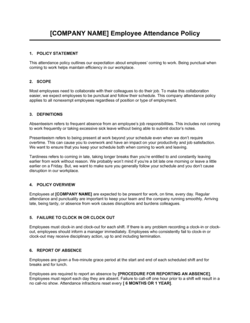
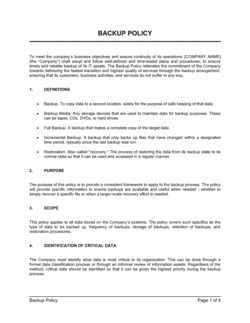
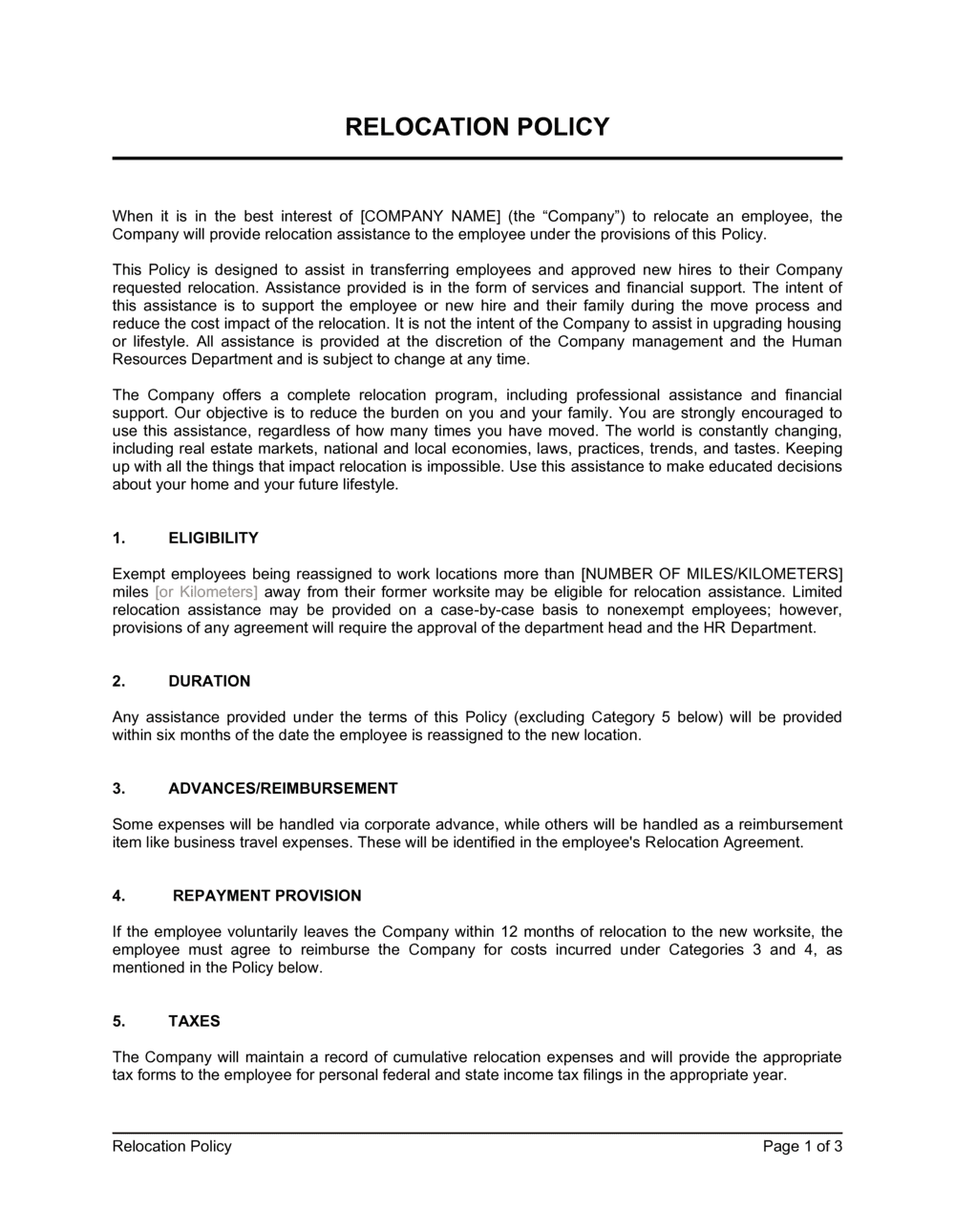
Relocation Policy Template

Free Word download β€’ Edit online β€’ Save & share with Drive β€’ Export to PDF

3 pagesβ€’20–30 min to fillβ€’Difficulty: Standard
Learn more ↓
FreeRelocation Policy Template

At a glance

What it is
A Relocation Policy is a formal HR and operations document that defines which employees qualify for moving assistance, what expenses the company will cover, how reimbursements are processed, and what repayment obligations apply if the employee leaves within a defined period. This free Word download gives you a structured, editable template you can tailor to your budget and workforce needs, then export as PDF to distribute to HR teams, hiring managers, and new hires.
When you need it
Use it when your organization regularly moves employees across cities, states, or countries β€” or when you want to standardize ad hoc relocation deals into a single written policy that applies consistently across all roles and levels.
What's inside
Eligibility criteria, benefit tiers by role level, covered and excluded expense categories, reimbursement procedures, lump-sum payment rules, repayment agreements, tax gross-up guidance, and a temporary housing allowance schedule.

What is a Relocation Policy?

A Relocation Policy is a formal HR and operations document that defines the terms under which a company provides financial assistance to employees who must move their primary residence for work. It establishes who qualifies, what expenses are covered, how benefits are structured by role level, how reimbursements are submitted and approved, and what repayment obligations apply if the employee leaves the company within a defined period after the move. Rather than negotiating each relocation individually β€” producing inconsistent deals and unpredictable costs β€” a written policy creates a repeatable, auditable framework that HR teams, hiring managers, and finance can apply uniformly across every eligible hire and transfer.

Why You Need This Document

Without a written relocation policy, every out-of-town hire becomes a separate negotiation where the outcome depends on who asked, how urgently the role needed to be filled, and how assertive the candidate was β€” not on any principled framework. The result is a mix of overpromised packages, underfunded moves, and repayment disputes that land in HR's lap months after the employee has already started. Relocation spend without a defined cap and clawback clause has no floor: storage fees, luxury temporary housing, and vehicle shipping claims add up quickly when employees have no written guidance on what is and is not covered. A clear, tiered policy with explicit exclusions, a firm submission deadline, and a pro-rated repayment schedule protects the company's budget, gives candidates a transparent offer component to evaluate, and gives HR a defensible position when any individual claim exceeds what was intended. This template gives you a complete, editable framework you can tailor to your workforce in under three hours.

Which variant fits your situation?

If your situation is…Use this template
Domestic moves within the same countryDomestic Relocation Policy
International transfers involving visa and tax complexityInternational Relocation Policy
Providing a fixed cash payment instead of expense reimbursementLump-Sum Relocation Policy
Temporary assignments lasting 3–12 monthsTemporary Assignment Policy
New hires relocating from outside the local marketNew Hire Relocation Agreement
Executive or C-suite relocation with enhanced benefitsExecutive Relocation Policy
Capturing the repayment obligation in a standalone signed documentRelocation Repayment Agreement

Common mistakes to avoid

❌ No minimum distance threshold

Why it matters: Without a mileage floor, employees request assistance for moves of 5–10 miles that cost the company real money without solving any talent-access problem.

Fix: Set a minimum of 50 miles between the employee's current residence and new work location as the qualifying threshold, and state it explicitly in the eligibility section.

❌ Omitting an expense submission deadline

Why it matters: Employees submit receipts months after the move, complicating tax reporting, disrupting year-end budget close, and making it impossible to flag out-of-policy spending in time to correct it.

Fix: Set a firm 60-day submission window from the move completion date and include automatic forfeiture of unclaimed amounts after the deadline.

❌ A flat repayment clause with no pro-rated schedule

Why it matters: Requiring 100% repayment at month 23 of a 24-month window is widely seen as punitive and is difficult to enforce β€” employees often simply resign and dispute it.

Fix: Use a sliding scale β€” 100% in Year 1, 50% in Year 2 β€” with zero obligation after the window closes. A graduated schedule is more consistently honored and easier to enforce.

❌ No explicit exclusions list

Why it matters: A policy that lists covered expenses but says nothing about exclusions leaves employees free to interpret silence as approval for vehicle shipping, pet transport, and luxury storage.

Fix: Add a dedicated exclusions section naming at least five expense categories the company will not cover, regardless of tier or circumstance.

❌ Promising a tax gross-up without defining the percentage

Why it matters: Payroll applies different rates to different employees for the same move, creating inequitable outcomes and exposing the company to complaints and potential discrimination claims.

Fix: Define the gross-up percentage by tier in the policy and include a worked example so employees and payroll staff apply it consistently.

❌ No written acknowledgment before the move

Why it matters: If a repayment dispute arises, the company's ability to enforce the clawback depends on proving the employee understood and agreed to the terms before incurring expenses.

Fix: Require a signed relocation acknowledgment form β€” separate from the employment contract β€” before authorizing any relocation spend.

The 10 key sections, explained

Policy purpose and scope

Eligibility criteria

Benefit tiers

Covered and excluded expenses

Lump-sum option

Reimbursement process

Repayment agreement

Tax treatment and gross-up

Temporary housing and house-hunting trips

Policy administration and exceptions

How to fill it out

  1. 1

    Define your eligible employee population

    Decide whether the policy covers new hires, existing employees transferring internally, or both. Set the minimum move distance that triggers eligibility and confirm which employment types qualify.

    πŸ’‘ A 50-mile minimum is the most common threshold in North American corporate policies and aligns with historical IRS guidance on qualified moving expenses.

  2. 2

    Set benefit tiers aligned to your org structure

    Map your role levels to two or three tiers with distinct dollar caps. Pull two or three comparable job offers from your recent hiring activity to calibrate whether the caps are competitive.

    πŸ’‘ Benchmark against published relocation surveys (WorldatWork, Worldwide ERC) annually β€” caps that were competitive three years ago may now be below market for key talent markets.

  3. 3

    Build the covered and excluded expense list

    List every category you are willing to reimburse with a dollar cap per category. Then explicitly list at least five common expense types you will not cover. Both lists are equally important.

    πŸ’‘ Storage is the single most common source of relocation budget overruns β€” cap it at 30 days regardless of tier.

  4. 4

    Decide on lump-sum versus reimbursement

    Choose whether each tier uses itemized reimbursement, a lump-sum payment, or optionally either. Set the lump-sum amounts and confirm they are mutually exclusive with itemized claims.

    πŸ’‘ Lump-sum programs reduce HR administration time by 60–70% but shift the risk of cost overruns to the employee β€” suitable for tiers where you want to cap exposure cleanly.

  5. 5

    Draft the repayment clawback schedule

    Set the repayment window (typically 12–24 months), the pro-rated schedule (e.g., 100% in Year 1, 50% in Year 2), and the trigger events (voluntary resignation and termination for cause).

    πŸ’‘ Exclude involuntary termination without cause from repayment triggers β€” courts have declined to enforce clawbacks against employees laid off through no fault of their own.

  6. 6

    Address tax treatment and gross-up eligibility

    Confirm which payments are taxable under current law in your jurisdiction. Decide which tiers receive a gross-up and at what percentage, and document this in the policy so payroll processes it consistently.

    πŸ’‘ Consult your payroll provider before finalizing the gross-up percentage β€” the all-in tax rate varies by state, province, and income level and affects your true cost per relocation significantly.

  7. 7

    Set submission deadlines and approval workflows

    Define the expense submission window after move completion, the required documentation, and the processing timeline. Name the approval authority for out-of-policy exceptions.

    πŸ’‘ A 60-day submission deadline is the practical standard β€” it closes the tax year cleanly for most moves while giving employees enough time after settling in.

  8. 8

    Distribute and acknowledge before the move begins

    Send the policy to the employee before they incur any expenses and obtain written acknowledgment. Attach the repayment agreement as a separate signed exhibit.

    πŸ’‘ Document that the employee received and acknowledged the policy β€” this is your primary defense if a repayment dispute reaches arbitration or small-claims court.

Frequently asked questions

What is a relocation policy?

A relocation policy is a formal HR document that defines the terms under which a company assists employees who must move their primary residence for work. It covers who qualifies, what expenses are reimbursed or paid as a lump sum, what the dollar caps are by role level, and what repayment obligations apply if the employee leaves within a defined period. Without a written policy, every relocation becomes a one-off negotiation that produces inconsistent outcomes and unpredictable costs.

What expenses should a relocation policy cover?

A standard policy covers household goods transport and packing, one house-hunting trip for the employee and spouse or domestic partner, temporary housing for up to 30 days, travel to the new location, and a lease-break penalty up to a defined cap. Common exclusions include vehicle shipping, pet transport, storage beyond 30 days, and personal travel unrelated to the move. Defining both lists explicitly is equally important to controlling costs.

What is the difference between a reimbursement policy and a lump-sum relocation?

A reimbursement policy pays actual documented expenses up to a cap β€” the employee submits receipts and the company processes claims. A lump-sum relocation gives the employee a fixed cash payment to manage their own move however they choose, with no itemized accounting required. Lump-sum programs reduce HR administration significantly but transfer cost-overrun risk to the employee. Many companies offer a choice by tier.

How long should a relocation repayment window be?

Most corporate policies set a repayment window of 12 to 24 months from the move date. A 12-month window with 100% repayment is common for lower-cost moves. Higher-value packages often use a 24-month window with a sliding scale β€” typically 100% in Year 1 and 50% in Year 2. Windows longer than 24 months are difficult to enforce and can create goodwill issues with otherwise productive employees.

Are relocation reimbursements taxable income?

Under current US federal tax law, most employer-paid relocation benefits are treated as taxable income to the employee, reportable on Form W-2. The Tax Cuts and Jobs Act of 2017 suspended the exclusion for qualified moving expense reimbursements through 2025 for most employees. Some states follow federal treatment; others have their own rules. Employers typically address this by offering a tax gross-up for senior employees or by factoring the tax cost into the lump-sum calculation.

What is a tax gross-up in a relocation policy?

A tax gross-up is an additional payment the employer makes to cover the income tax the employee owes on taxable relocation benefits. For example, if $10,000 in relocation assistance is taxable and the employee's marginal rate is 30%, the employer grosses up by paying an additional $4,286 so the employee nets the full $10,000 after tax. Gross-ups are typically reserved for Tier 2 and Tier 3 (manager and above) employees because they add 25–45% to the effective cost of each relocation at those levels.

Does a relocation policy need to be a separate document from the employee handbook?

It can be a standalone document or an appendix to the employee handbook, but it should always be referenced in the handbook with a pointer to the current version. A standalone policy is easier to update when benefit caps or tax rules change β€” you can revise and redistribute it without reissuing the entire handbook. Either way, employees should receive and sign an acknowledgment specific to their relocation before any expenses are authorized.

How often should a relocation policy be updated?

Review the policy at minimum once a year during your HR policy audit cycle. Trigger an immediate review any time tax law changes affecting relocation benefits, your benefit caps fall more than 15% below market (check WorldatWork or Worldwide ERC survey data), or you open offices in new states or countries with different legal requirements. Stale relocation policies are among the most common sources of employee relations disputes during onboarding.

Can a company enforce a relocation repayment clause if the employee is laid off?

Generally, courts and arbitrators decline to enforce repayment clauses against employees who are involuntarily terminated without cause β€” the reasoning being that the employee cannot fairly be held responsible for a separation they did not initiate. Repayment obligations are typically enforceable only for voluntary resignation and termination for cause. Your policy should state this distinction explicitly to avoid disputes and potential wrongful-deduction claims.

What is a reasonable minimum distance to trigger relocation assistance?

Fifty miles is the most widely used threshold in North American corporate relocation policies. It aligns with historical IRS guidance on qualified moving expense deductions and is generally understood by employees and managers as a meaningful change of work location. Some companies use 35 miles for high-cost urban markets where a shorter commute change is genuinely disruptive. Anything under 25 miles is difficult to defend as a true relocation need.

How this compares to alternatives

vs Offer letter with relocation clause

An offer letter may include a brief relocation clause committing the company to 'reasonable moving assistance,' but it lacks the specificity needed to manage costs or enforce repayment. A relocation policy defines every term β€” caps, tiers, exclusions, clawback schedule β€” and applies consistently to every eligible employee. For repeat hiring in multiple markets, the policy replaces dozens of inconsistent offer-letter negotiations.

vs Relocation repayment agreement

A repayment agreement is a single-purpose signed document capturing only the clawback obligation β€” what the employee owes and when. A relocation policy is the governing framework that defines eligibility, benefits, and process for the entire program. The repayment agreement is typically an exhibit to the policy, signed by each relocating employee at the time their move is approved.

vs Employee handbook

An employee handbook covers a broad range of workplace policies in summary form. Relocation benefits are typically referenced in the handbook with a pointer to the standalone relocation policy for detail. The policy can be updated independently as benefit caps or tax rules change without triggering a full handbook revision β€” an important operational advantage.

vs Expense reimbursement policy

An expense reimbursement policy governs routine business expenses β€” travel, meals, and supplies β€” with rolling submission and approval. A relocation policy covers a one-time, high-value event with distinct tiers, tax implications, and a repayment obligation that standard expense policies do not address. Submitting relocation claims through a standard expense policy without a dedicated framework creates budget, tax, and compliance problems.

Industry-specific considerations

Technology / SaaS

Remote-first companies increasingly use lump-sum policies when requiring employees to relocate to hub cities, with higher Tier 3 caps to attract senior engineering and product talent from competitive markets.

Healthcare

Hospitals and health systems use tiered relocation policies heavily for physician, nursing, and specialist recruitment, often combining relocation assistance with sign-on bonuses and clawback windows of 24–36 months.

Financial Services

Global banks and insurance firms manage high volumes of international transfers, requiring relocation policies that address home-country tax equalization, cost-of-living adjustments, and foreign housing allowances.

Manufacturing

Plant openings and facility consolidations drive bulk employee relocations β€” manufacturing companies often negotiate volume rates with move management companies and use a standardized lump-sum model to control per-head cost.

Professional Services

Consulting and accounting firms rotate staff between offices frequently, making a lightweight temporary-assignment policy paired with a full relocation policy essential for distinguishing short rotations from permanent transfers.

Retail / Hospitality

Regional managers and district directors relocate frequently with store openings and market expansions β€” a tiered policy with a low-cap Tier 1 and a more generous management tier keeps costs predictable across high-turnover relocation events.

Template vs pro β€” what fits your needs?

PathBest forCostTime
Use the templateHR teams and small business owners standardizing relocation benefits for domestic hires without complex tax or international dimensionsFree2–3 hours
Template + professional reviewCompanies with international transfers, multi-state tax obligations, or executive-level packages with gross-up requirements$300–$800 (HR consultant or employment attorney review)2–5 business days
Custom draftedMultinational employers managing high-volume global mobility programs with tax equalization, cost-of-living adjustments, and currency considerations$2,000–$8,000 (global mobility specialist or law firm)2–6 weeks

Glossary

Lump-Sum Relocation
A single fixed cash payment given to the employee to manage their own move, with no itemized reimbursement or company-arranged services.
Repayment Clawback
A contractual obligation requiring an employee to repay some or all relocation assistance if they leave the company within a defined period β€” typically 12 to 24 months.
Tax Gross-Up
An additional payment the employer makes to cover the income tax the employee owes on taxable relocation benefits, so the employee nets the full intended benefit.
Eligible Expenses
The specific moving costs the company agrees to reimburse, such as household goods transport, temporary housing, and travel to the new location.
Benefit Tier
A level in the relocation policy that determines the total benefit cap and covered services β€” typically differentiated by role seniority (e.g., individual contributor, manager, executive).
Household Goods Shipment
The physical transport of an employee's personal belongings from the origin to the destination, arranged either by a company-contracted mover or reimbursed by receipt.
Temporary Housing Allowance
A daily or monthly rate the company pays for short-term accommodation while the employee searches for permanent housing at the destination.
Cost-of-Living Adjustment (COLA)
A salary supplement provided when the destination city has meaningfully higher living costs than the origin, designed to maintain the employee's real purchasing power.
Destination Services
Support provided at the new location β€” typically area orientation, school search, and home-finding assistance β€” often delivered by a third-party relocation management company.
Move Management Company
A third-party vendor that coordinates household goods shipping, temporary housing, and destination services on behalf of the employer under a corporate rate agreement.

Part of your Business Operating System

This document is one of 3,000+ business & legal templates included in Business in a Box.

  • Fill-in-the-blanks β€” ready in minutes
  • 100% customizable Word document
  • Compatible with all office suites
  • Export to PDF and share electronically

Create your document in 3 simple steps.

From template to signed document β€” all inside one Business Operating System.
1
Download or open template

Access over 3,000+ business and legal templates for any business task, project or initiative.

2
Edit and fill in the blanks with AI

Customize your ready-made business document template and save it in the cloud.

3
Save, Share, Send, Sign

Share your files and folders with your team. Create a space of seamless collaboration.

Save time, save money, and create top-quality documents.

β˜…β˜…β˜…β˜…β˜…

"Fantastic value! I'm not sure how I'd do without it. It's worth its weight in gold and paid back for itself many times."

Managing Director Β· Mall Farm
Robert Whalley
Managing Director, Mall Farm Proprietary Limited
β˜…β˜…β˜…β˜…β˜…

"I have been using Business in a Box for years. It has been the most useful source of templates I have encountered. I recommend it to anyone."

Business Owner Β· 4+ years
Dr Michael John Freestone
Business Owner
β˜…β˜…β˜…β˜…β˜…

"It has been a life saver so many times I have lost count. Business in a Box has saved me so much time and as you know, time is money."

Owner Β· Upstate Web
David G. Moore Jr.
Owner, Upstate Web

Run your business with a system β€” not scattered tools

Stop downloading documents. Start operating with clarity. Business in a Box gives you the Business Operating System used by over 250,000 companies worldwide to structure, run, and grow their business.

Start freeΒ Β·Β No credit card required