1
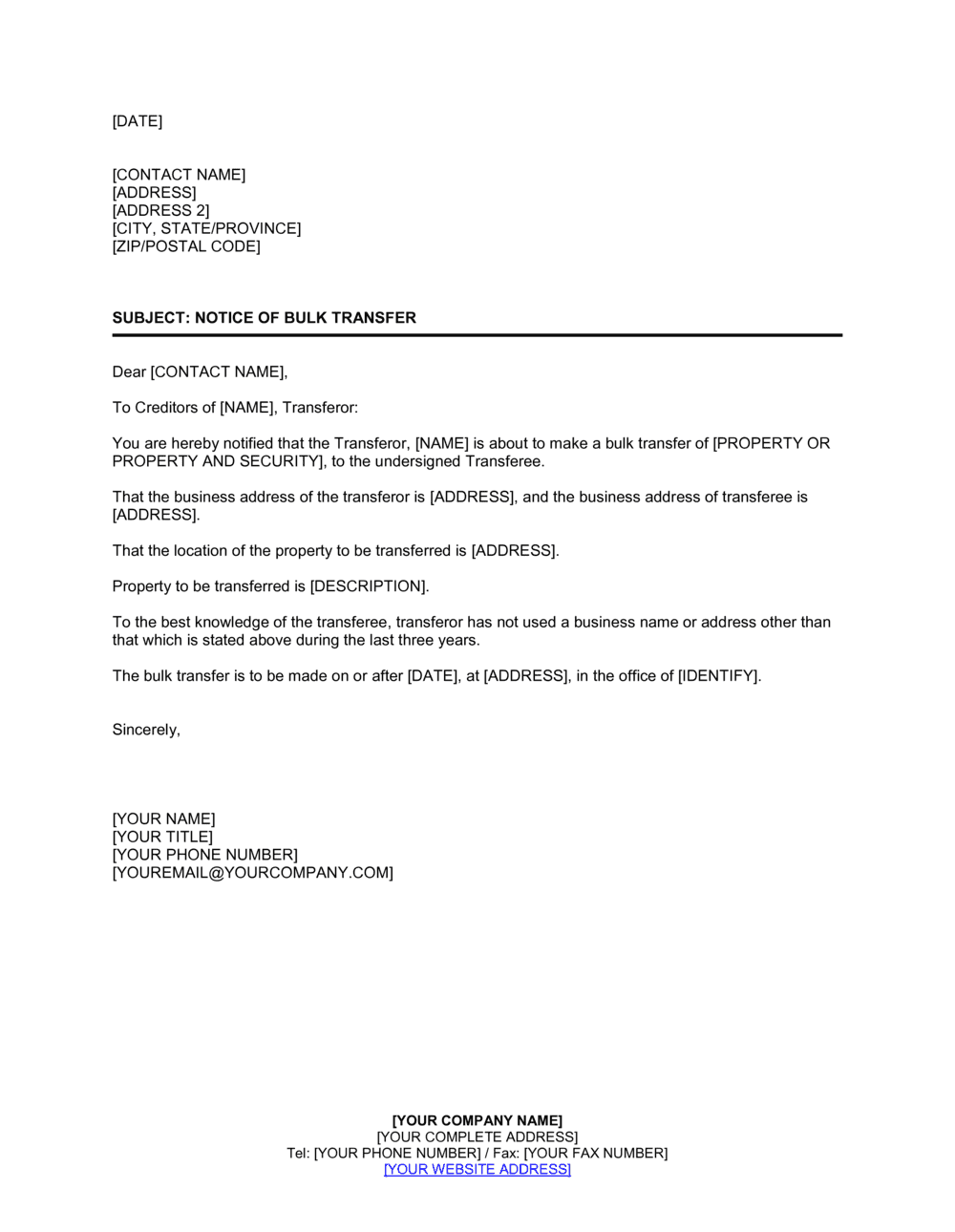
Identify the transferor's full legal entity name and address
Enter the registered legal name of the business transferring the assets, its address, and a brief description of the nature of the business. Cross-reference the entity's registration documents to confirm the exact legal name.
💡 If the business operates under a trade name, include both the registered name and the DBA to avoid any ambiguity for creditors reviewing their records.
2
Compile the list of creditors to receive notice
Gather a complete list of all known creditors — secured lenders, trade suppliers, landlords, and service providers — including their current addresses. Missing even one significant creditor can expose the transferor to claims after closing.
💡 Pull the creditor list from accounts-payable records, loan agreements, and any outstanding invoices dated within the last 12 months.
3
Describe the assets being transferred
Write a clear description of the asset categories included in the transfer — inventory, equipment, fixtures, vehicles, or goodwill. Attach a numbered Asset Schedule for a detailed itemization.
💡 A detailed Asset Schedule eliminates post-closing disputes about what was included and provides a reference point for both buyer and seller.
4
Identify the transferee by full legal name and address
Enter the full registered legal name and mailing address of the entity or individual receiving the assets. This allows creditors to contact the transferee directly if needed.
💡 Confirm the transferee's legal name from the signed purchase agreement or letter of intent before inserting it into the notice.
5
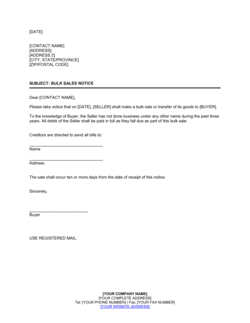
Set the transfer date with adequate advance notice
Enter the anticipated completion date of the transfer and count backward to ensure the notice is issued with sufficient lead time. Requirements vary — check whether any applicable statute, contract, or franchisor agreement specifies a minimum notice period.
💡 Even where no statutory requirement applies, issuing notice at least 10–15 business days before the transfer date is considered best practice.
6
Disclose outstanding obligations and consideration
State the approximate total of the transferor's known debts to creditors and the total consideration being paid for the assets. Review accounts-payable records and outstanding loan balances before completing this section.
💡 Round-number estimates are acceptable if exact figures are unavailable at notice time — note them as approximate and commit to providing final figures on request.
7
Add contact information and send
Include the name, email, and phone number of a contact who can answer creditor questions. Send the notice by a method that creates a delivery record — certified mail, email with read receipt, or courier — and retain proof of delivery.
💡 Retain copies of all sent notices and proof-of-delivery records in the deal file — they may be needed to demonstrate compliance if a creditor raises a claim after closing.