The 7 Most Important Things For Achieving Goals Template

Free Word download β€’ Edit online β€’ Save & share with Drive β€’ Export to PDF

3 pagesβ€’25–30 min to fillβ€’Difficulty: Standardβ€’Signature requiredβ€’Legal review recommended
Learn more ↓
FreeThe 7 Most Important Things For Achieving Goals Template

At a glance

What it is
The 7 Most Important Things For Achieving Goals is a structured planning and accountability document that formalizes the commitments, milestones, resources, and review cadences needed to move from intention to measurable outcome. This free Word download gives individuals, teams, and organizations a binding framework they can edit online and export as PDF to align stakeholders and track progress against defined objectives.
When you need it
Use it when launching a new business initiative, setting annual performance targets, entering a coaching or mentoring relationship, or any time you need written accountability for a goal that has material consequences if missed. It is especially valuable when multiple parties β€” a manager and employee, a coach and client, or business partners β€” need to agree on what success looks like and who is responsible for each element.
What's inside
The document covers seven core components: a clearly defined goal statement, the specific reasons and motivations behind the goal, an action plan with sequenced milestones, resource and support requirements, identification of potential obstacles and mitigation strategies, an accountability structure with named parties, and a review and measurement schedule with defined success criteria.

What is a Goal Achievement Plan?

A Goal Achievement Plan is a structured planning and accountability document that formalizes the seven core elements required to move from a stated intention to a measurable outcome: a precise goal definition, documented motivation, a sequenced action plan with milestones, an inventory of required resources, a written obstacle mitigation strategy, a named accountability structure, and a formal review and measurement schedule. Unlike an informal list of intentions, this document is signed by all parties, creating a written record of mutual commitment that can be referenced in performance reviews, coaching evaluations, and business planning cycles. The seven-component framework reflects what goal research consistently identifies as the difference between goals that get achieved and goals that get abandoned.

Why You Need This Document

Without a formalized goal plan, three predictable failures occur: goals remain vague enough to rationalize non-completion, accountability erodes when no specific person is named responsible, and obstacles derail progress because no response was agreed in advance. In employment and coaching contexts, the absence of a signed goal plan means disputes about whether targets were met default to subjective recollection rather than documented fact. For business owners and leadership teams, undocumented goals produce misaligned execution β€” everyone pursues a slightly different version of the objective. This template gives individuals, managers, coaches, and organizations a single document that captures all seven components, requires signatures before work begins, and creates the paper trail needed to evaluate outcomes honestly at every review point.

Which variant fits your situation?

If your situation is…Use this template
Setting individual employee performance goals tied to a review cycleEmployee Performance Improvement Plan
Defining quarterly company-wide objectives and key resultsOKR Planning Template
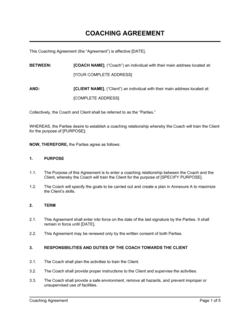
Documenting a coaching engagement with measurable outcomesCoaching Agreement
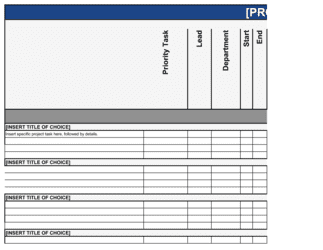
Setting goals for a specific project with deliverables and deadlinesProject Plan
Tracking personal or professional development goals over 12 monthsPersonal Development Plan
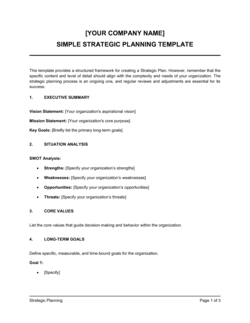
Aligning a leadership team around strategic annual prioritiesStrategic Planning Template
Establishing milestones for a new product launchProduct Launch Plan

Common mistakes to avoid

❌ Writing goals in vague, unmeasurable language

Why it matters: A goal like 'improve team performance' has no completion state β€” no one can determine whether it was achieved, making accountability impossible and disputes inevitable.

Fix: Rewrite every goal with a specific numeric target and a deadline: 'increase team output to 95 closed tickets per week by September 30.'

❌ Omitting the obstacle identification section

Why it matters: When an obstacle arises with no pre-agreed response, parties negotiate under pressure β€” typically resulting in watered-down goals or informal renegotiations that undermine the plan's integrity.

Fix: Complete the obstacle section for every goal plan, even when the path looks clear. Documenting 'no significant obstacles' still requires the exercise of thinking through the risks.

❌ Assigning accountability to a role rather than a named individual

Why it matters: When the person in the role changes β€” through promotion, departure, or restructuring β€” the accountability obligation becomes unassigned and oversight lapses without any formal record of the gap.

Fix: Name the specific individual, not their title. Add an amendment clause that requires a signed update if the accountability partner changes.

❌ Allowing informal verbal amendments to the action plan

Why it matters: Undocumented changes make it impossible to reconstruct the original goal, the changes made, and the reasons for them β€” turning a performance review or coaching dispute into a credibility contest.

Fix: Enforce the amendment clause: any change to milestones, deadlines, or resource commitments must be documented in a signed written addendum before taking effect.

❌ Skipping signatures because the document feels informal

Why it matters: An unsigned goal plan is a suggestion, not an agreement. Without signatures, neither party has a documented basis for accountability claims, and the document has no evidentiary weight in a dispute.

Fix: Treat the signature block as mandatory regardless of the relationship between parties. Even internal HR documents carry more weight when signed.

❌ Setting review dates without defining what data will be reviewed

Why it matters: Without a defined dataset, reviews default to anecdotal progress updates β€” subjective, inconsistent, and impossible to compare across periods.

Fix: Specify the exact metrics, reports, or observable outputs that will be reviewed at each session and document the results in a written log after every check-in.

The 10 key clauses, explained

Goal Definition Statement

In plain language: States the goal in precise, measurable terms β€” what will be achieved, by how much, and by when.

Sample language
[PARTY NAME] commits to achieving [SPECIFIC OUTCOME] by [DATE], as measured by [METRIC OR OBSERVABLE CONDITION]. The baseline at the time of this agreement is [CURRENT METRIC].

Common mistake: Writing the goal in vague language like 'improve sales' or 'grow the business.' Without a specific number and deadline, there is no objective basis for evaluating success or failure.

Purpose and Motivation

In plain language: Documents the underlying reasons the goal matters β€” connecting it to business strategy, personal values, or contractual obligations so that all parties understand the 'why.'

Sample language
This goal supports [STRATEGIC OBJECTIVE / PERSONAL VALUE] because [REASON]. Achieving it will result in [SPECIFIC BENEFIT] for [PARTY / ORGANIZATION].

Common mistake: Skipping this section as unnecessary. When motivation is not documented, parties lose commitment during difficult periods and the goal is abandoned without formal acknowledgment of the failure.

Action Plan with Sequenced Milestones

In plain language: Breaks the goal into specific tasks, assigns an owner to each, and attaches a due date β€” creating a traceable path from current state to goal completion.

Sample language
Milestone 1: [TASK DESCRIPTION] β€” Owner: [NAME] β€” Due: [DATE]. Milestone 2: [TASK DESCRIPTION] β€” Owner: [NAME] β€” Due: [DATE]. Milestone [N]: [TASK DESCRIPTION] β€” Owner: [NAME] β€” Due: [DATE].

Common mistake: Listing tasks without assigning owners. An unowned task defaults to no one, and missed milestones accumulate without accountability or a documented record of who was responsible.

Resource and Support Requirements

In plain language: Inventories everything needed to execute the action plan β€” budget, personnel, tools, training, and time β€” and identifies who is responsible for providing each resource.

Sample language
To execute this plan, [PARTY NAME] requires: [RESOURCE 1] (provided by [NAME/ROLE] by [DATE]); [RESOURCE 2] (budget: $[AMOUNT], approved by [NAME]); [RESOURCE 3] (scheduled for [DATE]).

Common mistake: Omitting resource requirements entirely, then citing a lack of resources as a reason for non-completion. Undocumented resource needs cannot be enforced, approved, or planned around.

Obstacle Identification and Mitigation

In plain language: Lists the foreseeable barriers to achieving the goal and the specific actions that will be taken to prevent or address each one if it materializes.

Sample language
Identified obstacle: [DESCRIPTION]. Likelihood: [HIGH / MEDIUM / LOW]. Mitigation: If [OBSTACLE] occurs, [PARTY] will [SPECIFIC RESPONSE] within [TIMEFRAME].

Common mistake: Writing 'no obstacles anticipated.' Every meaningful goal has obstacles. Omitting them leaves parties with no agreed response when disruptions occur, leading to unstructured renegotiation under pressure.

Accountability Structure

In plain language: Names the accountability partner or supervisor, defines their role, and specifies how and when they will follow up with the goal-setter.

Sample language
[ACCOUNTABILITY PARTNER NAME], acting as [ROLE], agrees to conduct [FREQUENCY] check-ins with [GOAL-SETTER NAME] on [DAY/TIME]. Check-ins will cover: progress against milestones, obstacles encountered, and any adjustments to the action plan.

Common mistake: Assigning accountability to a role rather than a named individual. If the accountable person changes, the obligation becomes unclear and oversight lapses without formal reassignment.

Measurement and Review Schedule

In plain language: Sets the cadence for formal progress reviews, defines what data will be reviewed, and states what happens if the goal is materially off track at a review point.

Sample language
Progress will be formally reviewed on [DATES or FREQUENCY]. At each review, [METRIC] will be compared to the milestone target. If progress is more than [X]% below target, [PARTY] will initiate a corrective action plan within [TIMEFRAME].

Common mistake: Setting a review cadence without defining what data will be reviewed or what threshold triggers a corrective response. Reviews without defined triggers become status updates with no actionable consequence.

Commitment and Signature Block

In plain language: Records the signatures of the goal-setter and accountability parties, confirming that all parties have read, understood, and agreed to the terms, milestones, and accountability obligations.

Sample language
By signing below, [GOAL-SETTER NAME] and [ACCOUNTABILITY PARTNER NAME] confirm they have reviewed and agree to the goal, action plan, milestones, resource commitments, and review schedule set out in this document. Signed: _____________ Date: [DATE].

Common mistake: Treating the signature block as optional because the document 'isn't really a contract.' Without signatures, there is no evidence of mutual agreement, and accountability claims become subjective in any dispute.

Amendment and Modification Clause

In plain language: States how the goal plan can be formally updated if circumstances change β€” requiring written consent from all parties rather than informal verbal agreement.

Sample language
This goal plan may be amended only by written agreement signed by all parties. Any verbal modification or informal email adjustment does not constitute a valid amendment to this document.

Common mistake: Allowing informal amendments by email or verbal agreement. Undocumented changes make it impossible to assess whether the original goal was achieved, modified, or abandoned β€” creating disputes in performance reviews or coaching relationships.

Confidentiality and Data Use

In plain language: Addresses whether the goal plan, its contents, and any performance data shared during accountability sessions are confidential β€” particularly relevant in coaching, HR, and business partnership contexts.

Sample language
All information shared in connection with this goal plan, including personal performance data, financial targets, and business strategy details, shall be treated as confidential by [ACCOUNTABILITY PARTNER NAME] and not disclosed to third parties without written consent from [GOAL-SETTER NAME].

Common mistake: Omitting confidentiality terms in coaching or HR contexts. Goal plans often contain sensitive financial targets, personal development details, or business strategy β€” without a confidentiality clause, there is no enforceable obligation to protect that information.

How to fill it out

  1. 1

    Write the goal definition in SMART format

    State exactly what will be achieved, the numeric target or observable outcome, and the specific completion date. Include the baseline metric so progress can be measured from a fixed starting point.

    πŸ’‘ If you cannot write the goal in a single sentence with a number and a date, it is not specific enough to hold anyone accountable.

  2. 2

    Document the purpose and motivation behind the goal

    Write two to three sentences connecting the goal to a business objective, personal value, or contractual obligation. This section is read when motivation drops β€” make it specific enough to be genuinely compelling.

    πŸ’‘ Tie the goal directly to a measurable business outcome β€” 'achieving this adds $X in revenue' is more durable than 'this supports our growth mindset.'

  3. 3

    Build the action plan with named owners and dates

    List every major task needed to achieve the goal, assign a specific named individual to each, and attach a realistic due date. Sequence the tasks so that each one logically enables the next.

    πŸ’‘ Break any task that takes longer than two weeks into two or more sub-milestones. Long tasks without interim checkpoints stall without early warning.

  4. 4

    Identify and budget all required resources

    List every resource needed β€” budget, personnel hours, tools, training, or approvals β€” and document who is responsible for providing each one and by when. Flag any resource that requires approval from a third party.

    πŸ’‘ Secure resource commitments in writing before the goal plan is signed. A plan that depends on resources not yet approved is not executable.

  5. 5

    List foreseeable obstacles and mitigation responses

    Identify at least three realistic obstacles β€” internal (skill gaps, competing priorities) and external (market changes, dependency on third parties). For each, write a specific response action and assign an owner.

    πŸ’‘ The most useful obstacles to document are the ones you consider most likely, not the ones that sound most impressive on paper.

  6. 6

    Name the accountability partner and define their role

    Enter the full name and title of the accountability partner, specify the check-in frequency and format (video call, in-person, written report), and describe exactly what the partner will review at each session.

    πŸ’‘ A monthly check-in is the minimum effective cadence for a 90-day goal. Weekly is standard for high-stakes or short-horizon objectives.

  7. 7

    Set the review schedule and corrective-action threshold

    Enter specific review dates on the calendar and define the metric gap β€” e.g., 20% below milestone target β€” that automatically triggers a formal corrective-action conversation.

    πŸ’‘ Schedule the first review at the 30-day mark regardless of the goal's time horizon. Early reviews surface execution problems before they compound.

  8. 8

    Execute signatures before work begins

    Both the goal-setter and accountability partner should sign the document before the first action plan task is due. Date the signatures accurately and retain a copy for each party.

    πŸ’‘ Use Business in a Box eSign to timestamp execution and prevent later disputes about whether the document was signed before or after work commenced.

Frequently asked questions

What is a goal achievement plan?

A goal achievement plan is a structured document that formalizes a goal in measurable terms and maps out the specific actions, resources, milestones, and accountability mechanisms needed to achieve it. Unlike an informal to-do list, it creates a written record that all parties β€” goal-setter, accountability partner, manager, or coach β€” have agreed to the terms and are committed to the process.

Why document the 7 most important things for achieving a goal?

Research consistently shows that written goals with specific milestones, accountability partners, and obstacle planning are significantly more likely to be achieved than unwritten intentions. Documenting all seven components β€” definition, motivation, action plan, resources, obstacles, accountability, and review β€” creates a complete execution framework rather than a partial one. Skipping even one component, such as obstacle planning or accountability assignment, measurably reduces completion rates.

Is a goal achievement plan legally binding?

A goal achievement plan can be structured as a binding agreement when it includes consideration (something of value exchanged by both parties), clear offer and acceptance, and signatures from all parties. In coaching contracts, employment agreements, and business partnerships, the goal plan often forms part of a broader binding document. Used as a standalone internal planning tool, it functions as a documented commitment rather than a contract β€” but signed copies still carry evidentiary weight in performance disputes.

Who should sign a goal achievement plan?

At minimum, the goal-setter and their accountability partner should sign the document. In employment contexts, the employee and their direct manager both sign. In coaching engagements, the client and coach sign. In business partnership contexts, all relevant principals should sign. Signatures confirm mutual agreement on the goal, milestones, and accountability obligations β€” without them, the document is advisory only.

How often should a goal plan be reviewed?

For 90-day goals, monthly reviews are the minimum effective cadence. For annual goals, quarterly reviews are standard with a mid-year in-depth assessment. High-stakes or fast-moving goals warrant weekly check-ins. The review cadence should be agreed and documented in the plan before execution begins β€” reviewing too infrequently allows problems to compound past the point of recovery.

What is the difference between a goal achievement plan and a performance improvement plan?

A goal achievement plan is forward-looking and typically self-initiated or mutually agreed β€” used to reach a new level of performance, launch an initiative, or develop a skill. A performance improvement plan (PIP) is remedial β€” used when an employee is already underperforming relative to their role requirements. Both documents share structural elements (milestones, accountability, review cadence) but differ in tone, purpose, and legal implications, particularly around termination risk.

Can a goal plan be amended after it is signed?

Yes, but amendments should always be documented in writing and signed by all original parties. Verbal or email-only amendments create ambiguity about what the current agreed standard is. A signed addendum preserves the integrity of the original document while accurately reflecting changed circumstances β€” essential for performance reviews, coaching evaluations, or any dispute about whether a goal was met.

What happens if a milestone is missed?

The plan should specify in advance what happens when a milestone is missed β€” whether that triggers a formal corrective-action conversation, a plan amendment, or simply a documented note at the next review. Without a pre-agreed response, missed milestones are handled inconsistently, and repeated misses go unaddressed until the goal's deadline passes. The corrective-action threshold clause prevents this by automating the escalation.

Do I need a lawyer to create a goal achievement plan?

For most internal business planning, coaching, or personal development uses, a high-quality template is sufficient. Legal review is recommended when the goal plan is embedded in or referenced by a binding employment agreement, coaching contract, or business partnership document β€” or when the consequences of non-achievement include financial penalties, equity clawback, or termination. A one-hour legal review typically costs $200–$400 and is worthwhile when the stakes are material.

How this compares to alternatives

vs Performance Improvement Plan

A performance improvement plan is a remedial HR document issued when an employee is already failing to meet role requirements. A goal achievement plan is forward-looking and typically self-initiated or mutually agreed for reaching new targets. PIPs carry termination implications; goal plans do not. Use a goal plan for growth and development; use a PIP when underperformance must be formally documented.

vs Coaching Agreement

A coaching agreement defines the overall terms of a coaching engagement β€” fees, session structure, confidentiality, and cancellation. A goal achievement plan defines the specific goal being pursued within that engagement. The two documents complement each other: the coaching agreement governs the relationship; the goal plan governs the outcome. Both should be signed before work begins.

vs Strategic Planning Template

A strategic plan is an organizational document mapping 3–5 year priorities, initiatives, and resource allocation at the company level. A goal achievement plan operates at the individual or team level, covering a single objective with specific milestones and a named accountability structure. Strategic plans inform which goals to set; goal plans determine how to achieve them.

vs Project Plan

A project plan manages the full lifecycle of a defined deliverable β€” scope, tasks, timeline, budget, and stakeholders β€” typically for a one-time initiative. A goal achievement plan focuses on behavioral and performance commitments rather than project scope, and includes motivation, obstacle planning, and accountability elements that project plans omit. Use a project plan for deliverable-based work; use a goal plan for performance or development objectives.

Industry-specific considerations

Professional Services

Coaches, consultants, and advisors use signed goal plans to define client deliverables, session milestones, and success metrics β€” reducing scope disputes and missed-outcome claims.

Technology / SaaS

Product and engineering teams use goal plans to formalize OKR commitments, tie individual targets to product milestones, and document resource dependencies that affect delivery timelines.

Healthcare

Healthcare organizations use goal plans for patient care coordination, staff development objectives, and accreditation improvement initiatives where documented accountability is a regulatory requirement.

Retail / E-commerce

Retail managers use goal plans to set sales targets, inventory reduction goals, and customer satisfaction improvement milestones with named store-level owners and monthly review checkpoints.

Jurisdictional notes

United States

Goal plans used in employment contexts must align with state-specific at-will employment doctrine β€” documented goals can be used as evidence in wrongful termination claims if framed as performance standards. In California, any financial penalty for failing to meet a goal may be subject to wage-and-hour scrutiny. Confidentiality clauses in goal plans are generally enforceable but should not conflict with NLRA protected concerted activity rights.

Canada

In Canada, documented goal plans used in employment settings can affect the quantum of reasonable notice owed upon termination β€” a well-documented performance history supports a for-cause argument, while inconsistent documentation weakens it. Provincial privacy legislation (PIPEDA federally, and provincial equivalents in Quebec, Alberta, and BC) governs how personal performance data in goal plans may be stored and shared. Quebec requires that documents intended for employees in that province be available in French.

United Kingdom

In the UK, goal plans used in employment contexts should align with the ACAS Code of Practice on disciplinary and grievance procedures β€” particularly when used in conjunction with performance management. Under UK GDPR and the Data Protection Act 2018, personal performance data captured in goal plans must be processed lawfully, with a clear retention policy. Goal plans are frequently referenced in employment tribunal proceedings as evidence of whether reasonable support was provided to an underperforming employee.

European Union

Under the EU General Data Protection Regulation (GDPR), personal performance data collected in goal plans constitutes personal data and requires a lawful basis for processing β€” typically legitimate interest or contractual necessity in employment contexts. Member states vary in their employment protection standards; Germany, France, and the Netherlands impose strong procedural requirements before any performance-related employment action can be taken, making well-documented goal plans critical evidence. Works council consultation may be required in some EU jurisdictions before implementing formal goal-setting frameworks.

Template vs lawyer β€” what fits your deal?

PathBest forCostTime
Use the templateIndividual goal-setting, internal business planning, coaching engagements, and HR development goalsFree30–60 minutes
Template + legal reviewGoal plans embedded in employment agreements, coaching contracts with financial penalties, or business partnership commitments$200–$400 (one-hour legal review)1–2 business days
Custom draftedExecutive performance agreements with equity or compensation tied to goal achievement, or regulated industry compliance objectives$800–$2,500+3–7 business days

Glossary

SMART Goal
A goal that is Specific, Measurable, Achievable, Relevant, and Time-bound β€” the standard framework for writing goals that can be objectively evaluated.
Milestone
A specific, dated checkpoint within a larger goal that confirms progress is on track before the final deadline.
Accountability Partner
A named individual who agrees to hold the goal-setter responsible for completing commitments on schedule, typically through regular check-ins.
Key Performance Indicator (KPI)
A quantifiable metric used to measure progress toward a specific goal, such as revenue, conversion rate, or completion percentage.
Obstacle Mitigation Plan
A written identification of foreseeable barriers to goal achievement, paired with specific strategies to prevent or address each one.
Action Plan
A sequenced list of concrete tasks, each with an owner and due date, that together produce the desired goal outcome.
Review Cadence
The agreed schedule β€” weekly, monthly, or quarterly β€” at which progress against the goal is formally assessed and documented.
Success Criteria
The specific, observable conditions that must be met for the goal to be considered achieved, agreed upon by all parties in advance.
Resource Inventory
An itemized list of the financial, human, technological, and time resources required to execute the action plan.
Commitment Clause
A signed statement by the goal-setter and any accountability parties confirming they have read, understood, and agreed to the terms of the goal plan.
Baseline Metric
The measured starting point against which progress is tracked β€” for example, current revenue or current skill level at the time the goal is set.

Part of your Business Operating System

This document is one of 3,000+ business & legal templates included in Business in a Box.

  • Fill-in-the-blanks β€” ready in minutes
  • 100% customizable Word document
  • Compatible with all office suites
  • Export to PDF and share electronically

Create your document in 3 simple steps.

From template to signed document β€” all inside one Business Operating System.
1
Download or open template

Access over 3,000+ business and legal templates for any business task, project or initiative.

2
Edit and fill in the blanks with AI

Customize your ready-made business document template and save it in the cloud.

3
Save, Share, Send, Sign

Share your files and folders with your team. Create a space of seamless collaboration.

Save time, save money, and create top-quality documents.

β˜…β˜…β˜…β˜…β˜…

"Fantastic value! I'm not sure how I'd do without it. It's worth its weight in gold and paid back for itself many times."

Managing Director Β· Mall Farm
Robert Whalley
Managing Director, Mall Farm Proprietary Limited
β˜…β˜…β˜…β˜…β˜…

"I have been using Business in a Box for years. It has been the most useful source of templates I have encountered. I recommend it to anyone."

Business Owner Β· 4+ years
Dr Michael John Freestone
Business Owner
β˜…β˜…β˜…β˜…β˜…

"It has been a life saver so many times I have lost count. Business in a Box has saved me so much time and as you know, time is money."

Owner Β· Upstate Web
David G. Moore Jr.
Owner, Upstate Web

Run your business with a system β€” not scattered tools

Stop downloading documents. Start operating with clarity. Business in a Box gives you the Business Operating System used by over 250,000 companies worldwide to structure, run, and grow their business.

Free Forever PlanΒ Β·Β No credit card required