- Net Income
- Total revenue minus all expenses and taxes — the actual profit remaining after every cost is deducted.
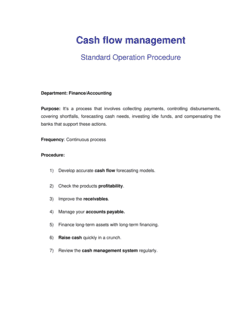
- Cash Flow
- The net movement of money into and out of the business over a defined period, distinct from profitability.
- Fixed Expense
- A cost that remains the same each month regardless of revenue, such as rent, insurance, or a software subscription.
- Variable Expense
- A cost that changes in proportion to business activity, such as raw materials, shipping, or hourly labor.
- Emergency Fund
- A dedicated cash reserve — typically 3 to 6 months of operating expenses — held to cover unexpected costs or revenue gaps.
- Accounts Receivable
- Money owed to the business by customers for goods or services already delivered but not yet paid for.
- Accounts Payable
- Money the business owes to suppliers or vendors for goods or services received but not yet paid.
- Burn Rate
- The monthly rate at which a business spends its cash reserves, used to calculate how long current funds will last.
- Gross Margin
- Revenue minus the direct cost of goods sold, expressed as a percentage — a measure of how efficiently you produce or deliver your product.
- Debt-to-Income Ratio
- Total monthly debt obligations divided by gross monthly income, used to assess financial health and borrowing capacity.
- Zero-Based Budget
- A budgeting method where every dollar of income is assigned to a specific category, so income minus allocations equals zero.