7 Mindsets For Entrepreneurs and Leaders Template

Free to read β€’ Save or share with one click

Free7 Mindsets For Entrepreneurs and Leaders Template

At a glance

What it is
The 7 Mindsets for Entrepreneurs and Leaders is a structured Word document that codifies seven core mental frameworks β€” from growth orientation and resilience to customer obsession and long-term thinking β€” into a single reference guide your team can apply daily. This free Word download gives founders and executives a ready-made framework to articulate, communicate, and embed a leadership philosophy across their organization.
When you need it
Use it when onboarding new team members and establishing cultural norms, when reorienting a leadership team after a strategic pivot, or when developing a personal leadership philosophy to share with investors, advisors, or a board.
What's inside
Seven clearly defined mindset sections β€” each with a description of the mindset, why it matters for entrepreneurial success, and practical behaviors that reflect it in daily decision-making. The document also includes an introduction framing why mindset drives outcomes, and a reflection section for individual or team application.

What is a 7 Mindsets for Entrepreneurs and Leaders Document?

The 7 Mindsets for Entrepreneurs and Leaders is a structured operational document that identifies seven core mental frameworks β€” including growth orientation, ownership, customer obsession, resilience, long-term thinking, abundance, and continuous learning β€” and translates each into the specific beliefs and observable behaviors that drive entrepreneurial and leadership success. Unlike a generic inspirational guide, it functions as a working reference: each mindset is defined with precision, illustrated with role-specific examples, and anchored to a reflection section that asks leaders to assess their own behavior and commit to concrete changes. Organizations use it as a cultural foundation document, an onboarding tool, and a recurring performance conversation guide.

Why You Need This Document

Without a documented mindset framework, leadership culture is defined by whoever speaks loudest in the room β€” and it drifts silently during hiring surges, strategic pivots, and leadership transitions. The consequences are concrete: misaligned managers who optimize for short-term metrics at the cost of long-term value, teams that suppress bad news because ownership feels like blame, and onboarding programs that communicate policy but not purpose. A written mindset document closes those gaps by making the implicit explicit β€” giving every team member a shared vocabulary for how decisions should be made and how setbacks should be processed. This template gives founders and executives a research-backed structure to build that document in hours rather than weeks, with placeholder language calibrated to real entrepreneurial situations rather than generic corporate values.

Which variant fits your situation?

If your situation is…Use this template
Establishing company-wide values and cultural norms from scratchCore Values Statement
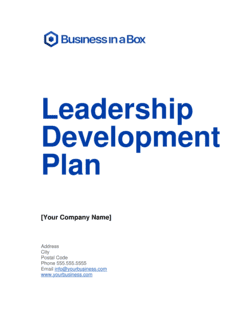
Documenting leadership expectations for managers across the orgLeadership Development Plan
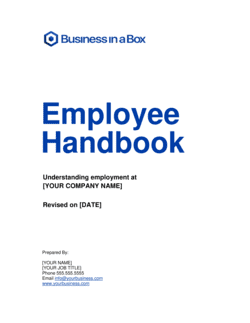
Onboarding new employees with a culture and expectations guideEmployee Handbook
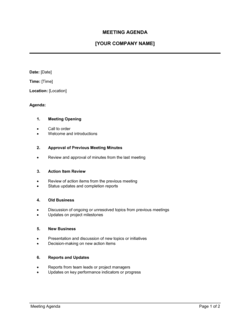
Running a structured leadership workshop or team retreatTeam Meeting Agenda
Coaching a high-potential employee on personal leadership growthPersonal Development Plan
Presenting organizational philosophy to investors or partnersCompany Overview
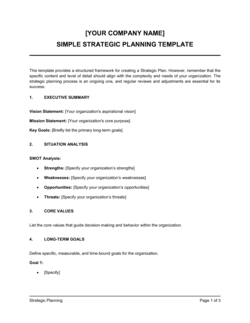
Aligning a leadership team around a strategic directionStrategic Planning Template

Common mistakes to avoid

❌ Using abstract motivational language without defining specific behaviors

Why it matters: Phrases like 'think big' or 'embrace failure' do not tell anyone what to do differently on Monday morning. Teams absorb the sentiment and change nothing.

Fix: For every mindset principle, write at least two specific, observable behaviors β€” actions that are concrete enough to recognize, reinforce, or coach in a real conversation.

❌ Treating the document as a one-time onboarding artifact

Why it matters: A document read once during orientation and never referenced again has no measurable impact on decisions or culture six months later.

Fix: Build the mindsets into recurring rituals β€” weekly team meetings, quarterly reviews, performance conversations β€” so they function as active operating principles rather than filed documents.

❌ Listing mindsets that conflict with actual organizational behavior

Why it matters: When a document says 'we embrace failure as learning' but people are publicly blamed for mistakes, the document destroys trust rather than building it.

Fix: Audit current leadership behavior before publishing. Only include mindsets the senior team already demonstrates at least partially β€” and be explicit about which ones are aspirational gaps.

❌ Skipping the reflection and application section

Why it matters: Without structured self-assessment prompts, the document functions as a values poster β€” something people agree with passively but never act on.

Fix: Require every team member to complete the reflection section and share at least one behavioral commitment with their manager within two weeks of receiving the document.

The 9 key sections, explained

Introduction: Why Mindset Drives Outcomes

Mindset 1: Growth Over Fixed Thinking

Mindset 2: Ownership and Accountability

Mindset 3: Customer Obsession

Mindset 4: Long-Term Thinking

Mindset 5: Resilience and Adaptive Response

Mindset 6: Abundance and Collaboration

Mindset 7: Continuous Learning and Intellectual Humility

Reflection and Application Section

How to fill it out

  1. 1

    Customize the introduction with your business context

    Replace the placeholder company name and add one or two sentences explaining why mindset is a strategic priority for your organization right now β€” a recent pivot, rapid growth, or cultural challenge.

    πŸ’‘ Reference a specific recent event (a missed target, a product launch, a team conflict) to make the introduction concrete rather than generic.

  2. 2

    Adapt each mindset description to your industry and stage

    Review each of the seven mindset sections and replace generic language with examples drawn from your actual business β€” specific customer segments, product decisions, or operational situations.

    πŸ’‘ One real example from your company's history per mindset section is worth ten hypothetical illustrations.

  3. 3

    Define the observable behaviors for each mindset

    For each mindset, add three to five specific, observable behaviors that demonstrate it β€” actions a manager could actually recognize and reinforce in a performance review or one-on-one.

    πŸ’‘ Behaviors should pass the 'camera test': if you filmed someone doing it, you would recognize it without needing to know their intent.

  4. 4

    Add or remove mindsets to match your organizational values

    The seven mindsets in this template are a research-backed starting point, not a fixed list. Remove any that don't resonate with your culture and add alternatives that do β€” as long as each one is actionable and distinct.

    πŸ’‘ Keep the total number between five and nine. Fewer than five feels incomplete; more than nine exceeds the working memory of most teams.

  5. 5

    Complete the reflection section for yourself first

    Before sharing the document with your team, complete the reflection prompts yourself honestly. Your self-assessment signals psychological safety and models the vulnerability the document asks of others.

    πŸ’‘ Share your own completed reflection with your direct reports β€” even the gaps β€” before asking them to complete theirs.

  6. 6

    Introduce the document in a structured session, not via email

    Present the completed document in a 60–90 minute team workshop. Walk through each mindset, share examples, and invite discussion before asking individuals to complete the reflection section independently.

    πŸ’‘ Set a follow-up date 30 days out to review the behavioral commitments made in the reflection section β€” accountability converts aspiration into habit.

Frequently asked questions

What is the 7 Mindsets for Entrepreneurs and Leaders document?

The 7 Mindsets for Entrepreneurs and Leaders is a structured leadership development document that defines seven core mental frameworks β€” including growth orientation, ownership, customer obsession, resilience, and continuous learning β€” and translates each into observable behaviors for founders and their teams. It functions as both a personal leadership philosophy and an organizational culture reference guide.

Who should use this document?

Startup founders establishing a cultural foundation, CEOs communicating a leadership philosophy to senior teams, HR managers embedding principles into onboarding programs, executive coaches guiding leadership assessments, and team leads setting behavioral expectations for direct reports all benefit from this template. It scales from a solo founder's personal reference to a company-wide culture document.

How is this different from a company values statement?

A values statement lists what a company believes in β€” integrity, innovation, customer focus. A mindset framework goes further by defining how those beliefs translate into specific thinking patterns and daily behaviors. Values answer 'what we stand for'; mindsets answer 'how we think and act when it's hard.' The two documents complement each other and are often used together.

Can I customize the seven mindsets for my specific industry or company?

Yes β€” the seven mindsets in this template are a research-backed starting point, not a fixed list. Remove any that don't align with your culture and add others that do, keeping the total between five and nine for practical adoption. Each mindset you include should be distinct, actionable, and consistent with how your leadership team already behaves or explicitly aspires to behave.

How should I introduce this document to my team?

Present it in a structured 60–90 minute workshop rather than distributing it via email. Walk through each mindset with real examples from your business, invite discussion, and ask team members to complete the reflection section independently afterward. Set a 30-day follow-up to review the behavioral commitments made in the reflection section.

How do I measure whether the mindsets are actually changing behavior?

The most reliable approach is to define two or three observable behaviors per mindset and build them into your existing performance management rituals β€” one-on-ones, quarterly reviews, and 360 feedback cycles. Track specific incidents: how often leaders seek disconfirming feedback, how quickly teams acknowledge and adapt to setbacks, whether post-mortem language shifts from blame to learning. Behavioral change is measurable if you define what it looks like before you start.

Is this document appropriate for non-entrepreneurial organizations?

Yes. While the framing uses entrepreneurial language, the seven mindsets β€” growth orientation, ownership, customer focus, long-term thinking, resilience, collaboration, and continuous learning β€” apply to any organization navigating uncertainty and competing for talent. Corporate innovation teams, nonprofit executives, and public-sector leaders use similar frameworks under different labels.

How often should this document be reviewed and updated?

Review it annually at minimum, and after any significant organizational shift β€” a strategic pivot, a leadership change, a major market disruption, or a cultural incident that reveals a gap between stated and actual behavior. A mindset document that never changes suggests the organization has stopped learning, which contradicts the growth mindset it is meant to promote.

What's the difference between a mindset document and a leadership competency framework?

A leadership competency framework defines skills and capabilities required for specific roles β€” strategic thinking for directors, coaching ability for managers. A mindset document defines the underlying beliefs and mental orientations that make those competencies sustainable across roles and levels. Competency frameworks tell you what to be able to do; mindset frameworks shape how you approach every situation regardless of role.

How this compares to alternatives

vs Leadership Development Plan

A leadership development plan is an individual document mapping specific skills to acquire, experiences to pursue, and timelines for a single person's growth. The 7 Mindsets document is organizational β€” it defines shared mental frameworks for an entire team or company. Use the mindset document to set the cultural foundation, then use individual development plans to build the skills that support it.

vs Strategic Planning Template

A strategic plan defines where the company is going β€” goals, initiatives, KPIs, and resource allocation. The 7 Mindsets document defines how leaders think and behave while executing that strategy. Strategy answers 'what and where'; mindsets answer 'how and why.' Both are needed; the mindset document should precede or accompany strategy work, not replace it.

vs Employee Handbook

An employee handbook documents policies, procedures, and compliance requirements for all staff. The 7 Mindsets document is a leadership philosophy guide focused on the beliefs and behaviors of founders and managers. The handbook governs conduct; the mindset document shapes culture. Large organizations often reference the mindset framework inside the handbook's culture section.

vs Personal Development Plan

A personal development plan is a structured individual roadmap for acquiring skills and experiences over a defined timeline. The 7 Mindsets document is a shared organizational reference that informs what those individual plans should prioritize. Think of the mindset document as the compass and the personal development plan as the route.

Industry-specific considerations

Technology / SaaS

Fast-moving product cycles and distributed teams make explicit mindset alignment β€” especially around learning from failure and long-term thinking over short-term metrics β€” a functional necessity, not a cultural luxury.

Professional Services

Client-facing teams benefit from a documented customer-obsession mindset that sets clear expectations about decision prioritization when client needs conflict with internal efficiency.

Retail / E-commerce

High-growth retail operations use the ownership and resilience mindsets to reduce blame culture during seasonal volatility and supply-chain disruptions.

Manufacturing

Continuous-improvement cultures in manufacturing align closely with the growth and learning mindsets, providing a leadership framework that connects to operational methodologies like lean and Six Sigma.

Template vs pro β€” what fits your needs?

PathBest forCostTime
Use the templateFounders, team leads, and HR managers building or refreshing a leadership culture document without external facilitationFree2–4 hours to customize and complete
Template + professional reviewLeadership teams preparing to roll out a mindset framework company-wide, or organizations recovering from a significant cultural incident$500–$2,000 for a facilitator or executive coach review session1–2 weeks including workshop facilitation
Custom draftedEnterprise organizations requiring a bespoke leadership philosophy integrated with existing competency frameworks, performance management systems, and L&D programs$5,000–$20,000 for an organizational development consultant4–12 weeks

Glossary

Growth Mindset
The belief that abilities and intelligence can be developed through effort, feedback, and persistence β€” as opposed to being fixed traits.
Entrepreneurial Mindset
A set of attitudes and behaviors β€” including opportunity recognition, calculated risk-taking, and resilience β€” that drive value creation in uncertain environments.
Abundance Mindset
The belief that opportunities, resources, and success are not zero-sum, enabling collaboration and generosity rather than defensive competition.
Customer Obsession
A behavioral orientation in which leaders start every decision by examining its impact on the customer experience rather than internal convenience.
Resilience
The capacity to recover from setbacks, adapt to adverse conditions, and continue pursuing goals without losing momentum.
Long-Term Thinking
Prioritizing decisions with durable value over short-term gains, even when the short-term cost is visible and the long-term benefit is uncertain.
Ownership Mentality
Taking full accountability for outcomes β€” good or bad β€” rather than attributing results to external circumstances or other people.
Psychological Safety
A team climate in which members feel safe to speak up, challenge ideas, and admit mistakes without fear of punishment or embarrassment.
Cognitive Bias
A systematic pattern of deviation from rational judgment β€” such as confirmation bias or sunk-cost fallacy β€” that distorts decision-making if left unexamined.
Leadership Philosophy
A documented set of beliefs and principles that guide how a leader makes decisions, treats people, and prioritizes competing demands.

Part of your Business Operating System

This document is one of 3,000+ business & legal templates included in Business in a Box.

  • Fill-in-the-blanks β€” ready in minutes
  • Compatible with all office suites
  • Export to PDF and share electronically

Create your document in 3 simple steps.

From template to signed document β€” all inside one Business Operating System.
1
Download or open template

Access over 3,000+ business and legal templates for any business task, project or initiative.

2
Edit and fill in the blanks with AI

Customize your ready-made business document template and save it in the cloud.

3
Save, Share, Send, Sign

Share your files and folders with your team. Create a space of seamless collaboration.

Save time, save money, and create top-quality documents.

β˜…β˜…β˜…β˜…β˜…

"Fantastic value! I'm not sure how I'd do without it. It's worth its weight in gold and paid back for itself many times."

Managing Director Β· Mall Farm
Robert Whalley
Managing Director, Mall Farm Proprietary Limited
β˜…β˜…β˜…β˜…β˜…

"I have been using Business in a Box for years. It has been the most useful source of templates I have encountered. I recommend it to anyone."

Business Owner Β· 4+ years
Dr Michael John Freestone
Business Owner
β˜…β˜…β˜…β˜…β˜…

"It has been a life saver so many times I have lost count. Business in a Box has saved me so much time and as you know, time is money."

Owner Β· Upstate Web
David G. Moore Jr.
Owner, Upstate Web

Run your business with a system β€” not scattered tools

Stop downloading documents. Start operating with clarity. Business in a Box gives you the Business Operating System used by over 250,000 companies worldwide to structure, run, and grow their business.

Free Forever PlanΒ Β·Β No credit card required