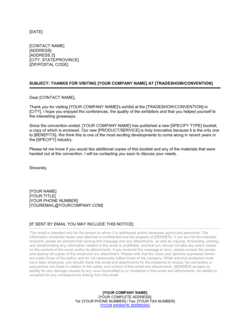
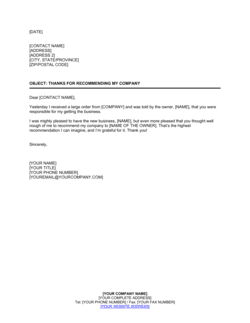
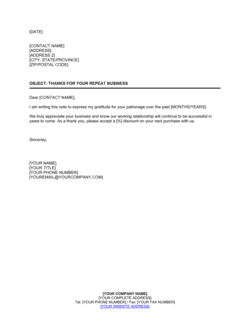
Thanks for the Meeting and the Consideration Template

Free Word download • Edit online • Save & share with Drive • Export to PDF

1 page20–25 min to fillDifficulty: StandardSignature requiredLegal review recommended
Learn more ↓
FreeThanks for the Meeting and the Consideration Template

At a glance

What it is
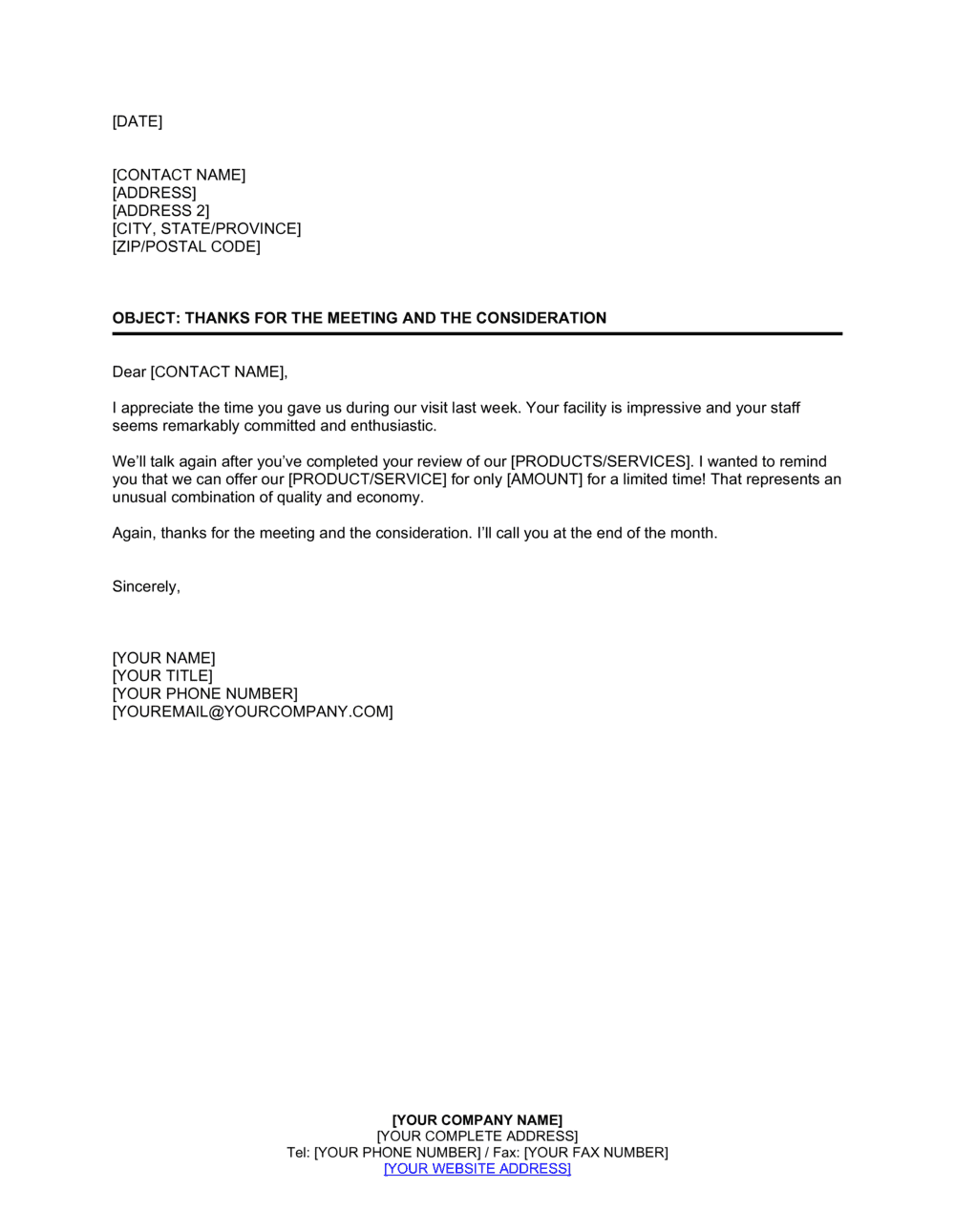
A Thanks For The Meeting And The Consideration letter is a formal written communication sent after a business meeting to acknowledge the time and attention given by the recipient, recap the key points discussed, and confirm any next steps or pending decisions. This free Word download gives you a polished, professionally structured template you can edit online and export as PDF to send immediately after your meeting.
When you need it
Use it after any significant business meeting — a sales pitch, a partnership discussion, a vendor evaluation, a job interview follow-up, or a contract negotiation — where you want to leave a positive impression, document what was agreed, and keep momentum moving toward a decision.
What's inside
Opening acknowledgment of the meeting and participants, a concise recap of the key discussion points, confirmation of any decisions or commitments made, a clear statement of proposed next steps and timeline, and a professional closing that reinforces goodwill and invites further dialogue.

What is a Thanks For The Meeting And The Consideration Letter?

A Thanks For The Meeting And The Consideration Letter is a formal written communication sent by one business party to another after a meeting, acknowledging the recipient's time, recapping the key discussion points, confirming any commitments or decisions made, and proposing concrete next steps. It functions simultaneously as a courtesy gesture, a relationship-maintenance tool, and a contemporaneous written record of what was discussed — making it useful not only for advancing business opportunities but also for documenting the substance of conversations that may later be relevant to a negotiation or dispute. While it is not a binding contract on its own, a well-drafted follow-up letter carries real practical and legal weight when it accurately reflects verbal commitments and is sent promptly after the meeting.

Why You Need This Document

Without a written follow-up after a significant business meeting, opportunities lose momentum, commitments are forgotten or misremembered, and the professional impression you worked to create fades within days. Studies of B2B sales cycles consistently show that prompt, structured follow-up communication is one of the highest-leverage actions a professional can take after a meeting — yet most people either skip it entirely or send a one-line email that does nothing to advance the relationship or document what was said. The consequences are concrete: deals stall because neither party takes the initiative to confirm next steps; disputes arise because verbal commitments were never written down; and promising relationships go cold because the recipient assumes the sender was not serious. This template gives you a structured, professional format that takes 20 minutes to complete, creates a paper trail that protects you if questions arise later, and signals to the recipient that you are organized, trustworthy, and serious about moving forward together.

Which variant fits your situation?

If your situation is…Use this template
Following up after a sales pitch or product demoSales Follow-Up Letter
Thanking an investor after a funding pitchThank You Letter to Investor
Following up after a job interview as a candidateThank You Letter After Job Interview
Confirming terms discussed in a contract negotiationLetter of Intent
Summarizing a vendor or supplier evaluation meetingVendor Evaluation Follow-Up Letter
Recapping a strategic partnership discussionMemorandum of Understanding
Acknowledging a board or committee meeting outcomeMeeting Minutes

Common mistakes to avoid

❌ Sending the letter more than 48 hours after the meeting

Why it matters: A delayed follow-up signals low priority and gives competitors who responded promptly an advantage. Decision cycles move quickly; a three-day delay can cost you a deal.

Fix: Set a personal rule of sending the follow-up letter the same business day or by 9 AM the morning after the meeting, while details are still fresh.

❌ Omitting a written recap of discussion points

Why it matters: Without a written record, parties often remember the meeting differently — especially on price, scope, or next steps — leading to disputes that are difficult to resolve without documentation.

Fix: Include a concise numbered list of the two to four key topics discussed, even if they seem obvious. This creates a shared written reference both parties can return to.

❌ Vague or unassigned next steps

Why it matters: Action items with no named owner and no deadline are rarely completed. The opportunity stalls, and each party assumes the other is moving forward.

Fix: Assign every next step to a specific person — by name, not company — and set a concrete deadline. If no deadline was agreed in the meeting, propose one in the letter.

❌ Using an overly casual tone for a formal business relationship

Why it matters: Tone mismatch — friendly language in a C-suite or legal context, or stiff formal language with a startup contact — creates friction and makes the letter feel out of place.

Fix: Match the tone of the letter to the formality of the meeting and the relationship stage. When in doubt, err toward formal — it is easier to relax tone later than to recover from appearing unprofessional.

The 9 key clauses, explained

Salutation and meeting reference

In plain language: Opens the letter by addressing the recipient formally and identifying the specific meeting being referenced by date and purpose.

Sample language
Dear [RECIPIENT NAME], Thank you for taking the time to meet with [SENDER NAME / COMPANY NAME] on [DATE] to discuss [MEETING SUBJECT / PURPOSE].

Common mistake: Using a generic 'Dear Sir/Madam' salutation instead of the recipient's name — this signals the letter was not personally composed and reduces its impact on the relationship.

Expression of gratitude

In plain language: Acknowledges the recipient's time, effort, and consideration in a specific and genuine way rather than a formulaic one-liner.

Sample language
We sincerely appreciate the time you and your team invested in reviewing our [PROPOSAL / PRESENTATION / OFFER] and for the candid and constructive discussion that followed.

Common mistake: Using vague gratitude language like 'thanks for your time' without referencing what specifically you are grateful for — specificity makes the appreciation feel genuine rather than perfunctory.

Meeting recap and key discussion points

In plain language: Summarizes the main topics discussed during the meeting to confirm mutual understanding and create a written record of what was covered.

Sample language
During our meeting, we discussed the following key points: (1) [TOPIC 1]; (2) [TOPIC 2]; and (3) [TOPIC 3]. We trust this reflects the substance of our conversation accurately.

Common mistake: Omitting the recap entirely and jumping straight to next steps — without a written summary, parties may later disagree on what was actually discussed or agreed.

Confirmation of commitments or decisions

In plain language: Explicitly states any specific commitments, decisions, or agreements that were reached during the meeting, so both parties share the same understanding.

Sample language
As agreed during our meeting, [COMPANY NAME] will [COMMITMENT / ACTION] by [DATE], and [RECIPIENT COMPANY] will provide [DELIVERABLE / RESPONSE] by [DATE].

Common mistake: Using ambiguous language like 'we discussed potentially moving forward' instead of clearly stating whether a decision was made — vague commitments are the leading cause of post-meeting misunderstandings.

Outstanding questions or open items

In plain language: Lists any questions raised during the meeting that were not resolved, or information that either party agreed to provide after the meeting.

Sample language
The following items remain open for further discussion or clarification: (1) [OPEN ITEM 1]; (2) [OPEN ITEM 2]. We will follow up with the requested information by [DATE].

Common mistake: Leaving open items unacknowledged in the follow-up — unresolved questions that are not tracked in writing tend to delay decisions and create frustration on both sides.

Proposed next steps and timeline

In plain language: States the specific actions each party will take following the meeting, with names responsible and target dates for each.

Sample language
We propose the following next steps: [PARTY A] will [ACTION] by [DATE]; [PARTY B] will [ACTION] by [DATE]. We suggest scheduling a follow-up call on or before [DATE] to review progress.

Common mistake: Listing next steps without assigning responsibility or deadlines — action items with no owner and no date are rarely completed, and the opportunity loses momentum.

Reiteration of value proposition or offer

In plain language: Briefly restates the core benefit or value the sender brings to the relationship, reinforcing the case for moving forward without repeating the full pitch.

Sample language
We remain confident that [COMPANY NAME]'s [PRODUCT / SERVICE / PROPOSAL] is well-positioned to address [RECIPIENT'S NEED / CHALLENGE] and deliver [SPECIFIC BENEFIT] within your required timeframe of [TIMEFRAME].

Common mistake: Turning this clause into a second full sales pitch — the follow-up letter should reinforce, not repeat. One focused sentence on value is more effective than three paragraphs of product features.

Invitation for feedback or questions

In plain language: Opens the door for the recipient to raise additional questions, share concerns, or request further information before making a decision.

Sample language
Should you have any questions, require additional information, or wish to discuss any aspect of our proposal further, please do not hesitate to contact [SENDER NAME] directly at [EMAIL / PHONE].

Common mistake: Closing the letter without inviting dialogue — recipients who have unresolved concerns but are not explicitly invited to raise them are more likely to go silent than to ask.

Closing and signature block

In plain language: Closes the letter with a professional sign-off, the sender's full name, title, company, and contact details.

Sample language
We look forward to the opportunity to work with you and will be in touch as outlined above. Yours sincerely, [SENDER FULL NAME] | [TITLE] | [COMPANY NAME] | [EMAIL] | [PHONE]

Common mistake: Using an informal sign-off like 'Thanks!' or 'Best' in a formal business letter — closing formality should match the tone of the meeting and the relationship stage.

How to fill it out

  1. 1

    Enter the date and recipient's details

    Add today's date at the top of the letter, then enter the recipient's full name, title, company, and mailing or email address. Use the same name and title format as the meeting invitation or business card.

    💡 Send the letter within 24 hours of the meeting — the window for maximum impact closes quickly, and a prompt follow-up signals professionalism.

  2. 2

    Write a specific salutation and meeting reference

    Address the recipient by name and identify the meeting clearly by date and subject in the opening sentence. Avoid generic openers like 'I hope this email finds you well.'

    💡 If you met with a group, address the primary decision-maker in the salutation and reference the full team in the body — 'you and your colleagues' or by name if the group is small.

  3. 3

    Draft the gratitude statement with specific details

    Thank the recipient for the specific time and attention they gave — reference the format of the meeting (site visit, video call, boardroom presentation) and what you appreciated most about the conversation.

    💡 One genuine, specific line of thanks outperforms three generic sentences. Reference a specific question they asked or insight they shared.

  4. 4

    Summarize the key discussion points

    List two to four of the most important topics covered in the meeting. Use numbered or bulleted points for readability. Keep each point to one concise sentence.

    💡 If your notes are incomplete, send a brief message to a colleague who also attended before writing the recap — an inaccurate summary is worse than no summary.

  5. 5

    Confirm any commitments and open items

    State clearly what each party agreed to do, and list any questions or information requests that were left open. Assign a name and date to every open item.

    💡 Use direct, active language: 'We will send the revised proposal by Friday, May 9' rather than 'the revised proposal will be sent.' Passive voice obscures accountability.

  6. 6

    State next steps with owners and deadlines

    List the specific next actions, who is responsible for each, and the target completion or response date. Propose a date for the next meeting or call if appropriate.

    💡 Offering two specific date options for the next meeting is more likely to generate a booking than an open-ended 'let us know when you are available.'

  7. 7

    Sign and send via the appropriate channel

    Add your full name, title, company, email address, and phone number to the signature block. Send via email as a PDF attachment or as formatted body text, depending on the relationship's formality.

    💡 For high-value opportunities — investment discussions, large contract negotiations, or executive-level relationships — a signed PDF attached to a brief, warm email performs better than a plain-text message.

Frequently asked questions

What is a 'thanks for the meeting and the consideration' letter?

It is a formal follow-up letter sent after a business meeting to thank the recipient for their time and attention, recap the key points discussed, confirm any commitments made, and outline proposed next steps. It serves as both a relationship-building gesture and a written record of the meeting's outcomes. In competitive business contexts — sales, investment, and partnership discussions — it also helps keep your proposal top of mind during the recipient's decision process.

When should I send a follow-up letter after a meeting?

Send it within 24 hours of the meeting for maximum impact — same business day is ideal for high-stakes opportunities. For formal business relationships or executive-level contacts, a signed PDF sent by end of the next business day is standard. Waiting longer than 48 hours risks the letter arriving after the recipient has already moved on or made a decision.

Is a thank-you letter after a meeting legally binding?

On its own, a thank-you letter is generally not legally binding — it is a letter of courtesy and record rather than a contract. However, if the letter contains specific language confirming agreed terms, prices, deliverables, or commitments, those statements may be referenced in later disputes as evidence of what was understood by both parties. If you need to formalize what was discussed, follow the letter with a Letter of Intent or formal contract. Consider consulting a lawyer if the meeting covered material business terms.

What should I include in a professional follow-up letter after a meeting?

A complete follow-up letter should include a specific salutation and meeting reference, a genuine expression of gratitude, a numbered recap of the key discussion points, confirmation of any commitments or decisions made, a list of open items with owners and deadlines, proposed next steps with a timeline, a brief restatement of the value you bring to the relationship, and a professional signature block with full contact details.

Should I send the letter by email or as a formal printed letter?

For most business contexts, email with a professionally formatted PDF attached strikes the right balance of speed and formality. A plain-text email works for ongoing relationships with established contacts. A printed and mailed letter is appropriate for very formal relationships, certain legal or regulated industries, or situations where you want to make a deliberate, differentiated impression. Always match the medium to the relationship and the stakes of the meeting.

How long should a thank-you letter after a business meeting be?

One page is the standard and should be sufficient for most meetings. If the meeting was complex — covering multiple topics, parties, or pending decisions — a second page is acceptable, but brevity is a virtue. The recipient is busy; a concise, well-structured letter is more likely to be read in full than a detailed three-page narrative. Aim for four to six short paragraphs or a mix of short paragraphs and a bulleted recap list.

Can I use this letter to confirm verbal commitments made in the meeting?

Yes, and this is one of the most practical uses of a follow-up letter. By stating in writing what each party agreed to do — and sending it promptly — you create a contemporaneous record that both sides can refer to if questions arise later. The recipient's failure to correct any inaccuracy in the letter strengthens your documented account of the meeting. For commitments involving material sums or formal obligations, follow up with a Letter of Intent or binding contract rather than relying solely on correspondence.

What is the difference between a follow-up letter and a Letter of Intent?

A follow-up letter is an informal or semi-formal document that recaps a meeting, expresses appreciation, and maintains momentum — it typically creates no binding obligations. A Letter of Intent is a more formal document that expresses a party's clear intention to proceed with a specific transaction and outlines the key terms, often as a precursor to a full contract. Use a follow-up letter after exploratory or early-stage meetings; use a Letter of Intent when the parties have agreed in principle to specific terms and are ready to move toward a formal agreement.

Should both parties sign the follow-up letter?

A standard thank-you or follow-up letter is signed only by the sender. If you want the recipient to formally acknowledge the recap of what was discussed — particularly for meetings where material commitments were made — you can request a countersignature or ask them to reply confirming the summary is accurate. For formal acknowledgment of agreed terms, a Letter of Intent or MOU signed by both parties is the more appropriate vehicle.

How this compares to alternatives

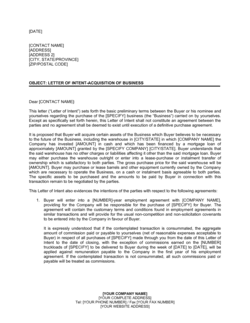
vs Letter of Intent

A Letter of Intent is a formal document expressing a clear intention to proceed with a specific transaction and outlining agreed key terms — it creates stronger legal weight and typically precedes a binding contract. A thank-you and consideration letter is a softer follow-up that maintains relationship momentum and documents discussion points without implying a formal commitment. Use the follow-up letter for early-stage meetings and the LOI when both parties are ready to move toward a formal agreement.

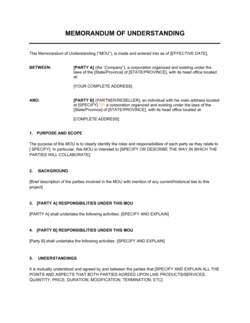
vs Memorandum of Understanding

A Memorandum of Understanding is a structured, bilateral document that both parties sign to confirm their mutual intentions and preliminary terms before a contract is drafted — it is more formal and typically non-binding. A follow-up letter is a unilateral, informal communication from one party to another. Use an MOU when both parties are ready to record their intentions formally; use a follow-up letter to maintain momentum and document discussions in the period leading up to that stage.

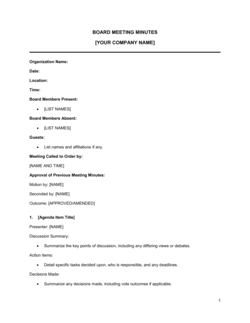
vs Meeting Minutes

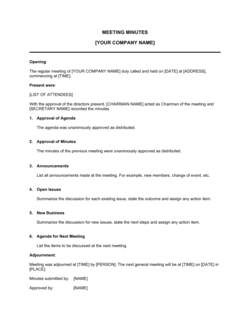
Meeting minutes are a neutral, comprehensive record of everything discussed, decided, and assigned during a formal meeting — typically prepared by a secretary or coordinator and distributed to all attendees. A follow-up letter is a relationship-oriented communication from one party to another, focused on appreciation, key highlights, and next steps rather than a complete verbatim record. Use meeting minutes for board meetings, formal committees, or any session requiring an official record; use a follow-up letter for client, partner, or stakeholder meetings.

vs Business Proposal

A business proposal is a comprehensive document that presents a specific solution, pricing, timeline, and terms to a prospective client or partner — it is typically prepared before or during the pitch phase. A follow-up letter is sent after the proposal has been presented to reinforce the relationship, recap the meeting, and move the conversation toward a decision. The two documents work sequentially: the proposal makes the case; the follow-up letter keeps it alive.

Industry-specific considerations

Professional Services

Consultants and advisors use follow-up letters to confirm scope, fees, and deliverables discussed in discovery meetings, reducing the risk of scope creep from the outset.

Financial Services

Investment managers and financial advisors use post-meeting correspondence to document suitability discussions, recommendations made, and client instructions received, supporting regulatory record-keeping obligations.

Technology / SaaS

Sales teams use structured follow-up letters after product demos to recap the pain points surfaced, confirm evaluation criteria, and propose a trial or proof-of-concept timeline with clear owners.

Real Estate

Agents and developers use post-meeting letters to confirm buyer requirements, pricing discussed, and the timeline for submitting an offer — creating a paper trail ahead of formal negotiations.

Healthcare

Medical device and pharmaceutical sales professionals use follow-up letters to recap clinical committee presentations, confirm which products were evaluated, and document any compliance or formulary questions raised.

Manufacturing

Procurement and supply chain teams use post-meeting letters to summarize vendor capability assessments, confirm pricing and lead times discussed, and record any quality or certification requirements raised.

Jurisdictional notes

United States

In the US, written follow-up correspondence confirming verbal commitments can be introduced as evidence in contract disputes under the parol evidence rule and promissory estoppel doctrine. If the letter confirms pricing, delivery terms, or a specific offer, courts in some states may treat it as a binding offer or acceptance. Avoid language like 'we have agreed' or 'this confirms our contract' unless a formal agreement is intended.

Canada

Canadian courts may consider post-meeting correspondence as evidence of the parties' intentions and the terms discussed, particularly in commercial disputes where no formal written contract was executed. In Quebec, civil law principles apply and written evidence of discussions carries significant weight. French-language correspondence may be required for provincially regulated interactions in Quebec.

United Kingdom

Under English contract law, a follow-up letter confirming agreed terms could be construed as a binding acceptance if it contains specific, certain terms and is communicated to the offeror. To avoid unintentional contract formation, include a 'subject to contract' notation if the discussions are still exploratory. In regulated sectors such as financial services, post-meeting correspondence may need to meet FCA record-keeping standards.

European Union

Across EU member states, written correspondence confirming meeting outcomes is generally treated as documentary evidence of pre-contractual negotiations under civil law systems. GDPR applies if the letter or associated communications include personal data — ensure your contact data handling and retention practices comply with applicable data protection law. In Germany and France, pre-contractual good-faith obligations (culpa in contrahendo) may be relevant if commitments made in correspondence are later withdrawn.

Template vs lawyer — what fits your deal?

PathBest forCostTime
Use the templateStandard post-meeting follow-ups for sales, partnership, and vendor discussions with no material binding commitmentsFree15–30 minutes
Template + legal reviewFollow-up letters that confirm specific verbal commitments, pricing, or terms that may be referenced in later negotiations$100–$300 (lawyer or senior advisor review)1 business day
Custom draftedHigh-value transactions, regulated industries, or situations where the letter may be introduced as evidence in a dispute or formal process$500–$1,5002–5 business days

Glossary

Follow-Up Correspondence
Written communication sent after a meeting or event to recap discussions, confirm commitments, and maintain professional momentum.
Next Steps
Specific, time-bound actions agreed upon during a meeting that each party is expected to complete before the next interaction.
Letter of Record
A formal written communication that creates a documented account of discussions or decisions, which may be referenced in future negotiations or disputes.
Goodwill
The positive professional reputation and trust built through courteous, timely, and transparent communication with business contacts.
Action Item
A discrete task assigned to a specific person with a defined deadline, arising from a meeting discussion.
Consideration (business context)
The time, attention, and resources a party has invested in evaluating a proposal, offer, or partnership opportunity.
Memorandum of Understanding (MOU)
A non-binding written agreement that outlines the intentions and preliminary terms discussed between two parties before a formal contract is signed.
Letter of Intent (LOI)
A formal document expressing a party's intention to proceed with a transaction or agreement, often summarizing key terms discussed in prior meetings.
Professional Correspondence
Formal written communication between business parties that follows established conventions of tone, structure, and etiquette.
Recap Clause
A section of a follow-up letter that summarizes the key points, decisions, or commitments made during a preceding meeting.

Part of your Business Operating System

This document is one of 3,000+ business & legal templates included in Business in a Box.

  • Fill-in-the-blanks — ready in minutes
  • 100% customizable Word document
  • Compatible with all office suites
  • Export to PDF and share electronically

Create your document in 3 simple steps.

From template to signed document — all inside one Business Operating System.
1
Download or open template

Access over 3,000+ business and legal templates for any business task, project or initiative.

2
Edit and fill in the blanks with AI

Customize your ready-made business document template and save it in the cloud.

3
Save, Share, Send, Sign

Share your files and folders with your team. Create a space of seamless collaboration.

Save time, save money, and create top-quality documents.

★★★★★

"Fantastic value! I'm not sure how I'd do without it. It's worth its weight in gold and paid back for itself many times."

Managing Director · Mall Farm
Robert Whalley
Managing Director, Mall Farm Proprietary Limited
★★★★★

"I have been using Business in a Box for years. It has been the most useful source of templates I have encountered. I recommend it to anyone."

Business Owner · 4+ years
Dr Michael John Freestone
Business Owner
★★★★★

"It has been a life saver so many times I have lost count. Business in a Box has saved me so much time and as you know, time is money."

Owner · Upstate Web
David G. Moore Jr.
Owner, Upstate Web

Run your business with a system — not scattered tools

Stop downloading documents. Start operating with clarity. Business in a Box gives you the Business Operating System used by over 250,000 companies worldwide to structure, run, and grow their business.

Free Forever Plan · No credit card required