1
Enter the corporation name and meeting details
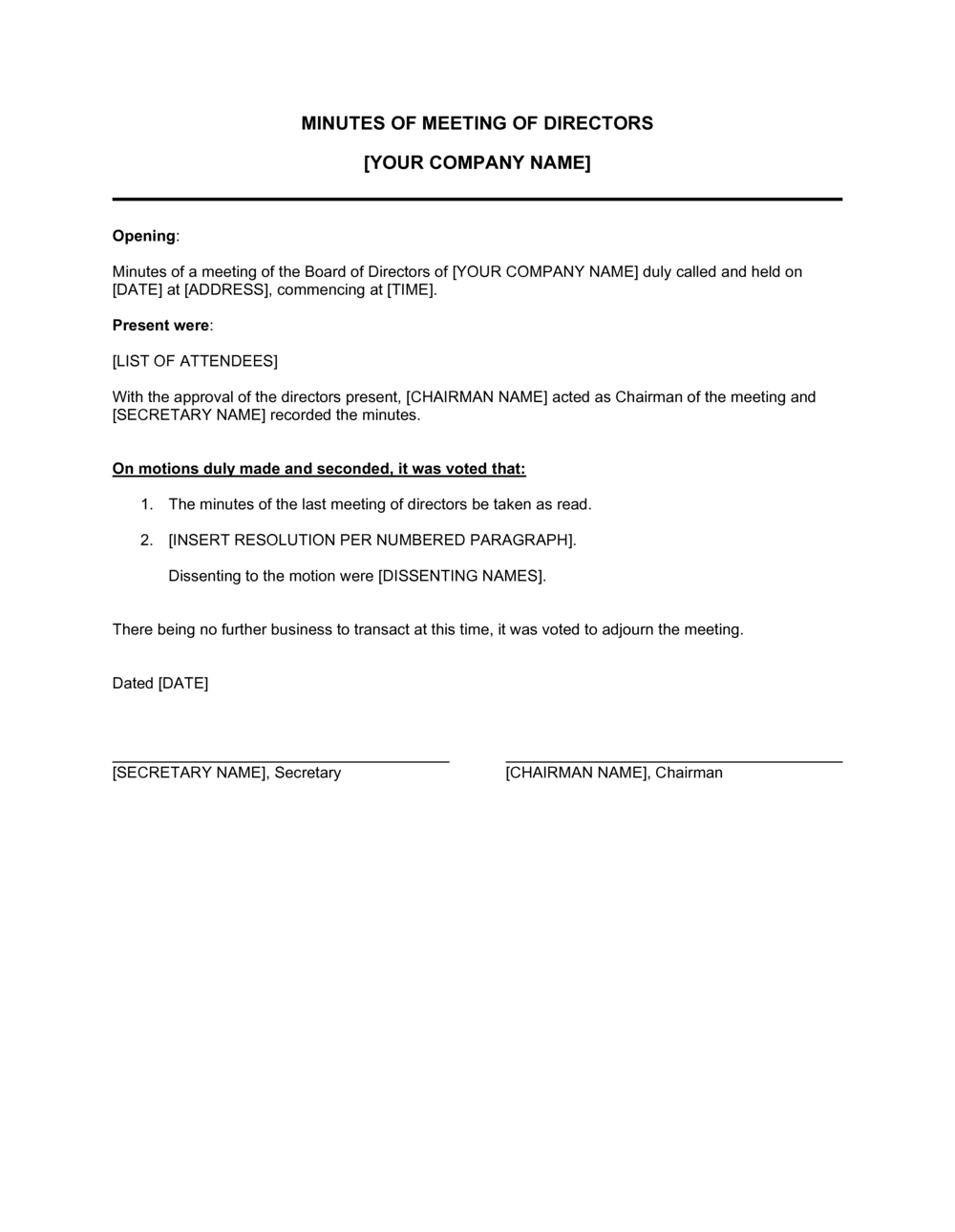
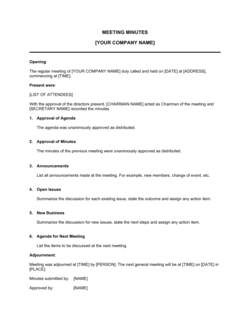
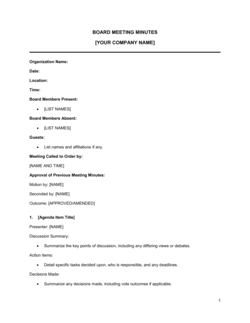
Type the company's full legal name at the top, then record the meeting type (regular or special), the exact date, start time, and physical or virtual location.
💡 Use the legal entity name exactly as it appears on your certificate of incorporation — not a trade name or abbreviation.
2
List attendees and record absences
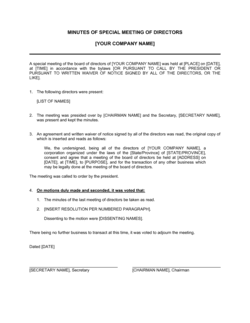
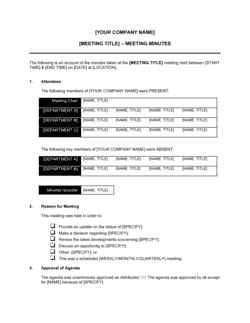
Name every director present, note whether they attended in person or remotely, identify who chaired the meeting, and list any directors who were absent.
💡 If an absent director sent written notice or gave a proxy, note that in the attendance section to support any quorum calculation.
3
Confirm quorum
State the number of directors present versus the total board size and confirm that a quorum was met under the corporation's by-laws or articles.
💡 Check your by-laws before the meeting — some companies require a majority of elected directors; others allow a lower threshold if written notice was properly given.
4
Record approval of prior minutes
Note that the previous meeting's minutes were circulated in advance, then record the motion, seconder, and vote to approve them.
💡 If any corrections to prior minutes are raised, note the amendment and have the corrected version re-approved before filing.
5
Summarize each agenda item with key discussion points
For each item, write a short paragraph identifying the subject, who presented it, the key points raised, and the outcome or resolution.
💡 Capture the substance of the deliberation — not a verbatim transcript — so the record shows the board exercised informed business judgment.
6
Draft resolutions in precise, action-specific language
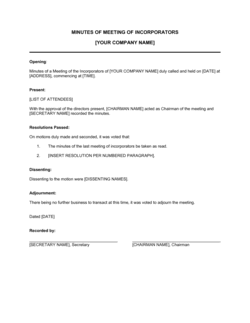
Write each resolution as 'RESOLVED THAT [company name] is authorized to [specific action],' then record the mover, seconder, and vote count.
💡 Avoid vague phrases like 'the board approved the proposal.' Name the specific action, amount, party, or document being authorized.
7
Record any conflict of interest disclosures
If any director declared a conflict, note the director's name, the subject matter, and whether they abstained from the vote.
💡 Even if the conflicted director is not sure their interest rises to the level of a formal conflict, err on the side of disclosure — it protects both the director and the corporation.
8
List action items and close the meeting
Record each action item with the responsible person and due date, then note the adjournment time and the date of the next scheduled meeting.
💡 Circulate the draft minutes to all directors within 5–7 days of the meeting while details are fresh — this speeds up approval at the next meeting.