- Letter of Intent (LOI)
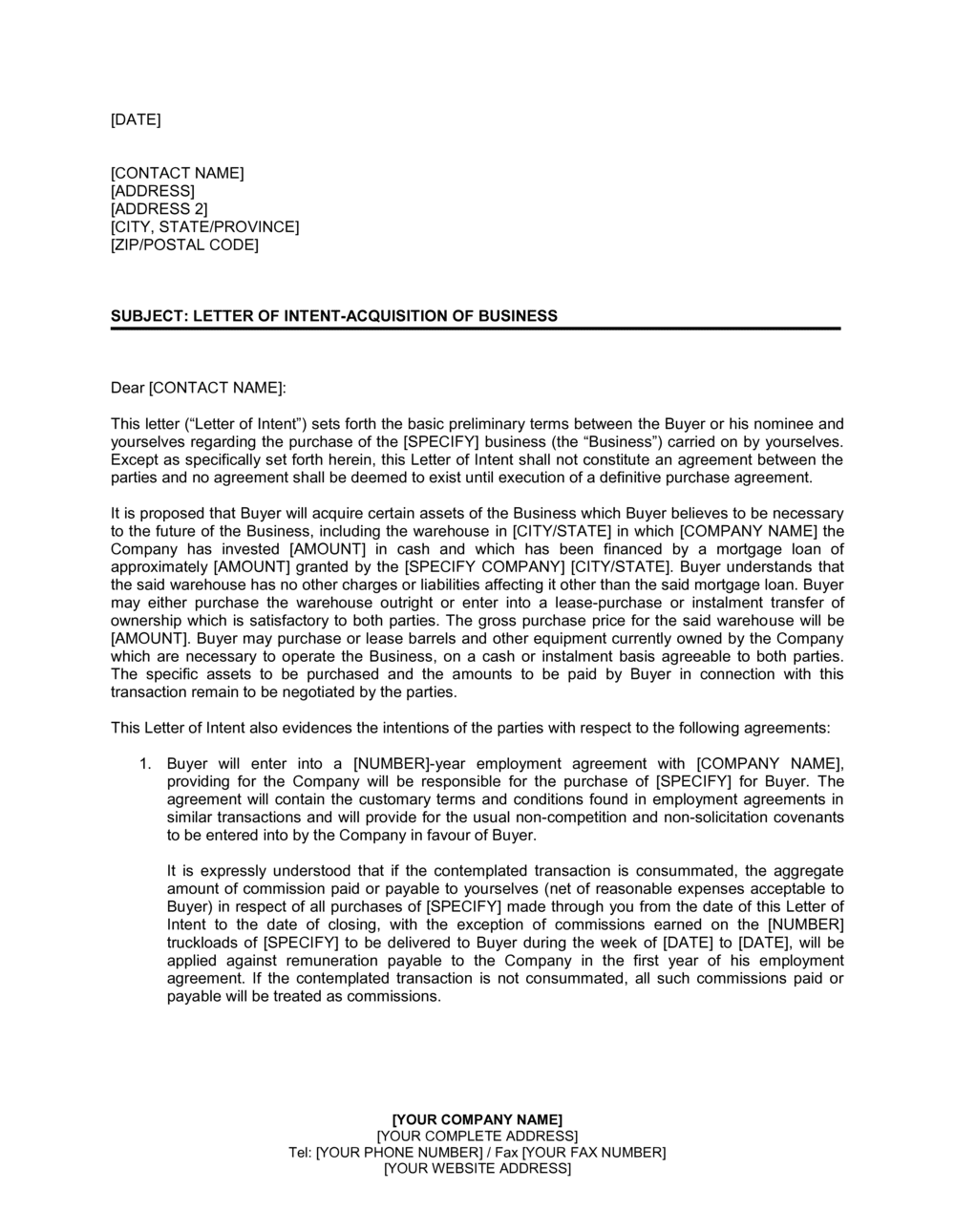
- A written document outlining the key proposed terms of a transaction before a binding contract is drafted — typically non-binding except for specific provisions such as exclusivity and confidentiality.
- Non-Binding
- A designation indicating that a document does not create enforceable legal obligations — parties can walk away without liability, except on any provisions explicitly stated to be binding.
- Exclusivity Period
- A defined window during which the seller agrees not to negotiate with or solicit offers from other potential buyers, giving the buyer time to complete due diligence.
- Due Diligence
- The formal investigation a buyer conducts of a target business — reviewing financials, contracts, liabilities, employees, and assets — before committing to a binding purchase.
- Asset Purchase
- A transaction structure in which the buyer acquires specific assets and liabilities of the business rather than purchasing the legal entity itself.
- Share Purchase
- A transaction structure in which the buyer acquires ownership of the legal entity by purchasing its shares, inheriting all assets and liabilities.
- Earnout
- A deal mechanism where a portion of the purchase price is paid to the seller after closing, contingent on the business meeting defined performance targets.
- Purchase Price Adjustment
- A mechanism that adjusts the final purchase price at or after closing based on changes in working capital, net debt, or other financial metrics between signing and close.
- Definitive Agreement
- The final, fully binding purchase contract — typically a Share Purchase Agreement or Asset Purchase Agreement — that replaces the LOI once due diligence is complete.
- Working Capital
- Current assets minus current liabilities at closing — often a reference point for purchase price adjustments in business acquisitions.