1
Enter the meeting details and convening authority
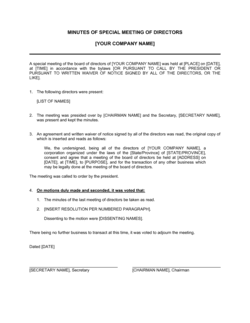
Fill in the company's legal name, meeting date and time, location or virtual platform link, and the specific bylaw, operating agreement section, or committee charter that authorizes the meeting. Name the chairperson and their title.
💡 Cross-check the convening authority reference against your current governing document — bylaws are amended more often than people realize, and citing a repealed provision invalidates the authority claim.
2
Complete the attendee roster before the meeting starts
List all expected attendees by full name and title, mark each as voting or non-voting, and note any proxy authorizations received. Leave space to record actual attendance at the opening of the meeting.
💡 Collect proxy authorizations in writing at least 24 hours before the meeting — verbal proxies are unenforceable in most jurisdictions and create disputes over vote counts.
3
Confirm and record the quorum declaration
At the opening of the meeting, count present and proxied voting members against the quorum threshold in your governing document. Record the specific numbers and the threshold citation in the quorum clause.
💡 If quorum is borderline, note the exact count and time in the minutes — if an attendee leaves mid-meeting, you may need to confirm quorum was maintained when each resolution was passed.
4
Move and record adoption of the agenda
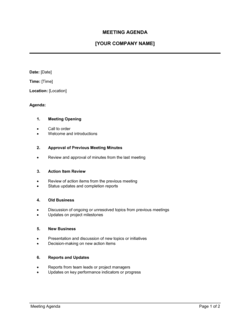
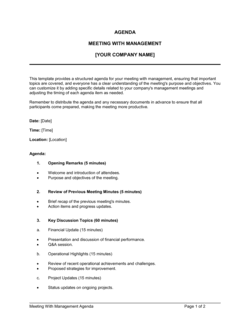
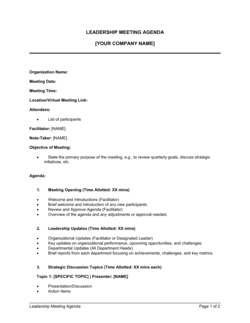
Present the pre-circulated agenda, invite any amendments, then record the motion, seconder, and vote result. Note any agenda amendments approved before business begins.
💡 Distribute the agenda at least 48 hours in advance — most corporate governance codes recommend this minimum notice period, and it reduces time wasted on last-minute objections.
5
Record each agenda item outcome as the meeting proceeds
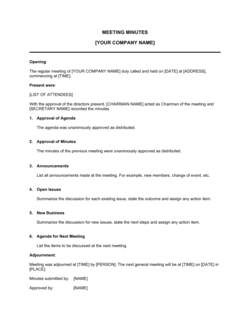
For each item, note the presenter, a concise summary of discussion, the outcome (decision reached, deferred, or no action), and a resolution number if a formal vote was taken. Record the exact resolution wording, mover, seconder, and vote count.
💡 Assign resolution numbers sequentially from the start of the fiscal year (e.g., MGT-2026-001) — this makes resolutions searchable and prevents numbering gaps that raise governance questions.
6
Assign action items with named owners and deadlines
After each substantive agenda item, record every action arising — description, named owner, and specific deadline date. Do not use 'team' or 'management' as the owner; assign to one individual.
💡 Read the action item list aloud before closing the meeting so every owner verbally confirms their task and deadline — this cuts completion rates significantly compared to silent distribution.
7
Obtain signatures and certify the minutes
Circulate a draft of the minutes within 48 hours of the meeting. Once corrections are incorporated, collect the chairperson's signature and the secretary's countersignature on the certification block.
💡 Date the signatures accurately — backdating certified minutes is a governance red flag that can expose directors to personal liability in regulated industries.
8
File the signed document and schedule the next meeting
Store the signed agenda and minutes in your governance records system. Record the next meeting date in the minutes and distribute the action item list to all owners immediately after signing.
💡 Maintain a single master register of all manager meeting minutes indexed by date and resolution number — auditors, investors, and acquirers will request this during due diligence.