1
Enter the parties' details and the date
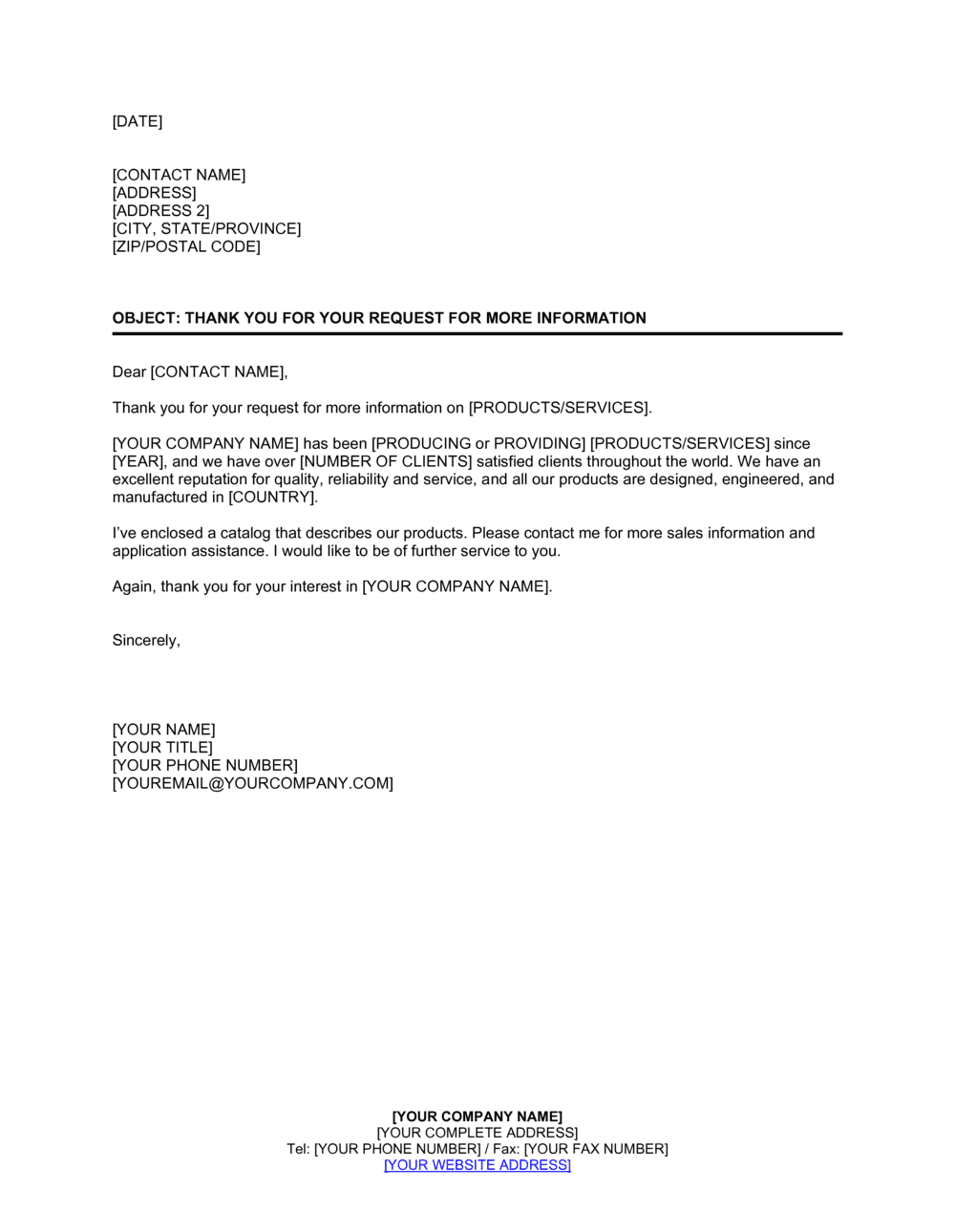
Fill in the company's full legal name and address at the top of the letter, along with the recipient's full name, title, and organization. Enter the date the letter is being issued — not the date the original request was received.
💡 Use your registered legal entity name, not your trade name or DBA, to ensure the letter is attributable to the correct contracting party.
2
Reference the original request precisely
In the acknowledgment clause, cite the date the request was received, the reference number if one was assigned, and a concise description of the subject matter. This creates an auditable record tying your response to the specific inquiry.
💡 If the request came by email, quote the subject line verbatim. If it arrived via a web form or RFI portal, include the submission ID.
3
Summarize the scope of the request
List the specific categories of information the requestor has asked for — product specifications, pricing, delivery timelines, contract terms, or other details. Keep this summary to three to five bullet points and invite the recipient to correct any misunderstanding within a defined timeframe.
💡 A short, numbered scope summary prevents scope-creep disputes later and demonstrates that you read and understood the request.
4
Insert the non-binding disclaimer
Confirm that the non-binding clause is present and clearly states the letter is not an offer or commitment. Review any factual statements in the letter — pricing estimates, availability windows — to ensure they are framed as preliminary and subject to change.
💡 If you must include any preliminary pricing or timeline information, add the phrase 'subject to formal agreement and change without notice' immediately after each figure.
5
Set a specific response timeline and name a point of contact
Enter the date or number of business days by which you will deliver the substantive response. Add the name, email, and direct phone number of the designated point of contact. Do not leave the timeline or contact as placeholders — a blank here is equivalent to no commitment.
💡 Net 5 to 10 business days is the standard acknowledgment-to-response window for most B2B inquiries. Anything longer should be explained with a brief reason in the letter.
6
Confirm confidentiality handling
Review the confidentiality clause to ensure it covers both your outbound information and any materials shared by the requestor. If the inquiry relates to a sensitive tender, regulatory matter, or pre-contract negotiation, consider whether a standalone NDA is needed before sharing any substantive response.
💡 If you already have an NDA in place with this party, reference its effective date in the confidentiality clause rather than creating duplicate or conflicting obligations.
7
Have an authorized signatory review and sign
Route the completed letter to the appropriate authorized signatory — sales director, general counsel, or owner — before sending. Confirm their title and authority level match what would be expected for the subject matter of the inquiry.
💡 For high-value or legally sensitive inquiries, have legal counsel review the letter before it leaves the building, even if no substantive information is included.
8
Send and retain a copy
Send the signed letter via email with read receipt, or by the same channel the original request arrived. Retain a copy of the sent letter and the original request in the same file or CRM record, timestamped.
💡 Store the original request and your acknowledgment letter together — if a dispute arises, having both documents in sequence is far more persuasive than producing each separately.