Credit Information Request Template

Free Word download β€’ Edit online β€’ Save & share with Drive β€’ Export to PDF

1 pageβ€’20–30 min to fillβ€’Difficulty: Standardβ€’Signature requiredβ€’Legal review recommended
Learn more ↓
FreeCredit Information Request Template

At a glance

What it is
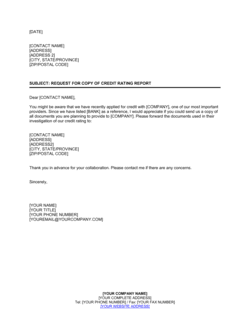
A Credit Information Request is a legally structured document a business sends to a prospective customer or supplier to authorize the collection, release, and review of credit-related information before extending trade credit or establishing a credit account. This free Word download is editable online and can be exported as PDF β€” covering authorization language, reference contacts, bank details, and signed consent in a single form.
When you need it
Use it before opening a new trade credit account, approving a net-terms arrangement, or onboarding a supplier or customer whose creditworthiness has not been previously verified. It is also used when renegotiating credit limits with existing accounts that have changed ownership or financial status.
What's inside
Applicant identification and business details, credit limit requested, authorization to contact trade and bank references, release of liability for references who respond in good faith, signed consent complying with applicable data protection requirements, and a reference contact list with account history fields.

What is a Credit Information Request?

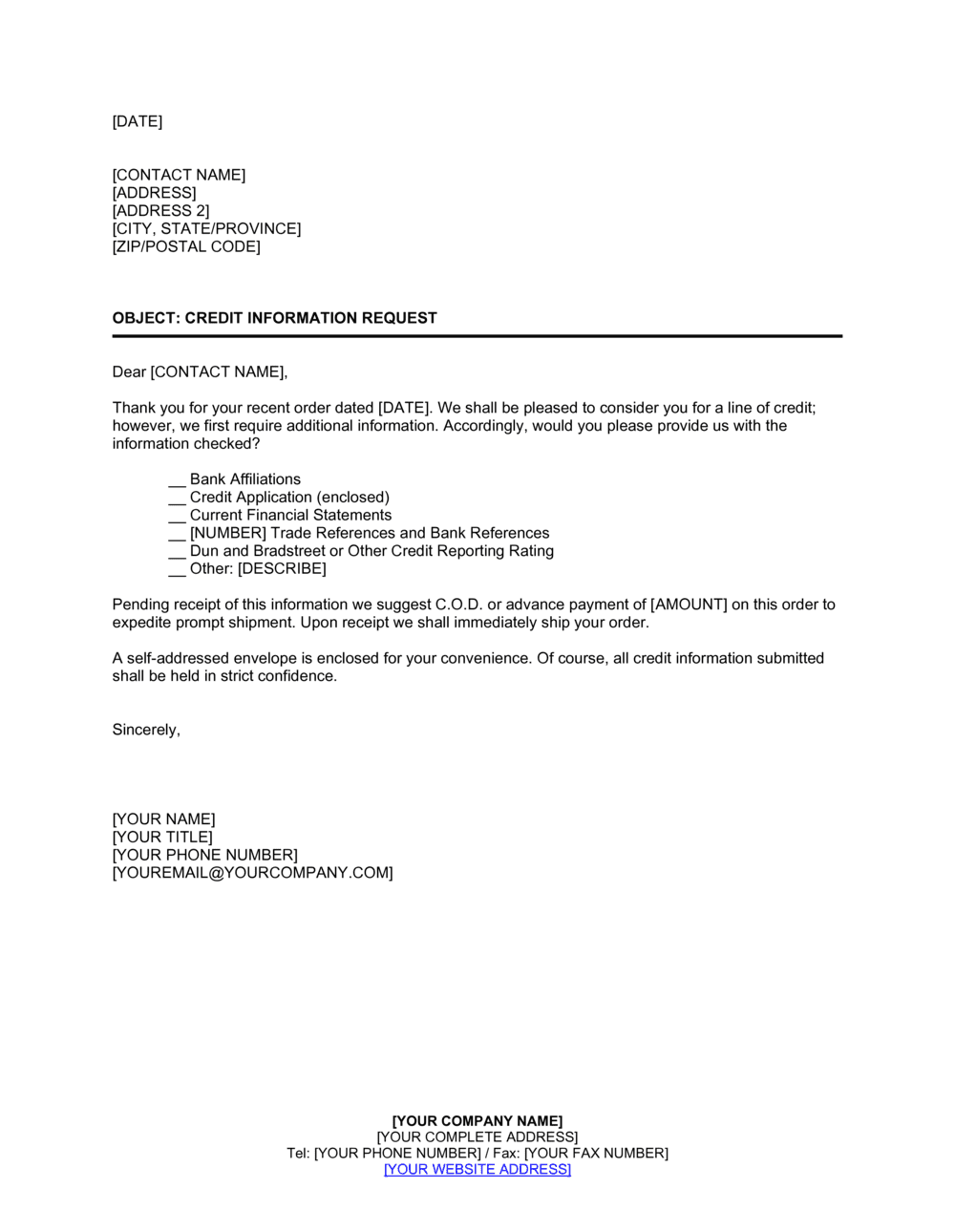
A Credit Information Request is a legally structured document a business uses to authorize the collection and release of credit-related information from trade references and banking institutions before extending a credit account to a new customer or supplier. It identifies the applicant's legal entity, states the credit limit and payment terms being sought, and obtains signed consent for the requesting party to contact references β€” along with a release of liability for good-faith disclosures. The form functions as both a due-diligence instrument and a documented consent record, creating an enforceable paper trail that supports the credit decision and satisfies data protection requirements in most major jurisdictions.

Why You Need This Document

Extending trade credit without a signed credit information request leaves your business exposed on several fronts at once. Without documented authorization, trade references and banks may lawfully refuse to share payment history β€” leaving you with no independent verification of the applicant's claims. Without a release of liability clause, honest references face legal risk for disclosing negative account information, which means you receive vague or deliberately unhelpful responses. Without a signed personal guarantee section for high-risk accounts, you have no recourse against the business principals if the entity defaults and dissolves. And without a data use and privacy consent clause, collecting and storing financial information from applicants in Canada, the EU, or the UK may violate PIPEDA, GDPR, or equivalent regulations. This template closes all four gaps in a single document β€” giving your credit team a consistent, defensible process for every new account, and a signed record that stands up in collections proceedings if the relationship goes wrong.

Which variant fits your situation?

If your situation is…Use this template
Extending trade credit to a new business customerCredit Information Request
Collecting a full credit application for a new accountBusiness Credit Application
Formally approving credit terms after references are verifiedCredit Agreement
Following up on an overdue account after credit was extendedCollection Letter
Notifying a customer that their credit application was declinedCredit Denial Letter
Requesting a credit limit increase for an established accountCredit Limit Increase Request
Documenting agreed payment terms between supplier and buyerPayment Terms Agreement

Common mistakes to avoid

❌ Accepting a trading name instead of the registered legal entity name

Why it matters: If the account defaults and you need to pursue collections or litigation, a mismatch between the name on the credit form and the registered legal entity can force you to refile or lose priority against other creditors.

Fix: Require the applicant to provide the exact name as it appears on their state or provincial business registration. Run a free secretary-of-state lookup to verify before approving the account.

❌ Skipping the bank reference

Why it matters: Trade references are provided by the applicant and can be selectively chosen to present a favorable picture. A bank reference is the most independent signal available and takes 2 to 5 business days to obtain.

Fix: Make the bank reference section mandatory, not optional. A signed authorization is all that is needed for most banks to confirm basic account standing.

❌ Using a personal guarantee clause without flagging it clearly

Why it matters: Courts in several jurisdictions have voided personal guarantees embedded in multi-page credit applications when signers demonstrate they were not made aware they were accepting personal liability.

Fix: Set the personal guarantee section apart with a visible header, require a separate initials box beside it, and include a sentence stating explicitly that the signer is accepting personal liability.

❌ Not including a release of liability for references

Why it matters: Without a liability release, references may be reluctant to disclose negative payment history for fear of a defamation or tortious interference claim from the applicant, resulting in vague or unhelpful responses.

Fix: Include a clearly worded release clause covering both the requesting party and all references for good-faith disclosures, and ensure the applicant signs it as part of the authorization block.

❌ Filing the form without documenting the credit decision

Why it matters: A signed credit form with no record of the decision made β€” approved limit, terms, date β€” is not actionable if the account is later disputed or the credit limit needs to be adjusted.

Fix: Complete a credit decision record attached to or stamped on the form before filing: approved credit limit, payment terms, date of decision, and approving officer's name.

❌ Omitting a data use and privacy consent clause

Why it matters: Collecting financial and personal information from a business applicant without a documented privacy consent can violate GDPR in the EU, PIPEDA in Canada, and state privacy laws in the US β€” exposing the requesting company to regulatory penalties.

Fix: Include a brief data use disclosure stating what information is collected, how it is stored, how long it is retained, and that it will not be shared beyond account administration. Require the applicant's signature on this clause.

The 9 key clauses, explained

Applicant Identification and Business Details

In plain language: Captures the legal name, trading name, address, entity type, tax ID, and years in business of the credit applicant.

Sample language
Legal Business Name: [LEGAL ENTITY NAME] | DBA: [TRADING NAME] | Entity Type: [CORPORATION / LLC / PARTNERSHIP / SOLE PROPRIETOR] | Tax ID / EIN: [TAX ID NUMBER] | Years in Business: [X] | Annual Revenue (approximate): $[AMOUNT]

Common mistake: Accepting a trading name instead of the registered legal entity name β€” if the account goes to collections, legal action must target the correct legal entity, and a mismatch creates enforcement delays.

Credit Limit Requested

In plain language: States the dollar amount of trade credit the applicant is requesting and the preferred payment terms.

Sample language
Requested Credit Limit: $[AMOUNT] | Requested Payment Terms: Net [30 / 60 / 90] days from invoice date | Purchase frequency: [ESTIMATED MONTHLY VOLUME]

Common mistake: Omitting this field and setting the limit internally without documenting the applicant's own request β€” leaving no benchmark to compare against the credit decision made after references are reviewed.

Trade Reference Contacts

In plain language: Lists two to four existing suppliers or creditors the applicant authorizes the requesting party to contact to verify payment history.

Sample language
Reference 1: Company Name: [REFERENCE COMPANY NAME] | Contact: [NAME / TITLE] | Phone: [NUMBER] | Account open since: [DATE] | High credit: $[AMOUNT] | Current balance: $[AMOUNT] | Payment history: [CURRENT / PAST DUE / SLOW]

Common mistake: Accepting only one reference, or failing to verify that the reference contact is the actual AP or credit department β€” personal references or sales contacts rarely have access to payment history data.

Bank Reference

In plain language: Authorizes the requesting party to contact the applicant's bank to confirm account standing, average balance range, and length of relationship.

Sample language
Bank Name: [BANK NAME] | Branch: [CITY / STATE] | Account Type: [CHECKING / LINE OF CREDIT] | Account Number (last 4): [XXXX] | Contact Name: [BANKER NAME] | Phone: [NUMBER]

Common mistake: Treating the bank reference as optional. Banks will confirm basic account standing when presented with a signed authorization β€” skipping it means missing the most objective credit signal in the form.

Authorization to Obtain and Release Credit Information

In plain language: The applicant's signed consent authorizing both the requesting party to gather information and each reference to release it, without which references may lawfully refuse to respond.

Sample language
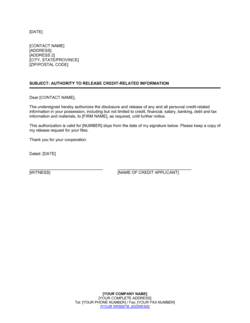
The undersigned hereby authorizes [REQUESTING COMPANY NAME] to obtain credit and financial information from the references listed above, and authorizes each reference to release such information to [REQUESTING COMPANY NAME] in connection with this credit application.

Common mistake: Using a generic authorization that fails to name the requesting company specifically β€” some references reject releases that do not identify the recipient by name, which voids the consent in practice.

Personal Guarantee (If Applicable)

In plain language: A clause in which a business principal or owner personally guarantees the account obligations if the business entity fails to pay.

Sample language
The undersigned principal of [COMPANY NAME] personally and unconditionally guarantees payment of all amounts owed under this credit account and agrees to be personally liable for any balance not paid by [COMPANY NAME] within [X] days of the due date.

Common mistake: Including the personal guarantee section without clearly flagging it to the signer β€” courts in several jurisdictions have voided personal guarantees when the signer demonstrates they did not knowingly accept personal liability.

Release of Liability for References

In plain language: Protects any reference who responds to a credit inquiry in good faith from legal claims by the applicant arising from the information disclosed.

Sample language
The applicant hereby releases [REQUESTING COMPANY NAME] and each credit reference from any and all liability for damages arising from the release, receipt, or use of credit information provided in good faith in connection with this application.

Common mistake: Omitting the release entirely β€” without it, a reference who discloses negative payment history could face a defamation or tortious interference claim from the applicant, making references reluctant to respond honestly.

Data Use and Privacy Consent

In plain language: Discloses how the collected information will be stored, used, and protected, and obtains consent in compliance with applicable privacy laws.

Sample language
The information collected in this form will be used solely to evaluate this credit application and to manage the resulting account. It will be retained for [X] years and will not be shared with third parties except as required by law or as necessary to administer this account. By signing, applicant consents to this use.

Common mistake: Using a boilerplate privacy clause that does not reflect actual data retention practices β€” regulators in the EU and Canada have assessed penalties for consent language that does not match what the company actually does with the data.

Certification and Signature

In plain language: The applicant certifies that all information provided is accurate and complete, and signs and dates the form to validate the authorization and consent.

Sample language
I/We certify that the information provided in this application is true, accurate, and complete to the best of my/our knowledge. Signature: _______________ | Printed Name: [NAME] | Title: [TITLE] | Date: [DATE]

Common mistake: Accepting a signature without a printed name and title β€” if the signatory leaves the company or the signature is disputed, there is no way to confirm who executed the document or whether they had authority to bind the entity.

How to fill it out

  1. 1

    Enter your company's information as the requesting party

    Add your legal entity name, address, phone, and accounts receivable contact to the header. This identifies who is making the request and receiving the information.

    πŸ’‘ Include your company's tax ID in the header if your industry or jurisdiction requires the requesting party to be identified for data protection purposes.

  2. 2

    Send the form to the credit applicant before opening the account

    Deliver the blank form to the applicant by email or postal mail. Do not prefill any of the applicant's details β€” require them to complete the form themselves so the information is self-certified.

    πŸ’‘ Set a clear deadline for return β€” 5 to 10 business days is standard. Accounts that take more than 15 days to return a credit form often signal disorganized AP processes.

  3. 3

    Review the applicant identification section for completeness

    Confirm the legal entity name matches their business registration, that the tax ID is present, and that the entity type is specified. Run a basic secretary-of-state lookup to confirm the entity is in good standing.

    πŸ’‘ A mismatch between the legal name on the form and the name on their invoices or website is worth clarifying before proceeding β€” it may indicate a DBA or an entity structure you were not aware of.

  4. 4

    Contact each trade reference directly

    Call or email each reference using the contact information provided. Ask specifically for: how long the account has been open, the high credit amount, current balance, and whether the account pays on time.

    πŸ’‘ Do not rely solely on written responses. A 2-minute phone call to the reference's credit department yields more candid information than a form response that the applicant may have coached.

  5. 5

    Contact the bank reference with the signed authorization

    Send or fax the signed bank reference section to the listed bank branch. Most banks will confirm account standing, approximate balance range, and relationship length when a signed release is presented.

    πŸ’‘ Bank confirmations are typically returned within 2 to 5 business days. Follow up once if you have not received a response after 5 business days.

  6. 6

    Evaluate the personal guarantee section and confirm authority

    If your credit policy requires a personal guarantee for new accounts below a certain revenue threshold or for sole proprietors, confirm the signer holds the title shown and has authority to bind both the entity and themselves personally.

    πŸ’‘ For LLCs and corporations, request a certificate of authority or board resolution confirming the signer can execute personal guarantees on behalf of the entity.

  7. 7

    Document your credit decision and file the completed form

    Record the approved credit limit, payment terms, and decision date on the form or in your credit management system. Retain the signed original with all reference responses as a single file.

    πŸ’‘ Store credit files for a minimum of 7 years β€” reference responses and signed authorizations are primary evidence if an account goes to collections or the credit decision is later disputed.

  8. 8

    Communicate the credit decision to the applicant in writing

    Issue a credit approval or denial letter that states the approved limit, terms, and any conditions. If denying credit based on reference information, follow applicable adverse action notice requirements in your jurisdiction.

    πŸ’‘ In the US, adverse action notices under the FCRA are required when a consumer credit report was used in the decision, even if the applicant is a business with a sole proprietor.

Frequently asked questions

What is a credit information request?

A credit information request is a document a business sends to a prospective customer or supplier to authorize the collection and release of credit-related information before extending a trade credit account. It typically includes fields for trade references, a bank reference, signed authorization for contact, and a release of liability β€” forming the evidentiary basis for a credit decision. It differs from a credit application in that it focuses on the authorization and reference components rather than the financial statements or scoring model.

Is a credit information request legally binding?

The authorization and release sections are generally enforceable as binding consent when the form is properly signed and dated by an authorized representative of the applicant. The personal guarantee section, if included, creates a separate legally binding obligation on the individual signatory. The document does not itself create a credit obligation β€” that is typically established by a separate credit agreement or terms of sale once the request is approved.

What information should a credit information request include?

At minimum: the applicant's legal entity name and tax ID, the credit limit and terms requested, two to four trade references with account history fields, a bank reference with signed release, an authorization clause naming the requesting company, a release of liability for good-faith disclosures, a data use and privacy consent, and a certification and signature block. For higher-risk accounts, a personal guarantee section is standard practice.

Do I need a signed authorization to contact credit references?

Yes. Most trade references and banks will not release account information without a signed authorization from the applicant. Without one, you are relying on the reference's voluntary cooperation, which is inconsistent and leaves you without documented consent if the applicant later disputes the inquiry. A signed authorization also protects references from liability for disclosures made in good faith.

How long should I retain a completed credit information request?

Retaining completed credit forms for a minimum of 7 years is standard practice in most jurisdictions. This covers the typical statute of limitations for contract and debt collection claims. If the account results in litigation or a bankruptcy filing, the original signed form and all reference responses are primary evidence. Some regulated industries require longer retention β€” verify with your compliance team.

What is the difference between a credit information request and a business credit application?

A credit information request focuses specifically on authorizing and collecting third-party reference data β€” trade references and bank confirmations β€” as part of the credit evaluation process. A business credit application is broader: it typically adds financial statements, ownership structure, revenue history, and a full credit scoring process. The request is often used as a standalone document for trade credit decisions under $50,000; a full application is more common for larger lines or formal lending arrangements.

Do privacy laws like GDPR affect how I use a credit information request?

Yes, if the applicant or any of the references are located in the EU or the UK. GDPR requires that personal data β€” including financial information about individuals or sole proprietors β€” be collected with a documented lawful basis, disclosed through a privacy notice, and retained no longer than necessary. For B2B credit requests involving corporate entities only, GDPR applicability is reduced but not eliminated if any individual's data is collected. Canada's PIPEDA imposes similar consent requirements. Including a data use clause in the form addresses most compliance requirements in practice.

Should I require a personal guarantee for every trade credit account?

Not necessarily. Personal guarantees are most appropriate for sole proprietors, single-member LLCs, and new businesses with limited credit history, or for accounts where the requested limit exceeds a threshold your credit policy defines. For established corporations with a verified track record and strong trade references, requiring a personal guarantee may be unnecessary and can damage the commercial relationship. Calibrate the requirement to your credit risk threshold and document the policy consistently.

What should I do if a trade reference gives a negative report?

A single negative reference is not necessarily disqualifying β€” follow up to understand the context, such as a dispute that was later resolved or a period of financial difficulty the applicant has since exited. Two or more consistent negative references, or a bank report indicating insufficient average balances, should trigger either a credit denial, a reduced initial limit, or a requirement for prepayment until the account establishes a history with you. Document your rationale before communicating the decision.

How this compares to alternatives

vs Business Credit Application

A business credit application is a broader document that captures financial statements, ownership structure, and full credit scoring inputs in addition to references and authorizations. A credit information request focuses specifically on the authorization and reference-gathering components. For trade credit decisions under $50,000, the request alone is often sufficient; a full application is more common for formal lending or larger revolving credit lines.

vs Credit Agreement

A credit agreement is the binding contract that establishes the approved credit limit, payment terms, interest on overdue balances, and remedies for default β€” executed after the credit decision is made. A credit information request is the pre-decision document used to gather the information that supports the credit agreement. The request comes first; the agreement governs the ongoing relationship.

vs Collection Letter

A collection letter is a post-default document used to demand payment on an overdue account. A credit information request is a pre-credit document used to assess risk before a line is opened. The two documents sit at opposite ends of the credit lifecycle β€” the request is designed to prevent the situations that a collection letter is used to address.

vs Non-Disclosure Agreement

An NDA protects confidential business information shared between parties in a commercial relationship. A credit information request does share sensitive financial data β€” but its release mechanism is consent-based authorization rather than mutual confidentiality obligations. For applicants concerned about financial data disclosure, combining a credit request with an NDA or confidentiality clause is sometimes appropriate in higher-stakes supplier relationships.

Industry-specific considerations

Wholesale and Distribution

High transaction volumes and net-60 or net-90 terms make reference verification essential β€” distributors routinely carry six-figure receivables per account and face concentrated credit risk.

Construction and Trades

Material suppliers and subcontractors use credit requests to vet general contractors and project owners before delivering on account, given project delays and retainage practices that can compress payment timelines significantly.

Manufacturing

Manufacturers extending credit to OEM customers or distributors verify trade references alongside financial statements, as large order volumes and custom production runs create significant exposure if a buyer defaults mid-production.

Professional Services

Law firms, accounting practices, and staffing agencies use credit information requests when onboarding corporate clients on retainer billing, verifying that the client entity has a history of paying professional services invoices on time.

Jurisdictional notes

United States

The Fair Credit Reporting Act (FCRA) governs use of consumer credit reports and requires adverse action notices when a consumer report influences a credit decision β€” relevant for sole proprietors and personally guaranteed accounts. The Equal Credit Opportunity Act (ECOA) prohibits discriminatory credit decisions. State laws vary on personal guarantee enforceability, with some states requiring specific disclosure language for guarantees to be enforceable. Retention of credit records for at least 7 years is standard to cover the UCC statute of limitations on commercial claims.

Canada

PIPEDA (and provincial equivalents including Quebec's Law 25) requires informed consent before collecting personal financial information from individuals, including sole proprietors and personal guarantors. The consent clause in the form must clearly describe what data is collected, why, and how long it is retained. Quebec's Law 25, effective 2023, imposes stricter requirements including a privacy impact assessment for sensitive data. Personal guarantees in Ontario and British Columbia are enforceable without notarization but must be in writing and signed before the credit obligation arises.

United Kingdom

UK GDPR and the Data Protection Act 2018 require a documented lawful basis for processing financial information collected in a credit request β€” legitimate interests or contractual necessity are the most common bases for B2B credit. The Consumer Credit Act 1974 applies when the applicant is an individual or sole trader and the credit extended exceeds Β£25,000, imposing additional disclosure and agreement format requirements. Personal guarantees are generally enforceable in England and Wales when in writing and signed, but the Unfair Contract Terms Act 1977 may apply if terms are deemed unreasonable.

European Union

GDPR applies to any credit information request that collects personal data about individuals β€” including beneficial owners, directors, or sole proprietors β€” regardless of whether the applicant entity is a corporation. A valid consent or legitimate interest assessment is required, and the applicant must be provided a privacy notice at the point of collection. Several member states, including Germany and France, have additional national data protection requirements beyond GDPR. Cross-border credit requests involving applicants in multiple EU states should reference the data controller's lead supervisory authority in the privacy clause.

Template vs lawyer β€” what fits your deal?

PathBest forCostTime
Use the templateBusinesses extending standard trade credit under $50,000 to domestic commercial customersFree15 minutes to complete per applicant
Template + legal reviewCompanies with high-volume credit programs, cross-border accounts, or personal guarantee requirements$200–$500 for a one-time credit policy and form review by a commercial attorney3–5 business days
Custom draftedFinancial institutions, regulated lenders, or businesses extending credit exceeding $100,000 with complex multi-jurisdiction exposure$1,000–$3,000+1–2 weeks

Glossary

Trade Credit
An arrangement where a supplier allows a buyer to receive goods or services and pay within an agreed period, typically net 30, net 60, or net 90 days.
Credit Reference
A third party β€” typically a supplier or lender β€” who can confirm an applicant's payment history and creditworthiness based on direct experience.
Authorization Clause
The section of a credit request in which the applicant gives written consent for the requesting party to contact references and obtain financial information.
Release of Liability
A provision protecting references and the requesting party from legal claims arising from the good-faith disclosure or receipt of credit information.
Net Terms
Payment terms specifying the number of days after invoice date within which full payment is due β€” commonly net 30, net 60, or net 90.
Days Sales Outstanding (DSO)
The average number of days it takes a business to collect payment after a sale β€” a key indicator of credit risk and collection efficiency.
Credit Limit
The maximum outstanding balance a supplier will allow a customer to carry at any one time under a trade credit arrangement.
Personal Guarantee
A commitment by a business owner or officer to be personally liable for the business's credit obligations if the entity fails to pay.
FCRA (Fair Credit Reporting Act)
A US federal law governing the collection, use, and sharing of consumer credit information β€” relevant when the credit applicant is an individual or sole proprietor.
Credit Bureau
An agency that collects and maintains credit history data on businesses and individuals β€” examples include Dun & Bradstreet, Equifax Business, and Experian Business.
GDPR (General Data Protection Regulation)
EU law regulating how personal data β€” including financial information β€” may be collected, stored, and processed, applicable when the applicant or reference is located in the EU.

Part of your Business Operating System

This document is one of 3,000+ business & legal templates included in Business in a Box.

  • Fill-in-the-blanks β€” ready in minutes
  • 100% customizable Word document
  • Compatible with all office suites
  • Export to PDF and share electronically

Create your document in 3 simple steps.

From template to signed document β€” all inside one Business Operating System.
1
Download or open template

Access over 3,000+ business and legal templates for any business task, project or initiative.

2
Edit and fill in the blanks with AI

Customize your ready-made business document template and save it in the cloud.

3
Save, Share, Send, Sign

Share your files and folders with your team. Create a space of seamless collaboration.

Save time, save money, and create top-quality documents.

β˜…β˜…β˜…β˜…β˜…

"Fantastic value! I'm not sure how I'd do without it. It's worth its weight in gold and paid back for itself many times."

Managing Director Β· Mall Farm
Robert Whalley
Managing Director, Mall Farm Proprietary Limited
β˜…β˜…β˜…β˜…β˜…

"I have been using Business in a Box for years. It has been the most useful source of templates I have encountered. I recommend it to anyone."

Business Owner Β· 4+ years
Dr Michael John Freestone
Business Owner
β˜…β˜…β˜…β˜…β˜…

"It has been a life saver so many times I have lost count. Business in a Box has saved me so much time and as you know, time is money."

Owner Β· Upstate Web
David G. Moore Jr.
Owner, Upstate Web

Run your business with a system β€” not scattered tools

Stop downloading documents. Start operating with clarity. Business in a Box gives you the Business Operating System used by over 250,000 companies worldwide to structure, run, and grow their business.

Start freeΒ Β·Β No credit card required