1
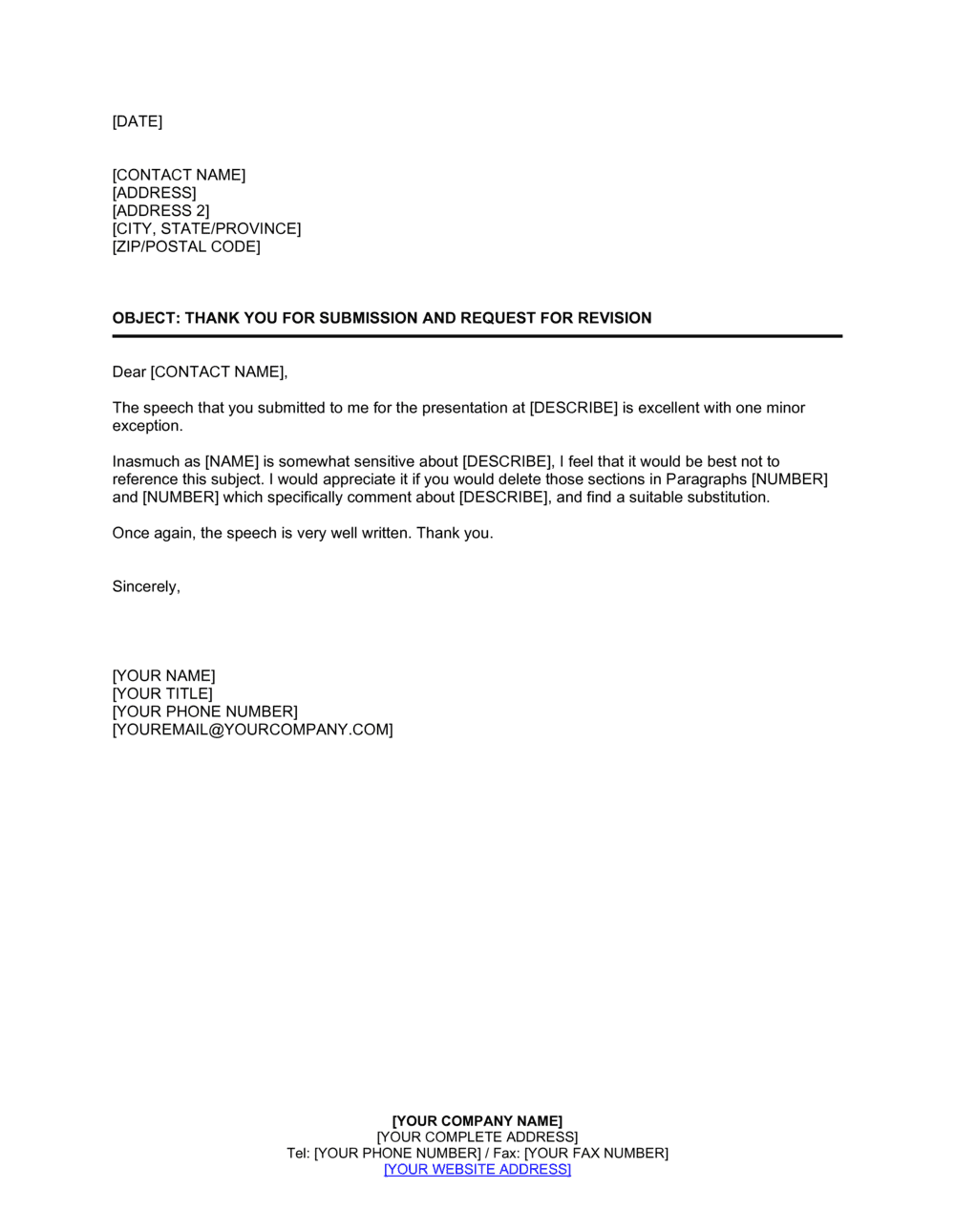
Identify both parties and the specific submission
Enter the full legal names of your organization and the submitting party, then identify the document being reviewed by its exact title, version number or date, and the date it was received.
💡 If the submitting party sent multiple versions, reference the specific version number or submission timestamp to avoid any dispute about which draft is under review.
2
Draft the acknowledgement of receipt clause
Confirm the date and method by which you received the document, and immediately follow it with language expressly stating that receipt does not constitute acceptance.
💡 Place the non-acceptance qualifier in the same sentence as the acknowledgement — not a separate paragraph — so it is impossible to read one without the other.
3
Write the statement withholding acceptance
Include a clear, unambiguous clause stating that you are not accepting the document in its current form and that acceptance is withheld pending satisfactory revision.
💡 Use the word 'expressly' — as in 'acceptance is expressly withheld' — to signal this is a deliberate legal position, not an oversight.
4
List each revision request with a section reference
For each required change, cite the specific section, clause, or exhibit in the submitted document, describe exactly what must change, and briefly state the reason. Number each item sequentially.
💡 Attach a redlined version of the document alongside the letter whenever possible — it reduces back-and-forth and leaves no room for the submitting party to misinterpret what 'revise Section 4.2' actually means.
5
Set a specific response deadline
Enter an exact calendar date by which the revised document must be received, and state clearly what happens if the deadline is missed — typically the right to withdraw, reopen bidding, or terminate discussions.
💡 Give at least 5–10 business days for straightforward revisions and 15–20 for complex contract or technical documents — unrealistic deadlines generate disputes about whether the submitting party had a fair opportunity to comply.
6
Add the non-waiver and reservation-of-rights clause
Include language confirming that nothing in the letter constitutes acceptance, a waiver of rights, or a commitment to contract. Position it both near the top and at the end of the letter.
💡 Have your legal counsel review this clause specifically if the submission is a contract draft — the line between a revision request and a counter-offer is narrow in some jurisdictions.
7
Specify the submission format and contact for the revised document
State the required format (e.g., tracked-changes Word file), the named recipient, and the delivery email or portal address for the revised submission.
💡 Create a dedicated submission email alias (e.g., submissions@yourcompany.com) to ensure revised documents are received and logged, even if the named contact changes roles.
8
Sign and send on official letterhead
Have an authorized representative sign the letter, print or export it on official company letterhead, and deliver it via the same channel the original submission was received — or a more formal channel if the stakes are high.
💡 Send by email with read-receipt and retain a copy with the delivery timestamp — if the matter later becomes a dispute, you need documented proof the letter was received before the deadline.