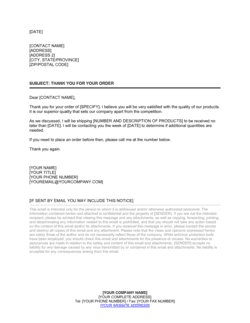
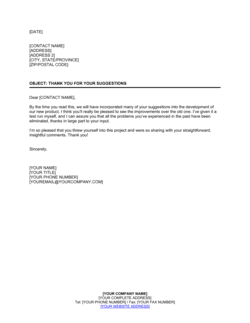
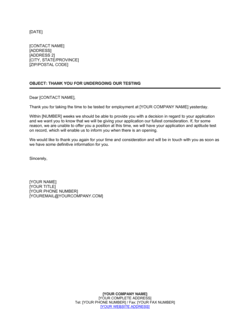
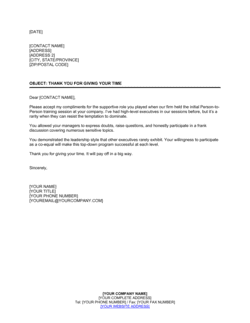
Thank You for Offer to Help Us Campaign Template

Free Word download β€’ Edit online β€’ Save & share with Drive β€’ Export to PDF

1 pageβ€’20–30 min to fillβ€’Difficulty: Standardβ€’Signature requiredβ€’Legal review recommended
Learn more ↓
FreeThank You for Offer to Help Us Campaign Template

At a glance

What it is
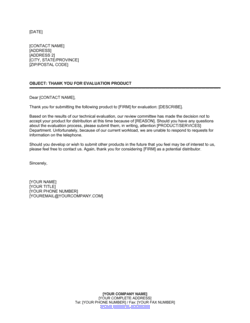
A Thank You For Offer To Help Us Campaign letter is a formal written acknowledgment sent by an organization to an individual or entity that has offered to support a campaign β€” whether through volunteering, in-kind contributions, financial backing, or expertise. This free Word download gives you a professional, editable template you can customize and export as PDF to send to supporters promptly and consistently.
When you need it
Use it as soon as an individual, business, or partner organization offers to assist your campaign β€” before any commitments are acted upon β€” to confirm acceptance, set expectations, and create a written record of the offer and your response. It is equally relevant for nonprofit fundraising campaigns, political campaigns, community initiatives, and commercial promotional drives.
What's inside
The letter covers a formal acknowledgment of the offer, a description of the type of assistance offered and accepted, any conditions or limitations attached to the support, the campaign's timeline and the supporter's expected role, confidentiality or conflict-of-interest reminders where relevant, and a clear call to next action for both parties.

What is a Thank You For Offer To Help Us Campaign Letter?

A Thank You For Offer To Help Us Campaign letter is a formal written acknowledgment issued by an organization to an individual, business, or partner that has offered to support one of its campaigns β€” whether through volunteering, financial contribution, in-kind resources, professional expertise, or public endorsement. More than a courtesy note, it documents the specific nature of the offer being accepted, the supporter's expected role and timeline, any applicable conditions or confidentiality obligations, and the tax acknowledgment information required by law when the offer involves a donation. It creates a clear written record that protects both parties and transforms a verbal or informal commitment into something concrete and actionable.

Why You Need This Document

Without a formal acknowledgment letter, supporter commitments remain informal and unenforceable β€” and informal commitments regularly fall through. Supporters who receive no written confirmation of their offer frequently re-interpret the scope of what they agreed to, miss campaign deadlines because they were never told the timeline, or withdraw their support without realizing the operational impact on the campaign. For nonprofit and charitable organizations, failure to issue a proper written acknowledgment for contributions of $250 or more in the US means donors cannot claim the deduction they were expecting β€” creating legal exposure for the organization. For political campaigns, undocumented support arrangements create campaign finance compliance gaps. This template gives you a professional, consistent letter you can send within days of receiving any offer, ensuring every supporter feels valued, every commitment is documented, and every campaign starts with the right foundation.

Which variant fits your situation?

If your situation is…Use this template
Acknowledging a financial donation offer to a nonprofit campaignDonation Acknowledgment Letter
Accepting a volunteer's offer to assist with a fundraising eventVolunteer Agreement
Confirming an in-kind contribution offer from a sponsorSponsorship Agreement
Responding to a business partner's co-marketing campaign support offerJoint Marketing Agreement
Acknowledging a grant-maker's offer to fund a specific campaign initiativeGrant Acceptance Letter
Confirming a professional's pro bono service offer for a campaignPro Bono Services Agreement
Responding to a community endorsement offer for a public campaignEndorsement Agreement

Common mistakes to avoid

❌ Accepting the offer in vague, unspecific terms

Why it matters: A letter that says 'thank you for your offer to help' without specifying what was offered creates no enforceable record of the commitment and leads to misaligned expectations on both sides.

Fix: Name the specific support β€” hours, dollar amount, goods, or services β€” in the description clause. If the offer was vague, ask for clarification before sending the letter.

❌ Omitting the campaign timeline from the letter

Why it matters: Supporters who don't know the campaign's start date, end date, or key milestones cannot plan their involvement and frequently miss critical windows, causing delays the organization cannot recover from.

Fix: Include at minimum the campaign start date, end date, and one or two key milestones the supporter needs to meet to fulfill their commitment.

❌ Making tax-deductibility statements without confirming registered status

Why it matters: Telling a donor their contribution is tax-deductible when the organization is not a registered charity exposes the organization to misrepresentation claims and the donor to an unexpected tax denial.

Fix: Confirm your organization's current charitable registration status with your accountant or legal counsel before including any deductibility language. If uncertain, use 'to the extent permitted by applicable law.'

❌ Sending the letter without an authorized signatory's signature

Why it matters: An unsigned acknowledgment letter has no evidentiary weight if the supporter later disputes the scope of their offer or the terms of their involvement.

Fix: Designate one campaign officer β€” the executive director, campaign manager, or a board officer β€” as the sole authorized signatory for all campaign acknowledgment letters, and obtain their signature before sending.

❌ Skipping the conflict-of-interest and confidentiality clause for volunteers

Why it matters: Volunteers have access to donor lists, campaign strategy, and internal communications. A volunteer who later joins a competing campaign or leaks donor data can cause serious reputational and legal harm if no confidentiality obligation was documented.

Fix: Include the confidentiality and conflict-of-interest clause in every acknowledgment letter, regardless of whether the supporter is a paid contractor, volunteer, or endorsing partner.

❌ Failing to outline next steps in the letter

Why it matters: Supporters who receive a warm thank-you with no direction on what to do next experience friction in following through, and the conversion rate from offer to active involvement drops sharply.

Fix: Close every letter with two or three concrete next steps β€” submit a form by a specific date, attend an orientation, or respond to confirm acceptance β€” so the supporter knows exactly how to proceed.

The 9 key clauses, explained

Opening acknowledgment and identification

In plain language: Names both parties β€” the organization running the campaign and the individual or entity offering help β€” and formally acknowledges receipt of the offer.

Sample language
On behalf of [ORGANIZATION NAME], we are writing to sincerely thank [SUPPORTER NAME / ENTITY NAME] for their generous offer to support our [CAMPAIGN NAME] campaign. We are pleased to acknowledge and accept your offer as described below.

Common mistake: Using a generic greeting without naming the supporter or the specific campaign. Unnamed acknowledgments feel impersonal and fail to create a clear evidentiary record of which offer is being accepted.

Description of the offer and accepted support

In plain language: Describes specifically what the supporter has offered β€” time, money, services, goods, or endorsement β€” and confirms which elements the organization is accepting.

Sample language
[SUPPORTER NAME] has offered to provide [DESCRIPTION OF SUPPORT β€” e.g., 20 hours of volunteer graphic design services / a cash contribution of $[AMOUNT] / in-kind donation of [GOODS]] in connection with the [CAMPAIGN NAME] campaign running from [START DATE] to [END DATE].

Common mistake: Accepting an offer in vague terms such as 'assistance as needed.' Vague acceptance language creates disputes about scope and lets either party reinterpret the commitment later.

Campaign overview and timeline

In plain language: Provides context on the campaign's purpose, goals, and key dates so the supporter understands how their help fits into the broader effort.

Sample language
The [CAMPAIGN NAME] is a [DESCRIPTION OF CAMPAIGN OBJECTIVE] initiative with a campaign period of [START DATE] to [END DATE]. Key milestones include [MILESTONE 1 β€” DATE] and [MILESTONE 2 β€” DATE]. Your support will contribute directly to [SPECIFIC GOAL].

Common mistake: Omitting the campaign timeline entirely. Supporters who don't know the schedule cannot plan their involvement and often disengage or fail to deliver on time.

Role and responsibilities of the supporter

In plain language: Defines what the supporter is expected to do, when, and under whose direction β€” preventing scope creep and clarifying accountability.

Sample language
[SUPPORTER NAME] will be responsible for [SPECIFIC TASKS / DELIVERABLES] during the campaign period. Activities will be coordinated with [CAMPAIGN CONTACT NAME, TITLE] and completed by [DEADLINE / SCHEDULE].

Common mistake: Leaving the supporter's role undefined and assuming goodwill will fill the gaps. Without defined responsibilities, supporters overlap with paid staff, miss tasks, or commit less than expected.

Conditions and limitations on support

In plain language: Sets any restrictions on how the support may be used, any matching conditions, or any situations that would make the offer void.

Sample language
This acknowledgment is subject to the following conditions: [CONDITION 1 β€” e.g., funds raised through this campaign may only be used for [SPECIFIC PURPOSE]]. Any change in the scope of support requires written agreement by both parties.

Common mistake: Not including any conditions when conditions were verbally discussed. Courts and regulators look to the written record; conditions not in the letter are treated as if they do not exist.

Confidentiality and conflict-of-interest declaration

In plain language: Asks the supporter to confirm they have no conflicting interests and to agree to keep campaign materials, donor data, and strategy confidential.

Sample language
By participating in the [CAMPAIGN NAME], [SUPPORTER NAME] agrees to keep confidential all non-public campaign information, donor lists, and strategic materials. [SUPPORTER NAME] confirms there is no conflict of interest that would impair their ability to assist the campaign in good faith.

Common mistake: Skipping this clause for volunteers on the assumption it only matters for paid staff. Volunteers who later share campaign data or endorse competing campaigns can cause significant reputational and legal harm.

Tax acknowledgment and receipt (where applicable)

In plain language: For financial or in-kind contributions, confirms the value of the donation for tax purposes and whether the contribution is tax-deductible under applicable law.

Sample language
For tax purposes, [ORGANIZATION NAME] acknowledges receipt of a [cash / in-kind] contribution valued at $[AMOUNT] on [DATE]. No goods or services were provided in exchange for this contribution, and it may be deductible to the extent permitted by applicable law. Please retain this letter as your official receipt.

Common mistake: Stating the contribution is 'tax-deductible' without confirming the organization's registered status. Only contributions to qualifying registered entities are deductible, and misstating this creates liability.

Organization contact and next steps

In plain language: Names the primary campaign contact for the supporter, outlines immediate next steps, and invites the supporter to reach out with questions.

Sample language
Your primary contact for this campaign is [CONTACT NAME], [TITLE], reachable at [EMAIL] or [PHONE]. Next steps: [STEP 1 β€” e.g., attend orientation on DATE / submit completed volunteer form by DATE]. We welcome any questions before you begin.

Common mistake: Ending the letter without clear next steps. Supporters who receive warm acknowledgments but no direction on what to do next often delay or fail to follow through on their offer.

Gratitude and organizational sign-off

In plain language: Closes with a sincere expression of appreciation, reinforcing the relationship and the importance of the supporter's contribution to the campaign's success.

Sample language
We are deeply grateful for your commitment to [CAMPAIGN NAME] and to the [MISSION / CAUSE] it supports. Your involvement is vital to achieving [CAMPAIGN GOAL], and we look forward to working with you. Sincerely, [AUTHORIZED SIGNATORY NAME], [TITLE], [ORGANIZATION NAME].

Common mistake: Using a generic sign-off with no named, authorized signatory. An unsigned or generically signed letter has limited evidentiary value and signals that the organization does not treat the relationship seriously.

How to fill it out

  1. 1

    Identify the organization and the supporter precisely

    Enter the full legal name of your organization and the full name or registered business name of the individual or entity who made the offer. Confirm the offer date and the specific campaign being referenced.

    πŸ’‘ Pull the supporter's name directly from their written or emailed offer to ensure the spelling and entity name match exactly.

  2. 2

    Describe the offer and what you are accepting

    Write a specific description of the support offered β€” hours, dollar amount, goods, services, or endorsement β€” and clearly state which elements your organization is accepting. If you are accepting only part of the offer, say so explicitly.

    πŸ’‘ Use quantities and dollar values wherever possible. 'Twenty hours of graphic design services valued at $2,000' is enforceable; 'some design help' is not.

  3. 3

    Summarize the campaign and key dates

    Add a brief description of the campaign's purpose and its start and end dates. List two or three key milestones the supporter should be aware of so they can plan their involvement.

    πŸ’‘ Keep this section to three to five sentences. The letter is an acknowledgment, not a campaign brief β€” save the detail for an onboarding package.

  4. 4

    Define the supporter's specific role and deliverables

    List the tasks or outputs you expect from the supporter, the deadlines for each, and the name and contact of the campaign staff member who will coordinate with them.

    πŸ’‘ Frame responsibilities as outcomes β€” 'three banner designs delivered by [DATE]' β€” not activities, to make accountability easier to manage.

  5. 5

    Add any conditions or restrictions on the support

    If funds must be used for a specific purpose, if the in-kind contribution cannot be redirected, or if the supporter's endorsement has geographic limits, write those conditions clearly in the conditions clause.

    πŸ’‘ Translate any verbal conditions discussed before the offer was made into this written clause. Verbal-only conditions almost never hold up.

  6. 6

    Include the confidentiality and conflict-of-interest acknowledgment

    Confirm that the supporter agrees to keep campaign information private and has declared any potential conflicts of interest. This clause should be in every letter, regardless of whether the supporter is a volunteer or a major donor.

    πŸ’‘ For high-profile supporters with public profiles, consider a separate, fuller confidentiality agreement in addition to this clause.

  7. 7

    Complete the tax acknowledgment block if the support is a contribution

    If the supporter is making a financial or in-kind donation, complete the tax acknowledgment section with the value, the date received, and a statement that no goods or services were exchanged. Verify your organization's charitable registration status before making any deductibility statement.

    πŸ’‘ In the US, contributions over $250 require a contemporaneous written acknowledgment to be deductible β€” this letter satisfies that requirement if issued promptly.

  8. 8

    Obtain an authorized signature and send promptly

    Have the letter signed by an authorized officer or campaign director β€” not an administrative assistant β€” before sending. Send it within five business days of the offer being received.

    πŸ’‘ Prompt acknowledgment strengthens the relationship and reduces the risk that the supporter withdraws or redirects their offer before you have onboarded them.

Frequently asked questions

What is a Thank You For Offer To Help Us Campaign letter?

A Thank You For Offer To Help Us Campaign letter is a formal written acknowledgment sent by an organization to a person or entity who has offered to support a campaign β€” through volunteering, financial contribution, in-kind resources, or endorsement. It confirms acceptance of the offer, describes the nature of the support, sets out the supporter's role and any conditions, and creates a written record of the commitment. It functions as both a relationship-building document and a basic evidentiary record.

Is this letter legally binding?

The letter can create legally enforceable obligations depending on its contents and the jurisdiction involved. If it describes a specific commitment β€” a financial contribution of a defined amount, a defined scope of services, or an in-kind donation β€” and both parties sign it, courts may treat it as a binding agreement. For purely volunteer engagements without financial stakes, enforceability is limited, but the written record still carries weight in resolving disputes. Consider having a lawyer review it when material financial commitments are involved.

When should I send this letter?

Send the letter within five business days of receiving the supporter's offer. For financial contributions over $250 in the US, the IRS requires a contemporaneous written acknowledgment β€” meaning you should not wait until the campaign ends. Prompt acknowledgment also reinforces the supporter's commitment before they have a chance to redirect their offer elsewhere.

Do I need a separate agreement alongside this letter?

For significant financial contributions, in-kind donations of high value, or professional service arrangements, a separate formal agreement β€” such as a sponsorship agreement, grant agreement, or volunteer agreement β€” is advisable in addition to this acknowledgment letter. The acknowledgment letter confirms the offer and sets the relationship tone; a formal agreement governs the detailed terms, remedies, and obligations between the parties.

What campaigns is this letter used for?

This letter is used across nonprofit fundraising campaigns, political campaigns, community and civic initiatives, commercial promotional drives, and co-marketing partnerships. Any organized effort seeking external support β€” whether financial, logistical, or reputational β€” benefits from formally acknowledging offers of help in writing. The template is adaptable across all these contexts by adjusting the campaign description and the nature of the support.

Does this letter satisfy IRS charitable contribution acknowledgment requirements?

In the US, a written acknowledgment is required for cash contributions of $250 or more to be tax-deductible by the donor. This letter satisfies that requirement if it states the amount of the contribution, the date received, and confirms whether any goods or services were provided in exchange. The organization must be a qualifying 501(c)(3) entity for the deduction to apply. For contributions of $75 or more where something of value was provided in return, the letter must also state the estimated value of that benefit.

Should volunteers receive this letter even if they are not donating money?

Yes. Sending a formal acknowledgment to volunteers β€” even those contributing only time β€” establishes a clear record of the agreed scope of their involvement, their confidentiality obligations, and the campaign timeline. It also significantly improves volunteer follow-through by making the commitment feel official. Volunteers who receive a signed acknowledgment are more likely to complete their commitments than those whose offers are only verbally accepted.

Can I use this letter for international supporters?

Yes, with modifications. For supporters in Canada, the UK, or EU member states, adjust the tax acknowledgment language to reference applicable local rules β€” CRA registered charity receipts in Canada, Gift Aid eligibility in the UK, and local tax authority requirements in EU countries. The confidentiality and role-definition clauses apply universally. For high-value cross-border contributions, obtain local legal advice on any additional disclosure or reporting requirements.

Who should sign this letter on behalf of the organization?

An authorized officer of the organization β€” typically the executive director, campaign director, or a designated board officer β€” should sign the letter. The signatory should have actual authority to accept the offer on the organization's behalf. Avoid having administrative staff or volunteers sign acknowledgment letters, as their authority to bind the organization may be questioned if a dispute arises.

How this compares to alternatives

vs Sponsorship Agreement

A sponsorship agreement is a full bilateral contract governing financial or in-kind support in exchange for named benefits β€” logo placement, speaking slots, or exclusivity rights. A campaign acknowledgment letter is lighter: it confirms an offer and sets basic expectations without negotiating reciprocal benefits. Use the acknowledgment letter first for general supporters, and a sponsorship agreement when material benefits are exchanged.

vs Volunteer Agreement

A volunteer agreement is a standalone document governing the volunteer's role, liabilities, confidentiality, and conduct for the duration of their engagement. A campaign acknowledgment letter covers similar ground at a higher level but is briefer and more relationship-oriented. For high-commitment volunteers in regulated sectors, use both β€” the letter to acknowledge the offer and the agreement to govern the engagement.

vs Donation Acknowledgment Letter

A donation acknowledgment letter is specifically designed to confirm receipt of a financial or in-kind gift for tax and recordkeeping purposes. A campaign offer acknowledgment is broader: it confirms the offer, defines the supporter's role, and sets expectations for the campaign relationship β€” not just the tax record. When financial contributions are involved, the campaign letter should include or attach the formal donation acknowledgment.

vs Grant Acceptance Letter

A grant acceptance letter formally accepts funds from a grant-making body under the specific terms of a grant agreement. It is governed by the grant's conditions, reporting requirements, and fund-use restrictions. A campaign offer acknowledgment covers a broader, less formal range of support types and is not tied to the grant compliance framework. Use a grant acceptance letter when accepting institutional grant funding, and this template for all other forms of campaign support.

Industry-specific considerations

Nonprofit and Charitable Organizations

Formal donation acknowledgment letters satisfy IRS and CRA requirements for donor tax receipts and document volunteer commitments for compliance and audit purposes.

Political and Advocacy Campaigns

Campaign finance regulations in most jurisdictions require documented records of all contributions and in-kind support; this letter forms part of the required paper trail.

Events and Entertainment

Sponsor and partner support offers for events need written confirmation of scope and deliverables before event planning can proceed and contracts are finalized.

Professional Services

Pro bono and co-marketing offers from law firms, PR agencies, or consultancies require formal acknowledgment to clarify scope, conflict waivers, and confidentiality obligations.

Retail and E-commerce

Brand partnership and influencer co-campaign offers are formally acknowledged to set deliverable expectations and confirm confidentiality of campaign strategy before execution.

Healthcare and Community Health

Community health campaigns rely on volunteer and sponsor support that must be documented to satisfy grant conditions and public health authority reporting requirements.

Jurisdictional notes

United States

The IRS requires a contemporaneous written acknowledgment for charitable contributions of $250 or more to be tax-deductible. The letter must state the contribution amount, the date, and whether any goods or services were provided in exchange. Political campaign contributions are generally not tax-deductible, and acknowledgment letters for political campaigns should not include deductibility language. State-level charitable registration may impose additional disclosure requirements.

Canada

Registered charities under the Income Tax Act must issue official donation receipts for contributions of any amount if the donor requests one, and must do so for all gifts over $20 used to claim charitable tax credits. The receipt must include the charity's registered number, the eligible amount of the gift, and the CRA-prescribed wording. Quebec organizations must comply with both federal and provincial requirements. Political contributions in Canada are subject to Elections Canada reporting and are not charitable receipts.

United Kingdom

UK charities registered with the Charity Commission can issue Gift Aid declarations, allowing the charity to reclaim 25p for every Β£1 donated by a UK taxpayer. The acknowledgment letter should include or reference a Gift Aid declaration if applicable. Campaigning activities by charities are regulated by the Charity Commission and must not constitute partisan political activity. Significant donations to political parties must be reported to the Electoral Commission.

European Union

Charitable tax deductibility rules vary significantly across EU member states β€” Germany, France, and the Netherlands each have distinct thresholds and documentation requirements. GDPR applies to any personal data processed in connection with campaign supporters, including names and contact details collected in the acknowledgment process; a brief privacy notice or reference to the organization's privacy policy is advisable. Cross-border donations within the EU may benefit from Persche ruling treatment but require local legal confirmation.

Template vs lawyer β€” what fits your deal?

PathBest forCostTime
Use the templateNonprofit campaigns, community initiatives, and commercial drives where support offers involve standard volunteering or modest in-kind contributionsFree10–20 minutes per letter
Template + legal reviewCampaigns receiving significant financial contributions, professional pro bono services, or endorsements with public profile implications$150–$400 for a brief legal review1–3 days
Custom draftedPolitical campaigns with campaign finance compliance requirements, major grant recipients, or cross-border support arrangements involving tax and regulatory complexity$500–$2,000+1–2 weeks

Glossary

Offeror
The individual, business, or organization that has extended an offer to provide support to the campaign.
In-Kind Contribution
A non-cash offer of goods, services, or resources β€” such as venue space, printing, or professional expertise β€” provided to support a campaign.
Acknowledgment Letter
A formal written response confirming receipt and acceptance of an offer, creating a written record of the agreement.
Campaign
An organized effort β€” fundraising, political, promotional, or community-based β€” to achieve a specific goal within a defined timeframe.
Volunteer
An individual who offers their time, skills, or labor to support a campaign without expectation of financial compensation.
Conflict of Interest
A situation in which a supporter's personal or professional interests could improperly influence their role or benefit from the campaign.
Confidentiality Obligation
A requirement that the supporter keep campaign strategy, donor information, or internal plans private during and after their involvement.
Consideration
Something of value exchanged between parties that transforms an informal offer into a binding commitment β€” may be minimal or symbolic in volunteer contexts.
Onboarding
The process of formally integrating a new supporter into campaign operations, including orientation, role assignment, and access to materials.
Tax Receipt
An official document provided to donors confirming the value and eligibility of their contribution for tax deduction purposes under applicable law.
Endorsement
A public declaration of support for a campaign by an individual or organization, which may carry reputational and legal implications for both parties.

Part of your Business Operating System

This document is one of 3,000+ business & legal templates included in Business in a Box.

  • Fill-in-the-blanks β€” ready in minutes
  • 100% customizable Word document
  • Compatible with all office suites
  • Export to PDF and share electronically

Create your document in 3 simple steps.

From template to signed document β€” all inside one Business Operating System.
1
Download or open template

Access over 3,000+ business and legal templates for any business task, project or initiative.

2
Edit and fill in the blanks with AI

Customize your ready-made business document template and save it in the cloud.

3
Save, Share, Send, Sign

Share your files and folders with your team. Create a space of seamless collaboration.

Save time, save money, and create top-quality documents.

β˜…β˜…β˜…β˜…β˜…

"Fantastic value! I'm not sure how I'd do without it. It's worth its weight in gold and paid back for itself many times."

Managing Director Β· Mall Farm
Robert Whalley
Managing Director, Mall Farm Proprietary Limited
β˜…β˜…β˜…β˜…β˜…

"I have been using Business in a Box for years. It has been the most useful source of templates I have encountered. I recommend it to anyone."

Business Owner Β· 4+ years
Dr Michael John Freestone
Business Owner
β˜…β˜…β˜…β˜…β˜…

"It has been a life saver so many times I have lost count. Business in a Box has saved me so much time and as you know, time is money."

Owner Β· Upstate Web
David G. Moore Jr.
Owner, Upstate Web

Run your business with a system β€” not scattered tools

Stop downloading documents. Start operating with clarity. Business in a Box gives you the Business Operating System used by over 250,000 companies worldwide to structure, run, and grow their business.

Start freeΒ Β·Β No credit card required